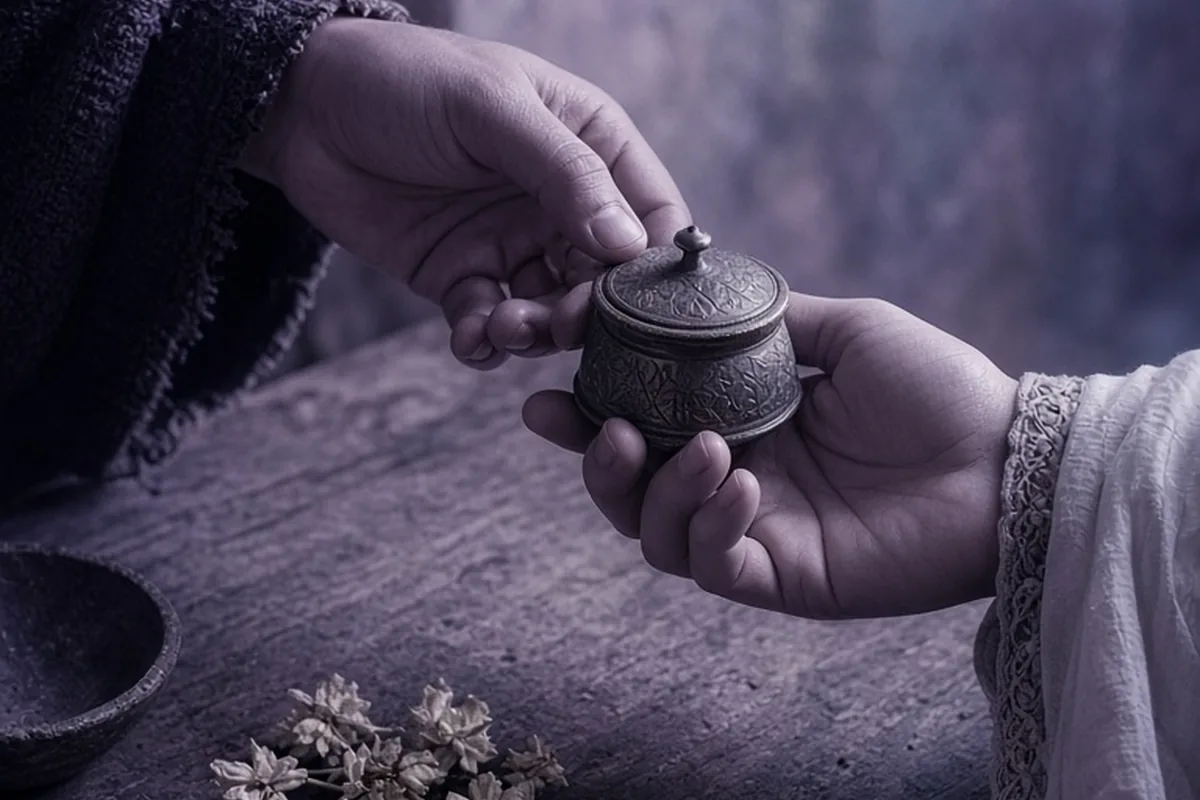
The story of Shiva and Sati is a foundational Hindu myth representing profound spiritual devotion, cosmic balance, and intense romantic partnership. Sati, an incarnation of the divine feminine, chose the ascetic Shiva despite her father Daksha's fierce opposition. Her tragic self-immolation in defense of Shiva's dignity and Shiva's subsequent world-shattering grief illustrate the destructive nature of familial pride and the enduring, transformative power of committed love.
Across world mythologies, few narratives capture the complex interplay of romantic passion, generational tension, and profound sorrow as vividly as the union between Shiva and Sati. Their journey offers a timeless lens through which we can examine our own relationships, boundary-setting with family, and the heavy emotional weight of loss.
The Cosmic Attraction: Transcending Social Expectations and Polarities
In mythological lore, Sati was born as the daughter of King Daksha, an aristocratic ruler deeply invested in social hierarchy, ritualistic orthodoxy, and worldly prestige. Shiva, conversely, lived on the fringes of civilization in Mount Kailash, covered in ash, detached from luxury, and indifferent to conventional social etiquette. Sati's attraction to Shiva was not based on external status or social approval; it was an innate spiritual recognition of his profound inner stillness and raw authenticity. She renounced the opulent comforts of her father's palace, undertaking arduous penance to win Shiva's attention and heart.
This dynamic illustrates how genuine intimacy often bridges seemingly irreconcilable differences. While Daksha saw Shiva as an uncouth outsider unfit for royal lineage, Sati recognized his transcendent nature. In human relationships, this polarity highlights the difference between superficial compatibility and deep, core resonance. True attraction often challenges conventional expectations, requiring partners to look beyond social conditioning, wealth, or pedigree to connect with someone's fundamental character and values. However, bridging two drastically different worlds requires strong emotional resilience, especially when external social circles refuse to understand the bond.
Daksha's Disapproval: Navigating In-Law Conflicts and Deep-Seated Ego
The central conflict of the myth stems from King Daksha's unyielding contempt for Shiva. Daksha expected deference, elaborate courtesies, and adherence to courtly traditions, none of which mattered to the detached ascetic deity. When Shiva did not offer the subservience Daksha demanded, the king interpreted it as a personal insult. Rather than attempting to understand his son-in-law's nature, Daksha allowed wounded pride to calcify into active malice, leading him to organize a massive grand sacrifice, or yagna, to which he invited every celestial being except Shiva and Sati.
Daksha's behavior serves as a stark depiction of toxic familial control and the damage wrought by unchecked ego. When parents or extended family members prioritize their social image or personal grievances over their child's happiness, the resulting friction places an immense emotional strain on the couple. In modern terms, Daksha's snub is comparable to using family gatherings or public milestones to deliberately exclude and demean a partner. The narrative demonstrates that attempting to appease an inherently dismissive family member rarely produces harmony; instead, it often escalates the conflict by validating unreasonable demands.
The Fatal Yagna: The Perils of Seeking Toxic Validation
When Sati learned of the grand gathering, she wished to attend despite not receiving an invitation. Shiva advised against going, recognizing that uninvited presence at a hostile gathering would only provoke hostility. Driven by the lingering hope that her father might soften and show affection, Sati went to the palace. Instead of warmth, she encountered public ridicule, cold contempt, and vicious insults directed at her husband. Realizing that her father's arrogance was irredeemable and feeling immense guilt for subjecting Shiva's honor to such humiliation, Sati entered a yogic trance and immolated herself through her internal mystic fire.
Sati's choice to attend the sacrifice illustrates the painful human impulse to seek closure and validation from family members who have consistently demonstrated emotional hostility. Shiva understood that walking into an environment designed to demean them would bear no fruit, representing the voice of prudent emotional boundaries. Sati's heartbreaking end serves as a cautionary tale: exposing oneself to chronic toxicity in hopes of winning unearned parental approval can lead to severe emotional self-destruction. Maintaining firm boundaries is often an act of self-preservation rather than a lack of love.
The Rudra Tandava: Understanding Raw Grief and Emotional Overwhelm
Upon hearing of Sati's death, Shiva's calm detachment completely shattered. In his fury and heartbreak, he pulled a lock of his hair and created the fierce warriors Virabhadra and Bhadrakali, who laid waste to Daksha's sacrifice and decapitated the king. Shiva then lifted Sati's lifeless body onto his shoulders and wandered across the cosmos, performing the Rudra Tandava—the wild, world-threatening dance of destruction fueled by unbearable grief and rage.
This mythic destruction gives profound legitimacy to the chaotic nature of deep sorrow. Shiva, normally the archetype of meditative restraint and unshakeable balance, becomes entirely consumed by the agony of loss. The narrative reminds us that intense grief does not follow neat, polite stages. When an anchor of our life is abruptly torn away, anger, despair, and emotional disorientation are natural human responses. Acknowledging raw pain is necessary, but Shiva's wandering also shows the danger of becoming lost in grief: unanchored sorrow, if left unchecked, has the potential to consume not only the grieving individual but also everything around them.
The Shakti Peethas: Transforming Profound Loss into Sacred Ground
To save the universe from the destructive aftermath of Shiva's grief, the preserver deity Vishnu used his Sudarshana Chakra to gradually sever Sati's body into fifty-one pieces as Shiva carried her. Wherever a portion of her body or ornament fell upon the Earth, that ground became a Shakti Peetha—a sacred pilgrimage site imbued with divine feminine energy. Only when the physical weight of Sati's form was gone did Shiva return to his senses, sitting in quiet meditation to integrate his immense sorrow.
Vishnu's intervention offers a powerful metaphor for the gradual processing and release of grief. Healing rarely happens all at once; it requires letting go of the physical attachment in stages until the burden no longer crushes the spirit. Furthermore, the myth suggests that deep suffering can eventually be transformed into meaning. Just as the scattered remnants of Sati became sanctified spaces of devotion, the scars left by significant losses can foster deeper compassion, spiritual maturity, and empathy for the suffering of others.
Sati to Parvati: The Evolution from Impulsive Devotion to Grounded Partnership
The story of Sati is only the first half of Shiva's romantic arc. Sati is reborn as Parvati, the daughter of Himavan, the king of the mountains. While Sati's love was characterized by youthful defiance and an unresolved struggle against her family's judgment, Parvati's pursuit of Shiva reflects patience, mature discipline, and family support. Parvati undertakes severe ascetic tapasya of her own, matching Shiva's spiritual depth before he accepts her as his equal consort. Together, they establish the harmonious household of Kailash, balancing ascetic detachment with domestic life.
This reincarnation highlights the psychological evolution of love. In youthful relationships, passion is often tested and strained by external rebellion and familial dynamics. The transition from Sati to Parvati illustrates that lasting partnership requires inner grounding, mutual self-realization, and a balance where both partners meet as sovereign equals. Love matures when it moves past the need to prove itself against external adversaries and instead focuses on building a shared, self-sustaining foundation.
Modern Relationship Wisdom from the Tale of Shiva and Sati
While rooted in ancient cosmology, the lessons embedded in the tale of Shiva and Sati apply directly to everyday relationship challenges. The story asks partners to reflect on how they handle external pressures, honor each other's individuality, and manage painful interpersonal rifts.
To apply these insights constructively in everyday life, couples can focus on several core practices:
- Establish clear boundaries with critical in-laws rather than forcing uncomfortable interactions that lead to emotional harm.
- Value deep character alignment over societal expectations, financial standing, or outward appearances.
- Honor each other's emotional expressions during crisis without allowing uncontained anger to destroy healthy connections.
- Recognize when to let go of unreciprocated family expectations to safeguard your personal well-being and partnership.
- Cultivate personal inner strength and identity alongside romantic commitment, ensuring that love is grounded in mutual respect.
Frequently asked questions
Why did King Daksha refuse to accept Shiva as his son-in-law?
Daksha prioritized social status, rigid orthodoxy, and lavish rituals, which contrasted sharply with Shiva's unconventional ascetic lifestyle. Shiva's indifference to courtly protocol was perceived by Daksha as an intolerable personal slight, fueling his deep-seated resentment.
What is the primary difference between Sati and Parvati?
Sati represents the initial, intense awakening of divine feminine energy whose devotion was tragic due to unresolved familial conflicts. Parvati represents the mature, disciplined expression of Shakti, earning Shiva's companionship through focused penance and establishing a balanced, enduring union.
What do the Shakti Peethas symbolize in psychological terms?
Psychologically, the Shakti Peethas symbolize the slow, piece-by-piece release of acute grief. They illustrate how processing intense emotional devastation can eventually sanctify one's life, turning painful experiences into profound empathy and inner strength.
How should modern couples handle family disapproval based on this story?
Couples can learn from Shiva's initial caution by prioritizing emotional safety and clear boundaries over chasing toxic approval. Standing united and refusing to subject one another to known hostility helps preserve both personal dignity and marital harmony.
Your next step
Assess your current relationship boundaries with extended family and agree with your partner on one concrete boundary that protects your mutual peace.