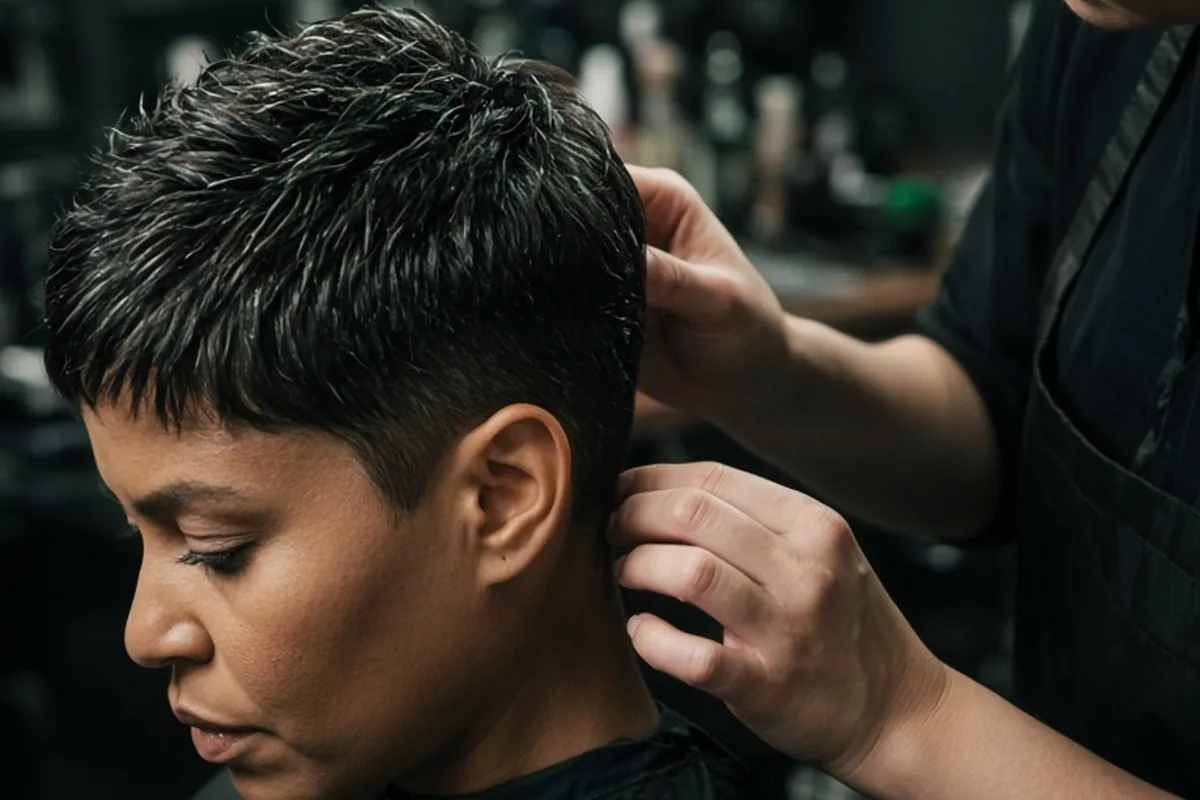
Finding a short hair barber for women with low porosity hair requires choosing a professional who understands compact cuticle layers alongside precision clipper and shear techniques. Low porosity hair resists moisture absorption and shows product buildup quickly, meaning your barber must know how to properly prep hair with warm steam, avoid heavy waxes during styling, and execute fades, tapers, or textured crops that move naturally without stiff chemical fixatives.
Transitioning to a short haircut or refining an existing crop is a major style shift, particularly when navigating traditional barbershop environments that may not routinely address the specific moisture dynamics of low porosity hair.
How Low Porosity Hair Affects Short Barber Cuts and Fades
Low porosity hair possesses a tightly bound cuticle layer that lies flat, creating a natural barrier that resists water entry while retaining internal moisture once fully hydrated. When cut short into clipper fades, tapers, buzzes, or textured pixies, this structural characteristic directly influences how the hair behaves under clippers and shears. Because moisture penetration is slow, dry or improperly prepped strands can be rigid, leading to uneven clipper passes, snagging, or irregular graduation along the scalp contour.
Short styles expose the scalp and highlight the natural growth direction of every follicle. On low porosity hair, product buildup from heavy, oil-laden pomades or petroleum-based greases sits visibly on the surface of the hair shaft rather than absorbing. This creates a dull, chalky film and can cause short hair to clump awkwardly instead of laying in smooth, clean gradients. A barber working with this hair profile must understand that moisture delivery requires warmth and lightweight humectants rather than thick, occlusive coatings that weigh down short texture.
Evaluating a Barber's Experience with Women's Precision Cutting
Finding a barber who creates a welcoming, technically competent space for women involves evaluating both their portfolio and their baseline understanding of head anatomy. Traditional barbering often focuses on squared-off lines and rigid block tapers designed for conventional masculine silhouettes. While many women prefer sharp, masculine styling, others look for softer edge work, rounded necklines, or customized sideburn transitions that complement their facial structure and hairline patterns.
When reviewing a barber's portfolio on social media or booking platforms, look for visible variety in hair textures and gender presentation. Check whether their short cuts maintain clean blending without relying on dark enhancement sprays to mask poor transitions. Inquire directly whether they provide thorough consultations before the cape goes on, as a skilled practitioner will take time to analyze your whorl patterns, cowlicks, scalp condition, and porosity level before picking up a clipper.
In-Chair Moisture Prep: Why Steam and Warm Water Matter
Traditional barbering often relies on a quick mist from a cold water spray bottle before sectioning and cutting with shears. For low porosity hair, cold water simply beads up on the surface and rolls off, leaving the inner cortex dry, brittle, and vulnerable to split ends from shear friction. A barber experienced with low porosity textures will use warm water, warm damp towels, or a professional facial steamer at the wash bowl to gently lift the cuticles before cutting or washing.
Proper hydration prep allows shears to slice cleanly through the hair fiber without bending or crushing the shaft. If your cut includes razor work along the nape or hairline, heat-assisted softening is essential to prevent razor burn, ingrown hairs, and folliculitis on short hair. A skilled barber will also choose lightweight, water-based cutting lotions or leave-in mists formulated with ingredients like aloe vera or vegetable glycerin instead of silicone-heavy detanglers that block subsequent moisture.
Top Short Barber Styles for Low Porosity Textures
A low-taper fade paired with a textured crop is one of the most functional cuts for low porosity hair. Keeping the perimeter clean and short reduces daily styling effort, while leaving 1 to 2 inches of length on top allows the natural curl or wave pattern to show without requiring heavy styling products to hold shape. The barber can use point-cutting or slithering techniques to remove internal weight, which prevents low porosity strands from bunching densely together.
For those seeking minimal daily maintenance, a uniform buzz cut or a high-and-tight fade offers a striking aesthetic that brings scalp health to the forefront. Because low porosity hair can trap dry skin beneath short stubble if wash routines are inadequate, keeping the length ultra-short allows direct access to the scalp for gentle exfoliating washes and light hydration. Alternatively, an asymmetrical pixie with an undercut blends classic salon softness with the razor-sharp precision of a barbershop neck taper.
Consultation Checklist: Specific Questions to Ask Your Barber
Clear communication during the initial consultation ensures that you and your barber share the same vision for the cut and the maintenance it requires. Begin by explaining your hair porosity and how your hair typically reacts to water and styling products. This signals to the professional that you understand your hair needs and want a technical cut tailored to your specific texture.
Ask practical questions to evaluate their service process before they begin cutting:
Be clear about your preference for perimeter finishing, such as whether you want a natural tapered neckline, a soft rounded finish, or a sharp squared block. If you have fine strands with low porosity, mention that heavy pressure during clippering or excessive thinning shears can cause frizz along the transition lines.
- Do you include a warm wash and scalp cleanse before cutting, or do you prefer to cut this texture dry?
- What styling products do you use for finishing, and do you have water-based or silicone-free options available?
- How do you approach softening the hairline around the ears and nape to suit my personal style preference?
- How often will this specific fade or taper require in-shop maintenance to keep its shape?
At-Home Maintenance: Hydration and Styling Without Heavy Buildup
Maintaining a fresh short cut on low porosity hair requires a streamlined at-home routine centered on lightweight hydration and regular clarifying. Because product accumulates rapidly on flat cuticles, wash your short hair once or twice weekly with a gentle, sulfate-free clarifying shampoo to remove residue, sebum, and environmental debris. Follow with a lightweight, water-based conditioner, using the warmth of your shower steam to help the conditioning agents penetrate the hair shaft.
For daily styling, skip heavy castor oil, raw shea butter, and petroleum pomades, which coat short hair in an unyielding greasy layer that attracts dust and flattens texture. Instead, choose water-based setting foams, flaxseed gels, or aloe-based curl mists. Apply these products to damp hair right after showering, allowing the trapped water to absorb alongside the humectants. At night, protect your taper and edges by sleeping on a satin pillowcase or wearing a breathable silk or satin bonnet to prevent friction, dry scalp flaking, and edge breakage.
Illustrative Scenarios
Resolving Post-Cut Flaking and Buildup on a Tapered Cut
Kendra, a graphic designer with low porosity natural hair, visited a neighborhood barbershop for a high skin taper fade. The barber styled her finished cut with a thick styling wax to hold her curls in place. Within two days, Kendra noticed heavy white flakes along her fade and felt severe scalp dryness, initially assuming the clippers had irritated her skin. During a follow-up visit, a barber trained in textured hair explained that the heavy wax could not penetrate her low porosity cuticle layer and had dried into a chalky film over her scalp pores. The barber clarified Kendra's hair, applied a warm towel steam wrap, and switched her to a lightweight flaxseed styling foam.
Key point: Low porosity short hair requires water-soluble, lightweight styling agents and steam-assisted hydration rather than heavy occlusive waxes that sit on the surface.
Frequently asked questions
How often should women with short, low porosity hair visit the barber?
Most short cuts, including fades, tapers, and precision pixies, maintain their sharpest definition with appointments every 2 to 4 weeks. If you wear a longer textured crop, you can often stretch visits to 5 or 6 weeks before the shape begins to lose structure.
Can low porosity hair handle straight-edge razor line-ups?
Yes, but the skin and hair must be thoroughly prepped with heat, steam, and a lubricating shave gel beforehand. Dry or cold shaving on low porosity hair increases the risk of follicle tugging, razor bumps, and localized irritation.
What is the best way to test if styling products are too heavy for short low porosity hair?
Rub a dime-sized amount of product between wet hands; if it resists mixing with water and leaves a tacky, greasy barrier on your palms, it will likely create visible buildup and weigh down a short cut.
Your next step
Schedule a preliminary consultation with a local barber to discuss their steam prep methods, inspect their portfolio for textured cuts, and verify their range of water-based styling products before your first cut.