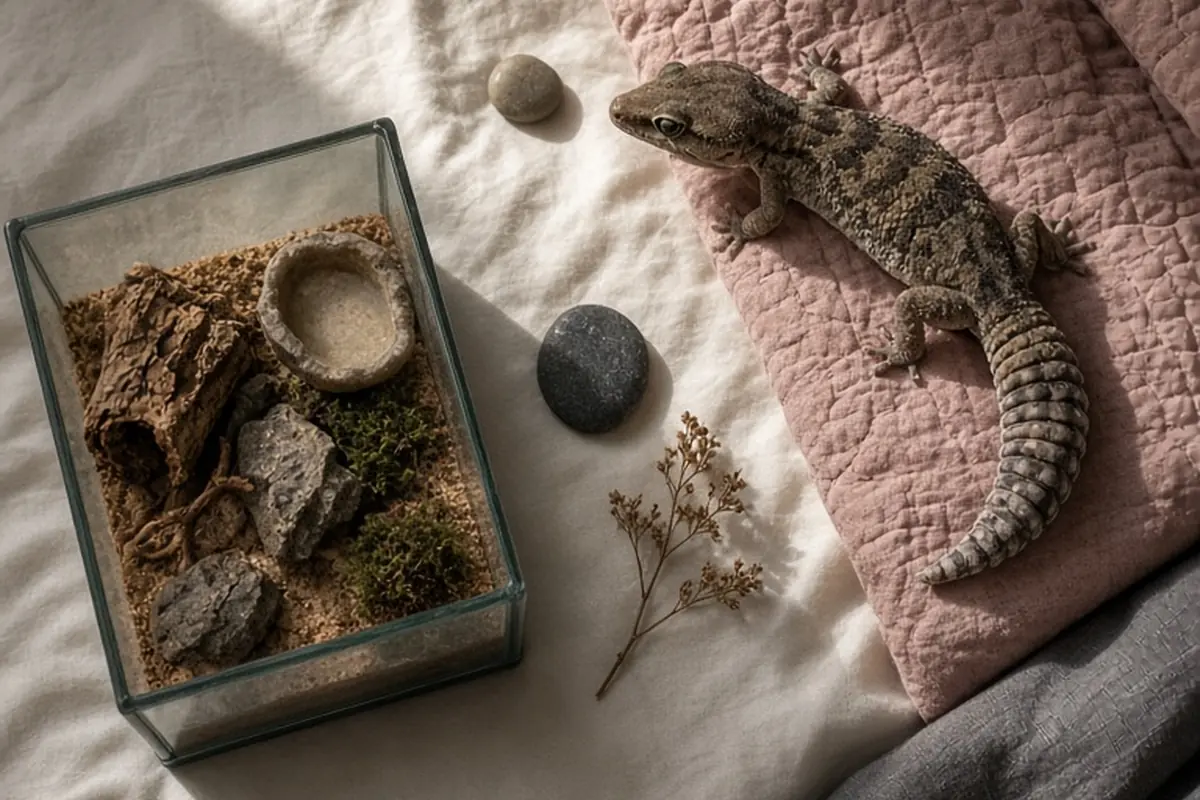
For most solo pet keepers, a male African fat-tailed gecko is the simpler choice because males eliminate the risk of egg-binding and reproductive calcium depletion. However, both sexes have equally docile, gentle temperaments when handled consistently. If you want a slightly larger lizard and zero reproductive health complications, choose a male. If you plan to keep a pet without worrying about hemipenal issues, a female is an equally rewarding companion.
African fat-tailed geckos have earned a devoted following among reptile enthusiasts for their velvety skin, calm movements, and tolerant dispositions. When preparing a terrarium for a new companion, deciding between a male or female often feels like a difficult crossroad, yet their day-to-day husbandry requirements remain largely identical. Understanding how sex influences adult dimensions, seasonal health risks, and physical care helps you select the right pet for your lifestyle.
Adult Size, Body Proportions, and Handling Feel
While male and female African fat-tailed geckos share the same general teardrop tail shape and nocturnal gaze, adult males naturally develop a heavier, broader build. A mature male typically weighs between 60 and 85 grams and reaches an overall length of 8 to 10 inches, displaying wider jowls and a distinctly triangular skull. Females usually top out between 45 and 65 grams with a slightly more slender profile, measuring between 7 and 9 inches from snout to tail tip.
These structural variations subtly change how the animal rests in your hand. A broad-bodied male offers a sturdy, weighty presence that beginner keepers often find easier to balance during gentle handling sessions. A female feels slightly lighter and more nimble, which some keepers prefer when navigating hands-on routine habitat cleanings. However, because both sexes grow large enough to require a standard terrarium footprint of at least 30 by 12 inches, you should not choose a female expecting to save substantial enclosure space.
Female Reproductive Health and Ovulation Realities
The most critical distinction when deciding between the sexes lies in female reproductive biology. Female fat-tailed geckos can cycle, ovulate, and produce clutches of infertile eggs during the spring and summer even if they have spent their entire lives completely isolated from a male. This biological process demands significant reserves of energy, protein, and calcium to form yolks and eggshells, which depletes bodily stores if dietary supplementation is not adjusted.
When a female prepares to lay infertile eggs, keepers must provide a dedicated nesting box filled with damp vermiculite or coconut fiber to encourage smooth deposition. If a female cannot find an appropriate laying site, or if she experiences a nutritional deficit or environmental stress, she risks developing dystocia, commonly known as egg-binding. Treating egg-binding often requires prompt intervention from a qualified reptile veterinarian, potentially involving hormone therapy or invasive spay surgery. Keepers choosing a female must be comfortable monitoring for signs of ovulation, increasing calcium dusting on feeder insects, and recognizing when a vet visit is necessary.
Male Anatomy and Hemipenal Hygiene Considerations
While males never face the reproductive strain of developing eggs, their anatomy comes with its own unique set of maintenance checks. Adult males possess paired reproductive organs called hemipenes, housed within noticeable bilateral swellings directly behind the cloacal vent at the base of the tail. In front of the vent, males also have a distinctive V-shaped row of pre-anal pores that exude waxy marking secretions as they reach sexual maturity.
In dry environments or habitats with poor hygiene, these natural secretions and shed fragments can consolidate inside the cloacal pockets to form hardened hemipenal plugs. If left unaddressed, a plug can cause localized swelling, bacterial infection, or painful hemipenal prolapse where the organ fails to retract. Fortunately, keeping ambient habitat humidity around 50 to 60 percent alongside an ever-present moist hide practically eliminates this risk. An owner choosing a male takes on the modest duty of visually checking the gecko's vent area during monthly health checks rather than managing egg laying cycles.
Temperament, Handling Tolerance, and Seasonal Activity
A persistent myth among new reptile keepers is that male geckos behave aggressively toward their human handlers while females are naturally sweet and passive. In African fat-tailed geckos, biological sex has virtually no bearing on friendliness or human interaction. Both males and females rank among the most placid, patient, and easy-to-handle lizards in the pet trade, preferring slow walks across open palms rather than skittish flight.
Behavioral shifts tend to be seasonal rather than confrontational. During the peak breeding season from late winter through early summer, an adult male might spend more nighttime hours pacing the perimeter of his enclosure, investigating decor, and scent-marking his environment in search of a mate. During this same window, an ovulating female might temporarily stop eating for a week or two while carrying eggs, spending hours excavating the substrate in her moist hide. Neither behavior translates to biting or cage defensiveness when you reach in to handle them.
Solitary Living and the Myth of Cohabitation
Some prospective owners lean toward getting a female because they hope to house two lizards together in a single habitat to save space or provide social enrichment. In captivity, African fat-tailed geckos must always be housed completely alone, regardless of their sex. Housing two males together inevitably leads to violent territorial battles, resulting in missing toes, severed tails, and fatal bite wounds.
Cohabiting females is equally problematic, even if the warning signs appear more subtle. When two females share an enclosure, the dominant individual routinely monopolizes the warmest basking hide and the most humid retreat, forcing the submissive gecko into cooler, drier areas where digestion and shedding fail. Over months, the suppressed gecko exhibits chronic stress, appetite loss, and stunted growth. Choosing a female should never be viewed as a gateway to keeping a communal display, as single housing is the only reliable way to safeguard their long-term health.
Accurate Sexing and Breeder Availability Factors
African fat-tailed gecko sex is largely influenced by temperature-dependent sex determination during egg incubation. Breeders who incubate eggs at lower temperatures around 81 to 83 degrees Fahrenheit produce primarily females, while higher temperatures around 88 to 90 degrees yield predominantly males. Because female incubation runs slightly cooler and longer, breeders often plan clutches according to market demand, though both sexes remain widely available in common morphs.
Accurately sexing a young fat-tailed gecko requires patience. Before an animal reaches 20 to 25 grams—usually between five and eight months of age—their physical markers look almost identical. If you purchase an unsexed baby at a reptile show, you must accept the 50-50 likelihood of either sex until the pre-anal pores and hemipenal bulges become unmistakable. If you are determined to have a specific sex to avoid egg-laying or hemipenal maintenance, insist on purchasing an established sub-adult whose vent has been verified by an experienced breeder.
A Clear Framework for Your Final Decision
Selecting between a male and female African fat-tailed gecko ultimately comes down to which category of health management you feel most equipped to oversee. A male gecko is generally the safest choice for first-time keepers who want a predictable routine without the looming worry of reproductive complications like retained eggs, calcium crashes, or emergency spays. If you maintain steady enclosure humidity and clean surfaces, a male will provide a calm, hardy companionship for fifteen to twenty years.
A female gecko is an ideal choice if you prefer a slightly smaller adult lizard and have ready access to an exotic veterinarian who understands reptile reproductive medicine. As long as you are willing to track her seasonal weight, provide a proper lay box every spring, and maintain diligent calcium supplementation, a female is just as gentle and engaging as any male. Match your final decision to your confidence in managing these specific physical needs rather than expecting differences in personality.
Frequently asked questions
Can a female African fat tail lay eggs without ever mating?
Yes, sexually mature female fat tails frequently cycle and produce infertile eggs on their own during the breeding season. These infertile eggs, sometimes called slugs, must be laid in a moist nesting box to prevent the gecko from becoming egg-bound.
Do male African fat-tailed geckos smell worse than females?
No, male fat-tailed geckos do not produce offensive body odors or noticeable musk. Their pre-anal pores secrete a mild waxy pheromone used to mark rocks and wood, but this is completely odorless to human keepers.
At what age can you tell if an African fat tail is male or female?
Most keepers can reliably determine sex once the gecko reaches around five to eight months of age or weighs at least 20 to 25 grams. At this stage, males develop a distinct row of open pre-anal pores and visible hemipenal bulges at the base of the tail.
Is one sex more expensive to purchase than the other?
For normal or standard color phases, males and females are priced similarly. In rare or newly developed genetic morphs, confirmed females occasionally command a higher price because breeders seek them for their breeding projects.
Your next step
Locate an experienced exotic veterinarian near you, decide whether you prefer managing male humidity needs or female nesting boxes, and contact a reputable breeder to reserve a confirmed sub-adult gecko of your chosen sex.