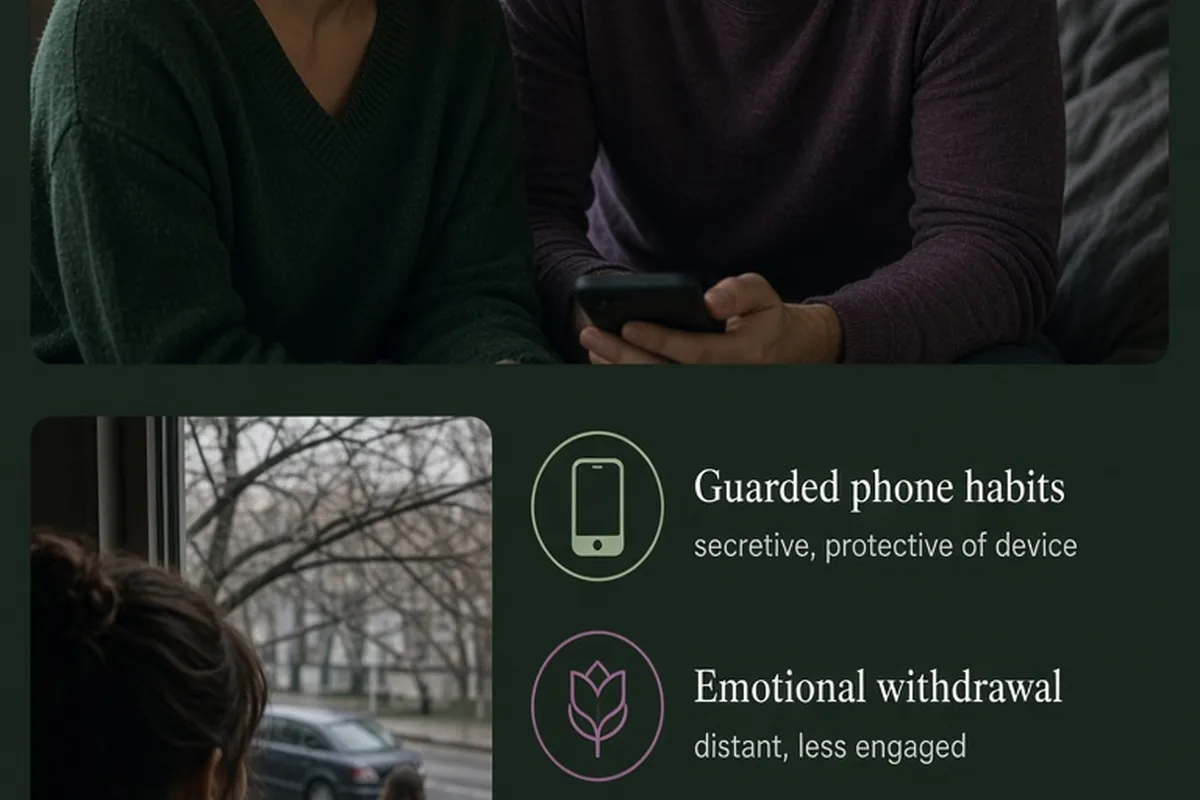
Signs of a cheating girlfriend usually appear as sustained patterns rather than isolated mistakes. Common indicators include guarded phone habits, sudden emotional withdrawal, uncharacteristic routine changes, and unprompted defensiveness when asked ordinary questions. Rather than snooping or making hasty accusations, the most constructive response is noticing persistent clusters of these behaviors, evaluating the overall health of the connection, and having a direct, calm conversation centered on mutual transparency.
Suspecting that your partner might be unfaithful creates a distracting, painful fog of doubt. When your intuition flares up, it is tempting to scrutinize every delayed text or tired sigh, looking for proof. Distinguishing between normal relationship dips and genuine disloyalty requires stepping back from panic, looking at measurable behavioral patterns, and keeping your self-worth intact.
Heightened Digital Secrecy and Guarded Device Habits
A sudden shift in how someone handles their personal devices is frequently the earliest visible sign of compartmentalized behavior. When someone starts actively hiding communications, their physical posture around technology changes. You may notice her consistently keeping her phone face-down on flat surfaces, taking calls out of earshot, or rapidly locking the screen whenever you enter the room. In long-term relationships where sharing screens or casual visibility was previously effortless, newly changed passcodes and cleared messaging logs often indicate a boundary erected to conceal, rather than just protect private space.
The context surrounding these actions matters significantly. A partner handling a sensitive project at work or organizing a surprise celebration might briefly tilt a screen away. However, an innocent person typically offers a brief, relaxed explanation if questioned, such as mentioning an urgent client email. An unfaithful partner, by contrast, often exhibits hyper-vigilance, reacting with startled irritation or jumping to shield the display before you have even glanced in their direction. The real warning sign is not having a private password; it is the tension, secrecy, and protective anxiety that suddenly surrounds everyday device use.
Emotional Withdrawal and Less Investment in Daily Life
Infidelity rarely begins in physical spaces; it almost always begins with emotional reallocation. When a partner channels their emotional energy, vulnerability, and humor toward someone outside the partnership, their presence at home tends to turn hollow. You might find that she stops recounting small daily frustrations, no longer asks how your day went, or responds to your achievements with mild indifference. The mutual banter and curiosity that once grounded your connection gradually give way to flat, transactional updates about practical errands.
This emotional flatline is distinct from standard life stress, though distinguishing the two takes careful observation. A girlfriend experiencing professional burnout or family grief usually appears tired across every domain of her life, yet she still welcomes supportive presence or explains her exhaustion. If she appears distant and unengaged with you, but becomes animated, enthusiastic, and energized the moment she steps away to text or attend social outings without you, that contrast points toward a selective withdrawal from your relationship rather than a general life slump.
Unexplained Schedule Shifts and Inconsistent Accounts
Time is a tangible resource that unfaithful behavior invariably consumes. When someone is maintaining a secret relationship, their regular calendar begins to stretch in unusual directions. This frequently shows up as unexpected late hours at an office that never previously demanded overtime, vague weekend commitments with acquaintances she rarely spoke of before, or recurring windows of several hours where she is entirely unreachable without a clear reason. Over time, the explanations for these disruptions tend to sound practiced or oddly convoluted.
Paying attention to conversational consistency reveals a lot about these time gaps. When everyday plans change naturally, details flow easily because the events actually occurred. Deceptive scheduling, however, usually relies on either excessive over-explaining to sound credible or aggressive vagueness to avoid contradictory statements later. For instance, if asking how a friend's dinner went is met with a clipped summary and an abrupt topic change, or if simple timeline details contradict what she mentioned two days earlier, the discrepancy suggests that the real use of her time is being withheld.
Drastic Fluctuations in Physical and Romantic Intimacy
Changes in romantic and sexual intimacy are often misunderstood because people assume cheating always leads to an immediate drop in affection. A steep decline in desire is certainly common; she may deflect physical touch, seem disconnected during sex, or eliminate non-sexual affection like spontaneous hand-holding, hugs, and warm greetings. This pulling away happens because emotional or physical fulfillment is being obtained elsewhere, or because maintaining physical closeness with a primary partner produces internal discomfort.
Conversely, some people experience a temporary, surprising surge in intimacy when stepping outside their relationship. This counterintuitive behavior can stem from heightened personal excitement or an underlying sense of guilt that prompts overcompensation. She might initiate sex much more frequently, introduce unfamiliar routines out of nowhere, or display intense, performative affection that feels disconnected from your actual emotional connection. The key factor is not just whether touch has increased or decreased, but whether it feels grounded in genuine mutual presence rather than guilt or detachment.
Disproportionate Defensiveness and Unprovoked Accusations
A partner engaged in unfaithful behavior often struggles with internal dissonance, which frequently manifests as reactive hostility. When guilt and fear of discovery accumulate, routine inquiries feel like interrogations. A harmless question like asking who was calling so late or what time she got back can ignite an outsized emotional reaction. Instead of answering plainly, she might accuse you of controlling her, question your confidence, or aggressively label you as paranoid and untrustworthy.
In many instances, this dynamic escalates into psychological projection, where the straying partner pre-emptively accuses you of disloyalty. She may scan your phone habits, voice unwarranted jealousy over your coworkers, or pick arbitrary arguments right before she leaves the house. Manufacturing a conflict creates emotional distance, which conveniently serves two psychological purposes: it justifies her withdrawal in her own mind, and it provides an excuse to stay away from home for hours without answering calls.
Addressing Your Suspicions Without Snooping or Losing Self-Respect
When trust starts breaking down, the temptation to snoop through personal devices, track locations, or interrogate mutual friends can feel overwhelming. Giving in to those impulses, however, comes at a heavy cost to your self-respect and mental clarity. Digging through private messages rarely brings relief; even if you find nothing, the anxious compulsion to check again persists, and if you do find something, the focus often gets diverted into a fight about your invasion of privacy rather than the core breach of trust.
A far more grounded path is addressing the visible shifts in the relationship directly and decisively. Choose a calm, neutral setting where neither of you is rushing, and articulate what you have personally witnessed using clear 'I' statements. Outline the pattern of distance, unexplained schedule disruptions, and lack of transparency without shouting or demanding a confession. Your goal in this conversation is not to act as a prosecutor building a courtroom case, but to state your standards for honesty, gauge her willingness to engage transparently, and decide whether the relationship still offers the respect and safety you require.
Illustrative Scenarios
Addressing Device Anxiety Directly
Liam noticed that his girlfriend of eighteen months, Sarah, had recently started turning her phone face-down and leaving the room whenever notifications buzzed late in the evening. Her answers about who was texting grew clipped, and Liam found himself agonizing over her screen every time she walked into the kitchen. Rather than attempting to guess her passcode in the middle of the night, Liam asked to talk during a quiet weekend morning. He calmly stated that her sudden privacy around her phone and her emotional absence were making him feel shut out of her life. While Sarah initially called him insecure, Liam held his ground without anger, explaining that mutual transparency was essential for him to remain in the relationship. His steady boundary led to an honest discussion about her inappropriate late-night conversations with an ex-coworker.
Key point: Addressing visible behavioral patterns directly preserves your dignity and forces real issues into the open far faster than covert investigation.
Evaluating Sudden Schedule Changes and Distance
Marcus experienced a confusing shift when his partner, Elena, began working unexpected weekend shifts and abruptly stopped inviting him to meet her colleagues. When Marcus asked about her plans, Elena gave vague replies and accused him of being overbearing. Frustrated, Marcus initially considered calling her office to verify her schedule, but he recognized that playing detective would only compromise his own integrity. Instead, he scheduled an uninterrupted conversation where he detailed the timeline inconsistencies and the growing distance between them. He made it clear that while he trusted her independence, he could not stay in a partnership where basic transparency and mutual consideration were treated as burdens.
Key point: Focus on the tangible standards you require from a partner rather than trying to micromanage their movements.
Frequently asked questions
What is the most reliable indicator that a partner is being unfaithful?
No single behavior definitively proves infidelity on its own. The most telling warning sign is a persistent cluster of sudden changes, such as intense device secrecy, emotional coldness, and defensive hostility toward basic questions, that cannot be explained by external life events.
Is it ever acceptable to look through her phone if I have strong suspicions?
While snooping is an understandable impulse when you feel anxious, it generally harms your self-respect and deflects accountability. Even if you confirm your fears, doing so through surveillance shifts the confrontation onto your boundary violation rather than the underlying trust breakdown.
Could sudden changes in appearance or new hobbies indicate cheating?
A renewed interest in fitness, novel wardrobe choices, or distinct musical tastes can stem from healthy personal growth. However, if these changes coincide with emotional detachment from you, secretiveness about who inspired the new interest, and secretive schedules, they may point to external romantic influence.
What should I do if she denies everything but the connection feels completely broken?
You do not need a confession or concrete physical proof to make a healthy decision about your relationship. If transparency, emotional safety, and mutual respect are gone, and she refuses to engage in rebuilding them, you have every right to end the partnership based on the lack of trust alone.
Your next step
Your immediate next step is to schedule an honest, uninterrupted conversation where you describe the specific behavioral shifts you have observed, hold your boundaries without escalating into anger, and evaluate whether your partner is truly willing to practice the transparency needed for trust to survive.