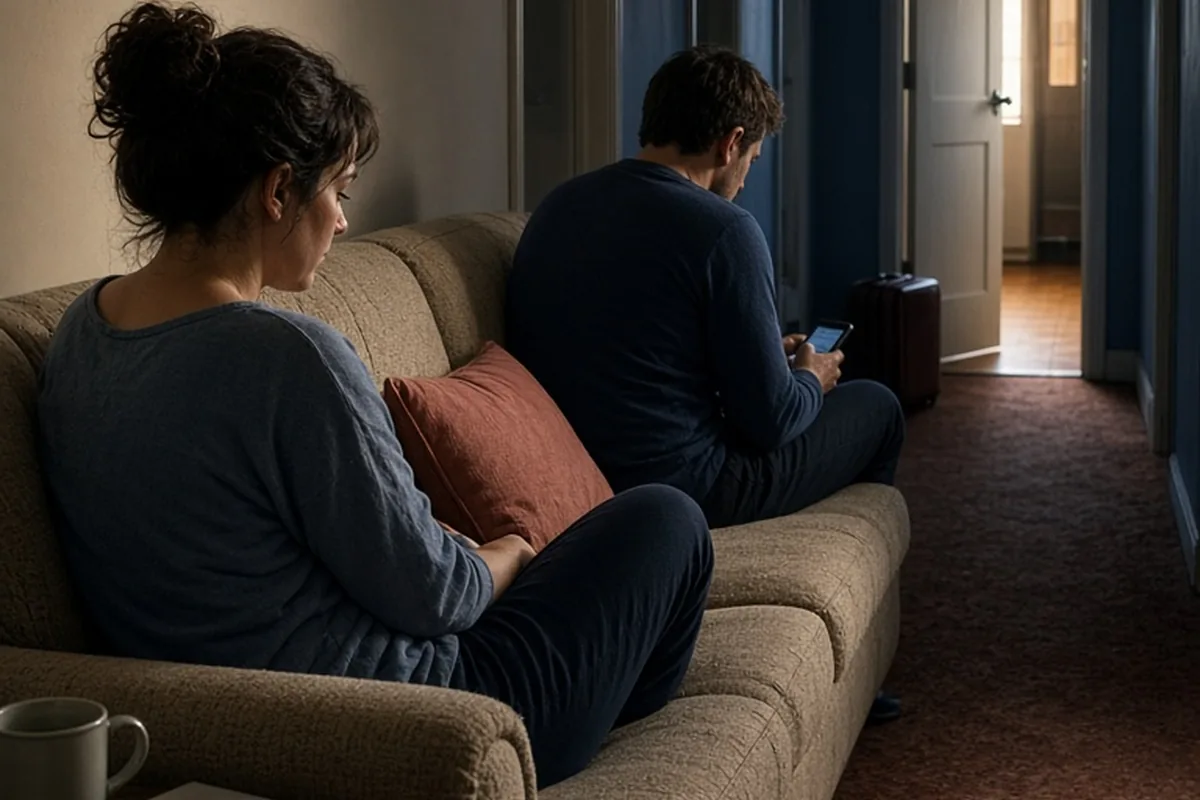
You are alone in a relationship when emotional intimacy, daily effort, and vulnerability become strictly one-sided. Common signs include carrying the conversational load, initiating all shared plans, feeling dismissed during distress, and realizing your partner shares physical space without investing attention. Over time, you stop bringing up personal concerns because expecting support feels more exhausting than dealing with problems by yourself.
Sharing a home, a lease, or a social circle does not protect someone from profound isolation. When emotional withdrawal sets in, two people can sit on the same sofa and feel continents apart. Recognizing this quiet detachment is not an immediate verdict that a partnership must end, but it is an honest signal that your current dynamic cannot sustain mutual well-being.
Carrying the Emotional and Practical Initiative Alone
In a healthy partnership, curiosity and initiative circulate naturally between both adults. You might organize dinner on Tuesday, while your partner proposes an outing for the weekend or checks in on a stressful project you mentioned. When you are functionally alone, this rhythm collapses into a solitary effort. You become the sole manager of shared time, the only person asking thoughtful questions after work, and the exclusive driver of intimacy. If you stop initiating contact or organizing daily routines, the partnership simply stalls into passive silence.
Consider an evening where you decide not to ask the standard questions about your partner's day or suggest plans for the upcoming weekend. Instead of stepping into the quiet space with curiosity, your partner lets days pass without asking a single question about your life. This pattern reflects an imbalance in emotional investment. While everyone experiences periods of exhaustion or mental overload, persistent passivity shifts the burden of maintaining the connection entirely onto your shoulders. Over time, this leads to quiet resentment and self-doubt.
Censoring Yourself to Avoid Emotional Indifference
One of the clearest internal indicators of loneliness within a relationship is the decision to keep personal news to yourself. When you receive exciting news at work or navigate a painful family disagreement, your instinct in a secure relationship is to turn toward your partner. When emotional isolation takes hold, however, you learn through repeated experience that sharing vulnerability yields flat reactions, dismissiveness, or sudden changes of subject. You begin filtering what you say to protect yourself from the sting of unreciprocated care.
For example, you might experience an exhausting medical appointment or achieve a major professional milestone, yet find yourself dialing a friend or sibling in the parking lot rather than waiting to speak with your partner. You rationalize that your partner is busy or distracted, but the deeper reality is that you do not expect empathy. Protecting yourself by withholding your inner world preserves temporary peace, but it also solidifies the very distance you fear, transforming your primary relationship into a surface-level arrangement.
Physical Presence Paired with Chronic Emotional Absence
Loneliness in a shared home rarely looks like an empty room; it usually looks like two people occupying the same square footage while living parallel, disconnected lives. A partner may sit beside you on the couch for hours, engrossed in their smartphone, gaming, or television, offering only monosyllabic responses to your remarks. While parallel play and comfortable silence are healthy features of a mature bond, chronic disengagement transforms shared time into an exercise in alienation.
Imagine cooking a meal together where neither person makes eye contact, or spending an entire Sunday afternoon together without exchanging a meaningful observation. The physical proximity serves as a painful contrast to the lack of mental attunement. You are technically in company, which prevents you from seeking connection elsewhere, yet you are deprived of the reciprocal engagement that makes shared space comforting. Acknowledge this dynamic carefully, as confusing physical availability with emotional availability often keeps people trapped in unfulfilling loops for years.
The Appearance of Peace Through Conflict Avoidance
Many couples mistake quietness for harmony. When emotional loneliness reaches an advanced stage, open disagreements often decrease dramatically, not because mutual understanding has improved, but because one or both partners have ceased investing the energy required to work through problems. You stop raising concerns about divided chores, physical affection, or financial habits because you anticipate stonewalling, defensive deflections, or promises that yield no lasting behavioral shift.
A useful illustration is swallowing your frustration when your partner repeatedly forgets an agreement you made together. Rather than bringing it up, you complete the task yourself in quiet defeat. You tell yourself that keeping quiet avoids another pointless argument. However, avoiding necessary friction when values or expectations clash merely trades temporary quiet for permanent emotional detachment. A complete absence of constructive disagreement often indicates that emotional surrender has replaced active partnership.
Affection and Touch Becoming Strictly Transactional
Physical touch and sexual intimacy often mirror the broader emotional health of a relationship. In an emotionally connected bond, casual touch flows throughout the day without pressure: a hand placed on a shoulder, an unhurried embrace before leaving for work, or brief eye contact that acknowledges your mutual bond. When disconnection settles in, everyday warmth dries up, leaving physical contact either nonexistent or confined to functional, routine habits.
In this dynamic, touch might occur only when one person wants sexual gratification, turning intimacy into a transaction rather than an extension of care. Alternatively, physical warmth may be reduced to a mechanical goodbye kiss that feels identical to checking a box on a chore list. Fluctuations in desire and stress are entirely normal across a relationship lifecycle. However, when non-sexual warmth and spontaneous tenderness vanish entirely, the loss signals that the emotional foundation requires deliberate attention.
Shifting from Passive Endurance to Direct Clarification
Addressing the ache of feeling alone in your partnership requires replacing quiet despair with grounded clarity. Frantic reactions, such as picking fights to generate emotional intensity or withdrawing into cold silence to test if your partner notices, generally fail. These reactive behaviors breed defensiveness or deepen the divide. Instead, a constructive next step involves calmly articulating the relational pattern you observe and inviting your partner into an honest assessment of where things stand.
A practical conversation avoids sweeping accusations like 'you never care about me' and focuses on specific dynamics: 'I notice we spend our evenings looking at separate screens, and I miss feeling connected to you. I want us to build real time together each week.' This framing accomplishes two things: it clarifies your standards without aggression, and it creates a clear diagnostic moment. Your partner's response—whether curious and collaborative or dismissive and uninterested—reveals whether you are working with an overwhelmed ally or navigating an unreciprocated commitment.
Illustrative Scenarios
Addressing the Digital Barrier
After coming home from work, David noticed his partner remained absorbed in her tablet throughout dinner, offering brief nods instead of conversation. He initially wanted to shut down and spend the evening in his study out of spite. Recognizing that silent retaliation would only increase his isolation, he chose a calmer moment after dinner to address the habit directly. He explained that he valued their time after work and felt distant when devices replaced conversation, asking if they could create an intentional screen-free window each evening.
Key point: Speaking up about a specific, observable habit in a neutral moment invites collaboration rather than triggering defensiveness.
Stepping Back from Invisible Management
Maya realized she had spent two years planning every vacation, social engagement, and household routine while her partner acted like a casual passenger. Exhausted by the unilateral pressure, she resisted the urge to orchestrate a passive-aggressive test. Instead, she laid out the reality clearly: she loved him, but carrying the relational planning alone left her feeling like a manager rather than an equal companion. She invited him to take full ownership of their upcoming holiday arrangements and stepped back completely to let him do so.
Key point: Clear ownership boundaries reveal whether a disengaged partner is ready to step up or content with one-sided effort.
Frequently asked questions
Can emotional loneliness in a relationship be repaired?
Repair is entirely possible, but only if both partners acknowledge the distance and commit to consistent behavioral changes. If one person dismisses the problem or refuses to adjust daily habits, solo effort cannot rebuild mutual intimacy.
How do I know if my partner is emotionally checked out or just stressed?
A stressed partner typically shows temporary withdrawal, acknowledges their low capacity, and re-engages once the acute pressure subsides. An emotionally detached partner exhibits long-term indifference, rarely asks about your world, and shows little concern when you express that you feel isolated.
Why does being lonely in a relationship feel worse than being single?
When you are single, your emotional solitude matches your reality, freeing you to seek companionship and focus inward without false expectations. Experiencing loneliness beside a partner generates cognitive dissonance, as you face constant rejection from the exact person committed to supporting you.
When is it appropriate to consider ending the relationship?
It is reasonable to consider parting ways when you have clearly communicated your needs multiple times, offered realistic avenues for reconnection, and received ongoing indifference or broken commitments in return. Staying indefinitely in a one-sided dynamic erodes your self-respect and emotional health.
Your next step
Choose one specific routine this week—such as a shared meal or a weekend walk—to directly invite your partner into uninterrupted conversation, and observe whether they meet you with genuine curiosity.