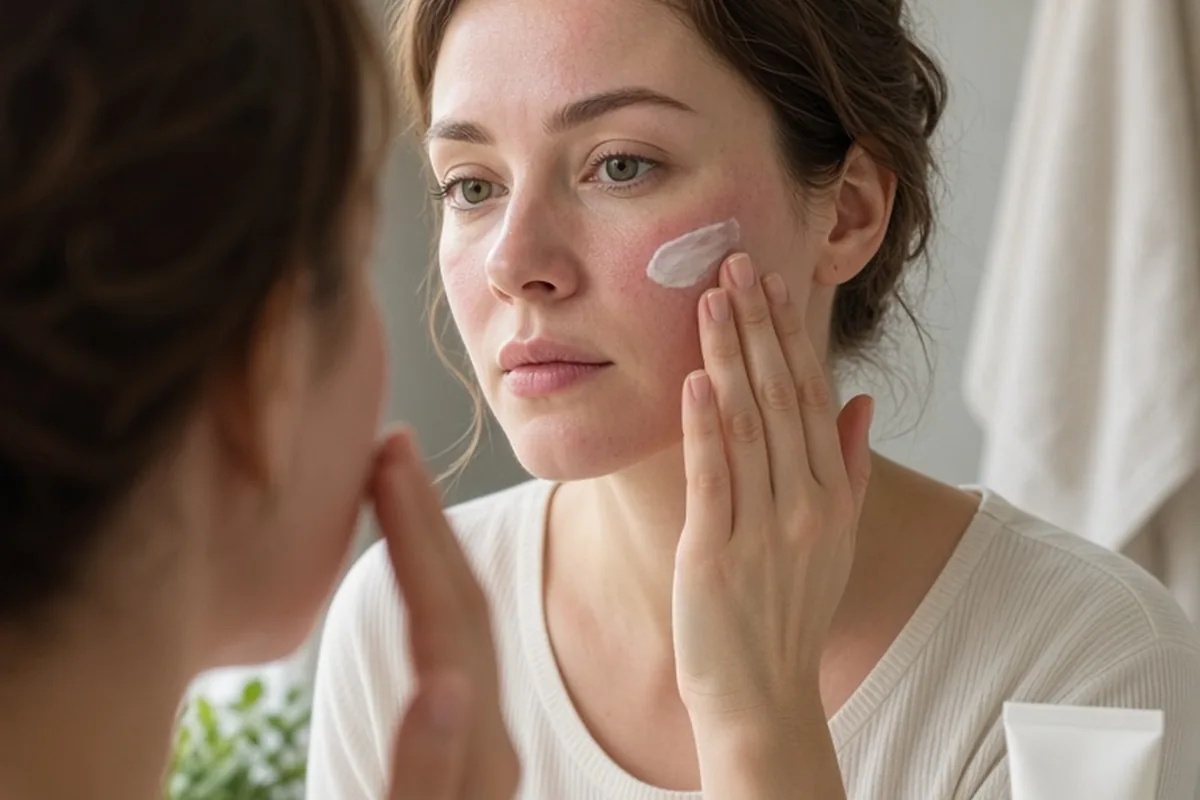
Skin irritation after starting a new skincare routine usually stems from introducing active ingredients too quickly, mixing incompatible formulas, or compromising the natural moisture barrier. Beginners experiencing redness, stinging, flaking, or tightness should immediately pause all active treatments, switch to a gentle non-foaming cleanser, apply a plain fragrance-free moisturizer with ceramides, and protect skin with sunscreen until sensitivity subsides completely.
Starting a personal care routine often feels exciting, but waking up to unexpected redness, burning sensations, or uneven dry patches can quickly become frustrating. When your complexion reacts poorly to freshly purchased bottles, distinguishing between a brief adjustment period and acute irritation is essential. Understanding the underlying triggers allows you to restore comfort, protect your skin barrier, and establish healthy habits without wasting products or causing lasting damage.
Distinguishing Purging, Irritation, and Contact Allergies
A common point of confusion for skincare beginners is telling the difference between a normal reaction, general irritation, and an allergic response. Skin purging happens specifically when ingredients that accelerate cell turnover, such as retinoids or exfoliating alpha- and beta-hydroxy acids, bring pre-existing microcomedones to the surface. Purging typically manifests as small whiteheads or standard pimples in areas where you regularly experience breakouts, and it usually resolves within four to six weeks without spreading to unaffected zones or causing painful inflammation.
In contrast, true skin irritation, often called irritant contact dermatitis, occurs when the stratum corneum is chemically or physically damaged. This causes widespread redness, tight pulling sensations, flaking, and a distinct burning or stinging feeling, especially when applying basic products like water or bland moisturizer. Allergic contact dermatitis is different still; it represents an immune response characterized by itchy red patches, small blisters, hives, or swelling around delicate tissue like the eyes and mouth. Recognizing these differences ensures you take the right corrective action rather than continuing an unsuitable product under the mistaken assumption that your skin is merely detoxifying.
- Purging: Occurs only with cell-turnover actives in habitual breakout zones, presenting as standard blemishes without burning.
- Irritation: Involves barrier compromise, manifesting as tight dryness, flaking, diffuse redness, and stinging from gentle products.
- Allergic Reaction: Involves immune activation, presenting as intense itchiness, hives, swelling, or rash-like clusters.
Common Beginner Routine Mistakes That Trigger Sensitivity
Most post-skincare irritation in beginners does not stem from defective formulas, but rather from how those formulas are introduced and combined. When starting out, many people purchase several potent treatments at once, such as high-strength vitamin C serums, salicylic acid toners, and exfoliating peels, applying them in the same daily routine. Layering multiple strong actives overwhelms the delicate lipid matrix that holds surface skin cells together, stripping away essential natural oils and accelerating transepidermal water loss.
Another widespread error is skipping tolerance-building protocols and proper patch testing. Highly concentrated ingredients like pure L-ascorbic acid, glycolic acid, or over-the-counter retinol demand gradual acclimatization over several weeks. When applied nightly on unprepared skin, or combined with vigorous physical scrubbing and hot water washing, the skin cannot regenerate its protective lipids fast enough. Additionally, applying acidic formulas directly to damp skin significantly increases ingredient absorption depth, turning a standard formulation into an unexpectedly harsh exposure that triggers reactive flushing.
Immediate First-Aid Steps to Calm Reactive Skin
When your skin shows obvious signs of irritation, your first priority must be de-escalation through a temporary skincare reset. Immediately discontinue all leave-on chemical exfoliants, retinol products, vitamin C serums, clay masks, and physical scrubs. You should also temporarily pause products containing added botanical fragrances, essential oils, denatured alcohol, or cooling agents like menthol, as compromised skin absorbs these potential sensitizers far more readily than healthy skin.
Streamline your regimen down to three fundamental steps: a non-stripping cleanser, a comforting barrier-support cream, and a broad-spectrum mineral or gentle chemical sunscreen during daylight hours. When cleansing, use lukewarm or cool water and apply the cleanser using only your clean fingertips, avoiding washcloths, cleansing brushes, or textured pads. Pat your face dry gently with a clean, soft cotton towel without dragging or rubbing the fabric across irritated areas.
Key Ingredients for Restoring the Moisture Barrier
Repairing an irritated skin barrier requires replenishing the physiological lipids and humectants that have been depleted. Look for moisturizers formulated with a physiological lipid blend containing ceramides, cholesterol, and free fatty acids. Ceramides act as the structural mortar between your skin cells, preventing moisture from escaping while blocking external irritants from penetrating deeper tissue layers. When paired with humectants like glycerin and hyaluronic acid, these creams draw hydration into the epidermis and lock it firmly in place.
Soothing and anti-inflammatory ingredients can also accelerate recovery and relieve burning sensations. Colloidal oatmeal, panthenol (provitamin B5), allantoin, and centella asiatica extract (cica) are widely recognized for their calming properties on stressed skin. For very dry or cracked patches, sealing the skin with a light layer of an occlusive balm containing petrolatum or squalane at night creates a protective microclimate that supports rapid cellular repair, though those prone to clogged pores should use occlusive ointments sparingly.
How to Safely Reintroduce Actives After Recovery
Before attempting to reintroduce any active treatment, wait until your skin has been completely symptom-free for at least two consecutive weeks. Signs of true recovery include zero stinging when applying plain moisturizer, an absence of flaking or rough texture, and consistent all-day comfort. Rushing back into active ingredients too quickly while the deeper barrier layers are still healing will quickly restart the cycle of irritation and set back your progress.
When you are ready to resume, reintroduce only one product at a time so you can isolate how your complexion responds. Begin by applying the product just once or twice per week on non-consecutive nights. If introducing a retinoid or strong acid, consider the buffering method: apply a light layer of moisturizer first, let it absorb, apply the active product, and follow with another layer of moisturizer. This technique slows the rate of ingredient penetration without eliminating its long-term benefits, dramatically reducing the risk of irritation.
When to Consult a Medical Professional
While mild irritation from over-exfoliation generally improves within a few days of simplified care, certain symptoms require professional medical assessment. If you experience severe swelling around the eyes or mouth, difficulty breathing, weeping or oozing blisters, severe burning pain, or a rash that rapidly spreads across your face and neck, seek immediate medical attention. These symptoms can indicate a severe allergic reaction or secondary bacterial infection requiring prescription intervention.
You should also schedule an appointment with a board-certified dermatologist if persistent redness, scaling, or pustules fail to improve after two to three weeks of a simplified barrier routine. Chronic irritation can occasionally trigger or unmask underlying dermatological conditions such as rosacea, perioral dermatitis, seborrheic dermatitis, or atopic eczema. A dermatologist can provide a precise diagnosis, perform patch testing to identify specific chemical allergens, and prescribe topical anti-inflammatory treatments that safely resolve the flare-up.
Illustrative Scenarios
Simplifying a Multi-Active Routine After Sudden Stinging
An individual new to skincare purchased a gentle cleanser, a 10% niacinamide serum, a 2% salicylic acid toner, and an over-the-counter retinol cream, incorporating every product into their nightly routine at once. Within five days, their face turned uncomfortably red, tight, and stung sharply even when splashing with cool water. Recognizing acute barrier irritation, they stopped using the toner, serum, and retinol entirely. They simplified their routine for three weeks to a creamy non-foaming cleanser, a fragrance-free ceramide cream, and mineral sunscreen. After the sensitivity and flaking fully resolved, they slowly reintroduced the salicylic acid toner once per week, maintaining comfortable skin without further irritation.
Key point: Introducing multiple potent skincare products simultaneously makes it impossible to identify sensitizing ingredients; scaling back to a minimal barrier-support routine allows the skin to heal fully before carefully titrating individual actives.
Frequently asked questions
How long does skin irritation after starting skincare take to calm down?
Mild irritation usually starts to subside within three to seven days after discontinuing active ingredients and switching to a basic barrier routine. However, fully restoring a compromised moisture barrier can take two to four weeks depending on the severity of the damage. Consistently avoiding exfoliants, hot water, and fragrances during this period is essential for a complete recovery.
Can I wear makeup while my skin is irritated from skincare products?
It is best to avoid complexion makeup like liquid foundation, concealer, and powder while your skin is visibly irritated or burning. Applying and removing makeup creates friction, and cosmetic pigments can penetrate micro-tears in a compromised barrier, worsening inflammation. If makeup is unavoidable, choose lightweight, fragrance-free mineral powders and remove them with a gentle, non-stripping cleansing oil.
Is a mild tingling sensation normal when applying skincare products?
A very brief, mild tingle lasting only a few seconds can occasionally occur with low-pH active ingredients like L-ascorbic acid or chemical exfoliants on healthy skin. However, any sensation that progresses into persistent burning, itching, or pain—or any stinging from basic moisturizers and cleansers—is a definitive sign of irritation and barrier damage. In those situations, rinse the product off and pause active use.
How should beginners patch test a new product to prevent irritation?
To patch test, apply a pea-sized amount of the new product to a discreet, clean area such as behind the ear, along the jawline, or on the inner forearm once daily for three to five days. Monitor the test site for delayed redness, itching, burning, or small bumps before applying the formula across your entire face. If any adverse reaction occurs on the test patch, do not use the product on your face.
Your next step
Take an inventory of your current skincare lineup today, temporarily put away all active treatments, and maintain a consistent three-step routine of a gentle cleanser, a fragrance-free ceramide moisturizer, and daily sunscreen until your skin feels completely calm and comfortable.