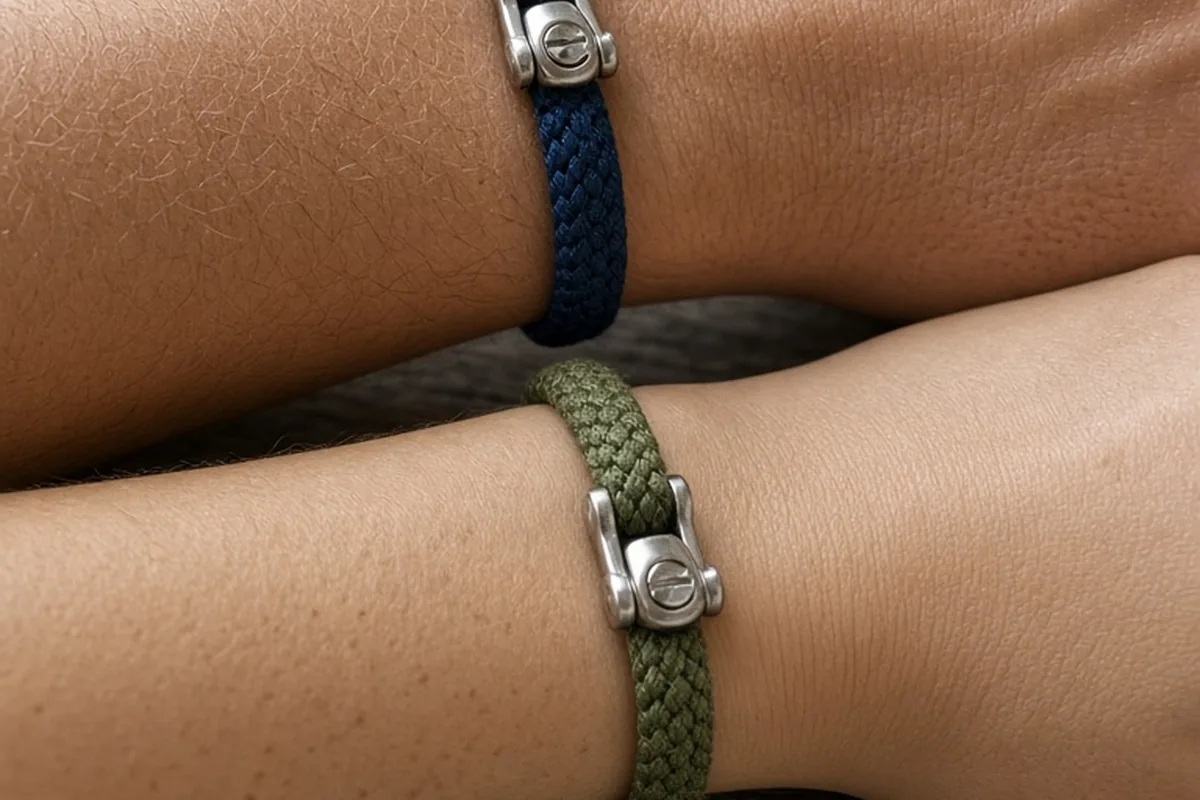
To find stylish couple bracelets both partners genuinely enjoy wearing, prioritize complementary designs over identical twins, select durable materials matched to your daily routines, and ensure comfortable sizing. Focus on cohesive elements like shared metals, inverted colorways, or subtle engravings rather than matching logos. This approach honors individual aesthetics while creating a meaningful, understated symbol of connection that seamlessly fits everyday life.
Selecting jewelry to share with a romantic partner often sounds simpler than it turns out to be in practice. While matching accessories carry heartfelt sentiment, individuals rarely share the exact same wardrobe habits, wrist sizes, or comfort levels with wearing jewelry throughout the workday.
Balancing Two Distinct Personal Aesthetics Without Forcing Exact Clones
The biggest obstacle couples encounter when picking shared jewelry is the assumption that the pieces must look completely identical. When one person prefers understated matte metals and tailored neutral clothing while the other favors vibrant streetwear, layered textures, or organic stones, forcing an identical match leaves at least one partner feeling self-conscious. A forced match often ends up tucked away in a drawer within a month because it clashes with one person's daily wardrobe.
A far more sustainable approach relies on thematic harmony rather than mirror imaging. Look for pairs that share a single grounding design element while allowing the secondary features to reflect individual preferences. For example, both bracelets might feature the exact same brushed gunmetal clasp, but one piece uses a slim woven marine cord while the other uses a thicker braided cuff. Similarly, you can choose complementary color palettes, such as pairing a warm cognac leather band with an espresso brown band, or matching obsidian beads with white howlite. This establishes a clear visual relationship between the items while ensuring each person feels comfortable wearing theirs every single day.
Comparing Durable Materials for Couple Bracelets: Metals, Leather, and Cord
Material selection directly determines whether your bracelets survive daily activities or deteriorate after a few weeks of handwashing and desk work. Stainless steel, particularly grades like 316L surgical steel, serves as one of the most reliable options for everyday utility. It resists tarnish, does not react to sweat, and avoids turning skin green, making it ideal for partners who want a low-maintenance accessory they do not have to remove before every shower or workout. Titanium offers similar hypoallergenic durability with a significantly lighter physical weight, which suits partners who dislike feeling heavy hardware resting against their wrists.
Natural materials bring distinct textures but come with specific functional limitations. Braided genuine leather offers an organic, classic look that patinas beautifully over time, yet it degrades quickly if exposed frequently to dish soap, pool chlorine, or heavy perspiration. If your everyday routines involve active outdoor hobbies, manual work, or frequent water exposure, military-grade nylon or waxed sailing cord offers a resilient alternative. High-density cord withstands continuous moisture without fraying, dries quickly against the skin, and retains its original color through months of consistent wear. Semi-precious mineral beads, such as matte onyx or tiger's eye, provide visual depth, though they require durable internal threading—such as coated steel wire or reinforced silicone—to prevent sudden snapping.
Sizing and Clasp Mechanisms That Ensure Daily Physical Comfort
Even the most attractive bracelet will be abandoned if it pinches arm hair, catches on knit sweaters, or slides awkwardly under a laptop keyboard. Getting the fit right requires measuring the actual circumference of both wrists with a soft measuring tape directly above the wrist bone, rather than guessing based on standard glove or shirt sizes. For a snug, tailored fit, add roughly a quarter-inch to a half-inch to the wrist measurement; for a relaxed fit that moves naturally along the lower forearm, add approximately three-quarters of an inch to a full inch.
Clasp construction determines both security and ease of use. Traditional lobster claw clasps provide high mechanical security, but fastening them one-handed each morning can be frustrating for someone unaccustomed to fine jewelry. Magnetic slide-lock clasps offer effortless attachment with sleek lines, though low-strength magnets risk popping loose when snagged against a coat sleeve. Adjustable sliding knot closures, commonly found on cord pieces, eliminate sizing uncertainty entirely and allow continuous micro-adjustments throughout the day as wrist volume naturally fluctuates with temperature changes and physical activity.
Subtle Symbolism Over Loud Sentiments: Meaningful Engravings and Accents
Many mass-market couple pieces rely on overt, bold imagery such as interlocking hearts, padlock motifs, or prominent script reading 'His' and 'Hers.' While these designs hold sentimental appeal for some, they can feel overly conspicuous or out of place in professional corporate offices, trade environments, or formal settings. Choosing subtle, private symbolism allows a couple to maintain an intimate shared meaning without broadcasting their relationship dynamics to casual observers.
Consider subtle details that carry personal significance known primarily to the two of you. Inside-band engravings keep messages completely private, allowing you to etch an anniversary date in clean Roman numerals, the geographic coordinates of where you first met, or a short phrase from a favorite memory directly against the skin. Exterior accents can also convey connection through abstract patterns, such as using subtle Morse code sequences woven with alternating bead shapes, or selecting dual stones where each partner wears a small inlaid bead of the other's birthstone. The result is an accessory that reads to the outside world as a sophisticated design piece while retaining quiet emotional significance for both partners.
Practical Care Habits to Prevent Wear, Tarnish, and Breakage
Establishing simple, realistic care routines ensures your pieces look polished and last across multiple years of wear. If you choose sterling silver components, keep in mind that silver naturally oxidizes when exposed to sulfur compounds in air, hot springs, and certain skin lotions. Wiping silver elements down with a soft microfiber cloth once a week prevents dark tarnish buildup without requiring abrasive chemical polishing solutions. Storing silver pieces in a dry, enclosed jewelry pouch when not worn significantly slows down environmental discoloration.
For leather and cord variants, moisture management is the single most important factor. If a leather bracelet gets soaked in heavy rain, allow it to air-dry completely at room temperature rather than blasting it with a hairdryer or resting it on a radiator, which causes genuine leather to crack and stiffen. Applying a tiny drop of natural leather conditioner every few months keeps vegetable-tanned hides supple and pliable. Cord bracelets benefit from occasional gentle rinsing under lukewarm tap water using mild hand soap to wash away accumulated skin oils, body lotions, and dust particles trapped within the weave.
How to Discuss Couple Jewelry When One Partner Is Hesitant
It is very common for one partner to love the romantic idea of matching jewelry while the other feels hesitant, especially if they have never worn bracelets or worry about drawing unwanted attention. Treating this hesitation as an aesthetic preference rather than a lack of relationship commitment keeps the conversation fun and pressure-free. A piece of jewelry is only a meaningful symbol if the person wearing it feels confident and unencumbered while doing so.
Begin the conversation by asking about physical comfort and daily boundaries rather than presenting a pre-purchased, rigid pair as a surprise obligation. Ask questions like: 'Would you prefer something flat that sits flush against your skin while typing, or does fabric cord feel more natural than metal?' If one partner works in healthcare, food service, or construction where wrist accessories create safety or hygiene issues, consider options designed to be worn primarily outside work hours, or choose a design that can securely double as an understated key fob or bag tag when wristwear is impractical.
Illustrative Scenarios
Resolving Aesthetic Mismatches: Elena and Marcus
Elena loved the idea of exchanging anniversary bracelets, but her personal style leaned toward delicate, minimalist silver jewelry, while Marcus exclusively wore rugged workwear and heavy dark-toned accessories. Initial searches produced shiny matching silver chains that Marcus felt awkward wearing, followed by chunky leather cuffs that felt overwhelming on Elena's petite wrist. Instead of forcing a compromise where both settled on something they merely tolerated, they selected a cohesive two-piece set from a workshop that used identical matte black titanium clasps attached to different band styles: a slim, featherweight braided nylon cord for Elena and a structured charcoal sailcloth band for Marcus. Both pieces felt natural within their existing wardrobes while sharing the exact same mechanical closure and secret underside engraving.
Key point: Focusing on shared hardware or accent colors rather than identical band silhouettes lets partners honor personal aesthetics while wearing genuinely connected pieces.
Adapting to Active Lifestyles: Jordan and Taylor
Jordan and Taylor bought a pair of matching semi-precious stone bead bracelets to celebrate moving into their first apartment together. Within three weeks, Taylor's elastic cord snapped after snagging on gym equipment, scattering beads across a locker room floor, while Jordan's metal accent tarnished from daily hand sanitizer use at work. Frustrated by the fragility of their original choice, they re-evaluated what their daily physical routines actually required. They replaced the beaded strands with low-profile, water-resistant marine cord bands secured by flush, screw-pin shackles made of marine-grade 316L stainless steel. The new bracelets sat completely flat against their wrists, held up to intense workouts and frequent handwashing, and never caught on athletic gear.
Key point: Choosing materials built for your most demanding daily physical environments prevents unexpected damage and extends the lifespan of everyday jewelry.
Frequently asked questions
Can couple bracelets be worn 24/7 without taking them off?
It depends strictly on the material and clasp type. High-grade stainless steel or titanium bracelets on marine-grade nylon cord can generally be worn through showering, exercise, and sleep without damage. In contrast, genuine leather, untreated elastic cords, and soft precious metals should be removed before water exposure or intense physical activity to prevent rot, snapping, and rapid tarnishing.
What should we do if our wrist measurements are significantly different?
Avoid one-size-fits-all fixed cuffs or unadjustable chains. Instead, look for jewelers who sell pieces individually sized by wrist circumference, or opt for designs featuring adjustable sliding knot systems that can expand or contract to fit wrists ranging from small to broad.
Is it okay if our couple bracelets do not look identical?
Yes, complementary or inverted designs are often far more successful over the long term than identical pieces. Sharing a metal tone, a small interior engraving, or a common accent color allows each partner to wear a silhouette that suits their individual frame and personal wardrobe.
How do we prevent skin irritation under metal or leather bands?
Ensure the metal components are certified nickel-free, such as 316L surgical stainless steel or pure titanium, as nickel is the primary cause of contact dermatitis. For leather or cord pieces, take the bracelet off after intense sweating to let both your skin and the band dry thoroughly before putting it back on.
Your next step
Take a soft measuring tape and record both of your exact wrist circumferences today, then discuss whether water-resistant cord or low-profile stainless steel best matches your daily work habits.