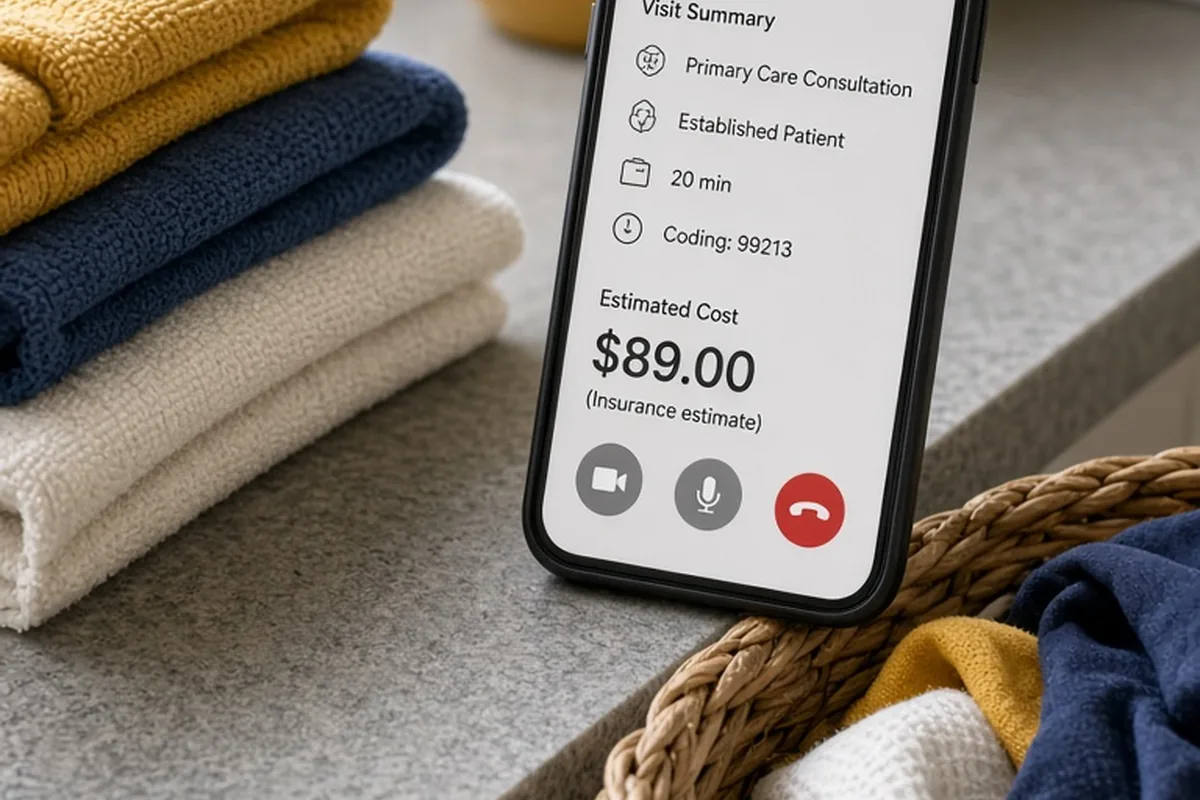
A telehealth visit cost in 2026 depends on whether you use commercial insurance, public coverage, or a direct cash-pay service. Out-of-pocket expenses vary based on your annual deductible, copayment structure, visit complexity, and whether the appointment involves primary care, specialized consultation, or routine triage. Because medical providers do not share a single uniform fee schedule, confirming your out-of-pocket cost requires verifying in-network participation and billing codes with your insurance plan or clinic billing office prior to your consultation.
Virtual clinical appointments have become a standard fixture of outpatient medicine across the United States. While connecting with a licensed clinician through a smartphone or computer eliminates transit time and clinic waiting rooms, the financial mechanics behind remote care mirror traditional medical billing. Understanding the structural variables that dictate virtual pricing helps patients navigate digital healthcare options confidently while avoiding unexpected out-of-pocket obligations.
Core Billing Elements That Determine Telehealth Appointment Pricing
A telehealth appointment is billed using professional medical service codes that evaluate the medical decision-making required during the session. Much like an in-person office encounter, a virtual visit fee is fundamentally shaped by the encounter complexity, the time spent reviewing medical charts, and the clinician credentials. An established patient addressing a straightforward follow-up discussion requires lower-tier coding than a new patient presenting with complex, interrelated symptoms requiring thorough historical review and treatment planning.
Beyond the clinician professional fee, telehealth delivery introduces distinct platform and organizational costs. Some hospital-owned systems bill an institutional facility fee alongside the clinician fee, even when the patient connects from their own residence. Conversely, standalone virtual care companies often integrate technical platform maintenance, secure audio-video infrastructure, and intake messaging into a single lump-sum charge. Recognizing whether your invoice represents a single professional fee or a split bill containing institutional service charges is essential when estimating your baseline financial exposure.
Insurance Coverage Dynamics: Parity Laws, Deductibles, and Copayments
How much an insured patient pays for a virtual medical visit depends heavily on plan structure, network tiering, and applicable state telehealth payment parity legislation. Some states mandate that commercial insurers reimburse virtual services on equal financial footing with face-to-face visits, while other jurisdictions allow plans to negotiate separate payment schedules for remote clinical encounters. If your health plan features a fixed copayment for primary care or specialist consultations, your remote visit may simply require that familiar predetermined amount.
For individuals enrolled in high-deductible health plans, the financial situation functions quite differently. Patients who have not satisfied their annual deductible generally bear the entire contracted in-network rate agreed upon between their insurance carrier and the healthcare provider. That contracted rate remains unknown until the medical claim is formally adjudicated, unless the patient requests an advance good-faith estimate. Once the annual deductible is met, coinsurance rules take over, leaving the patient responsible for a set percentage of the allowable charge until reaching their maximum annual out-of-pocket limit.
Women's Health Telehealth Screenings and Contraceptive Consultations
Virtual appointments have emerged as a primary gateway for women seeking reproductive healthcare guidance, initial wellness screenings, and medication management. Under federal preventive care standards, many clinical services categorized as preventive are covered without cost-sharing when delivered by in-network providers, though billing distinctions exist between pure prevention and problem-focused assessment. Guidance from the Office on Women's Health emphasizes that preventive discussions help identify health risks early and clarify appropriate screening schedules based on family history and lifestyle factors.
When consulting a clinician remotely for birth control counseling, the scope of the appointment directly influences billing. According to the Centers for Disease Control and Prevention, choosing a contraceptive method involves balancing individual medical history, preferences, effectiveness, and clinical eligibility criteria. If a telehealth session is dedicated strictly to contraceptive selection and counseling, it often qualifies under preventive coverage guidelines without patient cost-sharing. However, if the visit transitions into diagnosing or managing an underlying condition such as abnormal uterine bleeding, pelvic pain, or endocrine symptoms, clinicians frequently apply diagnostic evaluation codes that trigger standard plan copayments or deductible obligations.
Telehealth visits also serve as an effective screening and triage mechanism for cervical and breast cancer surveillance, even though physical sample collection and imaging cannot occur over a screen. A clinician can review screening intervals, order routine mammography or cervical cytology at local facilities, and discuss hereditary risk factors. Patients should understand that the virtual consultation fee itself is billed separately from the diagnostic tests, laboratory work, or imaging appointments initiated as a result of that initial remote conversation.
Further reading: Office on Women's Health
Further reading: CDC: Contraception and birth control methods
Direct-to-Consumer Telehealth Platforms Versus Hospital-Affiliated Virtual Clinics
The digital medical sector is bifurcated between independent direct-to-consumer digital health brands and integrated regional healthcare delivery networks. Direct-to-consumer platforms often operate on a transparent, upfront cash-pay structure, quoting a flat per-visit rate or packaging services into monthly subscription models. These companies bypass insurance administration entirely or treat claims as out-of-network reimbursements, making them appealing to individuals without insurance or those seeking predictable pricing without the threat of a retroactive medical bill.
Despite upfront transparency, direct-to-consumer models carry financial trade-offs. Recurring subscription programs may bill patient credit cards monthly regardless of whether a clinician is consulted, and the clinical notes generated on proprietary apps rarely synchronize automatically with a patient primary health system records. In contrast, virtual visits conducted through regional hospital networks and local primary care groups are typically integrated into your long-term electronic health record, but they follow complex hospital billing rules where the final out-of-pocket liability is rarely disclosed until a formal Explanation of Benefits arrives weeks later.
Secondary and Follow-On Expenses Generated by Virtual Medical Care
A telehealth appointment frequently acts as an entry point into broader diagnostic and therapeutic pathways, meaning the initial consultation represents only the first line item of your total medical expenditure. A virtual doctor cannot perform a physical palpation, obtain vital signs beyond what patient home devices provide, or draw blood. Consequently, virtual consultations often conclude with external orders for routine blood panels, microbiological cultures, electrocardiograms, or diagnostic radiology.
These downstream orders are billed independently by the independent diagnostic laboratories and imaging centers that perform the testing, governed by those facilities' specific network agreements with your health insurer. Similarly, pharmaceutical therapies prescribed during a remote session represent a separate point-of-sale expense at your retail or mail-order pharmacy. If your symptoms are deemed too complex or ambiguous for remote resolution, the provider will recommend an in-person physical examination, resulting in a second professional consultation charge for the same underlying health episode.
Practical Strategies for Securing Lower-Cost Virtual Medical Consultations
Patients looking to minimize their remote care expenses can utilize multiple established healthcare access programs. Federally Qualified Health Centers and community health clinics receive federal support to provide comprehensive outpatient services, including virtual care consultations, on a sliding-fee schedule adjusted for patient income and family size. These clinics offer an affordable safety net for uninsured or underinsured patients who require clinical continuity rather than episodic digital care.
Many employers and commercial health insurance plans also contract with dedicated third-party telehealth vendors to provide primary triage and acute urgent care at a subsidized, reduced, or zero copayment rate. Accessing these dedicated enterprise portals through an employer benefits dashboard is frequently far less expensive than scheduling a virtual visit directly through a regional specialty hospital. Additionally, patients paying out-of-pocket should inquire whether an independent clinic offers prompt-pay discounts, where paying the total balance at the time of service significantly reduces the gross charge.
How to Verify Your Virtual Visit Financial Liability Before Your Session
To protect yourself from unexpected healthcare costs, proactive financial verification should occur before joining the virtual waiting room. Contact your insurance carrier customer service department using the telephone number on your member card and ask specifically whether synchronous audio-video consultations are covered under your plan benefit package. You should ask whether the coverage is limited to designated vendor platforms or extends to any in-network medical group providing telehealth.
When speaking with both the insurer and the healthcare provider billing staff, request the specific Current Procedural Terminology codes and Place of Service codes they intend to use. An evaluation billed with Place of Service 02 indicates telehealth delivered outside the patient home, while Place of Service 10 denotes telehealth provided in the patient residence. Clarifying these billing details ensures your insurer processes your claim under the proper benefit tier and prevents processing errors that could temporarily leave you with full financial responsibility for the encounter.
Illustrative Scenarios
Navigating Split Diagnostic and Preventive Billing in Virtual Care
An illustrative composite patient scheduled a virtual appointment through an in-network women's health clinic seeking both routine contraceptive counseling and an evaluation for recurring abdominal pain. Because the provider addressed both a preventive topic and an acute diagnostic issue during the same thirty-minute session, the medical group submitted two separate procedural codes on the insurance claim. The contraceptive portion of the encounter was processed without cost-sharing under the plan preventive benefit, but the diagnostic evaluation code was applied against the patient annual deductible, resulting in an unexpected invoice for the diagnostic half of the visit.
Key point: Scheduling separate appointments for preventive screening discussions and acute diagnostic symptoms helps keep billing categories distinct and avoids unexpected out-of-pocket charges.
Frequently asked questions
Does my health insurance plan cover telehealth at the same rate as an in-person office visit?
Coverage depends on your specific insurance policy and applicable state parity laws. While many plans cover virtual appointments at the same copayment or coinsurance level as in-person visits, some policies limit telehealth coverage to specific contracted network partners or exclude certain clinical specialties from remote reimbursement.
Can I receive a firm price quote before completing a virtual doctor visit?
Cash-pay direct-to-consumer platforms typically publish firm upfront pricing for their consultations. When using health insurance through a traditional medical clinic, however, billing departments can only provide a good-faith estimate based on anticipated procedural codes, with final responsibility determined after your claim is adjudicated.
Are laboratory tests and prescriptions included in the price of a telehealth appointment?
No, virtual consultation fees cover only the clinician professional time and digital platform evaluation. Any laboratory panels, diagnostic imaging, or prescription medications ordered during the visit are billed independently by the testing facilities and dispensing pharmacies.
What happens financially if the clinician decides my issue cannot be treated virtually?
If a remote consultation reveals symptoms requiring immediate hands-on clinical evaluation, the provider will direct you to an urgent care clinic or emergency facility. You generally remain responsible for the telehealth consultation fee already incurred, in addition to the separate charges generated by the in-person facility.
Your next step
Call your health plan member services department today to request their specific billing rules and in-network telehealth roster before you book your next remote consultation.