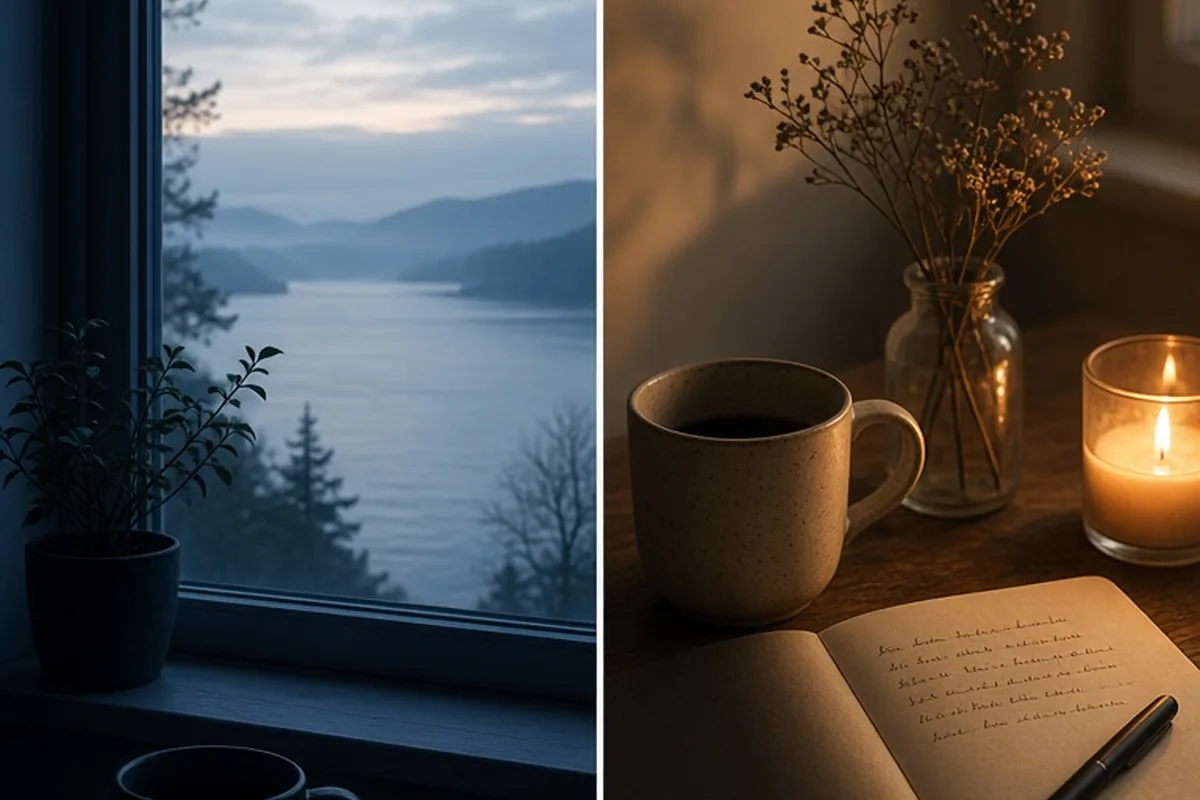
Things to be thankful for range from the obvious — health, relationships, shelter — to the easily overlooked: a working body, access to clean water, the ability to learn something new. Gratitude becomes more powerful when it moves past the generic and lands on something specific and real to your actual life, not a borrowed list.
Gratitude is one of those concepts that sounds simple until you actually try to practice it on a hard day. The trick is not finding a longer list — it is finding the right kind of noticing.
Why Specific Gratitude Works Better Than a Generic List
There is a meaningful difference between telling yourself you are grateful for your health and pausing to notice that your legs carried you up a flight of stairs without pain this morning. The first is an abstraction. The second is a moment you actually lived. Specificity anchors gratitude in reality, which makes it feel earned rather than performed. When gratitude feels performed, it tends to fade quickly and can even produce a mild guilt response — a sense that you should feel more than you do.
This is not about forcing positivity. It is about training attention. When you get specific, you are essentially teaching your brain to scan for evidence of what is working rather than defaulting to what is not. That shift does not erase difficulty, but it does change the ratio of what you notice throughout a day. Start small: one concrete thing, described in a full sentence, is more useful than a list of ten vague nouns.
The Basics That Are Easy to Take for Granted
Some of the most meaningful things to be thankful for are the ones that only become visible when they are gone. Running water that arrives clean and hot when you turn a tap. Electricity that makes a room bright at night. A roof that keeps rain out. These are not small things — they are the infrastructure of a stable life, and billions of people do not have reliable access to all of them. Naming them is not about guilt; it is about proportion.
The same logic applies to physical basics: being able to breathe without difficulty, digest a meal, sleep through the night, or see the words on this page. Bodies do an enormous amount of work that goes entirely unacknowledged until something stops functioning. A moment of genuine appreciation for a body that is doing its job — even imperfectly — can be surprisingly grounding, especially on days when you are frustrated with it for other reasons.
Relationships Worth Naming Out Loud
People are often the first thing that comes to mind in gratitude practice, and for good reason — connection is central to how humans experience meaning. But again, specificity matters. Rather than being grateful for family in the abstract, consider what a particular person actually did: the friend who texted to check in during a rough week, the sibling who made you laugh at a moment when you needed it, the colleague who covered for you without making it a transaction. Those specific acts are what relationships are actually made of.
It is also worth including people who are no longer in your life but shaped who you are — a teacher who believed in you, a mentor who gave you honest feedback, a grandparent whose habits you still carry. Gratitude does not require the person to be present. It just requires you to notice the impact. This kind of reflection can also help you recognize what you value in relationships, which is useful information when you are deciding where to invest your time and energy going forward.
Small Daily Moments That Deserve More Credit
The morning cup of coffee or tea that you drink before the day's demands arrive. A commute where you got a seat. A meal that was exactly what you wanted. A conversation that went somewhere unexpected and interesting. These are not dramatic, and they are not supposed to be. The point of noticing small moments is that they make up most of a life. If you only feel gratitude during peak experiences — a vacation, a promotion, a milestone — you are leaving a lot of ordinary goodness unacknowledged.
Seasons and weather are underrated here too. A warm afternoon in early spring after a long winter. The smell of rain on dry pavement. The particular quality of light in late October. These are free, available to almost everyone, and genuinely pleasant — but they pass without notice unless you make a small habit of looking up. You do not need to be poetic about it. Just notice that it happened.
Access, Opportunity, and the Luck of Circumstance
Some things to be thankful for are less about what you have done and more about where and when you were born, or the circumstances that shaped your options. Access to education — whether formal schooling or simply the ability to read and find information — is not universal. The ability to work in a field you find meaningful, or to have any stable employment at all, is not guaranteed. Safety in your neighborhood, freedom to move through public spaces without fear, the ability to make choices about your own life: these are real privileges that are unevenly distributed.
Naming these is not about self-congratulation or ignoring systemic problems. It is about honest accounting. When you recognize that some of what you have is luck as much as effort, it tends to produce a more grounded kind of gratitude — one that is less fragile when things get hard, because it was never entirely based on the idea that you earned everything you have. It can also quietly motivate generosity, since luck is not something you can hoard.
Challenges and Difficult Periods That Taught You Something
This one requires care, because it is easy to slip into toxic positivity — the idea that everything happens for a reason, or that you should be grateful for pain. That is not what this is. But there is a real and different thing: looking back at a hard period and recognizing that you came through it with something you did not have before. Resilience, clarity about what matters, a skill you had to develop under pressure, a relationship that deepened because of shared difficulty.
The distinction is timing and framing. You do not have to be grateful for a loss while you are in the middle of grieving it. But later, with distance, it can be honest to acknowledge that the experience changed you in ways that were ultimately useful. This kind of gratitude is retrospective and optional — it is not an obligation, and it should never be used to minimize what was genuinely hard. It is simply one more category worth considering when you have the space to do so.
Things You Can Do and Create
Abilities are easy to overlook because they feel like just part of who you are. But the capacity to cook a meal, write a sentence, fix something that is broken, make someone laugh, play an instrument badly but with pleasure, or learn a new skill at any age — these are genuinely worth appreciating. They represent years of accumulated practice and exposure, often shaped by people who taught you or environments that gave you access.
Creative capacity in particular tends to get undervalued in daily life. The ability to imagine something that does not exist yet, to solve a problem in a way that is not obvious, to make something with your hands or your mind — these are not trivial. Even if you do not think of yourself as creative, you almost certainly do something that involves making or figuring out, and that is worth naming. Gratitude for what you can do, as opposed to what you have, tends to be more durable because it is less dependent on external circumstances.
How to Build a Gratitude Practice That Actually Sticks
The research on gratitude practices is genuinely mixed when it comes to specific outcomes, so the honest framing is this: many people find that a consistent gratitude habit changes their baseline mood over time, but it is not a guaranteed fix for depression, anxiety, or difficult circumstances. What it tends to do is shift attention — and attention, over time, shapes experience. A practice that is too rigid or feels like a chore will not stick, so the goal is to find a format that fits your actual life.
Some people write three specific things each morning before looking at their phone. Others do a brief mental review at night before sleep. Some say it out loud to a partner or friend, which adds a social dimension that can make it more consistent. The format matters less than the specificity and regularity. If you miss a day, you do not need to catch up — just return to it. The value is in the habit of noticing, not in the accumulation of entries. Start with one week of one sentence per day and see whether it changes anything about how you move through your mornings.
Frequently asked questions
What if I genuinely cannot think of anything to be grateful for?
Start with the most basic physical facts: you are breathing, you are reading this, you are alive. These are not trivial. If even that feels hollow, it may be worth talking to someone — persistent inability to find anything positive can be a sign of depression, which deserves real support rather than a gratitude list.
Is it okay to be grateful for material things like money or possessions?
Yes, as long as you are being honest rather than performative. Gratitude for financial stability or a comfortable home is legitimate, especially when you recognize it is not equally available to everyone. The goal is genuine noticing, not a curated image of the right kind of gratitude.
How is gratitude different from ignoring real problems?
Gratitude and honest acknowledgment of difficulty are not opposites — they can coexist. Noticing what is working does not require pretending that what is not working is fine. The practice is about expanding your field of attention, not narrowing it to exclude hard truths.
Does gratitude have to be written down to be effective?
No. Writing can help because it slows you down and makes the thought more concrete, but a genuine moment of mental acknowledgment counts too. The key variable is specificity and intention, not the medium. Do whatever you will actually do consistently.
Your next step
Tonight, before you sleep, write one sentence about something specific that happened today that you are glad occurred — not a category, but an actual moment. Do that for seven days and notice whether your mornings feel any different.