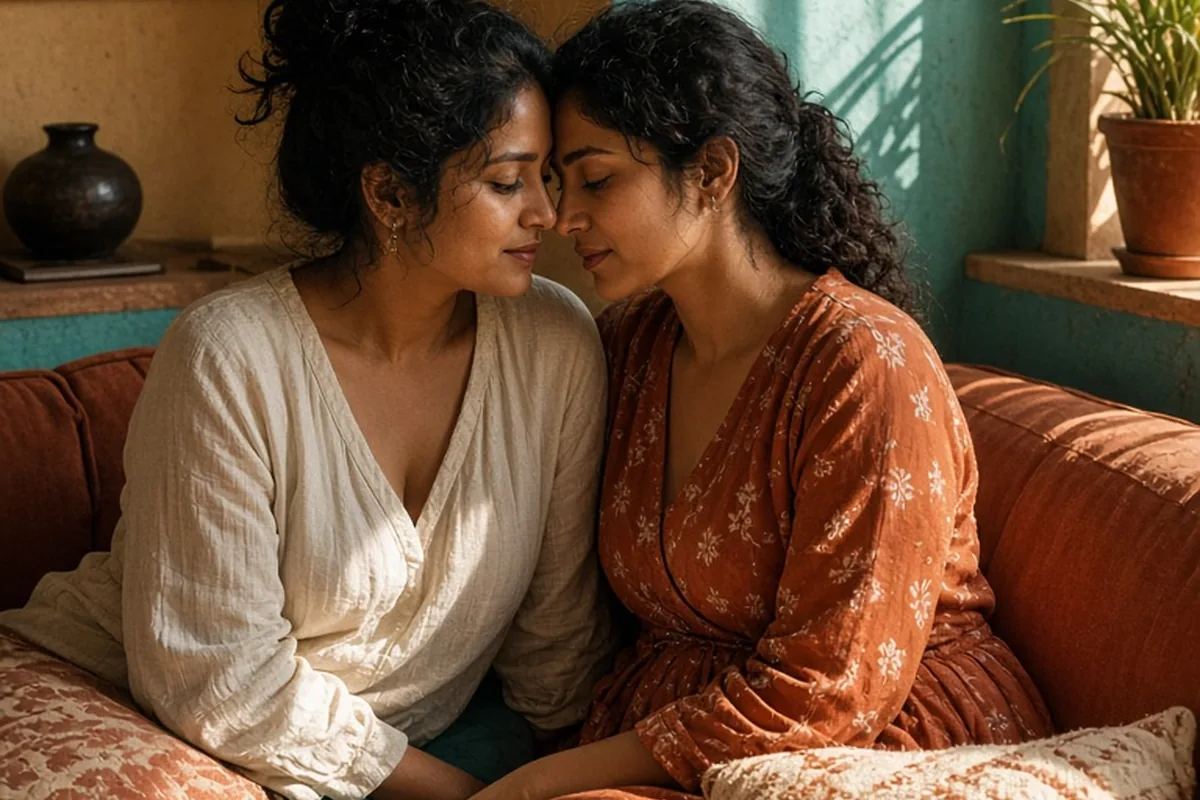
In regional adaptations of Indian mythology, notably the medieval Bengali Krittivasi Ramayana, King Bhagiratha is born from the sacred romantic union of two widowed queens. Following King Dilipa's death without an heir, the royal women embrace with divine blessing to conceive a child. This narrative highlights how ancient and medieval regional traditions accommodated non-heteronormative intimacy, fluid kinship, and miraculous lineage outside conventional patriarchal boundaries.
Exploring ancient epics often reveals unexpected narratives that challenge modern assumptions about gender roles, divine lineage, and romantic partnerships in traditional literature.
The Context and Origins of the Krittivasi Ramayana Narrative
While the Sanskrit Valmiki Ramayana presents King Bhagiratha's ancestry through standard lineage formulas, medieval vernacular retellings introduced distinct regional variations. The 15th-century Bengali text composed by the poet Krittibas Ojha, known as the Krittivasi Ramayana, contains the most prominent account of Bhagiratha's conception through the union of two women. In this telling, King Dilipa of the Ikshvaku dynasty dies without fathering a son, plunging the realm into an existential crisis regarding royal succession and the performance of ancestral rites.
To prevent the collapse of the dynasty, the sage Vashistha guides Dilipa's two grieving queens to unite in profound physical and emotional intimacy. Rather than framing this act as transgressive or sinful, the text describes their mutual affection as both divinely sanctioned and politically vital. The narrative reflects an era where regional storytellers utilized folklore and local customs to explore complex ideas about sacred duty, bodily potential, and the spiritual validity of same-sex love.
Conception, Divine Blessing, and the Symbolism of Anatomy
The legend details that through their deep love and sacred blessings, one of the queens conceives without the involvement of a man. According to traditional Ayurvedic understandings of conception prevalent during the period of the text's composition, bones were believed to be derived from paternal semen, while flesh, blood, and skin originated from the maternal womb. Consequently, when the child was born of two female partners without male seed, he emerged as a soft, boneless being, often described symbolically as a lump of flesh.
Far from discarding the child, the queens nurture him with devotion until the venerated sage Ashtavakra—himself physically distinct with eight bodily bends—encounters the infant. Recognizing the divine potential within the child, Ashtavakra uses his spiritual merit to bestow bones, physical strength, and perfect health upon him. The child is named Bhagiratha, derived etymologically in the text from 'bhaga' (a reference to the female generative organs), directly acknowledging his unique origin from two mothers.
Bhagiratha's Epic Destiny: Bringing the Ganga to Earth
The significance of Bhagiratha's queer origin becomes even more striking when viewed alongside his subsequent accomplishments in Indian epic tradition. Bhagiratha is not treated as a marginal or cursed figure in Hindu lore; instead, he is celebrated as one of the greatest monarchs in sacred history. He undertakes thousands of years of arduous penance to persuade the river goddess Ganga to descend from the heavens to purify the ashes of his ancestors and liberate their souls.
His unmatched resolve gave rise to the enduring Sanskrit idiom 'Bhagiratha prayatna' (Herculean effort), denoting supreme, unyielding dedication. That such an indispensable heroic figure in cosmological history is born from the loving union of two women demonstrates that classical storytellers saw queer origins as entirely compatible with spiritual greatness, royal dignity, and monumental civic achievement.
How Pre-Modern Texts Conceptualized Gender and Reproduction
Modern readers frequently interpret ancient stories through strict 21st-century ideological frameworks, but pre-modern literary traditions engaged with reproductive and sexual fluidity in distinct, nuanced ways. Regional epics like the Krittivasi Ramayana did not operate under rigid binary divisions between normal and abnormal; rather, they accommodated a broad spectrum of miraculous births, gender transformations, and unconventional unions within their cosmological worldviews.
However, engaging with these narratives requires acknowledging historical boundaries. The queens' union was framed both as genuine romantic affection and as an urgent dynastic necessity under the instruction of a royal preceptor. Understanding this dual context prevents modern readers from projecting contemporary sociopolitical identities onto medieval literature while still honoring the narrative as an authentic historical precedent for celebrating same-sex intimacy.
Parallels Across Indian Mythological Traditions
The tale of Bhagiratha's two mothers does not stand entirely alone within the vast landscape of Indian mythology. Across various Puranic texts, folk traditions, and regional epics, divine figures regularly transcend standard biological and reproductive templates. Examples include the birth of Lord Ayyappa from the union of Shiva and Mohini (the female avatar of Vishnu), the gender transformations of King Ila, and the pivotal role of Shikhandi in the Mahabharata.
These recurring motifs demonstrate that classical Indian thought maintained a sophisticated, fluid understanding of cosmic creation. When contemporary readers study Bhagiratha alongside these wider legends, it becomes clear that ancient Indian storytelling frequently embraced complex intersections of gender, desire, and spirituality rather than enforcing rigid homogeneity across sacred literature.
Contemporary Cultural Value and Personal Reflection
In modern cultural and relationship discussions, the legend of Bhagiratha serves as a powerful touchstone for individuals seeking historical roots for queer inclusion within non-Western contexts. For modern LGBTQ+ individuals and their families, discovering that sacred epics have long preserved stories of same-sex parenting and queer birth offers validation, belonging, and cultural continuity. It challenges the misconception that non-heteronormative family structures are modern anomalies.
On a practical, personal level, engaging with this myth invites readers to cultivate expansive views on family building, partnership, and unconditional commitment. It suggests that a relationship's worth and the legitimacy of a family are defined by mutual care, resilience, and ethical conduct, rather than conformity to narrow historical stereotypes or biological conventions.
Illustrative Scenarios
Navigating Cultural Heritage and Queer Identity
Arjun, a 31-year-old software designer living in Chicago, struggled with feeling alienated from his traditional Hindu upbringing after coming out. He initially assumed that his heritage possessed no room for queer identities or non-traditional family aspirations. While attending a cultural lecture, he encountered the story of King Bhagiratha's birth from two queens in the Krittivasi Ramayana. Arjun stopped viewing his identity as incompatible with his cultural roots and began exploring pre-modern literary texts with curiosity rather than defensive anxiety. This shifted his conversations with his parents from tense arguments into thoughtful discussions about the diversity of classical Indian folklore.
Key point: Discovering inclusive narratives within one's own cultural traditions can dismantle internal conflict and foster grounded, self-assured personal integrity.
Broadening Perspectives on Non-Traditional Family Building
Meera and Priya, a married couple in Mumbai, faced skepticism from extended relatives regarding their plans to raise a child through donor conception. Relatives voiced worries that a non-heteronormative household lacked historical precedent and community respect. Instead of responding with anger or retreating into silence, Meera and Priya shared literary narratives like Bhagiratha's lineage during a family gathering, illustrating how ancient regional texts honored diverse family formations. While it did not instantly resolve every relative's reservation, the reference provided a respectful, common cultural foundation that eased family tension and opened up constructive dialogue.
Key point: Grounding modern relationship choices in historical and cultural literacy can defuse conflict and build meaningful bridges with loved ones.
Frequently asked questions
Which specific text contains the legend of King Bhagiratha having two mothers?
The most prominent account appears in the 15th-century Bengali Krittivasi Ramayana, composed by poet Krittibas Ojha. Elements of this miraculous birth tradition are also referenced in regional Puranic commentaries and vernacular folktales across Eastern India.
Why was Bhagiratha born boneless in the original legend?
Medieval Ayurvedic medical philosophy posited that bones were formed from paternal semen, while soft tissues and blood were derived from maternal contributions. Because Bhagiratha was conceived from two women without a male partner, the text describes him as initially lacking bones until the sage Ashtavakra restored his body through spiritual blessings.
Is King Bhagiratha's queer birth story widely accepted in classical Hindu literature?
The narrative is celebrated within regional Bengali literature and respected folk traditions, though the classical Sanskrit Valmiki Ramayana provides a different, standard genealogical account. Indian epic literature often embraces multiple parallel versions of major myths across different regions and historical eras.
What does Bhagiratha's name mean in the context of this myth?
In Krittibas Ojha's retelling, the name Bhagiratha is explained poetically through wordplay on 'bhaga' (referring to female anatomy), honoring his birth from the union of two mothers. This etymology highlights his extraordinary origins alongside his epic achievements.
Your next step
Take time to read classical and regional literary traditions with an open mind, using historical narratives like Bhagiratha's birth to enrich your understanding of family diversity, personal resilience, and cultural inclusivity.