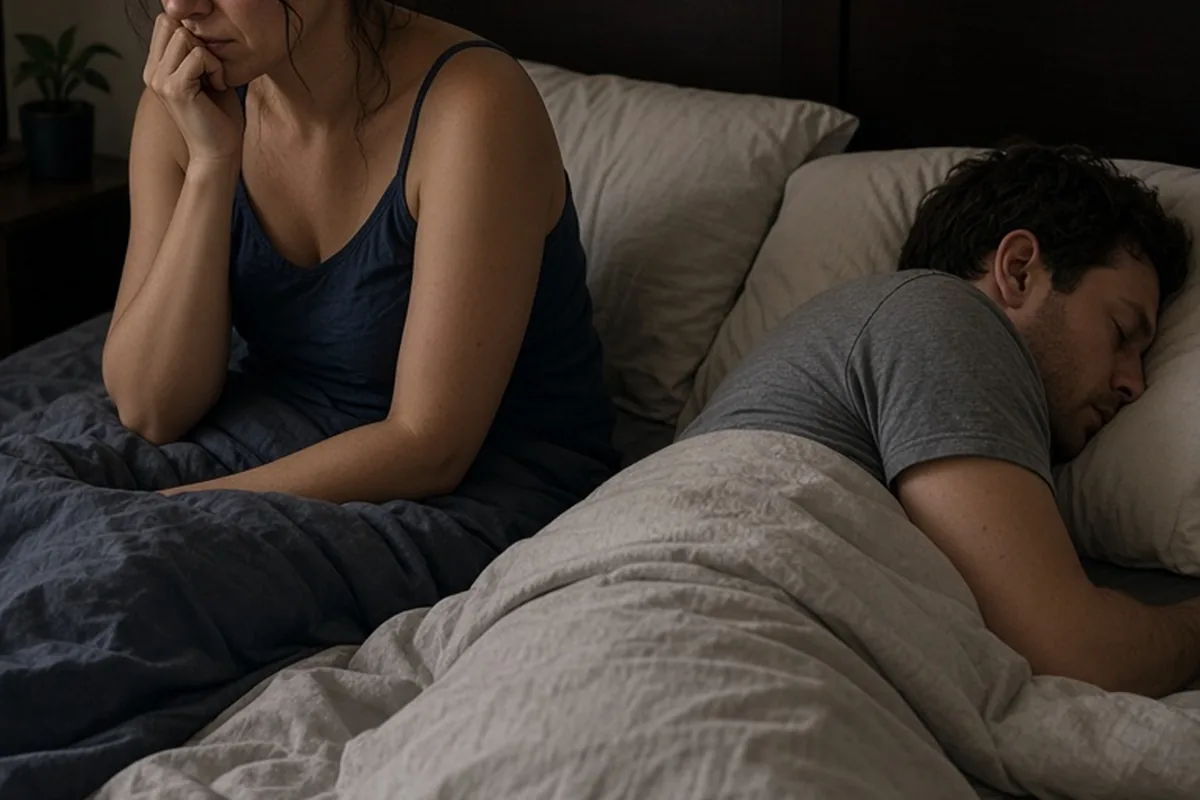
Sitting awake and upset while your partner sleeps usually signals deep emotional isolation, unmet physical needs, or unresolved tension. In that midnight moment, prioritize self-soothing rather than forcing an immediate confrontation. Regulate your nervous system, leave the bed temporarily if you feel overwhelmed, and schedule a calm, daylight conversation about your intimacy mismatch rather than trying to resolve heavy feelings in the dark.
That late-night image of sitting upright in bed, overwhelmed by sadness or frustration while a spouse sleeps soundly inches away, is a deeply painful reality for many couples. It highlights a sharp contrast between your internal emotional storm and their peaceful detachment, making the physical closeness of sharing a mattress feel like an immense emotional desert.
Why Midnight Rejection and Bedtime Loneliness Hurt So Deeply
Bedrooms are culturally and psychologically framed as sanctuaries for safety, romance, and shared vulnerability. When you experience a lack of affection, an awkward rejection, or prolonged sexual disconnection in this specific space, the physical environment amplifies your distress. Seeing your partner drift off effortlessly while you struggle with feelings of inadequacy, resentment, or loneliness creates a painful sense of abandonment. It is easy to interpret their sleep as conscious indifference or coldness, even when it often stems simply from genuine physical exhaustion, ignorance of your inner state, or emotional shutdown.
Psychological distress tends to feel heavier during quiet hours because external daytime distractions disappear. Without errands, work responsibilities, or household noise to occupy your mind, rumination takes over, turning quiet moments into intense internal monologues. Recognizing that late-night emotional spikes are biologically magnified by nighttime fatigue can help you avoid making permanent decisions or harsh judgments in the heat of the moment. Your pain is valid, but the middle of the night is rarely an accurate lens through which to measure your entire relationship.
Immediate Self-Soothing Strategies When You Are Stuck Awake in Bed
When intense feelings arise while your partner is sleeping, trying to force yourself to stay under the covers often worsens racing thoughts and muscle tension. Staying in bed while feeling rejected can create a negative subconscious association with your sleep space, turning your mattress into a trigger for anxiety. If you find your heart racing, your breathing shallow, or tears welling up, stepping out of the bedroom for twenty to thirty minutes can break the escalating loop of distress.
Move quietly to another room with dim lighting and engage in low-stimulation sensory grounding. You might drink a warm glass of water, practice slow diaphragmatic breathing, listen to soothing ambient sounds, or write your unfiltered feelings in a journal to get them out of your head. For example, if an awkward attempt at physical intimacy was met with a polite rebuff followed by immediate snoring, writing down your exact feelings helps you process the sting privately. The limitation here is that self-soothing does not solve the underlying marital dynamic; its sole purpose is to steady your nervous system so you can sleep and address the core issue when fully rested.
Common Underlying Factors Behind Intimacy Disconnects in Marriage
When one partner remains wide awake and distressed while the other sleeps comfortably, the root cause is rarely simple spite. In long-term partnerships, intimacy gaps typically develop through a gradual accumulation of unspoken resentments, mismatched libidos, routine fatigue, or hormonal shifts. Often, one person craves emotional reassurance and physical connection to relieve stress, while the other requires low stress and personal space before they can even consider sexual intimacy. This fundamental difference can leave one spouse feeling chronically deprived and the other feeling persistently pressured.
Additionally, sleep debt and work-related exhaustion frequently mask deeper relational withdrawal. A partner who falls asleep in seconds might be using unconsciousness as an avoidant coping mechanism to escape relational tension they do not know how to fix. Alternatively, chronic health issues, untreated depression, or medication side effects could be suppressing their energy and sexual desire. Identifying these underlying contributors helps reframe the situation from a dynamic of attacker versus victim into a shared relational challenge that requires collaborative attention.
How to Move the Conversation From the Bedroom to the Daylight
Waking up an exhausted spouse in the middle of the night to demand an emotional discussion almost always backfires. Sleep deprivation activates defensive survival instincts, making defensiveness, irritation, and dismissive remarks far more likely. A far more productive approach is to bookmark the issue mentally or in your notes, and initiate a conversation during the day when both of you are awake, fed, and free from immediate time pressures.
When you raise the topic, focus on your internal experience using clear, non-accusatory language rather than criticizing their behavior. For instance, instead of saying, 'You clearly do not care about me because you just rolled over and went to sleep,' you can frame it as, 'Last night when we turned off the lights without connecting, I felt very lonely and disconnected, and I would like us to talk about how we can feel closer.' This keeps the focus on your desire for shared closeness rather than putting your partner on trial. Be prepared for some initial discomfort, as discussing sexual and emotional gaps can make both partners feel vulnerable.
Re-establishing Non-Demanding Physical Touch and Daily Rituals
In relationships where sexual frequency has declined, bedtime touch often becomes charged with anxiety. If one partner suspects that every hug, backrub, or cuddle is an unspoken demand for sex, they may pull away completely to avoid having to deliver a rejection. This creates a painful cycle where all physical affection disappears, leaving the bedroom cold and distant long before anyone turns off the bedside lamp.
To break this defensive pattern, couples often benefit from establishing non-demanding physical touch. This means agreeing to share gentle physical contact, such as a five-minute foot massage, holding hands while talking, or a warm embrace before sleep, with a clear mutual understanding that it will not lead to intercourse. Removing sexual expectation from everyday touch allows the more hesitant partner to relax their defenses while giving the touch-deprived partner comforting sensory reassurance. However, both partners must honor this boundary consistently; if touch is used as a covert gateway to initiate sex, trust will erode further.
Knowing When to Seek Couples Counseling or Medical Advice
If late-night tears, emotional distance, and intimacy mismatches have persisted for months or years despite repeated attempts to communicate, independent efforts may no longer be sufficient. Deeply entrenched patterns of pursuit and withdrawal often require a skilled, objective professional to unpack. A licensed marriage and family therapist or certified sex therapist can provide a neutral, structured environment where both individuals can express vulnerabilities without descending into shouting matches or stony silence.
In parallel, consulting a healthcare professional can rule out physical contributors that silently impact intimacy and energy levels. Fluctuating hormones, thyroid imbalances, chronic pain, pelvic floor discomfort, and side effects from common medications like antidepressants can dramatically suppress libido and vitality. Addressing medical hurdles alongside relational counseling ensures that neither partner is unfairly blamed for biological factors outside their direct control. While professional support requires time and emotional effort, it provides concrete tools to replace late-night isolation with genuine mutual understanding.
Frequently asked questions
Should I wake my sleeping partner up when I feel deeply upset in bed?
In most cases, it is best to let them sleep and focus on self-soothing until morning. Waking someone abruptly often triggers defensiveness and irritability, making constructive dialogue very difficult. Save the discussion for daylight hours when both of you can communicate calmly and thoughtfully.
How can I stop taking my partner falling asleep immediately as personal rejection?
Remind yourself that falling asleep quickly is typically an involuntary biological response to physical exhaustion, stress, or nervous system fatigue rather than a deliberate statement about your worth. Differentiating their physical fatigue from their emotional feelings toward you helps reduce nighttime anxiety.
What if my partner refuses to talk about our bedroom intimacy issues during the day?
If your partner shuts down daytime conversations, express clearly how their withdrawal impacts your emotional well-being and propose speaking with a neutral professional. Suggesting a structured session with a couples counselor can help lower defensiveness and open a safe space for dialogue.
Your next step
Tomorrow morning, invite your partner to a low-pressure conversation over coffee by sharing how you felt the night before using calm, vulnerable language.