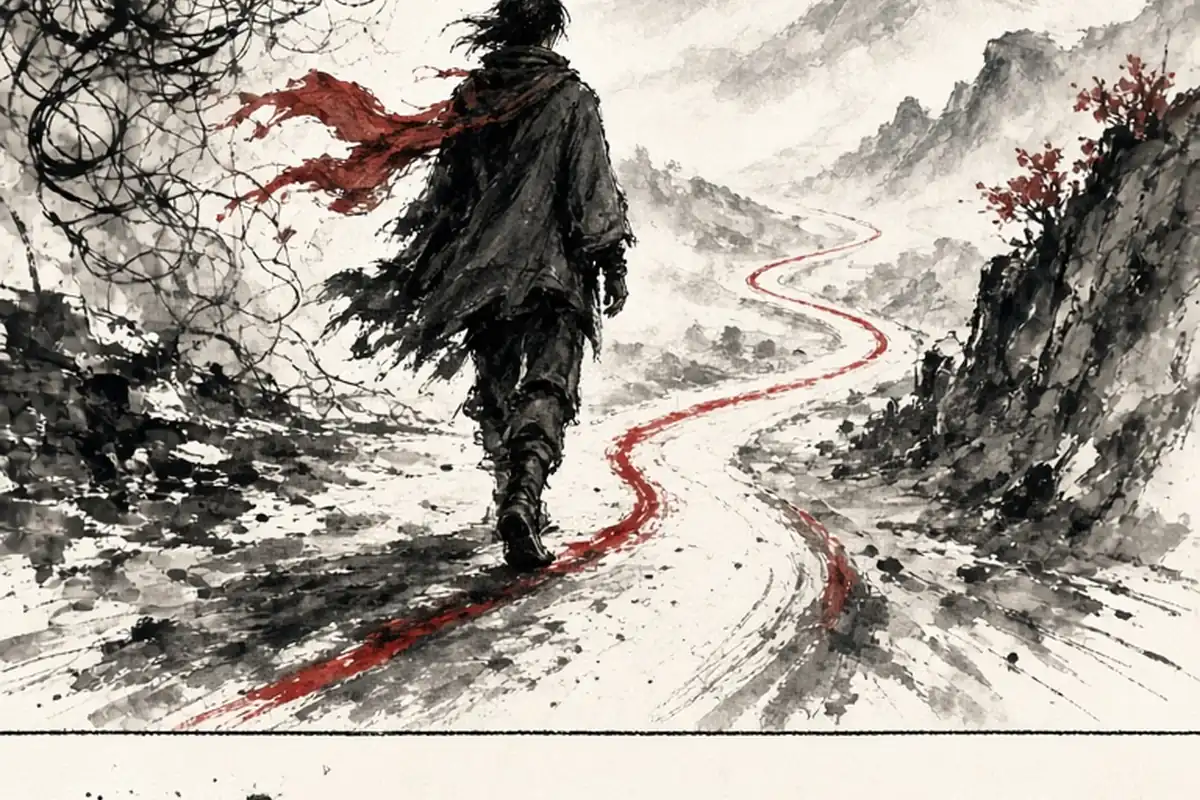
Warrior spirit is the inner orientation that lets you face difficulty without flinching, act with discipline when motivation fades, and hold to your values under pressure. It is not aggression or toughness for its own sake. It is the practiced habit of showing up fully, especially when the situation is hard, the outcome is uncertain, and quitting would be easier.
The phrase gets used a lot in motivational posts and sports commentary, but warrior spirit points to something more durable than a pregame mindset. It describes a way of moving through life that most people recognize when they see it, even if they struggle to name it in themselves.
Where the Concept Comes From
Across cultures and centuries, societies that faced survival-level challenges developed codes of conduct for those who bore the greatest risk. Japanese samurai culture formalized this into Bushido, a set of principles emphasizing loyalty, honor, and readiness to act decisively. West African warrior traditions, Indigenous North American warrior societies, and European knightly codes each built their own versions of the same core idea: that a person entrusted with protecting others must cultivate specific inner qualities, not just physical skill.
What these traditions share is the understanding that external competence without internal character is dangerous. A skilled fighter with no ethical grounding is simply a threat. The warrior spirit concept has always been about the combination: capability paired with restraint, courage paired with judgment, strength paired with service. Modern uses of the phrase often strip out the ethical dimension, which is worth noticing. The historical roots suggest that spirit without purpose is closer to recklessness than to genuine warrior character.
The Core Qualities That Define It
Warrior spirit is not a single trait. It is a cluster of qualities that reinforce each other. Courage is the most visible, but courage without discipline tends to burn out fast. Discipline is what keeps you training, practicing, or working on a hard problem even when the initial excitement has worn off. Resilience is the capacity to absorb setbacks without losing your sense of direction. And purpose is the anchor that makes the other three sustainable, because effort without meaning eventually collapses.
There is also a quality that does not get named as often: equanimity. Warriors in the classical sense were not people who felt no fear or pain. They were people who could feel those things and still act. Equanimity is the ability to stay grounded when circumstances are chaotic, to neither suppress what you feel nor be controlled by it. This is genuinely difficult to develop, and it is worth being honest that it takes time and repeated practice in real situations, not just intention.
- Courage: acting despite fear, not in the absence of it
- Discipline: consistent effort independent of mood or motivation
- Resilience: recovering direction after setbacks without pretending they did not happen
- Purpose: a clear enough reason that sustains effort over time
- Equanimity: staying functional under pressure without numbing out
How Warrior Spirit Shows Up in Ordinary Life
You do not need a battlefield to practice this. A parent raising a child through a serious illness, a person rebuilding their finances after a major loss, a professional navigating a hostile work environment while keeping their integrity intact, a student returning to school at forty after years away — these situations call on the same inner resources that historical warrior traditions tried to cultivate. The stakes are real, the discomfort is real, and the temptation to avoid or give up is real.
The everyday version of warrior spirit often looks quiet from the outside. It is the person who keeps their commitments when no one is watching. It is the friend who tells you a hard truth because they respect you enough not to flatter you. It is the choice to stay in a difficult conversation rather than shut down or walk away. None of these moments look dramatic, but they are exactly where character is built or eroded, one small decision at a time.
Building Discipline When Motivation Is Unreliable
Motivation is a feeling, and feelings change. Discipline is a structure, and structures can be designed. One of the most practical things you can do to build warrior spirit is to stop waiting for the right mood and start building systems that make the desired behavior the path of least resistance. This might mean laying out workout clothes the night before, blocking time on your calendar for the work that matters most, or creating a simple ritual that signals to your brain that it is time to focus.
The limit here is worth naming: structure alone does not create meaning. If you are disciplined in the service of goals that do not actually matter to you, the discipline will feel hollow and eventually break down. The most durable discipline is connected to something you genuinely care about, even if that thing is hard to articulate. Spending time clarifying what you actually value, not what you think you should value, is not a soft exercise. It is foundational to building the kind of sustained effort warrior spirit requires.
Resilience Is a Skill, Not a Personality Trait
People sometimes talk about resilience as if some people simply have it and others do not. The more useful framing is that resilience is a set of practices that can be learned and strengthened. These include the ability to reframe setbacks without minimizing them, to maintain social connection during hard periods rather than isolating, to regulate your nervous system through physical practices like sleep, movement, and breathing, and to keep a long enough time horizon that a current difficulty does not feel permanent.
A concrete example: someone who loses a job they depended on has two broad options in the immediate aftermath. They can treat the loss as evidence that they are fundamentally not capable, which tends to produce paralysis. Or they can treat it as a painful but finite event that requires a response, which tends to produce action. Neither framing changes the facts of the situation. But the second one keeps the person in a position to actually move forward. Warrior spirit, in this context, is the practiced ability to choose the second framing even when the first one feels more emotionally true in the moment.
The Role of Community and Accountability
Historical warrior traditions were almost never solitary. They were embedded in communities with shared values, mutual accountability, and clear expectations. The lone warrior is largely a modern myth. In practice, people who sustain warrior spirit over time tend to have relationships that hold them to their stated values, challenge them when they are cutting corners, and support them when they are genuinely struggling. This is not weakness. It is how character development actually works.
You can build this deliberately. It might mean joining a training group, a professional peer circle, a faith community, or simply being honest with a small number of people about what you are trying to do and why. The key is that the relationships involve real accountability, not just encouragement. Encouragement is useful, but it is not the same as someone who will notice when you are drifting and say something about it. Finding people who will do that, and being willing to do it for them in return, is one of the more underrated practices in building lasting character.
When Warrior Spirit Becomes a Problem
The concept has a shadow side that is worth taking seriously. When warrior spirit is used to justify suppressing legitimate emotions, ignoring physical or mental health needs, or pushing through situations that genuinely require rest or withdrawal, it stops being a strength and becomes a liability. The cultural pressure to always be strong, to never show vulnerability, to treat asking for help as failure, has caused real harm to real people. This is not what the best versions of warrior traditions actually taught, but it is how the concept often gets applied.
There is a meaningful difference between pushing through discomfort that is part of growth and ignoring signals that something is genuinely wrong. Warrior spirit, properly understood, includes the wisdom to know the difference. Resting when you are depleted is not weakness. Seeking support when a problem exceeds your current capacity is not failure. Knowing your limits well enough to work with them rather than against them is itself a form of discipline and self-knowledge that the best warrior traditions valued.
Cultivating Purpose as the Foundation
All of the other qualities, courage, discipline, resilience, equanimity, become more accessible when they are rooted in a clear sense of purpose. Purpose does not have to be grand or publicly legible. It can be as specific as being the kind of parent your child can rely on, or building something in your professional life that genuinely helps people, or living in a way that is consistent with your deepest values. What matters is that it is real to you, not borrowed from someone else's idea of what a meaningful life looks like.
Developing purpose is not a one-time exercise. It tends to evolve as you do, and it often becomes clearer through action rather than reflection alone. Trying things, noticing what energizes you and what drains you, paying attention to the moments when you feel most fully yourself, these are practical ways to get closer to a sense of purpose that can actually sustain effort over time. Warrior spirit without purpose is just endurance. With purpose, it becomes something closer to a life well-lived.
Frequently asked questions
Is warrior spirit the same as being aggressive or competitive?
Not really. Aggression and competition can be part of certain contexts, but warrior spirit in its fuller sense is about inner discipline and values, not about dominating others. Many people who embody it are notably calm and measured rather than intense or combative.
Can anyone develop warrior spirit, or is it something you are born with?
The qualities that make up warrior spirit, courage, discipline, resilience, and purpose, are all things that can be practiced and strengthened over time. Some people may start with temperamental advantages in one area or another, but none of it is fixed. Consistent practice in real situations is what builds it.
How do I know if I am pushing through productively versus ignoring a real problem?
A useful question to ask is whether the discomfort you are pushing through is the kind that comes with growth, or the kind that signals something is genuinely wrong. Physical pain, persistent mental health symptoms, and chronic exhaustion are worth taking seriously rather than overriding. Discomfort from doing hard but meaningful work is different in quality from those signals, though it can take practice to tell them apart.
Does warrior spirit apply to mental and emotional challenges, or mainly physical ones?
It applies across all of them. In fact, some of the most demanding applications of warrior spirit involve emotional and psychological challenges, staying honest in difficult relationships, maintaining integrity under professional pressure, or rebuilding a sense of self after a significant loss. The inner qualities required are the same regardless of the domain.
Your next step
Pick one quality from the core cluster, courage, discipline, resilience, equanimity, or purpose, and identify one specific situation in your current life where you could practice it more deliberately this week. Start there rather than trying to overhaul everything at once.