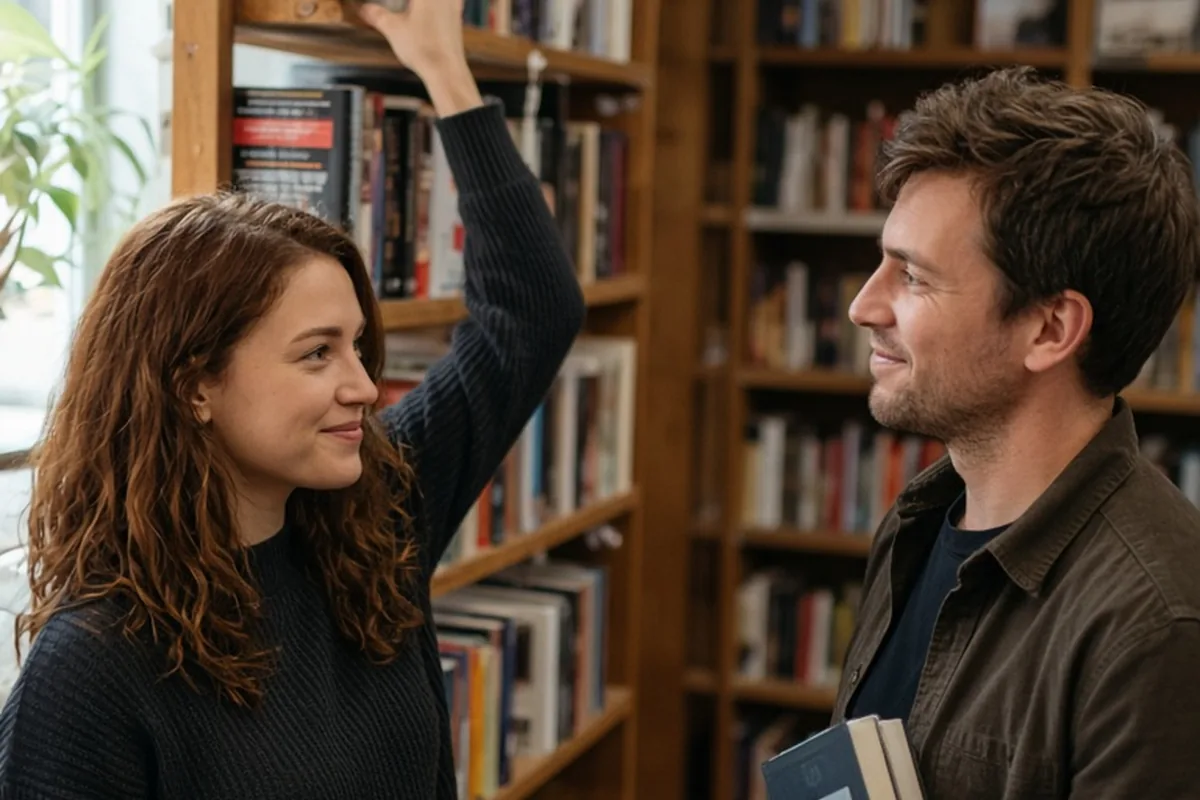
Using eye contact to flirt involves deliberate, comfortable moments of shared gaze that signal personal interest rather than casual scanning. Effective approaches include holding someone's gaze for a second or two before offering a subtle smile, glancing back once after looking away, and maintaining steady attention during direct conversation. These cues demonstrate warmth and presence without staring or applying pressure, giving the other person a clear, low-stakes opening to respond.
Eye contact is one of the most immediate nonverbal tools available in social settings, yet many people worry about striking the balance between being overly timid and coming across as intense. When used thoughtfully, visual connection establishes a quiet, shared moment that invites further interaction without requiring complicated maneuvers or aggressive posturing.
The Subtle Glance-and-Return Technique Across a Room
In a busy environment like a coffee shop, art gallery, or social mixer, catching someone's attention across the room requires a measured approach. The glance-and-return technique relies on establishing a brief visual baseline before confirming mutual interest. Start by scanning the room naturally rather than fixating on one person. When your eyes meet theirs, hold the connection for roughly one to two seconds, then calmly redirect your gaze toward your beverage, a friend, or your surroundings. Looking away first is not an admission of defeat; it creates a natural pause that keeps the initial moment light and casual.
The defining step occurs moments later. After a brief interval of three to ten seconds, look back in their direction. If the other person also looks over or has remained oriented toward you, the shared timing indicates that the first exchange was noticed rather than accidental. Pairing this second glance with a relaxed facial expression or a gentle nod provides an unmistakable yet low-pressure signal of interest. If they have returned to their conversation or turned their shoulders away, accept that as a sign they are focused on their own activity and let the moment go without repeating the attempt.
Softening Your Gaze to Project Warmth Instead of Intensity
A common pitfall with deliberate eye contact is adopting an unblinking, rigid stare that feels interrogative rather than inviting. Flirting relies on micro-expressions that communicate warmth and safety. To soften your gaze, relax the muscles around your forehead and jaw. When you make eye contact, allow your eyes to crinkle slightly at the corners—a natural accompaniment to an authentic half-smile. This slight muscular relaxation immediately transforms a neutral stare into a welcoming expression.
Visual pacing also matters significantly. If you stare unblinkingly across a table or room, the interaction can feel demanding. Instead, incorporate gentle pauses where you let your gaze drift toward the side as you speak or reflect, and then bring your eyes back to theirs when listening. This natural ebb and flow mirrors organic conversational interest. It gives both individuals breathing room while still clearly conveying that your attention is centered on them.
Maintaining Balanced Eye Contact During One-on-One Conversations
Once you are in direct conversation, eye contact shifts from an initial signal of attraction to a tool for building rapport. In general social interactions, comfortable eye contact typically occupies between fifty and seventy percent of the total conversation time. You do not need to count seconds or stare continuously; rather, aim to look directly at the other person more frequently while you are listening to them than while you are formulating your own responses.
When you speak, looking away briefly to gather your thoughts is entirely normal and prevents the conversation from feeling like a performance. When they are speaking, steady, appreciative eye contact demonstrates active engagement and emotional presence. Pairing direct eye contact with subtle conversational listening cues—such as a small tilt of the head or an affirming nod—shows that you find their words engaging, which naturally elevates the flirtatious energy of the dialogue.
Recognizing Ambient Cues and Knowing When to Disengage
A critical aspect of using eye contact respectfully is understanding nonverbal boundaries. Eye contact is an invitation, never a demand. If you catch someone's eye and they immediately look down at their phone, pull their body posture inward, put in earbuds, or deliberately avoid returning your gaze, these are clear signs that they prefer not to engage. A lack of reciprocal eye contact should always be met with graceful neutrality rather than persistent staring or attempts to force an interaction.
It is equally important not to over-interpret a single brief glance as definitive romantic interest. People look at each other for dozens of mundane reasons: tracking movement, checking who walked through a door, or simply daydreaming in a given direction. Look for confirmation across multiple cues—such as open body orientation, a responsive smile, or sustained visual engagement—before assuming someone is actively flirting. If those secondary cues are absent, simply continue enjoying your own day.
Transitioning from Eye Contact to a Natural Spoken Introduction
Eye contact can establish mutual awareness, but prolonged visual exchanges without verbal follow-up can quickly become awkward. Once you have exchanged two or three warm glances and a smile, the most effective next step is to bridge the distance with a casual, context-appropriate remark. Waiting too long creates unnecessary tension and makes approaching feel more intimidating than it needs to be.
Your opening line does not need to be clever or overly romantic; simple observational comments work best because they match the low-stakes nature of the eye contact you just shared. For instance, you might say, 'I noticed you were looking at the menu board—do you recommend anything here?' or 'I saw your shirt and had to ask, did you see that band on their last tour?' If the person responds warmly and maintains eye contact while answering, you have a natural foundation for an organic conversation. If their response is brief or closed-off, offer a polite smile and return to what you were doing.
Adjusting Visual Flirting for Social Anxiety and Different Comfort Levels
Direct eye contact can feel overwhelming for individuals with social anxiety, neurodivergent traits, or differing cultural backgrounds where sustained gaze is viewed differently. If looking directly into someone's pupils causes tension, you can soften the challenge by focusing on the bridge of their nose, their eyebrows, or the general area between their eyes. From a standard conversational distance, this appears virtually identical to direct eye contact while feeling significantly less intense for the speaker.
Another practical adjustment is to rely more heavily on shared activities where eye contact is intermittent rather than constant. Engaging with someone while sitting side-by-side at a counter, browsing books, or participating in a group hobby allows you to share brief, warm moments of eye contact when making a point, without the pressure of an uninterrupted face-to-face gaze. Pacing yourself according to your genuine comfort level ensures that your nonverbal expressions remain authentic and relaxed.
Illustrative Scenarios
Navigating Visual Signals at a Local Bookstore
Elena noticed someone browsing the same section at a community bookstore. When they both reached for adjacent shelves, their eyes met for a second. Elena initially felt an urge to look away entirely and avoid the aisle out of embarrassment. Instead, she chose to offer a brief, warm smile before returning her attention to the book in her hands. A minute later, she looked up again and noticed the other person was smiling in return. Taking that as a friendly signal, Elena made a simple comment about the author they were both looking at.
Key point: A brief pause followed by a relaxed smile clarifies that visual contact is welcoming rather than accidental, making a casual verbal opener feel natural.
Interpreting Mixed Signals at a Social Gathering
Julian was at a rooftop gathering and caught the eye of someone standing with a small group across the patio. He held their gaze for a moment, but the other person quickly turned back to their friends and adjusted their stance to face away from his side of the room. Julian considered walking over to initiate a conversation anyway, wondering if they were simply playing hard to get. Recognizing that closed body language and a lack of returned visual interest indicated a focus on their current group, Julian decided to respect that space and continued chatting with his own friends.
Key point: Respecting a lack of reciprocal eye contact prevents uncomfortable interactions and allows you to focus your attention on people who are actively receptive.
Frequently asked questions
How long should you hold eye contact when flirting across a room?
A comfortable duration for an initial across-the-room glance is roughly one to two seconds. Holding gaze longer than three seconds without a smile or conversational context can feel intense or intrusive, whereas a quick one-to-two-second connection paired with a soft smile clearly signals interest without being overbearing.
What should you do if someone looks away immediately after meeting your eyes?
If someone looks away quickly, simply resume what you were doing with a relaxed attitude. A rapid glance away can mean they were simply scanning the room, felt momentarily startled, or are busy with their own thoughts. Do not stare or attempt to force another visual interaction; allow any future engagement to happen organically.
Can eye contact alone confirm that someone is romantically interested?
No, eye contact on its own is an indicator of attention, not a definitive confirmation of romantic attraction. People frequently make eye contact out of basic social awareness, curiosity, or habit. Real interest is best evaluated by looking at a combination of cues, including open body language, a warm smile, and receptiveness during an actual verbal conversation.
How can I tell if my eye contact is coming across as friendly rather than aggressive?
The difference between friendly eye contact and an aggressive stare comes down to facial relaxation and pacing. Keep your eyebrows and jaw relaxed, allow your gaze to break naturally every few seconds, and pair visual contact with a subtle, pleasant facial expression rather than a completely flat, unblinking look.
Your next step
At your next casual social outing, practice the glance-and-return technique once: hold eye contact with someone interesting for one to two seconds, look away calmly, and only approach if they return a second warm glance.