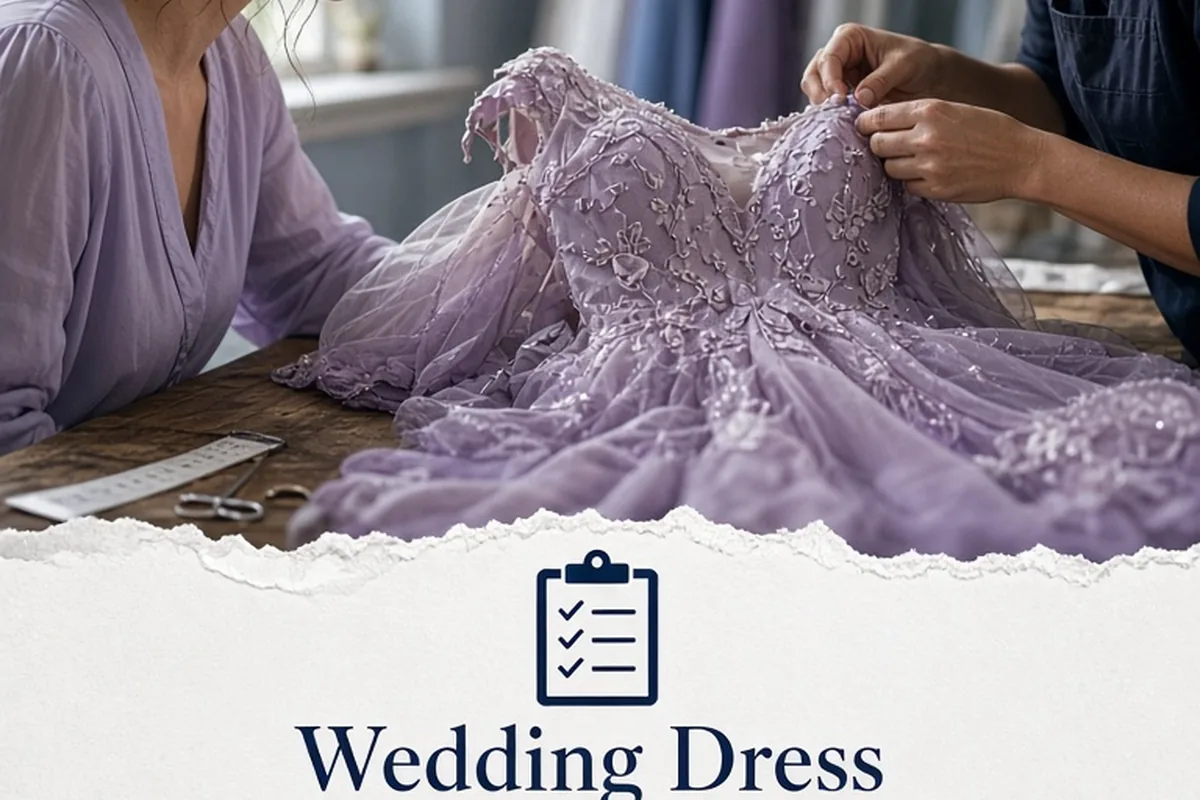
A wedding dress alterations contract checklist ensures your bridal gown tailoring agreement covers exact structural modifications, a firm fitting calendar, detailed fee breakdowns, and clear liability protections. Before signing or paying a deposit, verify that the contract explicitly itemizes hem work, bodice adjustments, bustle styles, and beadwork handling. It must also define who pays for subsequent adjustments if your gown does not match agreed specifications, establish firm completion milestones well ahead of your wedding date, and clarify insurance coverage for accidental damage.
Bridal alterations involve complex, irreversible tailoring on delicate fabrics, requiring weeks of skilled labor and multiple rounds of structural fitting. Because gown modifications represent a major investment of both time and money, entering into an informal arrangement or relying on verbal promises leaves you vulnerable to missed deadlines, mounting surprise fees, and unsatisfactory fit results.
Itemized Scope of Work for Bodice, Hem, and Bustle Construction
A reliable bridal alterations contract must outline the exact physical changes your tailor plans to make, rather than offering vague descriptions like taking in the dress or shortening the skirt. Gown architecture varies drastically depending on the silhouette, internal structure, and textile composition. Your contract should detail whether the tailor is taking in seams from the side, repositioning darts, reshaping armholes, or shortening the bodice from the waistline. Each of these procedures alters the balance of the garment differently, and having the precise method specified in writing ensures that both parties agree on how the dress will be altered to suit your proportions.
Hemline adjustments require explicit documentation because wedding gown skirts frequently involve several distinct layers, including delicate outer lace, horsehair braid edging, crinoline petticoats, and silky linings. The contract should identify whether the hem will be lifted from the natural waist, shortened by detaching and reapplying scalloped border lace by hand, or trimmed directly from the bottom edge. Similarly, the bustling system should never be left to verbal assumptions. The document must define the bustle style, such as an American over-bustle, a French under-bustle, or an Austrian gathered bustle, along with the specific number of anchor points, loops, buttons, or ribbons being constructed. When every alteration is cataloged down to the specific seam and layer, you eliminate confusion over what work was agreed upon and paid for during subsequent fittings.
Fitting Schedules, Milestones, and Mandatory Completion Deadlines
Timeline disputes represent one of the most stressful challenges in the wedding tailoring process, making a binding milestone calendar an essential component of your agreement. A comprehensive contract must record the confirmed dates and times for each distinct fitting stage, rather than listing a single vague completion date days before the ceremony. The initial fitting addresses rough pinned lines and foundation balance; the second fitting checks structural seams, boning placement, and hem heights with your chosen shoes; intermediate fittings refine fine contours; and the final fitting confirms ease of movement, bustling functionality, and the finished hem sweep.
Your contract must clearly state the guaranteed completion date, which should ideally fall at least two to four weeks before your wedding date or formal bridal portrait session. This buffer gives the tailor adequate time to resolve unexpected puckering, tension imbalances, or minor tweaks without invoking rush stress. Additionally, the agreement should establish the seamstress's obligation if an internal scheduling delay occurs on their end. Look for clauses specifying communication protocols if work is running behind schedule, alongside guaranteed turnaround times for remedial adjustments. Knowing when each phase of work must be completed keeps the vendor accountable and provides predictable checkpoints throughout the engagement.
Payment Terms, Change Order Rules, and Incidental Surcharges
Bridal seamstresses and alteration boutiques employ different billing formats, ranging from flat-rate packages to itemized line-item invoices. Your contract should clearly articulate the chosen pricing model, stating the initial non-refundable deposit, intermediate progress payments, and the conditions under which the final balance becomes due. Insist on a clause stating that no balance payment is required until you have inspected the finished gown on your body at the final appointment and confirmed that all written tasks have been completed satisfactorily.
The agreement must also spell out the protocol for change orders and supplementary charges. During the alteration process, design desires or fitting realities can shift. If you decide to add custom off-the-shoulder sleeves, build in bra cups, raise a neckline, or alter the silhouette from an A-line to a mermaid fit, the contract must define how those additions are quoted and authorized. A proper agreement requires written authorization and a documented quote before any work outside the original scope begins, protecting you against unapproved labor surcharges. Furthermore, verify how the seamstress handles fabric-specific complications, such as labor-intensive hand-beading, delicate appliques, or challenging metallics, to prevent sudden price increases halfway through construction.
Shoe Height, Undergarment Dependencies, and Body Fluctuation Limits
A wedding gown is fitted around a specific anatomical framework created by foundation garments, posture, and footwear. Consequently, alteration contracts frequently incorporate clauses addressing physical changes and client responsibilities. The document should state that hem lengths are cut and finished according to the exact shoe height worn during pinning appointments. If you change your footwear from high heels to low wedges after the hem has been trimmed, the tailoring business will treat corrective work as a completely new, billable project. Review these clauses carefully so you understand your obligation to bring identical foundation wear, shapewear, petticoats, and shoes to every fitting session.
Similarly, standard alteration contracts typically address weight loss, weight gain, or body composition changes that occur between fittings. While tailors expect minor natural shifts, substantial body changes can require completely resetting side seams, reshaping internal corsetry, or rebuilding waistbands. The contract should clearly articulate the threshold at which fit adjustments transition from standard fine-tuning under the original price to billable rework. Look for fair language that distinguishes between a tailor's failure to match the pinned measurements and structural changes necessitated by dramatic physical shifts, ensuring you are not unfairly billed for correcting a seamstress's construction error.
Cancellation, Postponement, and Dispute Resolution in Bridal Alteration Contracts
Unforeseen circumstances, such as wedding date postponements, venue changes, or personal emergencies, can interrupt alteration plans. Your bridal tailoring agreement must clearly describe the financial and material outcomes if either party cancels or suspends services. Look for provisions detailing how unearned portions of your deposit or progress payments are calculated if work is halted before completion. Fair contracts dictate that the client is only financially responsible for labor hours already logged and custom materials already purchased, with remaining balances forgiven or refunded.
The contract should also outline what happens to the physical garment if the contract is terminated. The document must affirm that the dress remains your exclusive personal property, prohibiting the tailor from holding the gown hostage beyond legitimate, documented labor fees that have already accrued under the written scope of work. In addition, examine the dispute resolution clause. It should name the governing local jurisdiction and specify reasonable mediation or escalation procedures rather than binding you to severe arbitration terms that restrict your ability to contest botched craftsmanship or unperformed services in small claims court.
Liability Protections for Fabric Damage, Stains, and Fitting Discrepancies
Wedding dresses are made from fragile materials such as silk tulle, crepe, organza, satin, and intricate French laces that can easily snag, rip, scorch, or stain during pinning, cutting, and pressing. A balanced alteration agreement must define the studio's liability in the event of accidental textile damage, dropped irons, oil transfer from industrial sewing equipment, or loss through fire or theft while the gown is in their custody. Be wary of broad exculpatory clauses where the business disclaims all liability for fabric tears, puckered seams, or scorched materials resulting from standard handling.
Ensure the contract establishes clear accountability if a cut is made incorrectly or if delicate lace is destroyed during re-embroidery. Acceptable terms typically state that the business carries commercial bailee or inland marine insurance to cover customer property and will cover professional fabric restoration, replacement of damaged yardage, or reimbursement of the gown's retail value if catastrophic damage occurs. Additionally, review the discrepancy remediation policy: if a finished seam fails to match the pinned specifications agreed upon at the prior fitting, the contract should explicitly state that remedial adjustments will be performed promptly at the tailor's sole expense.
Post-Fitting Care, Steaming Services, and Final Release Protocols
The final appointment is not simply a matter of collecting your gown; it involves a sequence of technical checks and garment care steps that belong in the contract. Your agreement should clarify whether the final price includes professional pressing or steaming. Many delicate fabrics, particularly multi-layered silk tulles, organzas, and crêpes, require specialized low-moisture steaming or delicate pressing to eliminate packaging wrinkles and tailor marks without introducing water spots or flattening textured embroidery. If steaming is treated as an optional add-on, this cost and timing should be clearly noted up front.
The contract must also outline the protocol for final inspection and physical handover. Reputable tailors use a formal sign-off document at pickup. The agreement should grant you adequate time during the final appointment to try on the finished dress, test the bustle with an accompanying guest or bridal attendant, inspect every exterior and interior seam, and check for runaway threads or missing beads. Clarify how much time you have after leaving the boutique to report latent defects, such as a bustle loop pulling out under gentle tension or a stuck hidden zipper, ensuring you have recourse if an issue surfaces during your wedding day preparations.
Frequently asked questions
What happens if my wedding dress is altered incorrectly according to the contract?
If the finished alterations do not match the pinned measurements or written scope of work, refer directly to your contract's rework clause. A fair contract requires the tailor to correct discrepancies at their own expense prior to the agreed completion deadline. If the tailor is unable or refuses to correct the mistake, the contract documentation serves as evidence for negotiating a partial refund or pursuing compensation.
Should a wedding dress alterations contract include a separate bustle warranty?
While few tailors use the term warranty, your contract should explicitly state that the bustle will be demonstrated, tested, and structurally reinforced before pickup. It is wise to verify that the agreement covers immediate re-anchoring of loose buttons, snaps, or ribbon ties at no extra cost if an anchor point loosens during the final try-on session.
How far in advance of the wedding date should the final pickup be scheduled in the contract?
Your contract should schedule final pickup between two and four weeks before your ceremony or formal bridal portrait session. Setting the pickup date well ahead of the wedding leaves ample time for minor adjustments, emergency pressing, and stress-free transport without having to pay rush fees.
Can an alterations business keep my dress if we have a billing dispute?
In many jurisdictions, artisans hold a legal mechanic's lien on property they have worked on until legitimate, documented labor fees are settled, but they cannot withhold your gown over unauthorized or unitemized charges. A clear contract that requires written change orders prevents tailors from demanding surprise fees before releasing your dress.
Your next step
Take your unsigned alterations contract and match every proposed modification against your gown's specific design features, requesting written amendments for any unlisted bustles, vague completion dates, or broad liability disclaimers before submitting a deposit.