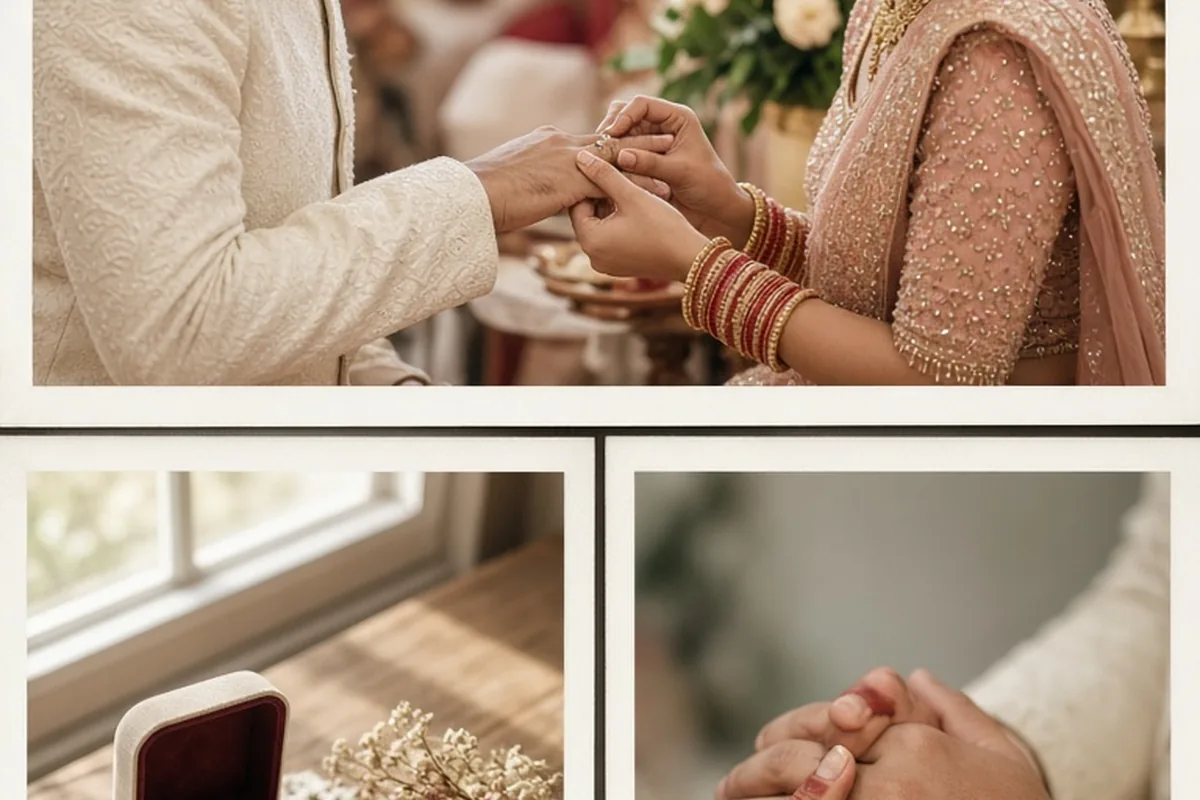
In Indian wedding traditions, the ritual of placing a ring on the finger occurs during the engagement ceremony, known as Sagai, Mangni, or Nishchithartham, or as a preliminary wedding rite. Traditionally, the groom receives the ring on the fourth finger of his right hand, while the bride wears hers on the left ring finger, though modern couples frequently place rings on the left ring finger for both partners.
While ancient Vedic ceremonies historically centered on rituals like the Mangalsutra tying and the sacred seven steps around the fire, the ring exchange has become a central celebration across Indian communities, uniting traditional family blessings with personal vows of commitment.
Cultural Significance of the Ring Exchange Ceremony in India
In traditional Indian weddings, the exchange of rings serves as a formal public declaration of intent to marry, often hosted during standalone engagement festivities known variously as Sagai, Mangni, Sakharpuda, or Nishchithartham. Rather than being viewed solely as an agreement between two individuals, the ring ceremony historically functions as a formal alliance between two extended families. Relatives gather to exchange auspicious gifts, sweets, and blessings, establishing an emotional and social pact long before the wedding altar is built.
The circular shape of the ring carries universal symbolism of wholeness and unbroken continuity, which aligns seamlessly with Indian philosophies of marital harmony and lifelong partnership. In contemporary celebrations, the moment the couple places rings on each other's fingers is treated with substantial fanfare, complete with customized stage setups, dedicated musical performances, and blessings administered by family elders. This blend of historic family alignment and personal expression makes the ring ceremony one of the most anticipated milestones in the wedding timeline.
Understanding Finger and Hand Placement Across Traditions
One of the most common practical questions regarding Indian ring ceremonies involves selecting the correct hand and finger. In many Northern and Western Indian Hindu customs, the right hand is traditionally considered auspicious for men, leading to the custom of the bride placing the ring on the fourth finger of the groom's right hand. Conversely, the bride typically receives her ring on the fourth finger of her left hand, reflecting the widespread belief in the anatomical connection between the left ring finger and the heart.
Regional, astrological, and personal preferences introduce meaningful variations to this custom. In certain communities or under specific planetary alignments, a family priest or astrologer may suggest that either partner wear their ring on a specific hand or finger to invite prosperity and avoid conflicting cosmic influences. Meanwhile, many modern couples choose the left ring finger for both the bride and the groom to maintain stylistic uniformity and ease during daily wear. The key is ensuring that both families and the couple communicate their preference ahead of time so the ceremonial exchange flows smoothly.
Regional and Faith-Based Variations in the Ring Ritual
India is home to diverse regional and religious communities, each of which integrates the ring ceremony with unique local customs. In South Indian Hindu households, the engagement ceremony, or Nishchithartham, often involves formal astrological chart readings and the presentation of traditional silk attire alongside the ring exchange. In Maharashtra, the Sakharpuda celebration centers on the groom's family gifting a packet of sugar to the bride to signify sweetness in their upcoming life, followed immediately by the exchange of gold or diamond rings.
Other faiths across the subcontinent observe distinct ring customs that carry deep spiritual meaning. In Sikh tradition, the Kurmai engagement ceremony often includes the presentation of a gold ring alongside a Kara (steel bangle), dry dates, and blessings from the Guru Granth Sahib. Indian Christian ceremonies place the ring exchange directly within the church liturgy, where the priest blesses the wedding bands before the couple exchanges them at the altar. In Muslim Mangni ceremonies, rings are frequently exchanged as part of a formal celebration of mutual consent, accompanied by prayers for the couple's future welfare.
Finger Rings Versus Traditional Sacred Ornaments
While finger rings enjoy widespread popularity today, they exist alongside a rich array of traditional Indian adornments that denote marital status. The most prominent example is the Bichiya, or silver toe ring, worn primarily on the second toe of both feet by married Hindu women in many parts of India. Unlike finger rings, which are often made of gold, toe rings are traditionally crafted from silver because gold is considered a sacred metal that should not be worn below the waist in classical Hindu tradition.
Historical bridal jewelry also includes the Arsi ring, a wide thumb or finger ring set with a small mirror, traditionally worn by royal Rajput and Mughal brides to discreetly catch glimpses of their partner during long ceremonies. Additionally, the Hathphool—a delicate network of chains connecting a wrist cuff to multiple finger rings—remains a fixture of traditional bridal attire. Understanding the distinction between ornamental pieces like the Hathphool and the primary engagement ring helps couples coordinate their jewelry styling so that the ceremonial ring remains accessible during the ceremony.
Adapting Ring Rituals for Second Marriages and Blended Families
When entering a second marriage or uniting blended families, couples often look for ways to make the ring ceremony reflect their mature perspective and unique circumstances. Some couples prefer a quiet, intimate ring exchange attended solely by close confidants, deliberately choosing to step away from large-scale ancestral expectations that may have characterized their previous weddings. In these settings, the ring exchange becomes a deeply personal reaffirmation of trust, maturity, and deliberate mutual selection.
Couples blending families with children frequently incorporate symbolic gestures into the ring ritual to foster inclusion and emotional security. For instance, alongside the couple's exchange of wedding bands, the bride and groom may present small pendants, bracelets, or engraved bands to their children, formally acknowledging the creation of a supportive family unit. This thoughtful adaptation honors the realities of remarriage while establishing a positive, memorable tradition that respects everyone involved.
Practical Etiquette and Ceremony Coordination
A successful ring ceremony requires clear practical coordination, especially given the sensory complexity and rapid pace of Indian wedding functions. Couples should account for the application of bridal Mehendi (henna), which is often wet or freshly set around the time of the engagement rituals. Ensuring the hands are completely dry before handling rings prevents sticky residue from tarnishing the metal or causing the band to slip awkwardly during the exchange.
Sizing represents another critical detail that warrants proactive attention. Humid climates, travel, and extended standing during celebrations can cause minor hand swelling, making an overly tight ring difficult to slide onto the finger on stage. Selecting a comfortable fit and designating a trusted family member or attendant to manage the ring boxes until the exact moment of the ritual ensures the presentation remains polished, relaxed, and seamless.
Frequently asked questions
Is the ring exchange mandatory in traditional Vedic Hindu weddings?
No, the ring exchange is not a mandatory component of classical Vedic Hindu rites, which historically focus on rituals such as the Mangalsutra Dharanam, Sindoor Daan, and Saptapadi. However, modern cultural practices have integrated the ring ceremony as a standard pre-wedding or engagement event.
Which hand does an Indian groom wear his wedding ring on?
An Indian groom traditionally wears his engagement ring on the fourth finger of his right hand in many Northern and Western traditions. However, many contemporary grooms choose to wear it on their left ring finger to match modern international practices.
Can silver or platinum be used instead of gold for Indian engagement rings?
Yes, while yellow gold holds longstanding cultural and auspicious value in India, diamond-studded platinum, white gold, and rose gold have become widely accepted choices for engagement and wedding rings. Metal selection generally depends on personal aesthetic preferences, lifestyle, and budget.
Your next step
Clarify hand and finger preferences with your partner and families early in the planning process to ensure the ring exchange ceremony honors both your cultural traditions and personal comfort.