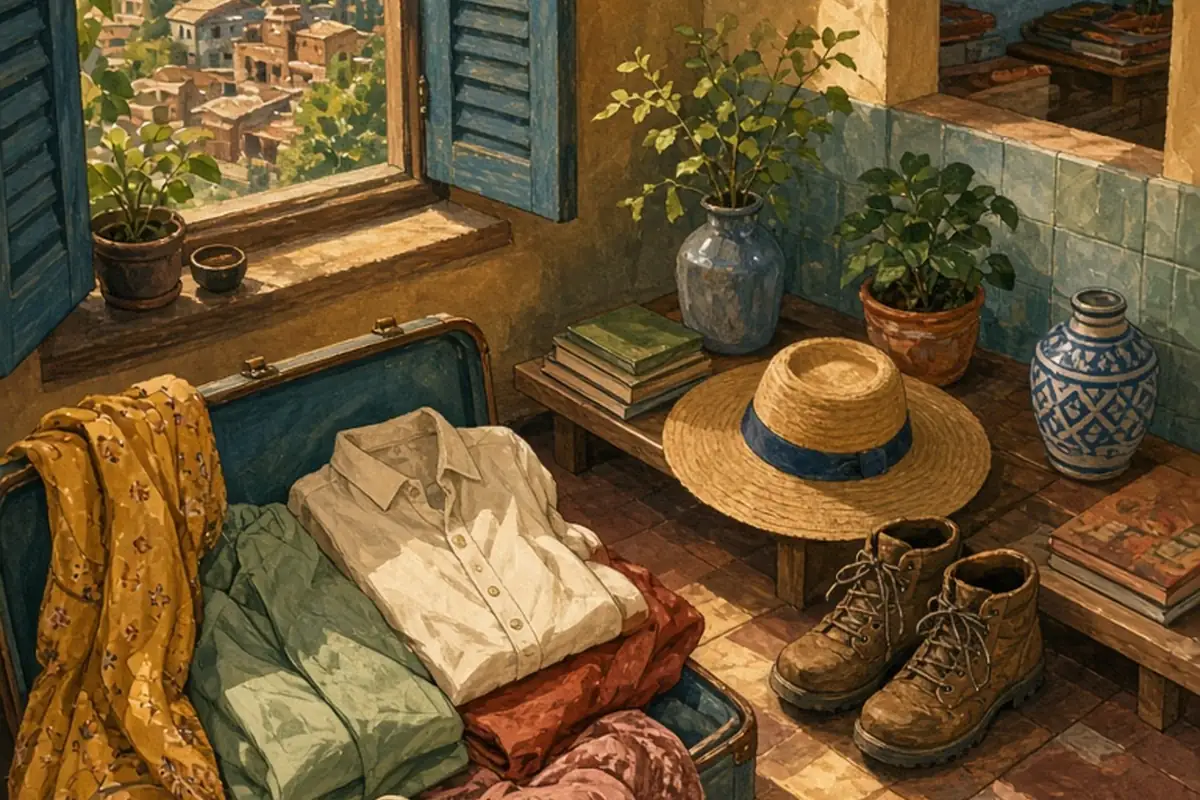
Female tourists in Pakistan generally wear modest, loose-fitting clothing that covers the shoulders, chest, upper arms, and ankles. Popular choices include long tunics or kurtas paired with loose trousers, wide-leg linen pants paired with long-sleeved button-down shirts, and maxi dresses layered with cardigans. Carrying a lightweight scarf or dupatta is essential for covering your head at religious sites and navigating conservative public spaces with ease.
Packing for a trip to Pakistan involves balancing personal comfort, climate demands, and cultural awareness. While dress expectations vary between modern urban neighborhoods and remote villages, modest attire remains the universal foundation for respectful and hassle-free travel throughout the country.
Core Cultural Principles and Everyday Modesty
In Pakistan, clothing choices are deeply tied to cultural customs and Islamic values, which emphasize modesty for both men and women. For female travelers, this standard translates into covering the collarbone, chest, shoulders, and legs down to the ankles. Outfits with tight silhouettes, sheer fabrics, deep necklines, or bare shoulders can draw unwanted attention and may cause discomfort in conservative public spaces such as traditional bazaars, bus stations, and residential neighborhoods.
Dressing modestly does not require you to adopt a full traditional wardrobe immediately, but it does mean choosing loose-fitting silhouettes that do not cling to the body. An oversized cotton shirt worn over relaxed trousers, for example, achieves the same degree of cultural respect as traditional attire while keeping you cool in high temperatures. Modesty in this context serves a dual purpose: it signals respect for the communities hosting you and significantly reduces lingering stares, allowing you to move through public spaces with greater confidence.
A useful everyday staple is the dupatta or lightweight cotton scarf. While wearing a head covering is generally not mandatory for foreign women on standard city streets, keeping a scarf draped around your neck or shoulders helps soften the neckline of Western tops. It also gives you an immediate layer to pull over your chest in crowded areas or over your hair when you encounter a conservative setting.
Adapting Western Clothing for Daily Travel
You do not need an entirely new wardrobe before arriving in Pakistan, as many standard Western garments can be styled to meet local expectations. Long-sleeved tunic tops, mid-thigh button-down boyfriend shirts, and lightweight duster cardigans are excellent layering pieces that provide torso and hip coverage over standard pants. Pair these tops with wide-leg linen trousers, breathable cotton culottes that hit the ankle, or relaxed-fit jeans.
Maxi dresses and long skirts can also work well, provided they have higher necklines and opaque fabric. If a dress has short sleeves or a lower neckline, wear a lightweight long-sleeve tee underneath or layer a loose, unbuttoned linen shirt over the top. Avoid form-fitting bodycon cuts, high leg slits, and low-rise bottoms. Leggings can be worn comfortably, but only when paired with a long tunic or dress that extends past mid-thigh.
One trade-off to consider with Western clothing is fabric weight and heat retention. Layering multiple garments to achieve modesty during hot summer months in central provinces like Punjab or Sindh can become uncomfortable quickly. Prioritizing single-layer modesty—such as an opaque, loose, long-sleeved linen tunic—will keep you significantly cooler than piling cardigans over short-sleeved tops.
Regional Differences from Major Cities to Northern Valleys
Clothing norms vary notably depending on where you travel within Pakistan. In cosmopolitan neighborhoods of major cities like Lahore, Karachi, and Islamabad, you will see a diverse spectrum of fashion. In upscale cafes, art galleries, and shopping malls, local women frequently wear modern cuts, fusion wear, and Western styles such as jeans and shirts without head coverings. In these specific enclaves, female tourists have wider latitude with their clothing choices, though keeping shoulders and knees covered remains advisable.
Outside these urban pockets, expectations shift toward traditional conservatism. In smaller towns, rural farming communities, and conservative border regions like Khyber Pakhtunkhwa and Balochistan, loose traditional dress is the standard, and foreign women are strongly encouraged to wear loose salwar kameez sets with a draped dupatta. In these areas, blending in through conservative dress makes daily interactions much smoother and demonstrates situational sensitivity.
The northern alpine regions, including Hunza, Skardu, and Gilgit-Baltistan, have their own distinct dynamic. Due to a long history of international mountaineering and community-based tourism, areas like central Hunza are relatively progressive and accustomed to foreign visitors in practical outdoor gear. However, even in northern villages, modesty is deeply valued; local women appreciate tourists who avoid tight athletic wear when walking through residential paths and village centers.
Visiting Mosques, Shrines, and Sacred Sites
Visiting historical religious landmarks, such as the Badshahi Mosque in Lahore or the Faisal Mosque in Islamabad, requires strict adherence to specific dress codes. At all active religious sites, female visitors must cover their hair completely, along with their arms down to the wrists and legs down to the ankles. Clothing must be completely opaque, as security guards and site caretakers actively enforce modesty standards at the entrances.
A wide scarf made of cotton, modal, or lightweight viscose is best for these visits, as smooth silk scarves tend to slide off hair easily during movement. You will also be required to remove your footwear before entering prayer halls and courtyard carpets. Carrying a pair of clean walking socks in your daypack ensures your feet stay protected from hot marble tiles in the summer and cold stone floors in the winter.
Sufi shrines across the country, known as dargahs, often have vibrant, crowded courtyards with devotional music and rituals. When visiting shrines, dress especially conservatively in a full three-piece salwar kameez or an ankle-length dress with a wide shawl. Keeping your head covered for the entirety of your time inside the shrine perimeter is standard etiquette.
Outdoor Adventures, Trekking, and Activewear
Pakistan is home to world-class trekking routes in the Karakoram and Himalayan ranges, where technical performance gear is necessary for safety and comfort. On mountain trails far from towns, standard outdoor apparel—such as moisture-wicking long-sleeve base layers, technical hiking trousers, and fleece jackets—is completely appropriate and expected. Choose loose trekking pants over tight compression tights whenever possible.
If you prefer hiking in athletic leggings, pack a lightweight running skirt, loose hiking shorts, or a long quick-dry tunic to wear over them until you clear village trailheads. When passing through remote shepherd settlements or stopping for tea at high-altitude villages, having a long outer layer or a light windbreaker that covers your hips helps maintain cultural modesty without compromising athletic functionality.
Sun protection is critical in the high-altitude north due to intense ultraviolet exposure. Long-sleeved UPF-rated shirts with high collars and wide-brimmed sun hats serve both modesty and sun safety. Keep an extra buff or bandana accessible in your pocket; it protects your neck from sunburn on the trail and doubles as a quick head covering when entering mountain hamlets.
Fabrics, Footwear, and Essential Accessories
The climate in Pakistan can range from scorching desert heat exceeding 100 degrees Fahrenheit in the plains to sub-freezing temperatures in the northern mountains. Selecting the right fabric is essential for staying comfortable. Natural, breathable textiles like cotton, linen, lawn, and lightweight viscose allow air circulation and dry quickly in humid conditions. Synthetic fabrics like polyester or nylon should generally be avoided for city touring, as they trap body heat and moisture.
Footwear must balance comfort, support, and ease of removal. You will encounter unpaved roads, dusty footpaths, uneven sidewalks, and frequent shoe-removal checks at religious and residential thresholds. Slip-on walking shoes, breathable minimalist sneakers, or sturdy closed-toe sandals with arch support are practical daily options. Avoid delicate footwear or open-toed shoes without back straps in busy urban centers where streets can be dusty.
Key accessories include a secure crossbody bag that keeps your hands free, dark sunglasses to reduce direct eye contact in crowded markets, and multiple versatile scarves. A medium-weight pashmina or wool shawl is especially useful if traveling during winter or visiting mountainous areas, as temperatures drop rapidly after sunset.
Buying and Wearing a Local Salwar Kameez
One of the easiest, most comfortable, and most respectful ways to dress in Pakistan is to purchase a traditional salwar kameez locally. The salwar kameez consists of a long tunic (kameez), loose trousers (salwar), and a matching scarf (dupatta). Readymade sets are readily available in shopping plazas, major retail stores like Khaadi, Generation, and Sapphire, and local bazaars across every city at very reasonable prices.
Local garments are cut specifically for the climate, utilizing airy lawn cotton that offers complete coverage without trapping heat. Local vendors and tailors are accustomed to helping visitors find the right size and fit. Wearing a salwar kameez is warmly received by local residents, who often view it as a genuine sign of respect for Pakistani culture, opening the door to friendlier conversations and hospitality.
When purchasing ready-to-wear sets, look for stitched two-piece or three-piece suits. An unstitched fabric set requires taking the cloth to a local tailor (darzi), which takes anywhere from one to several days depending on the shop's workload. If you have limited travel time, stick to ready-to-wear collections in standard sizes.
Frequently asked questions
Is it legally required for female tourists to cover their heads in Pakistan?
No, covering your head in everyday public spaces is not a legal requirement for female tourists in Pakistan. However, you must cover your hair when entering mosques, shrines, and other sacred religious sites. Carrying a light scarf with you makes it easy to cover your head whenever local norms or specific locations call for it.
Can women wear jeans and t-shirts while traveling in Pakistan?
Women can wear jeans, but they should be relaxed or straight-leg cuts rather than skin-tight styles. Standard short-sleeved t-shirts are generally too revealing for conservative public streets, so pair your jeans with loose, long-sleeved shirts or mid-thigh tunics instead.
What should female travelers wear for swimming or water activities?
Public hotel pools in upscale urban areas often permit standard one-piece modest swimsuits, though policies vary by venue. For swimming in public lakes, rivers, or coastal areas, women should wear full-coverage swimsuits, burkinis, or quick-drying athletic leggings paired with a loose, long-sleeved rash guard.
How should I dress for hot summer weather without compromising modesty?
Focus on loose, lightweight natural fabrics like lawn cotton and linen in light colors. Long-sleeved, oversized button-downs, wide-leg trousers, and traditional cotton kurtas provide full sun protection and modesty while allowing continuous airflow to keep you cool.
Your next step
Begin building your packing list around loose linen trousers, oversized long-sleeve tops, and a few versatile scarves, reserving suitcase space to pick up a comfortable, tailored salwar kameez once you arrive.