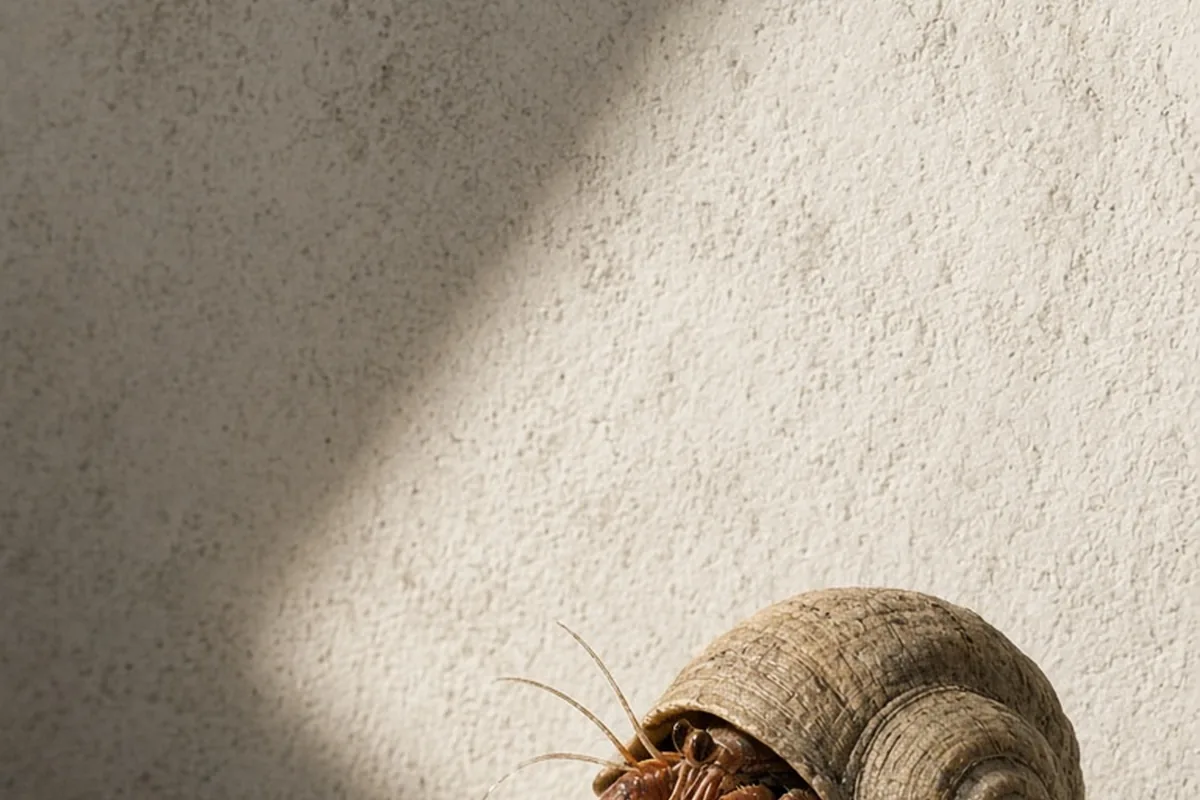
A female hermit crab looks nearly identical to a male on the surface, but she possesses two small, distinct circular pores called gonopores. Located on the underside of her body, these tiny pinprick openings sit on the coxa, or base segment, of her third pair of legs, counting the large claws as the first pair. Females also feature small, feathery appendages called pleopods on the left side of their abdomen.
Determining the sex of a pet hermit crab requires examining specific anatomical markers on the underside of the body rather than relying on general appearance, color, or shell choice.
Locating Gonopores on the Walking Legs
The most reliable anatomical feature distinguishing a female hermit crab from a male is the presence of gonopores. Gonopores are tiny, paired circular openings through which the female releases eggs during the reproductive cycle. These pores are located on the underside of the body at the base segment, known as the coxa, of the third pair of thoracic appendages. To count correctly, count the pair of large front claws (chelipeds) as the first pair, followed by the first pair of walking legs as the second, and the next pair of walking legs as the third.
Under good lighting, gonopores look like two distinct, dark, or slightly recessed pinprick dots. In juvenile crabs or smaller species, these marks can be difficult to see with the naked eye and may require a gentle magnifying lens. In contrast, male hermit crabs have completely smooth coxae on their third pair of legs, showing no visible holes, pits, or dark markings at the limb joints.
When checking for gonopores, inspect both the left and right legs at the third limb position. While developmental anomalies are rare, confirming that both pores are symmetrically placed ensures an accurate reading. If the leg bases appear unbroken and smooth without any indentations, you are observing a male.
Abdominal Structure and Pleopods
Beyond the leg joints, female hermit crabs have unique internal and abdominal structures designed for carrying clutches of eggs. Inside the shell, a female crab has a soft, asymmetrical abdomen equipped with three small, feathery appendages called pleopods on its left side. During breeding, the female attaches thousands of fertilized eggs to these pleopods, keeping them protected, aerated, and moist within the humidity of the shell until they are ready to hatch.
Male hermit crabs lack these developed abdominal pleopods entirely or possess only microscopic, vestigial structures. Because hermit crabs keep their soft abdomens tucked deeply inside their gastropod shells to prevent dehydration and physical injury, pleopods are rarely visible during routine handling. Attempting to force a crab out of its shell to inspect its abdomen can tear its connective tissue and cause fatal trauma.
You may occasionally catch a glimpse of the abdomen when a crab voluntarily changes shells in a clear glass enclosure or while deep cleaning its current shell. However, because gonopores can be seen while the crab remains safely inside its home, checking the walking legs remains the only safe and practical diagnostic method for pet owners.
Safe Techniques to View the Underside
Because hermit crabs are naturally defensive prey animals, inspecting their underside requires patience and gentle handling techniques that avoid causing undue stress. Never pull, twist, or pry a hermit crab by its legs or shell opening. Doing so can cause the crab to drop limbs as an autotomy stress response or sustain permanent internal damage.
The safest inspection method involves using a clear, clean glass or food-grade acrylic container. Place the crab gently inside the clear container, set the container on an elevated surface or hold it carefully above eye level, and wait in a quiet, warmly lit room. Once the crab feels secure, it will extend its body outward to explore and walk across the clear bottom, giving you a direct, unobstructed view of the base of its third leg pair.
Another effective technique is to hold the crab by the back of its shell between your thumb and index finger, tilting it slightly backward over a soft towel. If the crab reaches outward to right itself, use a small penlight to briefly illuminate the underside of the walking legs. If the crab remains withdrawn, place it back into its habitat and try again later rather than prolonging the handling session.
Common Myths About Crab Color, Size, and Claws
A widespread misconception among new crab owners is that external markers like shell shape, vibrant coloration, or claw proportion indicate whether a crab is male or female. In popular pet species such as the Caribbean hermit crab (Coenobita clypeatus) and the Ecuadorian hermit crab (Coenobita compressus), both sexes exhibit identical ranges of coloration, from deep purple and orange to tan and brown, which fluctuate primarily based on diet and molting stages rather than biological sex.
Similarly, claw size is not an indicator of sex in land hermit crabs. Both males and females develop a noticeably enlarged primary claw (usually the left claw in land species) used for defense, climbing, and sealing the shell aperture against predators and dry air. A large or dominant claw does not signal a male crab, just as a smaller overall body size does not signify a female.
Behavioral assumptions can also be misleading. Activity levels, shell preferences, and climbing agility vary among individuals due to environmental factors such as enclosure humidity, substrate depth, and temperature rather than sex-specific habits. Relying on visual stereotypes will lead to frequent misidentification.
Breeding Biology and Captive Realities
Even when male and female hermit crabs share an enclosure, captive breeding is extraordinarily complex and rarely results in surviving offspring without specialized marine laboratory equipment. In nature, female hermit crabs carry fertilized egg masses within their shells for several weeks before migrating to the ocean shoreline to release their microscopic larvae, known as zoeae, directly into saltwater waves.
These larvae must pass through multiple delicate swimming stages over several weeks, consuming specialized plankton in precisely maintained marine conditions before finding tiny juvenile shells and transitioning to land life. In a standard freshwater or terrarium setup, any released eggs quickly spoil or fail to survive because they lack the necessary oceanic currents and microscopic food sources.
Observing your crabs mating or seeing a female holding a dark mass of eggs within her shell is a sign of an active, healthy environment, but it does not require changing basic enclosure care. Maintaining steady tropical humidity (75% to 80%) and providing continuous access to both fresh, dechlorinated water and marine-grade saltwater allows female crabs to maintain their natural hydration and grooming cycles without interference.
Housing and Daily Care Considerations for Mixed Groups
Hermit crabs are highly social animals that thrive in colonies, and keeping males and females together presents no behavioral risks or aggressive competition. Male crabs do not fight over females in standard captive conditions, nor do females require isolation from the group during normal seasonal cycles. The daily care requirements for both sexes remain completely identical across diet, humidity, heating, and substrate depth.
To ensure a peaceful habitat for both sexes, focus on resource abundance rather than managing gender ratios. Provide a generous assortment of natural, non-painted shells in various opening sizes and styles so that every crab can switch shells without competition. Because females sometimes choose slightly more spacious shells when developing internal egg masses, offering extra turbo and round-aperture shells supports natural behaviors.
Additionally, ensure the substrate consists of a moistened five-to-one ratio of play sand to coconut fiber, packed at least six inches deep or three times the height of your largest crab. This allows both males and females to safely burrow for molting without being disturbed by other colony members.
Frequently asked questions
Can you tell a female hermit crab by looking at its claw size?
No, claw size does not indicate sex in land hermit crabs. Both males and females develop one enlarged defensive claw, usually on the left side, which serves as a protective door when they tuck inside their shell. Only the presence of gonopores on the underside can confirm sex.
At what age or size can you determine the sex of a hermit crab?
Sexing is generally easiest once a hermit crab reaches a medium size with a shell opening around half an inch or larger. In very young or micro-sized crabs, the gonopores may be too small to spot clearly without high-powered magnification.
Do female hermit crabs behave differently than male hermit crabs?
There are no notable differences in personality, social behavior, or daily activity between male and female hermit crabs. Variations in curiosity, climbing, and shyness are driven by individual temperament, enclosure conditions, and recent molting cycles rather than sex.
Your next step
To safely check your hermit crab's sex, place your pet inside a clear glass container and look from beneath with a flashlight to check for two small gonopore dots on the third pair of leg bases.