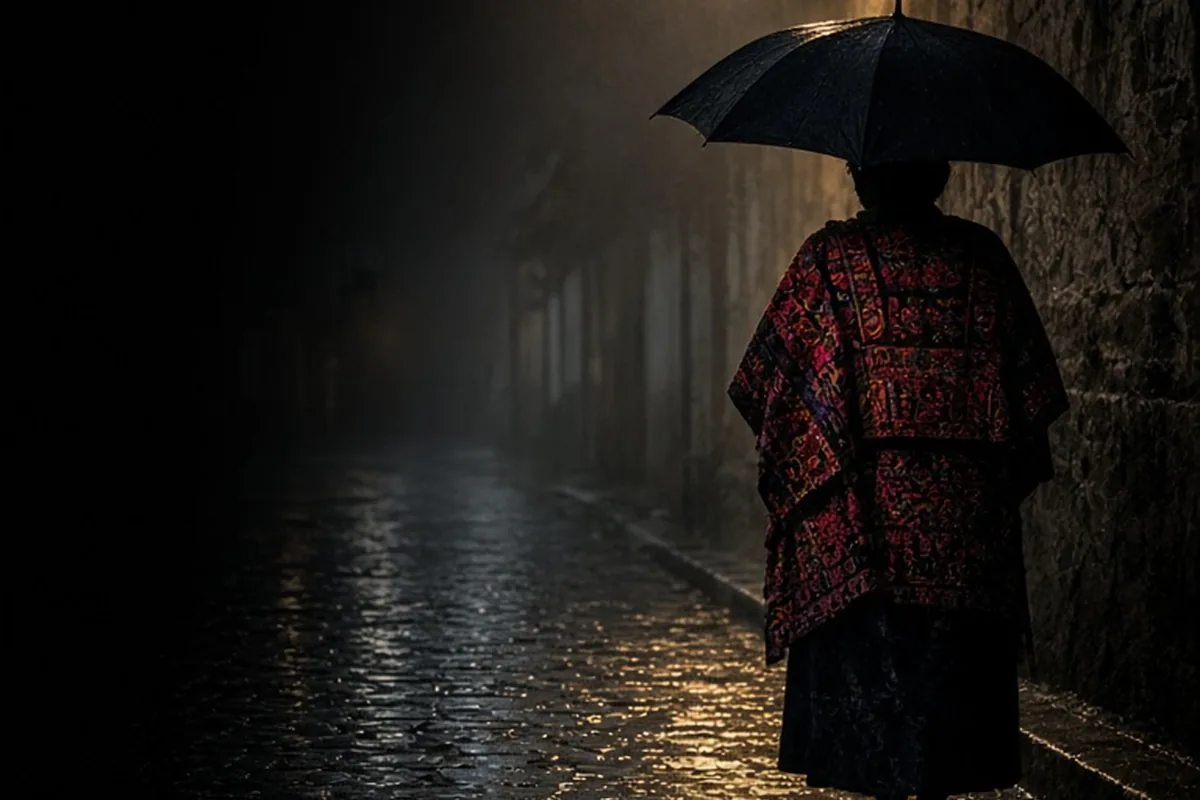
A Guatemalan woman's huipil serves as a visual biography and cultural statement. Through specific weaving techniques, localized color palettes, and symbolic iconography, it reveals her municipality of origin, indigenous Maya heritage, marital or social standing, and ceremonial responsibilities. Each garment also showcases her personal creative choices, family lineage, and technical mastery on the traditional backstrap loom.
Worn across the highlands and lowlands of Guatemala, the huipil is far more than traditional attire; it is a living manuscript woven from cotton, silk, and ancestral memory. For Maya women, donning a huipil is an act of daily self-expression, cultural continuity, and political resistance that communicates complex layers of individual and communal identity at a single glance.
Geographic Origin and Municipality Lineage
The most immediate detail a huipil communicates is the wearer's specific hometown or municipality. Because Guatemala is home to dozens of distinct Maya townships spread across varied mountainous terrain, weaving traditions evolved in localized pockets. Each community developed signature color schemes, structural cuts, neckline finishes, and structural proportions that make a woman's regional roots identifiable from across a market square.
For example, a huipil from San Antonio Palopó near Lake Atitlán traditionally incorporates deep blues and greens reflecting the surrounding water and volcanic terraces, adorned with small geometric figures. In contrast, a huipil from Chichicastenango features heavy red or purple background panels with sunburst-style chain stitching around the neck, signifying the town's highland cosmology. A woman wearing a huipil from Nebaj in the Ixil region will showcase vibrant red backgrounds covered with rows of bright animal figures and human forms. Recognizing these geographic markers allows observers to understand the specific highland or valley landscape where the weaver's family has lived for generations.
While regional designs remain recognizable, municipal boundaries are not rigid barriers. When women migrate to urban centers like Guatemala City or relocate due to marriage, their huipiles may blend motifs from both their birthplace and their new community, documenting physical journeys and inter-village connections directly into the fabric.
Mayan Ethnolinguistic Heritage and Community Belonging
Beyond geographic coordinates, a huipil identifies the wearer's broader ethnolinguistic group within the Maya civilization. Guatemala recognizes over twenty distinct Maya language groups, including K'iche', Kaqchikel, Mam, Q'eqchi', and Tz'utujil. The structural choices in a huipil, such as whether it is made of two or three joined panels, whether it is worn tucked into the corte (skirt) or left loose, and whether the supplementary weft is raised or flat, often align with these broader linguistic territories.
This linguistic and ethnic signaling provides an immediate sense of shared heritage among women meeting outside their home communities. In crowded regional transit hubs or national assemblies, the huipil functions as a shared badge of belonging that transcends spoken dialects, enabling Maya women to recognize collective solidarity and cultural resilience against historic assimilation pressures.
However, interpreting ethnolinguistic background purely through textile patterns requires nuanced understanding. Historical trade, displacement during the internal armed conflict, and contemporary style exchanges mean that patterns are dynamic living traditions rather than static ethnographic artifacts.
Cosmological Beliefs and Sacred Symbolism
The motifs woven into the body of a huipil convey the wearer's spiritual worldview and her community's relationship with the natural and sacred universe. Maya cosmology views humans as deeply interconnected with nature, time, and celestial forces, and these concepts are transcribed into woven geometry using supplementary weft brocading.
Common symbols carry specific meanings that reflect this worldview. The four cardinal directions and the movements of the sun are frequently represented through diamond shapes and radial neckline stitching. Zigzag lines commonly represent the sacred plumed serpent or winding mountain paths, while depictions of maize plants, birds, and sacred trees honor agricultural fertility and life-giving natural cycles. In many K'iche' communities, double-headed eagle motifs represent dual vision: looking both backward into ancestral history and forward into the future.
When an artisan wears these symbols, she is not merely displaying decorative craft; she is carrying ancestral philosophy on her shoulders. The placement of symbols around the collar and chest often acts as a spiritual protective shield, centering sacred power over the heart and throat of the wearer.
Life Stage, Marital Status, and Ceremonial Standing
A huipil can also signal a woman's current stage of life, social milestones, and community responsibilities. In several municipalities, subtle variations in thread color, fullness of embroidery, or specific border trims indicate whether a woman is single, recently married, a mother, or an elder. For instance, in certain Poqomam or Kaqchikel towns, specific ribbon colors or supplementary neck embroidery are historically associated with marital transitions.
Social and religious hierarchy is particularly visible through the distinction between daily huipiles (huipiles de diario) and ceremonial garments (huipiles ceremoniales or cofradía huipiles). While everyday garments are lighter, shorter, and designed for practicality in household and agricultural work, ceremonial pieces are expansive, densely brocaded, and often woven with rare materials like natural silk, lustrina, or hand-spun native brown cotton (cuyuscate).
A woman wearing a ceremonial huipil in public is immediately recognized as holding a leadership or spiritual role within a cofradía (religious brotherhood) or community council. These garments are treasured heirlooms, passed down across generations and worn only during patron saint festivals, weddings, and sacred civic ceremonies.
Individual Artistry, Mastery, and Innovation
While community conventions establish the foundational rules of a design, every huipil reflects the unique aesthetic choices and technical skill of the individual weaver. Maya backstrap weaving is a demanding discipline that requires precise mathematical calculation, tension control, and spatial memory without relying on drawn patterns. Consequently, a huipil communicates the artisan's personal standard of craftsmanship.
Weavers exercise significant creative agency in choosing color gradients, combining contrasting thread types, and introducing personal variations on traditional motifs. An experienced artisan might subtly alter the density of a chevron pattern, introduce a modern palette of turquoise and magenta into an older village layout, or weave a miniature animal signature into a discreet section of the torso.
Within weaving families, daughters often inherit specific structural techniques and motif variations from their mothers and grandmothers. An informed eye can often trace a garment back to a particular household or lineage of master weavers, recognizing the subtle stylistic 'handwriting' that distinguishes one artisan's work from another.
Economic Autonomy and Cultural Resistance
In modern Guatemala, wearing and producing huipiles is closely tied to economic sovereignty and indigenous rights advocacy. Because industrialization, global fast fashion, and historical discrimination have pressured indigenous populations to abandon traditional clothing, choosing to wear a handmade huipil is a deliberate declaration of cultural pride and political presence in public life.
Weaving huipiles also provides Maya women with vital financial independence. Through collective weaving associations and independent artisan cooperatives, women leverage their specialized knowledge to generate household income, fund education for their children, and build community infrastructure. The quality and complexity of the garment often indicate an investment of several months of labor and significant material resources.
At the same time, indigenous weaving collectives are actively fighting for collective intellectual property rights to protect their ancestral designs from commercial exploitation by industrial fashion brands. When a woman wears her traditional huipil, she actively participates in defending the integrity, ownership, and value of her community's cultural patrimony.
Ethical Understanding and Meaningful Appreciation
For travelers, collectors, and cultural enthusiasts, understanding what a huipil signifies is the first step toward respectful engagement. Appreciating these garments requires moving beyond superficial aesthetic admiration to recognize them as complex intellectual property and personal heritage carrying centuries of lived experience.
When purchasing or learning about huipiles, buyers can practice ethical support by sourcing textiles directly from weavers or transparent community cooperatives that pay fair, artisan-set wages. Understanding the time, symbolism, and regional origin behind a piece helps ensure that fair compensation reflects the weeks or months of skilled labor invested in its creation.
Appreciation also means respecting the context in which garments are worn. While acquiring wall hangings or ethically produced contemporary items supports local livelihoods, repurposing sacred ceremonial textiles into disposable accessories without community consent can trivialize their deep spiritual and social functions.
Frequently asked questions
How long does it typically take to weave a traditional huipil?
Creating a traditional huipil on a backstrap loom generally requires between one and six months of dedicated labor, depending on the complexity of the motifs and the density of the weave. Ceremonial huipiles with intricate supplementary brocading can take even longer.
Can any Maya woman wear a huipil from a different village?
Yes, Maya women frequently purchase or wear huipiles from other regions out of personal style preference, convenience, or appreciation for different weaving styles. However, during major local festivals, civic events, or family ceremonies, women almost always wear the traditional design of their home municipality.
Why do some modern huipiles look different from vintage versions?
Huipiles are dynamic, evolving garments influenced by new dye techniques, changing trade routes, imported yarns, and contemporary fashion trends. Modern weavers regularly incorporate fresh color palettes and innovative geometric combinations while preserving core ancestral structures.
What is the difference between a backstrap-loomed huipil and a machine-made version?
A backstrap-loomed huipil is entirely handwoven thread-by-thread with tension maintained by the artisan's body, creating unique structural irregularities and dense, two-sided brocading. Machine-made versions use automated looms and chemical dyes, resulting in lighter, uniform textiles that lack handwoven texture and cultural lineage.
Your next step
When admiring or acquiring a Guatemalan huipil, always inquire about its specific municipality of origin and seek out direct artisan cooperatives that ensure fair compensation and cultural preservation.