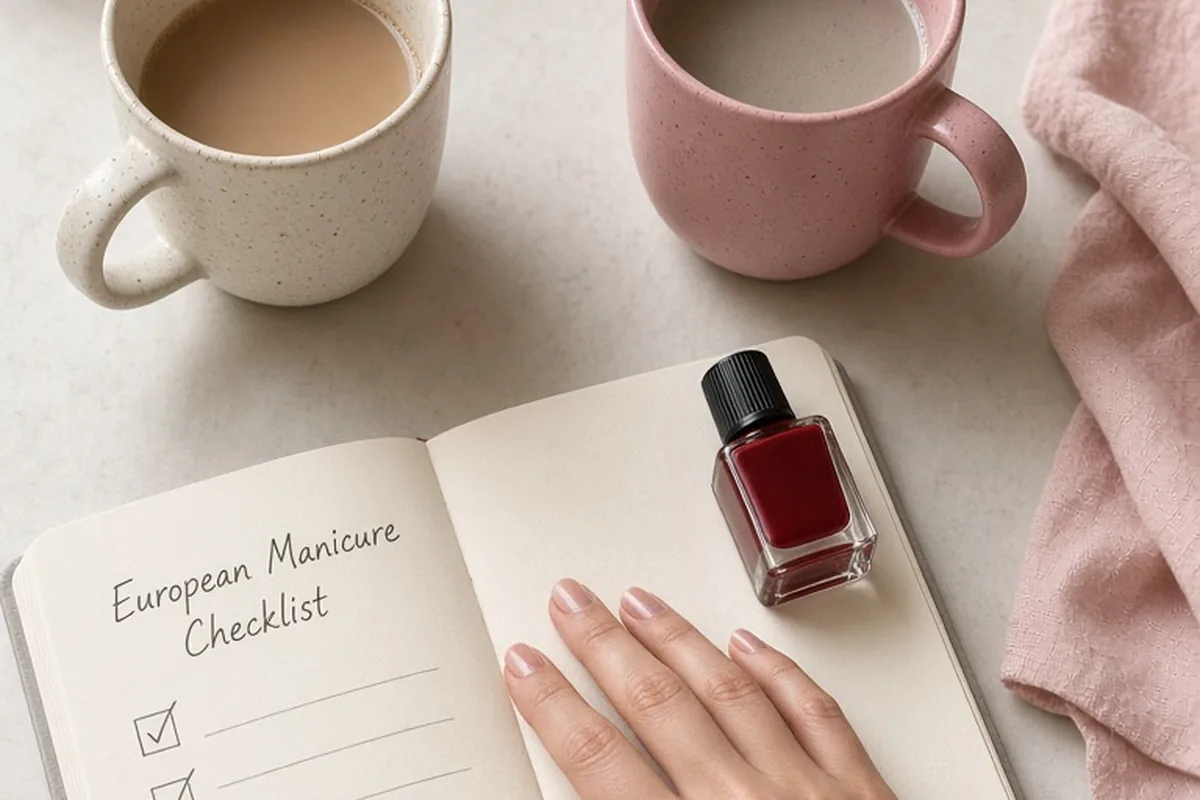
A European manicure appointment checklist is a practical guide covering preparation, technician vetting, in-salon steps, and aftercare for a non-invasive nail treatment. The process focuses on softening and gently pushing back cuticles without cutting live tissue, using clean implements, assessing nail plate health, and applying protective polish or overlays while maintaining a strict daily hydration routine at home.
Navigating nail salon menus can feel overwhelming when techniques range from traditional water soaks to intensive electric filing. A European manicure offers a balanced, cuticle-safe alternative that prioritizes the natural integrity of your nail barrier while still delivering a clean, polished look.
Understanding the European Manicure Method and Philosophy
The defining feature of a European manicure is its gentle, non-cutting approach to cuticle maintenance. Unlike traditional wet manicures that soak fingers in water or Russian manicures that rely on motorized e-files to abrade the surrounding skin, the European technique uses specialized chemical softening lotions, alpha-hydroxy acid formulations, or gentle oils to dissolve dead skin cells clinging to the nail plate. The living proximal nail fold remains completely intact, functioning as nature intended to seal the nail matrix against bacteria, fungi, and environmental irritants.
This methodology appeals to clients seeking neat grooming without the risks of infection, hangnails, or tissue thickening that often follow repeated mechanical cutting. While the immediate visual result is softer and slightly less deeply recessed than an aggressive hardware manicure, the long-term trade-off is significantly healthier nail growth and fewer skin tears. Understanding this distinction helps you set realistic aesthetic expectations before stepping into the salon.
Pre-Appointment Preparation Checklist
Proper preparation before you arrive at the salon ensures your technician can work efficiently and assess your natural nail bed accurately. In the week leading up to your visit, resist the temptation to trim, pick, or push your own cuticles with metal tools. Home clipping frequently creates ragged edges and micro-abrasions that make professional softening products sting or cause uneven results.
Arriving with clean, product-free hands also saves valuable appointment time. If you currently wear gel, dip powder, or acrylics that were applied elsewhere, notify the salon during booking so they can schedule adequate removal time without rushing the delicate European cuticle treatment.
Consider this quick preparation checklist before your appointment:
- Stop all home cutting or aggressive scraping of cuticles at least seven to ten days prior to your visit.
- Apply a drop of simple jojoba oil or hand cream nightly to hydrate dry, hardened skin surrounding the nail plate.
- Notify the salon in advance if you require the removal of existing gel, acrylic, or dip enhancements.
- Avoid submerging your hands in hot water or heavy cleaning detergents immediately before your appointment.
How to Vet and Choose the Right Salon
Because the term European manicure is sometimes used loosely in salon marketing, vetting your service provider ensures you receive an authentic, tissue-preserving treatment rather than a standard soak-and-clip service. A qualified technician will readily explain their process and emphasize that they do not cut live skin surrounding your nail plate. They should rely on disposable orange wood sticks or smoothly rounded, sterilized stainless steel pushers to tidy the eponychium.
Sanitation protocols should be visible and uncompromising. Autoclave pouches, hospital-grade liquid disinfectants, fresh single-use files, and immaculate workstations are non-negotiable standards. If a technician reaches for nippers to slice away the healthy perimeter of skin around your nail without your consent, they are deviating from the European technique.
Use the following questions to verify the salon meets your standards:
- Do you use chemical cuticle softeners and gentle pushers rather than cutting the living proximal fold?
- Are metal implements sterilized in an autoclave between every client?
- Do you provide fresh single-use files, buffers, and disposable wooden sticks for each service?
- Can your technicians accommodate natural nail restoration plans alongside regular or gel polish applications?
Step-by-Step Appointment Service Checklist
Knowing what should happen while you are in the chair gives you confidence throughout the service. The European manicure begins with a dry consultation where the technician examines your nail shape, surface texture, and cuticle condition. After gently shaping the free edge with an appropriate grit file, the technician applies an enzymatic or alkaline cuticle remover across the perimeter of each nail.
Once the product has softened the non-living pterygium, the technician glides a pusher or wooden stick across the nail plate to release stubborn residue. Any excess lotion is wiped away cleanly, followed by light surface buffing, a thorough alcohol or dehydrator cleanse, and your choice of base coat, color lacquer, or structured gel overlay.
A typical in-chair European manicure follows this sequence:
- Initial dry consultation and assessment of nail bed health and skin hydration.
- Precision shaping of the free edge using a gentle file suited to natural nails.
- Application of a dedicated cuticle softening lotion to dissolve dead tissue on the plate.
- Gentle pushing back of the softened cuticle with an orange wood stick or rounded tool.
- Cleansing and wiping the nail plate clean of chemical softeners without soaking.
- Careful removal of remaining loose flakes with a fine-grit soft buffer.
- Nail plate dehydration and base coat application followed by color or treatment polish.
Cost, Timing, and Tipping Benchmarks
A standard European manicure typically takes between 45 and 60 minutes for natural lacquer, and up to 75 minutes if paired with gel polish or structured builder overlays. Because the technique involves deliberate, gentle work rather than rapid mechanical clipping, appointments should never feel hurried. Pricing generally ranges from $35 to $70 for regular polish and $55 to $95 for gel or strengthening overlays, depending on geographic location and salon tier.
Tipping follows standard beauty industry etiquette, with 15 to 20 percent of the pre-discount total considered standard for thorough, attentive care. If your technician spent extra time carefully restoring neglected cuticles without causing discomfort, tipping at the higher end acknowledges that technical precision. Scheduling appointments every two to three weeks maintains clean cuticle borders without letting dead tissue build up excessively.
Post-Appointment Aftercare and Longevity Checklist
Maintaining your results at home is straightforward but requires daily consistency. The primary threat to a fresh European manicure is moisture loss, which causes the softened cuticle perimeter to dry out, lift, and develop small rough spots. Keeping high-grade cuticle oil by your bedside and at your desk allows for quick applications that lock moisture into the proximal fold and nail matrix.
Physical protection is equally essential for longevity. Wearing rubber gloves while washing dishes or handling household chemicals prevents cleaning agents from dissolving polish binders and drying out your nail folds. If a small piece of loose, dead skin appears between appointments, avoid pulling or biting it; apply extra oil and let your technician address it at your next visit.
Follow these daily and weekly habits to extend your manicure:
- Apply a plant-based cuticle oil containing jojoba or squalane at least twice daily.
- Wear protective gloves during dishwashing, gardening, and household cleaning chores.
- Avoid using your fingernails as scraping tools or package openers.
- Apply a rich hand moisturizer immediately after every hand washing.
- Rebook your maintenance appointment every two to three weeks to sustain cuticle health.
Frequently asked questions
How long does a European manicure usually last?
A European manicure with standard polish lasts about five to seven days, while gel polish paired with the European method typically remains intact for two to three weeks. Longevity depends primarily on how consistently you apply cuticle oil and protect your hands from harsh chemicals.
What is the main difference between a European and a Russian manicure?
A European manicure relies on gentle chemical softeners and manual pushing without cutting live tissue, making it non-invasive and safe for sensitive skin. A Russian manicure uses motorized electronic drill bits to sand and cut the entire proximal fold dry, which creates an ultra-deep polish line but carries higher risks if performed incorrectly.
Can I get gel polish or nail art with a European manicure?
Yes, European manicures are fully compatible with regular polish, gel polish, builder gel, and nail art. The technician simply cleanses the softened nail plate thoroughly with alcohol to remove all residue before applying your chosen base and color system.
Your next step
Review your salon options, confirm that your chosen technician uses gentle chemical softening rather than cutting live cuticles, and schedule your appointment with bare, unclipped nails.