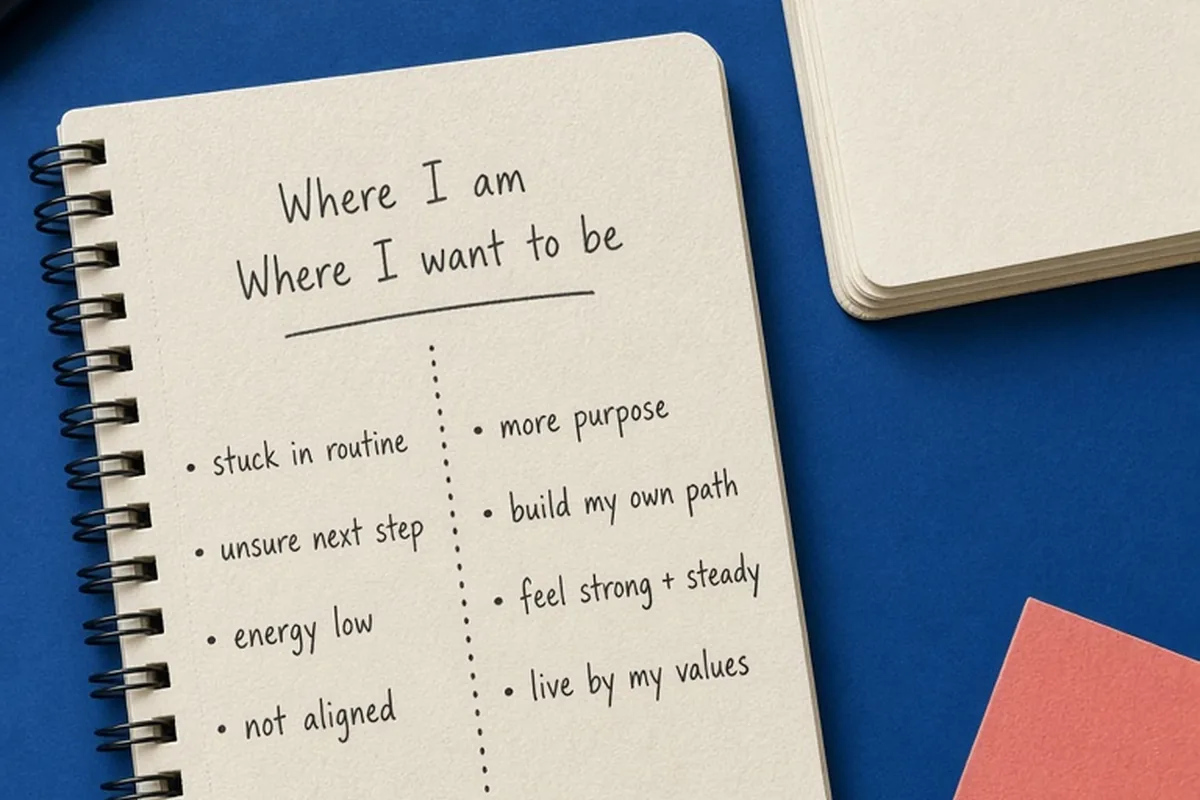
A life coach is a trained professional who partners with clients to clarify personal or professional goals, create structured action plans, and build sustainable habits. Rather than diagnosing mental health conditions or resolving past trauma, a life coach focuses on the present and future. They use reflective questioning, objective feedback, and consistent accountability to help individuals bridge the gap between their current situation and their desired outcomes.
Many people experience periods where their daily routine feels disconnected from their broader aspirations, leaving them uncertain about how to create meaningful momentum. When self-help books and informal advice fall short, partnering with an objective professional can provide the structure needed to navigate change thoughtfully.
The Core Purpose and Philosophy of Life Coaching
Life coaching operates on the foundational belief that clients are inherently creative, resourceful, and capable of generating their own solutions. Rather than acting as an authoritative expert who dictates what a person should do, a life coach functions as a collaborative thinking partner. The process is designed to help individuals examine their assumptions, identify hidden blind spots, and align their daily actions with their core values. This non-prescriptive approach fosters self-efficacy, ensuring that progress stems from internal conviction rather than external pressure.
During the coaching relationship, the practitioner uses structured inquiry and active listening to draw out clarity. For example, if someone expresses a desire to change careers but feels paralyzed by fear, a coach will not simply hand them a list of open job postings. Instead, the coach helps the client dissect what fulfillment means to them, examine the specific beliefs holding them back, and break down the transition into manageable exploratory steps. This approach ensures that the client builds lifelong decision-making skills rather than becoming dependent on the coach for ongoing direction.
Life Coaching Compared to Therapy, Mentorship, and Consulting
Understanding what a life coach does requires understanding what coaching is not. Life coaching is fundamentally different from clinical psychotherapy, consulting, and traditional mentorship. Psychotherapy and counseling focus primarily on mental health, psychological healing, and resolving historical trauma or emotional distress. Therapists are licensed healthcare professionals trained to diagnose and treat clinical conditions such as depression, generalized anxiety, and personality disorders. In contrast, life coaching assumes a baseline of psychological health and focuses on future-oriented goals, habit formation, and personal development.
Consulting and mentorship also follow different operating models. A consultant is hired for specific subject-matter expertise to analyze a problem and prescribe a specialized technical solution. A mentor offers guidance based on their own personal career path within a shared industry. A life coach, however, does not need to have worked in your specific field because their expertise lies in the facilitation of change, self-reflection, and goal architecture. Recognizing these boundaries helps individuals choose the right modality for their current life circumstances, ensuring safety and appropriate support.
- Therapy: Focuses on emotional healing, resolving past trauma, and treating clinical mental health conditions.
- Life Coaching: Focuses on present awareness, future goal achievement, personal agency, and accountability.
- Consulting: Focuses on diagnosing external organizational or technical issues and delivering prescribed expert solutions.
- Mentorship: Focuses on sharing lived professional experience and offering career advice within a specific field.
Common Specializations Within the Coaching Industry
While general life coaching addresses broad personal development and work-life harmony, many coaches specialize in distinct life domains. Specialization allows practitioners to tailor their frameworks to the specific challenges unique to certain transitions. For example, career transition coaches focus on professional reinvention, negotiating compensation, and overcoming workplace stagnation, while executive coaches work primarily with organizational leaders to refine communication styles and strategic delegation.
Other common niches include wellness coaching, financial behavior coaching, and relationship coaching. A wellness coach helps clients build sustainable routines around sleep, nutrition, and stress management without prescribing medical regimens. Relationship coaches assist individuals or couples in clarifying interpersonal boundaries and communication patterns. Regardless of the niche, reputable coaches operate within established professional boundaries, avoiding clinical claims or guaranteed outcomes.
- Career and Transition Coaching: Assisting with job changes, professional identity shifts, and career milestones.
- Executive and Leadership Coaching: Developing communication, decision-making, and team-management capabilities.
- Health and Wellness Coaching: Supporting sustainable lifestyle habits, movement, and stress regulation.
- Relationship and Communication Coaching: Clarifying personal boundaries, interpersonal dynamics, and social confidence.
- Productivity and Time-Design Coaching: Helping clients overcome chronic procrastination and design efficient daily systems.
What to Expect During a Typical Coaching Engagement
A standard coaching engagement begins with an intake or discovery session where the coach and client establish foundational objectives, define boundaries, and clarify what success looks like. Clients frequently enter coaching with vague aspirations, such as wanting more balance or greater confidence. Through structured assessment tools and targeted dialogue, the coach helps translate these broad wishes into measurable, values-based milestones with defined timelines.
Subsequent sessions typically occur weekly or biweekly for 45 to 60 minutes, conducted virtually or in person. Each session follows a deliberate structure: reviewing progress on previous action items, addressing emerging obstacles, exploring new perspectives, and co-creating specific commitments for the upcoming week. The work that occurs between sessions—such as testing a new boundary at work or establishing a consistent morning routine—is where meaningful change takes place, with the coach providing structured accountability and reflection along the way.
Evaluating the Benefits and Practical Limitations of Coaching
The primary benefit of working with a life coach is gaining structured clarity and dedicated space for intentional reflection. In daily life, urgent demands often crowd out important long-term priorities. A coach serves as an objective sounding board, unattached to the client's social or professional circle, which allows for honest exploration without interpersonal judgment. Clients frequently report improved focus, reduced procrastination, greater self-awareness, and enhanced confidence in their decision-making abilities.
However, coaching has clear practical limitations that clients must weigh carefully. Coaching cannot replace clinical therapy for mental health disorders, nor can it compensate for a lack of personal readiness to take action. Because coaching relies entirely on client agency, progress will stall if an individual expects the coach to do the heavy lifting or solve complex external problems on their behalf. Furthermore, professional coaching requires a significant investment of time, mental energy, and financial resources, making it essential to assess personal readiness before entering an agreement.
How to Select a Qualified and Credible Life Coach
Because the life coaching industry is largely unregulated in many jurisdictions, anyone can technically call themselves a coach without formal training. To ensure quality and ethical standards, look for professionals who have earned credentials through recognized independent bodies such as the International Coaching Federation (ICF), the National Board for Health & Wellness Coaching (NBHWC), or the Center for Credentialing & Education (CCE). These organizations require rigorous accredited training, hundreds of hours of supervised practice, and adherence to strict codes of ethics.
When vetting potential coaches, schedule an exploratory consultation to assess communication compatibility and professional transparency. Inquire about their formal training, coaching methodology, client confidentiality standards, and practical experience with your specific focus area. Be wary of practitioners who rely on high-pressure sales tactics, make promises of guaranteed wealth or instant transformation, or blur the lines between coaching and clinical therapy. A reputable coach will be completely upfront about their scope of practice, pricing structure, and cancellation policies.
Illustrative Scenarios
Clarifying Career Direction Through Structured Inquiry
A composite scenario involves David, a mid-level marketing manager who felt chronically uninspired by his role but feared losing financial security. Rather than suggesting a specific job opening, his coach guided him through a structured values assessment and daily energy audit over eight weeks. Through this process, David discovered that his dissatisfaction stemmed not from marketing itself, but from a complete absence of strategic autonomy in his current department. With his coach holding him accountable to weekly research goals, David developed a portfolio of internal proposals and successfully transitioned into an autonomous product-marketing role within his organization.
Key point: Life coaching does not provide pre-packaged answers; it provides the inquiry and accountability needed for individuals to identify root issues and execute deliberate solutions.
Frequently asked questions
How long does a typical life coaching relationship last?
Most coaching engagements last between three to six months, meeting weekly or biweekly. This timeframe provides sufficient opportunity to establish new habits, navigate real-world setbacks, and achieve measurable milestones without fostering long-term dependency.
Do life coaches need a state license to practice?
In most regions, life coaching is an unregulated field that does not require a state-issued license. However, reputable coaches pursue independent credentials from established organizations like the International Coaching Federation to verify their training, competence, and ethical standards.
Can someone work with both a therapist and a life coach at the same time?
Yes, many individuals work with both professionals concurrently, provided the boundaries remain distinct. A therapist addresses psychological healing and clinical conditions, while a coach focuses exclusively on forward-looking personal, professional, or habit-oriented goals.
How much does hiring a life coach typically cost?
Coaching rates vary widely based on the practitioner's credentials, specialization, and location, generally ranging from $100 to over $400 per hour or packaged as multi-month programs. Because rates are self-set, clarifying pricing and cancellation terms upfront is essential.
Your next step
Take twenty minutes to write down the single area of your life where you feel most stuck, noting the specific actions you have avoided and the exact support you need; use these notes to evaluate whether an introductory consultation with a certified coach aligns with your current priorities.