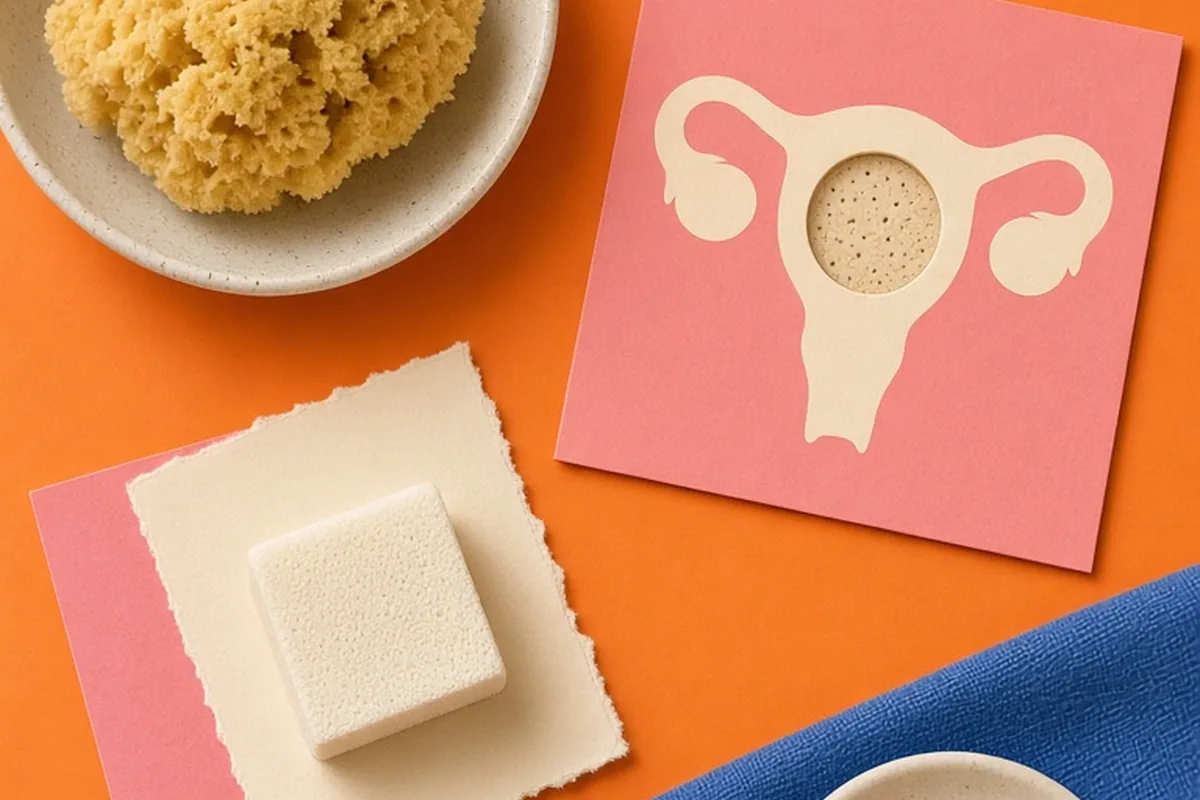
A menstrual sponge is an internal period product made from either harvested natural sea sponge or medical-grade synthetic foam that absorbs menstrual flow within the vaginal canal. Because it is soft, flexible, and stemless, it molds to your anatomy and can provide comfortable protection during daily routines, physical exercise, and penetrative sexual intercourse.
Navigating reusable and alternative period care often leads people to look beyond standard tampons, pads, and silicone cups. Menstrual sponges have gained attention as an adaptable option for anyone seeking a soft, custom-fit barrier that feels virtually undetectable once in place.
Understanding the Basics and Mechanics of Menstrual Sponges
A menstrual sponge functions similarly to a tampon by absorbing fluid internally, but its physical design is entirely distinct. Instead of a compressed cotton cylinder with a pull cord, a sponge is an open-cell, pliable matrix that expands gently to fill the contours of the vaginal canal. When inserted, it settles below or around the cervix, collecting blood directly at the source while creating a soft seal against vaginal walls.
Because sponges lack rigid rims, plastic applicators, and hanging strings, they distribute internal pressure evenly without pressing uncomfortably against the bladder or bowel. The porous texture gives them substantial absorbency relative to their size, making them popular for active individuals, athletes, and anyone who finds conventional silicone cups or firm tampons uncomfortable.
Natural Sea Sponges Versus Modern Synthetic Foam
Menstrual sponges generally fall into two distinct categories: natural sea sponges and engineered synthetic foam sponges. Natural sea sponges are sustainably harvested ocean organisms that are cleaned, dried, and trimmed for personal use. They are renewable, biodegradable, and reusable over several menstrual cycles when maintained properly. However, because they are natural marine products, individual sponges vary widely in pore density, shape, and texture, and they require meticulous manual inspection and cleaning before initial use.
In contrast, synthetic menstrual sponges are manufactured from medical-grade polyurethane foam or similar biocompatible materials. These options are typically uniform in shape, pre-lubricated or shaped with an ergonomic removal notch, and intended for single-use disposal. Synthetic sponges provide predictable absorbency and arrive pre-sterilized, which appeals to users who want the benefits of a soft, stringless product without the ongoing washing, sanitizing, and inspection routines required by ocean-harvested sea sponges.
Step-by-Step Preparation and Insertion Techniques
Proper preparation is essential before inserting any menstrual sponge. If you are using a reusable natural sponge, you must first hydrate it thoroughly in clean, warm water; a dry sponge is stiff and abrasive, but wetting it transforms it into an exceptionally soft, pliable cushion. Once saturated, gently squeeze out all excess moisture until the sponge is damp but not dripping. Synthetic single-use sponges often come pre-moistened or ready to insert, though checking packaging instructions is recommended.
To insert the sponge, wash your hands thoroughly with soap and water, then assume a relaxed position such as squatting, propping one leg on the edge of a tub, or sitting on the toilet. Compress the sponge between your thumb and fingers into a narrow, compact shape. Part your labia with your free hand and slide the sponge backward and upward along the natural angle of your vaginal canal toward the cervix. Once released, the sponge will expand to fill the space. If you feel pinching, pressure, or noticeable resistance when walking, use a clean finger to gently guide the sponge slightly deeper into the vaginal fornix.
How to Remove a Menstrual Sponge Without a String
Because most menstrual sponges do not feature an attached removal cord, taking them out requires a calm approach and familiarity with your internal anatomy. Begin by thoroughly washing your hands. Sit comfortably on the toilet or squat down to naturally shorten the vaginal canal. Take a deep breath to relax your pelvic floor muscles, as tension will cause the vaginal walls to grip the sponge more tightly.
Gently bear down using your abdominal and pelvic muscles, similar to the motion of having a bowel movement, to shift the sponge lower in the canal. Insert your index finger and thumb until you locate the base of the sponge. Pinch a firm section of the sponge between your fingertips and slowly draw it outward, tilting it slightly to avoid spilling collected fluid. If you cannot reach it right away, wait a few minutes, change your posture, or bear down again steadily; the sponge cannot get lost inside the body because the cervix acts as a natural physical barrier.
Cleaning, Sanitizing, and Storage for Reusable Sponges
Maintaining rigorous hygiene is necessary to preserve the lifespan of reusable natural sponges and protect your reproductive health. During an active menstrual cycle, rinse the sponge thoroughly under cool running water after each removal to flush out blood, followed by warm water and a mild, fragrance-free, pH-balanced cleanser. Avoid using standard dish soaps, laundry detergents, or harsh antibacterial cleansers, as residual chemicals can disrupt natural vaginal flora and cause irritation.
At the end of each cycle, natural sponges require a deep sanitizing soak. Submerge the sponge for ten minutes in a solution of warm water mixed with a small amount of apple cider vinegar, hydrogen peroxide, or baking soda. Never boil a sea sponge, microwave it, or expose it to bleach, as excessive heat and strong oxidizers break down the delicate organic fibers and destroy the sponge structure. After sanitizing, squeeze out excess liquid and allow the sponge to air-dry completely in a well-ventilated space before storing it in a breathable cotton pouch.
Hygiene, Safety Considerations, and Health Precautions
Like any internal menstrual product, sponges must be used with attention to wear time and personal hygiene. A menstrual sponge should never remain in the vaginal canal for longer than six to eight continuous hours. Leaving any absorbent device inserted for prolonged periods increases the risk of bacterial overgrowth, including Staphylococcus aureus, the organism associated with Toxic Shock Syndrome (TSS).
It is also important to recognize regulatory differences. In some regions, natural sea sponges are sold as novelty items rather than regulated medical devices because they can occasionally harbor microscopic sand particles, sea debris, or natural microbes if not thoroughly processed. Always inspect raw natural sponges carefully under good lighting before first use and discard any sponge that shows signs of tearing, crumbling, persistent odor, or discoloration.
Evaluating the Practical Benefits and Daily Trade-Offs
Menstrual sponges offer distinct advantages, especially for individuals seeking discreet comfort during physical activities or mess-free penetrative intercourse on period days. Because the material compresses fully under pressure and contains no hard components, neither partner typically feels the sponge during intimacy. They also generate less recurring plastic waste than traditional disposable pads and applicator tampons.
However, sponges involve practical trade-offs that may not suit every lifestyle. Removal is naturally more hands-on and can occasionally be messy, making public restroom changes challenging. Additionally, individuals with heavy flows may find that sponges reach capacity more quickly than high-volume menstrual discs or cups. Assessing your personal comfort with internal self-checks, regular sanitization routines, and manual removal will help determine whether a sponge fits your daily routine.
Frequently asked questions
Can I have sex while wearing a menstrual sponge?
Yes, both natural and synthetic menstrual sponges are soft and stemless, allowing them to remain in place during penetrative intercourse. They absorb menstrual fluid near the cervix to minimize leakage during intimacy. Make sure to remove and wash or discard the sponge afterward according to product guidelines.
How long does a reusable menstrual sponge last?
With proper cleaning, gentle handling, and regular sanitization, a natural sea sponge typically lasts between three to six menstrual cycles. If the sponge begins to tear, lose elasticity, or crumble, it should be replaced immediately.
Can a menstrual sponge get lost inside the body?
No, a menstrual sponge cannot travel beyond the vaginal canal because the opening of the cervix is far too small to allow it through. If a sponge feels unreachable, relaxing your pelvic floor muscles and bearing down gently will bring it down within fingertip reach.
Can I trim a natural menstrual sponge if it is too large?
Yes, you can customize the size of a dry or damp natural sea sponge by carefully trimming small amounts from the perimeter with clean scissors. Trim gradually and test the fit while damp, taking care not to cut the sponge too small, which can make removal difficult.
Your next step
If you want to try a menstrual sponge, choose a reputable medical-grade synthetic sponge or carefully cleaned natural sponge, practice insertion and removal on a light flow day at home, and adhere strictly to the eight-hour maximum wear limit.