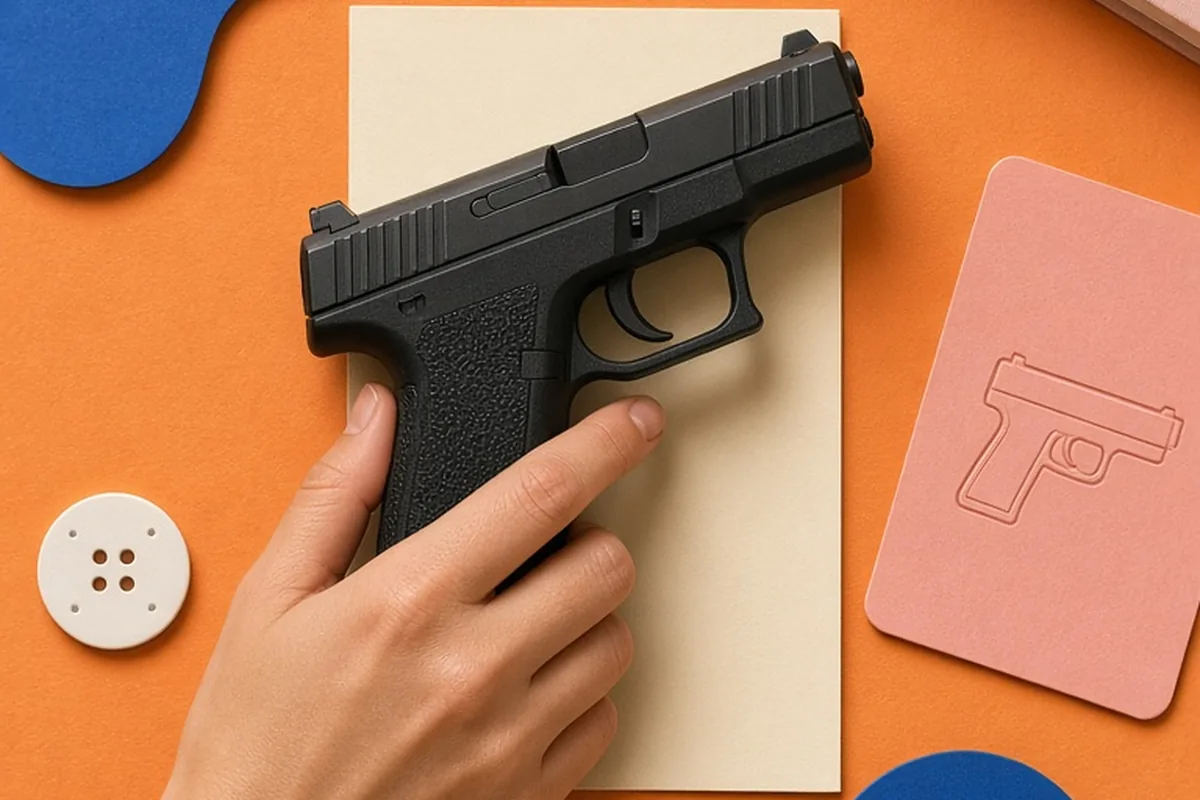
The best pistol for a woman is one that matches her individual hand anatomy, grip strength, and intended use rather than any generic marketing label. Top choices frequently include ergonomic 9mm or .380 ACP models such as the Smith & Wesson Shield EZ, Walther PDP F-Series, Sig Sauer P365, and Glock 43X, each offering different balances of manageable slide racking, modest recoil, and slim grip profiles.
Selecting a defensive firearm requires looking beyond superficial marketing trends or one-size-fits-all recommendations. Hand size, palm width, finger length, and upper-body leverage vary significantly across individuals, making direct hands-on evaluation the single most reliable path to finding a pistol that provides confidence and precise control.
Prioritizing Grip Ergonomics and Hand Geometry
Hand ergonomics form the foundation of accurate and safe shooting. While women on average have somewhat shorter fingers and narrower palms than men, anatomical differences vary widely. A handgun with an oversized grip circumference forces the shooter to rotate their hand around the frame, pulling the web of the hand out of alignment with the bore axis. When the hand is misaligned, felt recoil pushes the pistol sideways rather than straight back into the forearm, creating excessive muzzle flip and slowing down subsequent shots.
Trigger reach—the distance between the backstrap of the grip and the front face of the trigger—is equally vital. The shooter should naturally place the first pad of their index finger flat on the trigger without straining or shifting their overall grip. If the reach is too long, the finger pulls diagonally, pushing shots off target. Pistols designed with adjustable backstraps or slender single-stack and staggered-stack magazines allow shooters to customize the grip geometry to their exact hand structure. However, very thin grips can concentrate recoil into a narrower area of the palm, so shooters must balance slimness against comfort.
Evaluating Calibers and Recoil Management
Caliber selection dictates both defensive capability and physical controllability. The 9mm Luger represents the modern baseline for personal protection, offering an optimal combination of magazine capacity, ballistic effectiveness, and ammunition availability. For shooters who maintain a consistent two-handed grip, modern 9mm defensive ammunition delivers manageable recoil in compact and mid-sized frames. However, in ultra-lightweight micro pistols, 9mm can generate a sharp, snappy impulse that some find fatiguing or difficult to control during rapid firing strings.
For those with lower hand strength, arthritis, or severe sensitivity to recoil, the .380 ACP cartridge serves as a practical alternative. When chambered in locked-breech handguns of moderate weight, .380 ACP produces significantly softer recoil, facilitating rapid and accurate sight recovery. The trade-off lies in reduced terminal ballistics and slightly higher ammunition costs compared to standard 9mm. Rimfire options like .22 LR offer negligible recoil and are exceptional for skill development, but their reliance on rimfire priming makes them less mechanically reliable for primary personal defense.
Addressing Slide Manipulation and Mechanical Controls
Operating the slide of a semi-automatic handgun requires overcoming the tension of the internal recoil spring, which is responsible for chambering cartridges and absorbing firing energy. Many standard subcompact pistols use heavy springs to compensate for their light slides, making manual cycling difficult for individuals without substantial hand or pinch strength. Struggling to rack the slide creates safety hazards and delays clearing mechanical stoppages.
To address this challenge, manufacturers have introduced dedicated easy-to-rack mechanisms. These designs incorporate lighter recoil springs, tactile rear cocking wings, and reduced-force internal hammer systems that dramatically lower the effort required to chamber a round or lock the slide open. Additionally, proper biomechanics—such as pushing the frame forward with the dominant hand while keeping the non-dominant hand stationary against the slide—substantially reduces the effort required compared to purely pulling backward with finger strength.
Balancing Frame Dimensions Between Shootability and Concealment
A common misconception is that smaller handguns are automatically better suited for women. In practice, physics dictates an inverse relationship between a gun's physical mass and its perceived recoil. Lightweight micro-compact pistols transfer more kinetic energy straight into the shooter's hands and provide a shorter sight radius, making consistent accuracy more challenging to achieve. Full-sized pistols offer the smoothest shooting experience and highest capacity, yet their bulk makes them difficult to conceal comfortably across typical women's clothing styles.
The compact and subcompact categories generally provide the ideal balance. Modern micro-compacts with extended magazines allow a full three-finger grip on the frame, preserving control without adding unnecessary width. When evaluating dimensions, pay close attention to grip height, which causes the most noticeable outline or printing under clothing, versus barrel length, which helps stabilize the holster inside the waistband without hindering concealment.
Leading Handgun Models Engineered for Ergonomic Versatility
Several modern firearms have set the standard for ergonomic flexibility, accessible controls, and manageable dimensions. These models cater to varying physical needs, from specialized low-effort designs to highly concealable, high-capacity platforms.
The following models represent proven designs across distinct functional categories:
- Smith & Wesson M&P Shield EZ (9mm or .380 ACP): Specifically engineered with a lightened slide spring, easy-loading magazines, and tactile grip safeties, making it an exceptional choice for shooters with limited hand strength.
- Walther PDP F-Series (9mm): Designed from the ground up for female hand dimensions, featuring a reduced grip circumference, shortened trigger reach, and a unique operating system that reduces slide racking resistance by approximately twenty percent.
- Sig Sauer P365 / P365-XMacro (9mm): A pioneer in micro-compact capacity, offering modular grip modules, a narrow profile, and comfortable ergonomics that adapt well to both small and medium hands.
- Glock 43X / 48 (9mm): Slimline single-to-staggered designs that deliver a full-length grip for positive control while maintaining a very flat profile that conceals cleanly against narrower torsos.
Concealed Carry Considerations for Female Body Geometry
Concealing a handgun involves distinct ergonomic challenges for female anatomy. Women typically possess shorter torsos, higher waistlines, and more pronounced hip contours than men. Carrying a firearm at the traditional 3 o'clock or 4 o'clock strong-side hip position often causes the grip to protrude outward or press painfully against the pelvic bone when sitting, making conventional carry methods impractical for many.
Appendix inside-the-waistband (AIWB) carry—positioning the firearm in front of the abdomen between the hip bones—is widely regarded as one of the most effective solutions for women. When paired with high-quality Kydex holsters equipped with concealment wings or wedges, the firearm tucks closely against the natural valley of the torso. For outfits without standard sturdy belt loops, modular chassis systems like the PHLster Enigma allow secure on-body carry independently of clothing fabrics. Off-body purse carry is generally discouraged by defensive instructors due to slow draw speeds, increased theft risk, and the danger of losing control of the bag in everyday situations.
Live-Fire Rental and Selection Protocol
Handling an unloaded pistol at a retail counter provides only an initial impression of hand fit. Dry handling cannot reveal how the gun behaves during live ignition, whether the slide release is easily reachable under stress, or how the texture of the grip feels against the skin under sustained recoil. A thorough live-fire evaluation at a local shooting range with rental options is an essential step before making a financial commitment.
During live-fire testing, fire at least thirty to fifty rounds through three different candidate firearms. Focus on specific evaluation metrics: Can you reach and depress the magazine release without completely breaking your firing grip? Does the slide lock back consistently after the final round? Are your shot groupings tight and centered at distances of three, five, and seven yards? Evaluating these practical factors side-by-side reveals the firearm that naturally works with your physical mechanics.
Frequently asked questions
Is a small snub-nosed revolver better for a woman than a semi-automatic pistol?
While snub-nosed revolvers are mechanically straightforward and eliminate slide manipulation, they feature very heavy double-action trigger pulls and intense felt recoil due to their light frames. Most shooters achieve higher accuracy, faster follow-up shots, and greater comfort with an ergonomic semi-automatic pistol chambered in 9mm or .380 ACP.
Can a woman comfortably carry a concealed pistol without wearing a heavy tactical belt?
Yes, modern concealed carry gear includes independent chassis systems, specialized belly bands, and holsters with fabric-grabbing clips that do not rely on traditional belt loops. These systems secure the firearm directly against the body under dresses, athletic wear, or business attire while maintaining a safe, rigid trigger guard.
What is the primary mechanical difference between standard pistols and easy-to-rack models?
Easy-to-rack models use specialized recoil spring assemblies, optimized internal hammer geometry, and pronounced slide serrations or wings to reduce the force required to cycle the action by roughly twenty to thirty percent compared to conventional striker-fired pistols.
Your next step
Visit a local shooting facility that offers firearm rentals, select three distinct compact models—such as a dedicated easy-rack pistol, a modular micro-compact, and an ergonomically tailored compact—and test each with standard ammunition to identify the pistol that delivers the most comfortable grip and controllable recoil.