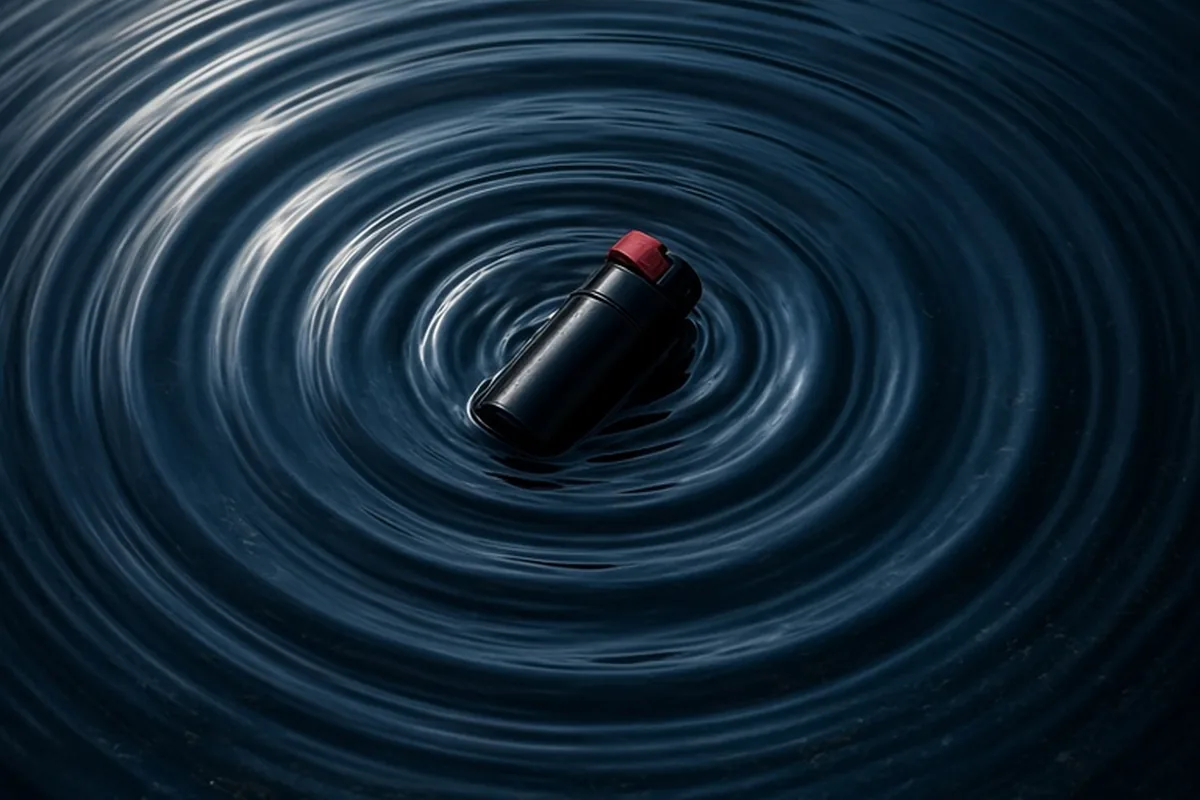
The best self-defense weapon for most women is pepper spray or pepper gel. It provides a defensive barrier from eight to twelve feet away, requires minimal physical force to deploy, and temporarily incapacitates an aggressor by causing involuntary eye closure and intense respiratory discomfort. This range allows you to create a safe window of opportunity to escape and call for help without needing close-quarters physical contact.
Choosing a personal safety device is a practical decision that should reflect your everyday routine, physical comfort, local legal regulations, and willingness to train. A self-defense tool is only as effective as your ability to access it quickly, understand its operational limits, and use it decisively under sudden stress.
Pepper Spray and Pepper Gel for Stand-Off Distance
Pepper spray and pepper gel remain the most recommended personal defense tools for women because they solve the most critical problem in a physical confrontation: maintaining distance. Oleoresin capsicum (OC), the active inflammatory ingredient in pepper-based defensive sprays, instantly inflames the mucous membranes of an attacker's eyes, nose, and throat. Upon contact, an aggressor experiences involuntary eyelid spasms, temporary blindness, intense burning, and coughing. This reaction occurs regardless of the attacker's physical size, strength, or pain tolerance, giving you immediate leverage to turn and run.
While traditional aerosol sprays emit a wide cone of fine droplets that covers a broader target area, pepper gel fires a thicker, stream-like compound. Pepper gel offers two significant advantages: it travels further (often up to twelve to fifteen feet) and resists wind drift, which sharply reduces the risk of blowback into your own face when deployed outdoors. Furthermore, pepper gel sticks to the skin and eyes of an assailant, making it harder to wipe away. However, both options have trade-offs. Aerosols can contaminate indoor air in enclosed spaces like elevators or stairwells, while gel requires more precise aim since it does not disperse in a broad cloud. Most canisters also lose propellant pressure over time, meaning they must be replaced every two to four years to ensure reliable function.
- Defensive distance: Provides a protective buffer of 8 to 15 feet before an assailant reaches you.
- Immediate physiological disruption: Triggers involuntary eye closure and coughing regardless of the attacker's size.
- Formula differences: Aerosol mist covers a broader area, while gel resists wind blowback and travels farther.
- Maintenance requirements: Canisters require replacement every two to four years due to gradual propellant pressure loss.
Personal Safety Alarms for Non-Violent Deterrence
Personal safety alarms, also known as acoustic deterrents, are small electronic keychains that emit an ear-piercing sound (typically between 120 and 130 decibels) when a pin is pulled or a button is pressed. Many modern models also feature a high-intensity flashing strobe light. The primary objective of an alarm is not physical incapacitation, but psychological disruption. An aggressive individual relies heavily on stealth, surprise, and isolation; a piercing siren removes their anonymity, startles their sensory focus, and draws immediate attention from nearby pedestrians, building occupants, or drivers.
The major benefit of a personal alarm is its near-universal accessibility. Because it is completely non-weaponized, you can carry it legally in virtually every jurisdiction, take it through airport security checkpoints, and carry it into secure workplaces, concerts, or university buildings where weapons are prohibited. It also eliminates the danger of an accidental discharge causing physical harm to yourself or a family member. The limitation, however, is that an alarm relies entirely on deterrence and third-party response. If you are in a remote area, an empty parking garage, or a quiet trail with no one around to hear it, a sound alarm cannot physically restrain or stop a committed assailant.
High-Output Tactical Flashlights for Vision Disruption
A tactical flashlight is one of the most underrated yet effective multi-use defensive tools available. Designed to emit between 500 and 1,500 lumens of focused light, a compact tactical flashlight can temporarily blind and disorient an approaching threat in low-light environments. When direct, high-intensity light hits human eyes adapted to darkness, it bleaches the visual pigments in the retina, producing instant afterimages, loss of peripheral vision, and disorientation that lasts for several seconds. Many models feature a rapid-strobe mode, which disorients depth perception and makes it difficult for an attacker to track your movements.
Beyond lighting, tactical flashlights are constructed from aircraft-grade aluminum and often feature a crenelated or strike-beveled bezel around the lens. In a worst-case scenario where an assailant closes the distance, the solid metal housing can serve as an improvised striking implement to deliver focused defensive strikes to vulnerable areas. Tactical flashlights are entirely legal to carry everywhere, double as everyday utility tools for illuminating dark walkways, and never arouse suspicion. The primary trade-off is that their blinding utility decreases significantly in broad daylight, and maintaining battery charge requires consistent attention.
Stun Guns and Contact Electroshock Devices
Stun guns are handheld devices that use high-voltage, low-amperage electrical charges to cause rapid muscle contraction, localized pain, and temporary neurological confusion. Unlike projectile conducted energy devices used by law enforcement (which shoot wire probes across a room), civilian stun guns require direct physical contact between the device's metal test prongs and the attacker's body. Pressing the active prongs into a major muscle group, such as the shoulder, abdomen, or upper thigh, sends electrical impulses that overwhelm the attacker's neuromuscular system and induce pain.
The visible electrical arc and loud crackling sound of a stun gun can serve as a potent psychological deterrent before physical engagement happens. However, the fundamental limitation of a stun gun is its contact-only requirement. To use it, you must allow an aggressor to enter your personal space, placing you within arm's reach of strikes, grabs, or weapon retention struggles. If an attacker has greater physical strength or reaches you before you trigger the device, there is a risk of being overpowered. Additionally, stun gun legality varies widely across states, counties, and cities, with several regions requiring permits or banning them entirely.
Striking Tools and Reinforced Keychains
Reinforced keychains, kubotans, and tactical pens are manual striking instruments designed to concentrate the force of a defensive blow into a small, hard point. Made from hardened plastics, dense metals, or carbon fiber, these tools reinforce the natural structure of your fist and amplify force when striking pressure points, bony landmarks, or soft-tissue targets. They are compact, lightweight, mechanically simple, and have no batteries, propellants, or electronics that could fail in an emergency.
Despite their simplicity, manual impact tools demand close physical proximity and a foundational degree of physical confidence. If you freeze or struggle with close-contact physical defense, a kubotan or tactical pen will not provide an automatic advantage. Without basic practice on how to grip the tool, align your wrist, and deliver a solid strike, the tool can slip or be stripped from your hand. Furthermore, security personnel at airports, courthouses, and entertainment venues frequently confiscate pointed striking keychains, classifying them as concealed weapons under local codes.
Matching Your Tool to Your Environment and Lifestyle
Finding the right self-defense weapon requires an honest assessment of your daily lifestyle, local laws, and personal comfort. A college student walking across a zero-tolerance campus will need a different tool than a solo hiker on remote trails or a professional commuting on urban public transit. Start by reviewing municipal and state laws regarding canister size limits for pepper spray, chemical concentrations, and restrictions on stun guns or bladed tools. Carrying a tool that is illegal in your area creates legal vulnerability, even if used purely in self-defense.
Next, consider your typical environment and daily routines. If you frequently jog before dawn, a high-output tactical flashlight or a hand-strap pepper gel unit designed for runners provides safety without impeding your stride. If you work in a corporate office with metal detectors or strict workplace weapon policies, a high-decibel personal alarm or discreet tactical pen is a compliant choice. Select a device that aligns with your real routines rather than an idealized scenario, ensuring you actually carry it every single day.
- Campus and corporate environments: Prioritize non-weapon tools like 130dB personal safety alarms or bright tactical flashlights to comply with zero-tolerance rules.
- Urban commuters: Pepper gel offers directional defense on windy sidewalks and platforms without dispersing dangerous blowback.
- Outdoor runners and walkers: Look for ergonomic hand-strap pepper units or lightweight acoustic alarms that remain securely in hand without slipping.
Carrying Ergonomics and Muscle Memory
The most advanced self-defense weapon is useless if it is buried under gym clothes at the bottom of a zipped tote bag. Real-world confrontations unfold within seconds, leaving no time to dig through compartments or untangle a keychain. For any defensive tool to be practical, it must be instantly accessible. Carry your tool in a dedicated jacket pocket, an easily reached outer pouch, or in your hand with your thumb resting over the safety mechanism whenever you are walking through high-risk, low-visibility areas.
Muscle memory is just as critical as accessibility. Under acute adrenaline-induced stress, fine motor skills degrade, and cognitive processing narrows into tunnel vision. Take time to practice the physical mechanics of using your chosen tool in a calm setting. Practice disengaging the safety flip-top on an inert pepper spray canister, drawing your tactical flashlight from a pocket, or pulling the pin on an alarm until the movement becomes smooth and intuitive. Familiarity breeds composure, reducing hesitation if you ever face a real threat.
Illustrative Scenarios
Selecting a Safety Tool for an Urban Transit Commute
Elena, an evening shift hospital worker in Chicago, needed a personal safety tool for her four-block walk from the train station through windy, poorly lit streets. Initially considering a stun gun, she realized it would require close contact and was subject to strict transit restrictions. Instead, she chose a dual setup: a 1,000-lumen compact tactical flashlight to scan dark entryways and a finger-grip pepper gel canister clipped directly into her coat pocket. The gel formulation eliminated the risk of wind blowing spray back into her face during winter gusts.
Key point: Matching defense tools to specific environmental conditions, such as wind and poor lighting, ensures your safety plan is practical and dependable.
Frequently asked questions
Is pepper spray or pepper gel better for self-defense?
Pepper gel is generally preferable for personal defense because it fires in a concentrated, heavier stream that travels further and resists wind blowback. Traditional pepper spray creates a wider cloud that can drift back toward you in windy conditions or contaminate enclosed indoor rooms. However, pepper spray requires slightly less precise aim than gel because of its wider dispersal.
Can I take personal safety weapons on an airplane?
Most self-defense weapons, including stun guns, tactical pens, and striking keychains, are prohibited in carry-on luggage by the TSA. Small pepper sprays (under 4 fluid ounces with a safety mechanism) are permitted in checked baggage on most airlines, but personal safety alarms are the only option completely permitted in carry-on bags.
What should I do immediately after using a self-defense weapon?
As soon as you deploy a defensive tool and break the encounter, run immediately toward a well-lit, populated area or secure indoor location. Do not stay to assess the attacker's condition; call 911 immediately to report your location, describe the assailant, and state that you acted in self-defense.
Your next step
Check your local municipal laws on defensive sprays today, purchase an inert practice canister alongside your active pepper gel, and spend ten minutes practicing your draw from your daily coat pocket.