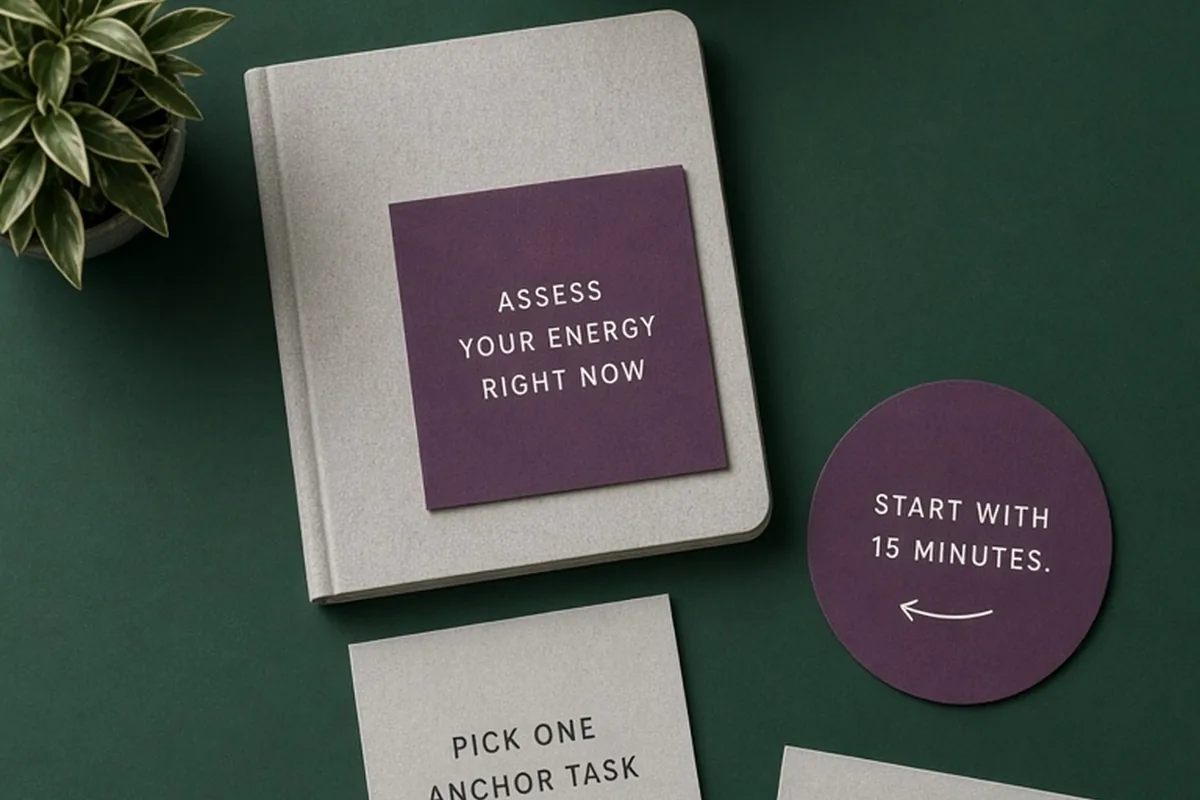
To decide what to do today, first evaluate your current energy level instead of defaulting to obligation. If your energy is low, prioritize active rest or a simple domestic reset. If your energy is moderate or high, pick a single anchor task that creates a sense of accomplishment, whether that involves tackling an unfinished project, exercising outdoors, or reaching out to a friend. Start with one fifteen-minute action.
Waking up with unstructured hours often brings unexpected pressure. When an entire day lies open without external demands, having limitless choices can feel surprisingly paralyzing, frequently leaving people stuck browsing screens or wondering where the hours disappeared. Deciding how to spend your day does not require an intense schedule; it simply requires a clear, manageable starting point tailored to how you feel right now.
Assess Your Mental and Physical Energy Before Planning
Before writing an ambitious checklist, pause and evaluate how much physical and mental fuel you actually have available. People often base their daily plans on what they believe an ideal version of themselves ought to accomplish, ignoring genuine fatigue, stress, or mental fog. When you attempt to force high-concentration tasks during a state of cognitive depletion, you are far more likely to experience frustration, self-criticism, and avoidance behaviors like endless phone scrolling.
A practical approach is to score your current state on a simple three-tier scale: low, medium, or high energy. If you have had an exhausting workweek and slept poorly, accepting that today is a low-capacity day prevents unrealistic expectations. If you feel rested and clear-headed, you can channel that stamina toward tasks that demand creativity or physical effort. The trade-off of this honest inventory is that you may need to postpone tasks you hoped to complete, but aligning your agenda with your real capacity ensures that whatever you do undertake feels sustainable rather than punishing.
Consider an example where someone intends to clean their entire house, reorganize their finances, and run five miles on a Sunday morning. If they wake up feeling mentally drained, attempting all three usually leads to giving up by noon out of sheer overwhelm. By recognizing their low energy early, they can consciously downgrade the plan to a restorative walk and clearing just the kitchen counter, finishing the day feeling grounded rather than defeated.
Choose a Single Anchor Task to Ground Your Day
One of the primary causes of an aimless day is having too many competing priorities. When everything feels equally important or interesting, the brain struggles to prioritize, leading to executive dysfunction and inertia. Establishing an anchor task—one primary activity that receives your dedicated focus—gives structure to the day and guarantees a tangible sense of completion, regardless of what else happens.
Your anchor does not need to be a grueling chore or an intense work assignment. It can be a creative project, an errand you have deferred for weeks, an hour dedicated to reading a book, or preparing a nourishing meal from scratch. The rule of the anchor task is simple: you commit to initiating and completing this one activity before worrying about secondary tasks. Once the anchor is finished, the rest of the day can remain flexible and open-ended without the nagging guilt that often accompanies unstructured time.
The limitation of relying on an anchor task is that life sometimes introduces interruptions, such as an urgent family phone call or an unexpected home maintenance issue. In those situations, hold the anchor lightly. If your chosen activity cannot happen as planned, either reduce its scope—spending ten minutes organizing a single drawer instead of an entire closet—or consciously release it without viewing the day as a total loss.
What to Do When You Feel Paralyzed by Free Time
Paradoxically, having completely open days can trigger anxiety rather than relief. When there is no alarm set, no meeting to attend, and no urgent deadline, the burden of manufacturing your own purpose can feel heavy. Many people find themselves sitting frozen on the sofa, opening and closing apps, unable to choose between going outside, cleaning, resting, or pursuing a hobby.
To break through this freeze state, remove the pressure of committing to an entire day or even an entire afternoon. Instead, adopt a micro-commitment approach. Tell yourself that you will perform one very brief, concrete physical action for just five minutes. This might mean washing three mugs in the sink, stepping outside to stand on your porch in natural light, or putting on walking shoes without deciding how far you will go.
Physical movement alters your mental state faster than intellectual deliberation. For instance, if you have spent two hours lying in bed trying to figure out what you want to do, sitting up and making your bed creates a visible boundary between sleeping and wakefulness. The goal is not immediate hyper-productivity; it is simply generating gentle behavioral momentum that allows the next choice to feel natural.
Restorative Options for Low-Energy Days
If your self-assessment reveals low energy, your day should focus on genuine recovery rather than forced exertion. However, it is essential to distinguish between passive consumption that leaves you feeling more depleted and intentional restorative rest. Hours spent consuming fast-paced short videos or distressing news headlines often leave the nervous system overstimulated yet physically inactive, deepening lethargy rather than relieving it.
Consider activities that provide calm engagement without demanding high cognitive output. You might listen to a full album or an engaging audiobook while resting with your eyes closed, take a warm shower or bath, or do gentle floor stretches while focusing on deep breathing. Preparing a simple pot of tea and sitting by a window without screens offers the mind an opportunity to wander quietly and reset.
The trade-off of choosing intentional rest is learning to tolerate the internal voice that insists you are wasting time. In a culture that frequently equates personal worth with visible output, taking a restorative day can feel uncomfortable. Remind yourself that rest is a biological maintenance requirement, not an optional reward you must earn through exhaustion.
- Listen to a podcast, audiobook, or musical album without looking at a screen.
- Take a slow, unhurried walk around your neighborhood without tracking pace or distance.
- Prepare a comfort meal or warm beverage and enjoy it without digital distractions.
- Do light stretching, gentle yoga, or sit quietly in a comfortable chair.
High-Energy Ideas for Progress and Exploration
When you wake up with steady energy, curiosity, and no mandatory obligations, you have an opportunity to invest in projects that regular workdays crowd out. These windows of vitality are ideal for diving into activities that require sustained attention, creative problem-solving, or physical stamina.
You might choose to tackle a home improvement task, such as repainting a room, decluttering a neglected storage space, or building a piece of furniture. Alternatively, dedicate several uninterrupted hours to a creative endeavor—drafting a piece of writing, practicing an instrument, sketching, or experimenting with complex recipes. You can also explore your local environment by visiting a museum, hiking a new trail, or discovering a neighborhood you rarely visit.
The main hazard during high-energy days is over-scheduling yourself. In an initial burst of enthusiasm, you might try to run four errands, clean the basement, bake bread, and study a language all before evening. This frequently leads to physical burnout by late afternoon. Protect your satisfaction by selecting one substantial pursuit and allowing whatever remaining time you have to stay unhurried.
Incorporate Low-Stakes Social Connection
Solitude can be deeply renewing, but extended periods of unplanned isolation can sometimes drift into feelings of disconnect or loneliness. If you find yourself feeling untethered or moody, introducing a small dose of human interaction can re-center your perspective and provide an enjoyable focal point for your afternoon.
Social connection on an open day does not need to involve elaborate parties or exhausting hosting duties. A quick text message to an old friend asking how their week went, a fifteen-minute phone conversation with a family member, or inviting a neighbor for a coffee can satisfy the need for contact without demanding hours of planning. Even low-interaction public environments can help; working on a sketchbook at a neighborhood cafe or browsing books at your public library provides a subtle sense of community without conversational demands.
Be mindful of your social boundaries. If your social battery is already running low from professional interactions during the week, agreeing to large group gatherings might leave you drained. Choose the degree of connection that matches your current comfort level rather than what you feel obligated to accept.
Structure Your Remaining Hours with Gentle Horizons
When people try to rescue an unstructured day, they often swing from total chaos to overly rigid time-blocking. Scheduling every half-hour block usually backfires because any minor delay derails the entire timetable, triggering frustration. A more flexible and forgiving alternative is organizing your day around three broad horizons: morning, afternoon, and evening.
Under this approach, assign just one general theme to each horizon. For example, your morning might be reserved for self-care and quiet reading, your afternoon dedicated to your anchor task of organizing your garage, and your evening reserved for a movie or cooking dinner with a partner. If a task takes longer than expected during the afternoon, it does not ruin a delicate hourly schedule; it simply occupies that horizon.
At the end of the day, assess what you experienced through the lens of what occurred rather than what was left undone. Even if you only managed a single domestic chore and spent the rest of the day resting, acknowledging that choice as intentional keeps you from carrying unhelpful self-reproach into the next morning.
Illustrative Scenarios
Navigating a Blank Saturday
Jordan woke up on an open Saturday with no obligations, intending to make the most of the free time. By early afternoon, overwhelmed by competing desires to clean, exercise, study for a certificate, and visit a museum, Jordan had spent four hours on the couch switching between social media feeds, feeling increasingly guilty. Recognizing the freeze response, Jordan put down the phone, walked outside for ten minutes to clear mental static, and selected just one anchor for the remainder of the day: spending two hours organizing the workspace. Once that single task was complete, Jordan felt satisfied and spent the evening relaxing guilt-free.
Key point: Attempting to fulfill every possible desire on a free day often causes paralysis; stepping outside and committing to one anchor task restores clarity and agency.
Frequently asked questions
What should I do if I am completely bored but have no motivation?
Boredom paired with low motivation usually indicates mental exhaustion or overstimulation from screens. Instead of trying to force a productive task, change your physical environment by taking a short walk outside or drinking a glass of water in a quiet room. Often, stepping away from devices allows your genuine interests to resurface naturally.
Is it okay to spend an entire day doing nothing?
Yes, dedicating an open day to rest is completely valid, especially after periods of prolonged stress or physical exertion. The key is making it an intentional choice rather than an accidental default so you can enjoy your downtime without lingering guilt. Give yourself explicit permission to relax and recharge.
How can I stop feeling guilty for not being productive on my days off?
Guilt often stems from measuring personal worth solely through measurable accomplishments and checklists. Remind yourself that rest, leisure, and open time are necessary for long-term health and creativity. Setting one small, manageable anchor task early can also provide enough satisfaction to let you enjoy the rest of the day unburdened.
What if my plans for today get ruined by bad weather or cancellations?
Treat disruptions as an opportunity to pivot toward indoor activities you rarely make time for during normal weeks. Shift your focus to cooking an involved meal, organizing a specific corner of your home, or catching up on reading. Flexibility prevents unexpected cancellations from defining the entire mood of your day.
Your next step
Pick one small action that aligns with your current energy right now, set a timer for fifteen minutes, and begin without worrying about the rest of the day.