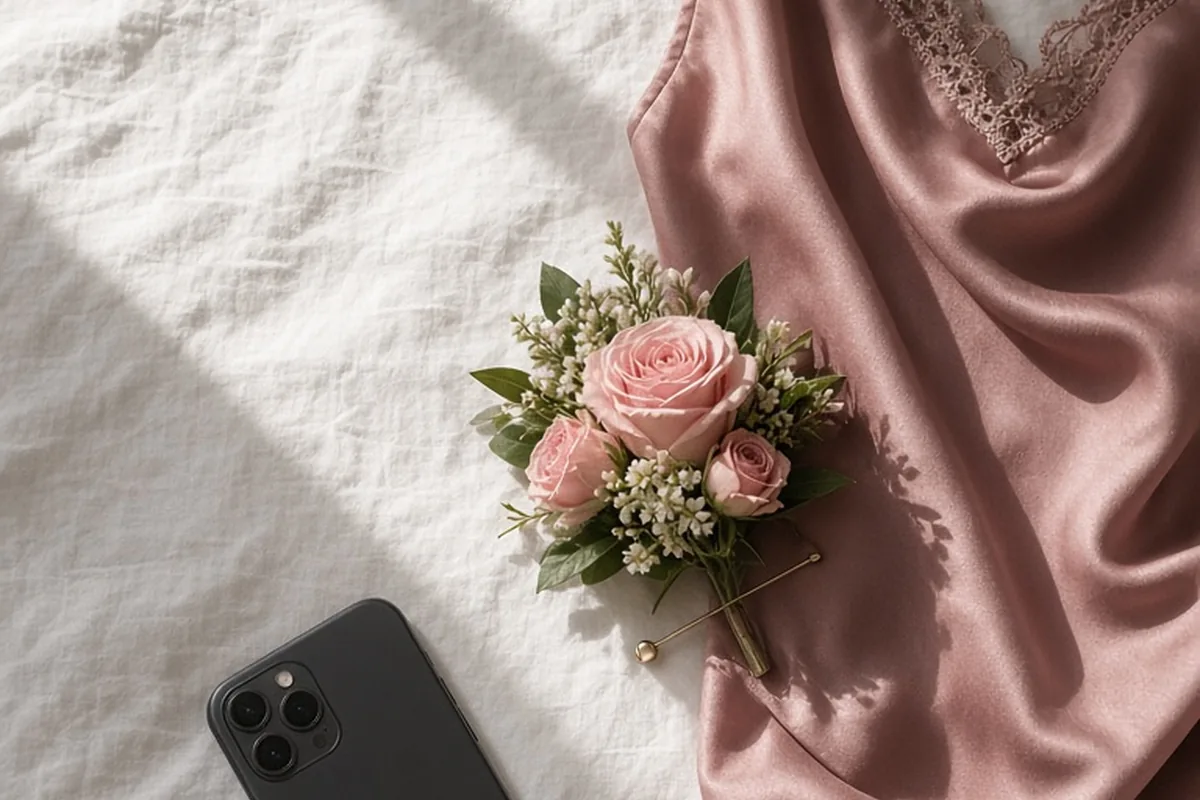
Traditionally, a woman wears a pin-on corsage on the left side of her chest, positioned just below the collarbone with the stem pointing downward. For a wrist corsage, formal etiquette places it on the left wrist. However, if you are left-handed or wearing an asymmetrical gown, placing the corsage on the right side provides greater physical comfort and keeps the blooms safe from friction.
Floral accessories remain a staple of formal celebrations, including proms, weddings, galas, and milestone anniversaries. While pinning flowers to an evening dress or strapping them to a wrist may seem straightforward, proper positioning ensures the arrangement stays secure, looks balanced in photographs, and does not interfere with movement throughout the event.
The Etiquette Behind Wearing Flowers on the Left Side
The standard tradition of placing a corsage on the left side stems from historical etiquette that associated flowers worn close to the heart with affection, honor, and formal celebration. In Western formalwear traditions, both boutonnieres for men and corsages for women have mirrored this placement for generations. Positioning the flowers on the upper left chest created a unified aesthetic across formal receiving lines and wedding parties, signaling that the wearer held an honored role in the event.
Beyond symbolism, practical mechanics reinforce the left-side convention. Because most people are right-handed, wearing a floral piece on the left chest or left wrist reduces the chance of crushing the petals during greetings. When extending a right hand for a handshake, lifting a glass for a toast, or reaching across a table, the left-side placement keeps the delicate blooms out of the path of high-friction movement. While modern styling allows for flexibility, starting with the left side remains the most widely recognized standard.
Positioning a Pin-On Corsage on Bodices, Straps, and Jackets
Pinning a corsage properly requires placing it on a stable portion of the garment where the fabric can support the weight of the floral base. The ideal location is about an inch below the left collarbone, angled slightly toward the shoulder rather than resting completely vertical. Positioning the flowers slightly at an angle allows the petals to face forward toward cameras and conversational partners instead of drooping downward against the chest.
When attaching a corsage to a tailored blazer, tuxedo jacket, or structured dress, pin the arrangement to the left lapel or sturdy bodice seam. For garments with thin shoulder straps, slide the backing directly against the strap where it meets the chest, ensuring the strap is wide enough to conceal the floral tape and ribbon. If the dress is strapless, standard pin-on corsages are rarely recommended because the lack of upper shoulder support causes the dress neckline to sag under the weight of the water-filled stems and wires.
Wrist Corsage Rules: Choosing Between Left and Right Wrists
Wrist corsages offer a versatile alternative to pinned flowers, particularly for modern prom dresses, lightweight fabrics, and backless gowns. The default rule for a wrist corsage is to wear it on the left wrist. This mirrors the placement of a pin-on corsage and aligns with traditional watch placement, keeping your dominant right hand entirely free to hold clutches, adjust makeup, or shake hands without bruising fragile petals.
Personal ergonomics should always override rigid tradition if the left-side placement causes inconvenience. Left-handed wearers often choose their right wrist so the flowers do not bump against tables when writing or eating. Similarly, if you wear a prominent statement bracelet or watch on your left wrist, shifting the corsage to the right wrist creates balanced visual weight and prevents the jewelry from tangling with floral wire or ribbons.
Adapting Floral Placement for Asymmetrical and Modern Silhouettes
Modern evening wear often features asymmetrical necklines, such as one-shoulder gowns, halter cuts, diagonal ruffles, or architectural cutouts. In these instances, following a strict left-side rule can disrupt the visual lines of the garment. If a dress has a single strap on the right shoulder and an open left shoulder, placing a pin-on corsage on the right strap balances the outfit and gives the pin solid fabric to anchor into.
When a dress features intricate beading, delicate illusion mesh, or heavy draping across the chest, pinning through the fabric may tear threads or puncture fine tulle. In such cases, switching from a pinned chest corsage to a wrist band, an ankle corsage for tea-length gowns, or a floral accent secured to an evening clutch allows you to wear the celebratory flowers without compromising the structure or appearance of an expensive gown.
Step-by-Step Guide to Securing a Corsage Without Damaging Fabric
Securing a pin-on corsage securely involves a specific weaving technique that keeps the floral head upright without tearing the garment. Begin by holding the corsage in place against the fabric with your non-dominant hand. Take a long pearl-headed floral pin and push it from the back side of the fabric toward the front, passing through the dress material, through the thickest part of the taped floral stem, and then back down into the fabric behind the arrangement.
For heavier arrangements featuring dense blooms like spray roses or multiple orchids, a single pin may allow the corsage to tilt outward. Inserting a second pin diagonally across the first in an 'X' pattern anchors the stem firmly against the body. If you are wearing fine silk, satin, or velvet that shows permanent pin punctures, consider using floral magnets. Magnetic corsage attachments clamp the fabric between two small, powerful magnetic plates, securing the flowers completely without piercing any threads.
Coordinating Corsages with Dates, Boutonnieres, and Group Photos
When attending an event with a date or formal party, corsage placement plays an important role in how couples appear together in staged portraits. Because the standard photographic stance places the woman to the right of her partner (from the photographer's perspective, on the viewer's left), wearing both the boutonniere and the corsage on the left side ensures that both floral arrangements face outward toward the camera lens rather than being hidden between the couple's shoulders.
Color and structural harmony are equally essential when planning floral accessories. The ribbons and primary blooms of the corsage should complement the dress palette and align with the partner's boutonniere or pocket square without clashing. Choosing durable greenery like Italian ruscus or seeded eucalyptus helps frame delicate blossoms like freesia, ranunculus, or mini roses, providing structural rigidity that withstands hours of hugs, dancing, and movement.
Handling and Preserving Fresh Flowers Throughout the Event
Fresh corsages are vulnerable to temperature fluctuations, body heat, and physical contact. To keep blooms crisp before the event, store the corsage inside its clear plastic florist container in a standard household refrigerator, set away from the cold air vent and away from fresh fruit, which releases ethylene gas that accelerates wilting. Lightly misting the petals with cool water a few hours before departure helps hydrate the surface layers.
During the event, be mindful of seatbelts, heavy coats, and enthusiastic embrace angles that could snap wired stems. If a petal bruises or a ribbon loosens while dancing, keeping a small piece of clear floral glue, miniature safety pins, and a pack of tissue in an evening clutch lets you make quick, unnoticeable repairs in the restroom without retiring the flowers early.
Frequently asked questions
Can a woman wear a corsage on the right side?
Yes. While traditional etiquette favors the left side, wearing a corsage on the right side is entirely appropriate if you are left-handed, wearing an asymmetrical one-shoulder dress on the right, or carrying an accessory that would otherwise crush the flowers on the left.
Should a corsage stem point up or down?
A pin-on corsage should almost always be worn with the stem pointing downward toward your waist and the blooms facing upward toward your shoulder. This mimics the natural growth direction of flowers and keeps the heavy blossoms stable against the fabric.
What is the difference between a corsage and a boutonniere?
A corsage is typically a multi-flower arrangement accented with ribbons, greenery, or wristbands designed for women at formal occasions. A boutonniere is a smaller, single-stem or small-cluster floral piece pinned to a man's suit lapel.
How do you wear a wrist corsage comfortably without it flipping over?
Select an elastic band, velvet ribbon, or metal cuff that fits your wrist snugly rather than loosely. If the floral cluster feels top-heavy, tighten the ribbon tie or add a small strip of double-sided fashion tape underneath the base plate to anchor it flat against your skin.
Your next step
Check your outfit's neckline and fabric weight ahead of time to decide whether a left-side pin-on placement, a left wrist band, or a magnetic clip works best for your evening.