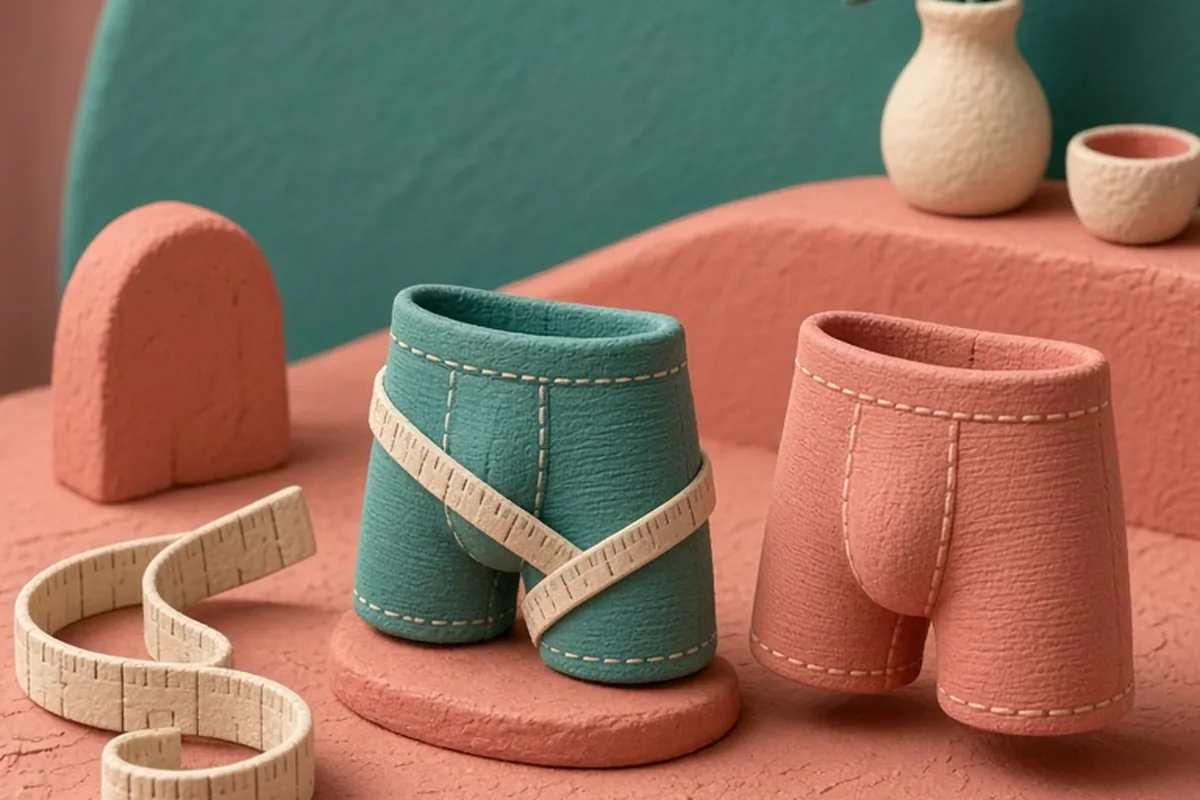
To find your boxer brief size as a woman, match your widest hip and natural waist measurements to the brand sizing chart rather than converting standard dress sizes. When buying standard men's boxer briefs, sizing down one size from your usual women's pant size generally works best, though choosing your regular size provides extra ease if you have wider hips or fuller thighs. Women-specific boxer briefs typically align directly with standard women's underwear sizing.
Boxer briefs have become a staple for women seeking all-day comfort, reliable anti-chafing thigh coverage, breathable lounging layers, and gender-affirming everyday wear. However, navigating the difference between men's cut dimensions and modern women-specific styles can make choosing the right size confusing without a clear framework.
Converting Men's Boxer Brief Sizes to Women's Sizing
Men's boxer briefs are engineered primarily around waist circumference in inches, whereas traditional women's underwear is built to accommodate a wider ratio between the waist and hips. When shopping the men's department, the general rule of thumb is to size down by one full letter size from your usual women's bottom size. For example, if you typically wear a women's large in leggings or briefs, a men's medium is usually the most balanced starting point.
This conversion works because men's waistbands are cut wider and straighter relative to the seat. A direct conversion based strictly on waist measurement might fit your midsection while pulling tight across your glutes or upper thighs. If your hips are significantly wider than your waist, matching your largest hip measurement to the waistband's maximum stretch range will keep the fabric from straining or cutting into your skin.
- Women's XS (US 0-2 / 24-26 inch waist) generally aligns with Men's XS (26-28 inch waist)
- Women's Small (US 4-6 / 27-29 inch waist) generally aligns with Men's Small (28-30 inch waist)
- Women's Medium (US 8-10 / 30-32 inch waist) generally aligns with Men's Small to Medium (30-32 inch waist)
- Women's Large (US 12-14 / 33-35 inch waist) generally aligns with Men's Medium to Large (32-35 inch waist)
- Women's XL (US 16-18 / 36-39 inch waist) generally aligns with Men's Large to XL (36-39 inch waist)
- Women's 2XL (US 20-22 / 40-43 inch waist) generally aligns with Men's XL to 2XL (40-43 inch waist)
Taking Accurate Body Measurements for Boxer Briefs
Relying on numbered dress or pant sizes often leads to sizing errors because vanity sizing varies drastically across apparel brands. Taking three quick body measurements with a flexible measuring tape gives you the exact baseline needed to consult any size chart with confidence.
First, measure where you prefer the waistband to rest, whether that is at your natural waist near your belly button or lower on your hip bones. Second, measure around the fullest part of your hips and buttocks, keeping the tape parallel to the floor without pulling it taut. Third, measure the circumference of your upper thigh roughly two inches below the groin crease. This thigh measurement is especially critical for boxer briefs, as tight leg bands can cause uncomfortable constriction when sitting.
Men's Cut vs. Women's Cut Boxer Briefs: Fit Differences
Traditional men's boxer briefs feature a contour pouch and sometimes a functional fly. In lightweight modal or cotton-spandex blends, this pouch typically sits flat against the body without noticeable bulk under casual trousers or sweatpants. However, in stiffer woven cottons, an empty pouch can create small folds of excess fabric that show through fitted denim or activewear.
In contrast, boxer briefs designed specifically for women or gender-neutral brands feature a flat front panel, a wider gusset tailored for anatomical comfort, and curved seams shaped for fuller hips. Women's versions often feature higher rises to sit comfortably over curves without sliding down in the back. Deciding between the two comes down to your personal aesthetic preference, wardrobe needs, and how you want the front panel to lay.
Selecting the Best Fit for Your Body Shape and Proportions
Body geometry plays a major role in how boxer briefs feel throughout the day. Individuals with straighter, athletic, or rectangular builds often find standard men's cuts fit seamlessly off the rack because their waist and hip dimensions follow a uniform vertical line. Sizing down one size from women's bottoms usually yields a smooth, secure fit that stays in place.
If you have an hourglass or pear-shaped silhouette where your hips and thighs are substantially fuller than your waist, sizing for your waist alone can result in leg openings that pinch and seams that stretch uncomfortably across the seat. In this scenario, prioritize fitting your hips and thighs first, and look for styles with wide, plush elastic waistbands that hold securely even if there is slight ease at the midsection.
Inseam Length and Fabric Elasticity Considerations
Inseam length determines both the styling and functional performance of boxer briefs. Trunks usually offer a short 2 to 3-inch inseam, providing the boxer aesthetic with minimal thigh coverage, though they are more prone to riding up on full thighs. Standard boxer briefs feature a 5 to 6-inch inseam, which hits the mid-thigh and delivers reliable chafing protection for daily walking. Long-leg boxer briefs, with 7 to 9-inch inseams, extend closer to the knee and are ideal for vigorous workouts, running, or wearing beneath dresses.
Fabric composition also alters the effective fit of the garment. One hundred percent woven cotton provides zero recovery, meaning it will stretch out during wear and feel baggier by the end of the day. For a dependable, second-skin fit that retains its shape, choose fabrics containing 5 to 10 percent elastane or spandex blended with modal, bamboo viscose, or combed cotton. High-stretch blends accommodate hip curves much better than rigid materials.
Solving Common Fit Issues: Rolling, Riding Up, and Pinching
A rolling waistband is one of the most frequent complaints when wearing boxer briefs. This usually happens when the waistband is seated too low against a curving waist or when the band is too tight, forcing the elastic to fold over during movement. Moving up one size or choosing a high-rise cut with a wider, microfiber-wrapped band usually resolves rolling.
If the leg openings ride up into your crotch as you walk, the inseam is either too short for your thigh shape or the leg bands lack sufficient elasticity to grip gently without squeezing. Selecting a 6-inch or longer inseam with flat-locked hem stitching keeps the legs anchored. If the front panel bags awkwardly, consider sizing down in a stretch fabric or switching to a flat-front, women-specific cut.
Hygiene and Practical Styling Beneath Everyday Outfits
When wearing boxer briefs daily, consider how the gusset aligns with your hygiene needs. Many traditional men's styles place a center seam directly through the crotch, which can cause irritation or chafing during long periods of sitting. Look for flatlock seams or seamless interior construction to avoid friction against sensitive skin.
If you plan to wear boxer briefs under light-colored clothing or thin fabrics, seam placement and waistband thickness become important. Seamless microfiber or bonded-edge trunks prevent visible panty lines beneath tight leggings, while breathable ribbed cotton or bamboo styles serve as comfortable loungewear, sleep shorts, or extra base layers beneath loose trousers and skirts.
Illustrative Scenarios
Illustrative Sizing Decision: Balancing Curvy Hips and Waist Measurements
An illustrative shopper with a 29-inch waist and 41-inch hips usually wore a size Medium (8-10) in standard women's underwear. When browsing men's 5-inch boxer briefs, the size chart recommended a Men's Small for a 29-inch waist. However, knowing that a rigid Small waistband would not clear a 41-inch hip comfortably, she chose a Men's Medium made from a 95 percent modal and 5 percent spandex blend. The added elasticity accommodated her hip curvature while the wide waistband stayed flat against her waist without gaping.
Key point: When your waist and hip measurements cross two different size brackets, choosing the larger size in a high-recovery stretch fabric prevents leg binding and seam tension.
Frequently asked questions
Will men's boxer briefs look bulky in the front if I do not fill the pouch?
Most modern men's boxer briefs made from modal, bamboo, or stretch cotton have soft, unstructured contour pouches that drape naturally flat against the body. Only heavy woven cottons or reinforced athletic cups create noticeable front bulk under fitted clothing.
Can I wear sanitary pads with boxer briefs?
Standard wingless pads stick well to the flat cotton gusset of women-specific boxer briefs. Traditional men's cuts with center crotch seams or narrow gussets may not hold winged pads securely, so a flat-front style is generally better for pad use.
What boxer brief inseam works best to prevent inner thigh chafing under dresses?
A 5-inch to 7-inch inseam offers the most dependable protection against friction while walking. Shorter 3-inch trunks tend to roll up toward the groin on full thighs, reducing their anti-chafing effectiveness.
How should I wash boxer briefs to prevent them from shrinking a size smaller?
Wash them in cold water on a gentle cycle and tumble dry on low heat or hang them to dry. High dryer heat breaks down elastane fibers and shrinks cotton fabric, which can tighten the waistband and leg openings over time.
Your next step
Measure your natural waist and fullest hip point with a flexible tape, compare them to the brand size chart, and order a single pair in a high-stretch modal or cotton blend to confirm your comfort before buying in bulk.