During a divorce with kids, you can expect a structured legal and personal transition involving temporary orders for custody and living arrangements, complete financial disclosures, parenting plan negotiations, and child support determinations. Family courts prioritize the best interests of the children, requiring parents to separate marital disputes from co-parenting decisions. Depending on whether you reach a settlement through direct negotiation or court hearings, the process concludes with an enforceable divorce decree outlining custody, support, and parental responsibilities.
Navigating a divorce while raising children requires balancing complex legal procedures with the emotional and daily stability of your family. Understanding how courts address custody, how parenting time is structured, and how financial obligations are calculated gives you the clarity needed to make constructive decisions for your children.
Initial Filings and Establishing Temporary Child Custody Orders
The legal divorce process officially begins when one spouse files a petition or complaint for dissolution of marriage with the local family court and serves the documents on the other spouse. When minor children are involved, initial filings must identify each child, their current residence, and where they have lived over the prior five years to establish appropriate jurisdictional authority under state child custody laws.
Because a final divorce decree can take several months or longer to resolve, courts frequently implement temporary orders shortly after filing. Either spouse may file a motion for temporary orders to establish immediate guidelines for physical custody, parenting schedules, child support, health insurance coverage, and the temporary possession of the family residence. These orders establish a legally enforceable routine so children do not experience sudden disruptions while litigation or settlement talks proceed.
Temporary orders are designed to maintain stability rather than penalize either parent. Judges generally look at who has served as the primary caregiver for daily routines, school commutes, medical appointments, and bedtime schedules. While temporary orders do not automatically determine the final custody ruling, they often establish an operational baseline that influences long-term arrangements if the schedule proves successful and supportive for the children.
Further reading: USA.gov: Get a copy of a divorce decree
Building a Detailed Legal Parenting Plan and Holiday Schedule
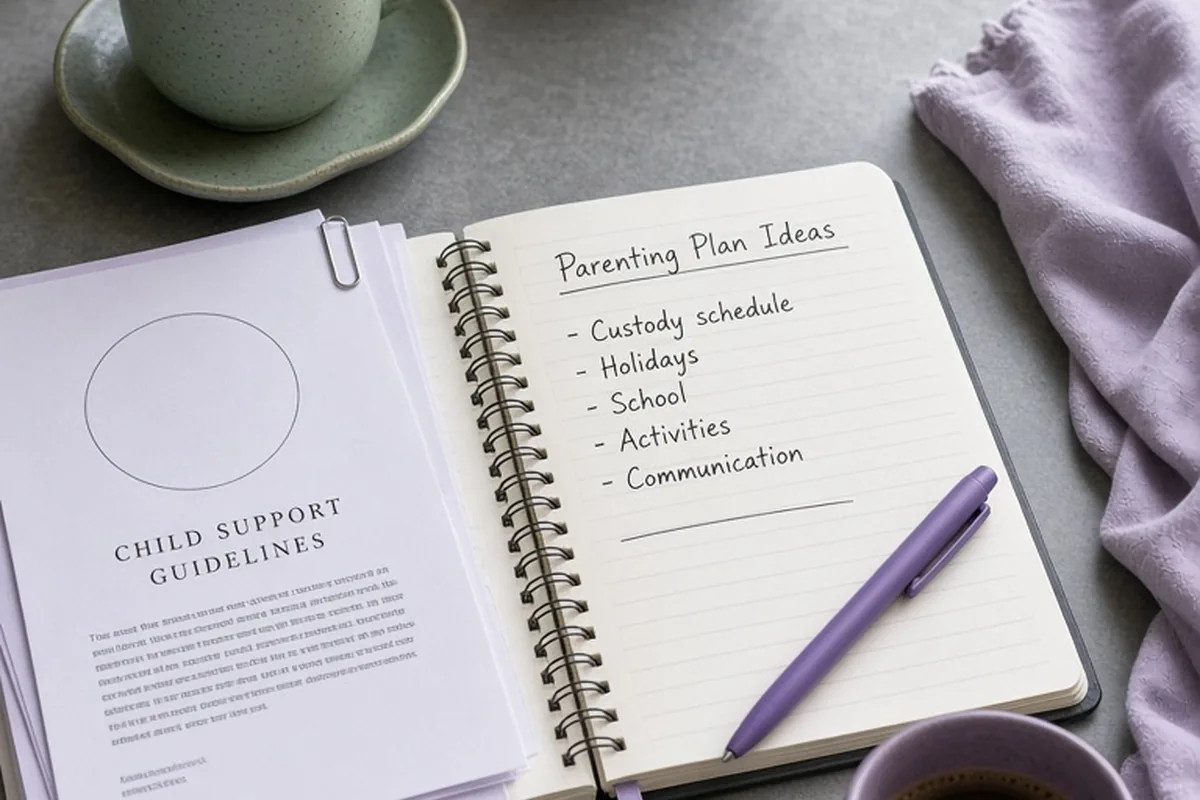
A central requirement in any divorce involving children is the creation of a comprehensive parenting plan. This document distinguishes between legal custody, which involves the authority to make major decisions regarding education, non-emergency healthcare, and religious upbringing, and physical custody, which defines where the children live on a day-to-day basis. Courts strongly favor arrangements that preserve meaningful relationships with both parents, provided there are no safety or welfare concerns.
A workable parenting plan outlines exact residential schedules, specifying weekday routines, weekend rotations, drop-off and pick-up locations, and transportation responsibilities. It must also detail holiday and vacation sharing, including how parents alternate major holidays, school breaks, birthdays, and summer vacations. Addressing transition logistics clearly in writing minimizes ongoing disputes and prevents miscommunication between households.
In addition to standard scheduling, thorough parenting plans address dispute resolution procedures, communication rules, and relocation boundaries. Many plans incorporate a right of first refusal, requiring a parent to offer the other parent the opportunity to care for the children before hiring a third-party babysitter if child care is needed for an extended duration. Outlining clear boundaries for introducing new romantic partners and traveling out of state also helps protect children from unnecessary relational turbulence.
Child Support Calculations, Health Insurance, and Add-on Expenses
Child support is an independent legal right belonging to the child, established to ensure both parents contribute financially to their upbringing. In the United States, every state maintains statutory child support guidelines based primarily on parental incomes, the number of overnight visits each parent exercises, and existing health insurance premiums. Parents must provide verified financial disclosures, including pay stubs, tax returns, and asset statements, to calculate these base figures.
Beyond baseline support, divorce agreements must account for mandatory and discretionary add-on expenses. These typically include out-of-pocket medical and dental costs not covered by insurance, work-related childcare or daycare fees, agreed-upon extracurricular activities, tutoring, and school tuition. Agreements usually divide these additional expenses proportionally based on each parent's share of combined gross income or allocate them as an equal fifty-fifty split.
Tax considerations also play a significant role in long-term financial planning during and after a divorce. The allocation of child dependency tax credits, head of household filing status, and medical expense deductions depends on specific custodial arrangements and formal written agreements submitted in accordance with federal tax regulations. Consulting official tax publications and a qualified tax professional ensures both parties claim the appropriate deductions without triggering filing conflicts.
Further reading: IRS Publication 504: Divorced or Separated Individuals
Mediation, Custody Evaluations, and Contested Court Proceedings
When parents cannot agree on a parenting schedule or decision-making rights, courts generally require alternative dispute resolution before allowing a case to go to trial. In family mediation, a neutral third-party mediator helps parents negotiate parenting time, communication protocols, and division of responsibilities. Mediation provides parents with direct control over the outcome, allowing for personalized solutions that a judge might not have the flexibility to create.
If mediation fails to resolve high-conflict custody disagreements, the court may appoint professional third parties to evaluate the family situation. A judge may assign a Guardian ad Litem, who represents the legal best interests of the children, or order a private custody evaluation conducted by a licensed mental health professional. These evaluators interview parents, observe interactions with children, inspect home environments, consult teachers or pediatricians, and submit formal recommendations to the court.
Should contested matters proceed to a formal trial, the family court judge makes binding decisions based on statutory best-interest-of-the-child standards. Factors considered include the mental and physical health of all parties, the emotional ties between each parent and child, each parent's willingness to foster a positive relationship with the other parent, and any substantiated history of domestic violence or substance abuse. Because state laws govern domestic relations procedures, filing requirements and trial protocols vary significantly across local jurisdictions.
Further reading: USA.gov: Get a copy of a divorce decree
Managing Daily Co-Parenting Communication and Emotional Transitions
The psychological adjustment of children during a divorce is heavily influenced by the level of conflict they witness between their parents. Shielding children from adult legal matters, financial disputes, and personal grievances is critical for their emotional well-being. Using dedicated co-parenting applications or shared digital calendars can streamline logistics, keep communication focused solely on the children, and create a transparent, written record of all parenting exchanges.
Children process divorce differently depending on their developmental age. Toddlers and young children need consistent daily routines, familiar comfort objects, and reassurance that both parents will continue to care for them. School-age children may express loyalty conflicts, worry about personal blame, or experience temporary academic dips, requiring structured check-ins and open listening. Adolescents often demand greater flexibility in their schedules to accommodate friendships, sports, and extracurricular commitments.
Maintaining consistent expectations, bedtime habits, and behavioral boundaries across both households gives children a predictable sense of security. Parents should avoid using children as messengers, questioning them about the other parent's personal life, or criticizing the other parent in their presence. If a child displays prolonged signs of anxiety, withdrawal, or behavioral regression, engaging a licensed pediatric counselor or family therapist can provide targeted emotional support.
Finalizing the Divorce Decree and Modifying Parenting Agreements Post-Decree
The divorce process formally concludes when a judge reviews and signs the final judgment and decree of dissolution of marriage. This document incorporates the approved parenting plan, child support order, medical support provisions, and property division terms, making them legally binding court orders. Official copies of the signed decree are filed with the local clerk of court and can be requested through appropriate state or municipal vital records offices for updating school records, passports, and benefit plans.
Even after a decree is finalized, parenting plans and child support obligations are not permanently fixed. Family courts recognize that circumstances change as children grow, educational needs evolve, or parents experience significant job transitions, health changes, or relocations. Either parent may file a motion for modification post-decree, but courts generally require proof of a substantial, material change in circumstances since the entry of the original order before adjusting custody or support terms.
Attempting to modify custody arrangements informally without court approval creates substantial legal risk. While parents are free to cooperate flexibly on day-to-day schedule swaps, permanent changes to parenting time or child support amounts must be submitted to the court as a formal stipulation and signed by a judge. This step ensures that all modifications remain legally valid and enforceable under state law.
Further reading: USA.gov: Get a copy of a divorce decree
Illustrative Scenarios
Transitioning from Emotional Friction to Structured Digital Scheduling
After filing for divorce, Marcus and Elena struggled with daily schedule handoffs for their seven-year-old son. Text messages about pick-up times frequently turned into arguments about past marital issues, causing tension during school drop-offs and leaving their son visibly anxious. Recognizing that unstructured communication was fueling conflict, they agreed through mediation to move all child-related logistics to a dedicated co-parenting application. They established a clear 2-2-3 custody schedule, designated the school as the neutral exchange point, and limited written messages exclusively to factual updates regarding homework, health, and activity schedules.
Key point: Setting clear communication boundaries and using neutral exchange locations reduces direct parental conflict, providing children with a predictable, stress-free routine.
Resolving Unplanned Extracurricular Costs Through Clear Agreement Terms
During their separation, David signed his ten-year-old daughter up for a competitive soccer team and expected his ex-spouse, Sarah, to cover half of the travel and tournament fees without prior discussion. Sarah felt blindsided and refused to pay, creating financial tension. Rather than escalating the matter to a costly court hearing, they worked with their attorneys to draft a clear clause in their final parenting plan requiring written mutual consent for any discretionary extracurricular expense exceeding a specified threshold before either parent incurs the cost.
Key point: Defining advance notice and consent rules for extra expenses prevents unexpected financial disputes and ensures both parents participate in major budget decisions.
Frequently asked questions
How long does a divorce with children usually take to complete?
The timeline varies significantly depending on state-mandated waiting periods and whether the custody plan is contested. Uncontested cases where parents agree on a parenting plan and support terms may resolve in a few months, while contested custody litigation can extend from nine months to well over a year. Check your local county court rules to identify specific statutory waiting periods in your area.
Can children choose which parent they want to live with?
Children do not have the absolute legal authority to choose their custodial parent until they reach the age of majority, which is eighteen in most jurisdictions. However, many state courts permit judges to consider the mature preferences of older children, typically starting around age twelve to fourteen, as one factor among many in assessing their best interests.
Who claims the children on taxes after a divorce?
Under federal tax guidelines, the parent with whom the child lives for the greater number of nights during the calendar year is generally considered the custodial parent eligible to claim the child. However, the custodial parent can release the claim for dependency exemptions or child tax credits to the noncustodial parent by signing IRS Form 8332 or including an equivalent formal provision in their divorce agreement.
What happens if my co-parent violates the custody schedule?
If a parent consistently fails to follow the court-ordered parenting plan, you should maintain a factual log of missed visits, late arrivals, and written communications. You can address ongoing non-compliance by filing a motion for enforcement or a motion for contempt with the family court that issued the original decree.
Your next step
Begin organizing your monthly financial records and a detailed log of your children's current weekly routines to prepare for drafting your initial parenting plan and temporary support filings.