When someone is in the hospital, express warmth, eliminate pressure to reply, and offer specific, manageable help. Thoughtful phrases include: 'I am thinking of you and sending love—no need to respond,' 'I am here for whatever you need, whether that is quiet company or running an errand,' and 'I dropped off a meal at your home for when you get back.' Focus on acknowledging their present reality rather than minimizing their situation.
Finding the right words when a friend, coworker, or family member is hospitalized can feel daunting. You want to convey warmth and steady support without overwhelming their limited energy, demanding medical updates they might be tired of repeating, or offering unsolicited advice. Balancing genuine care with respect for their privacy and physical exhaustion is the key to comforting someone navigating a medical stay.
Comforting Phrases to Send by Text or Hospital Card
Written messages are often the gentlest way to show support because they allow a hospitalized person to read and process your words whenever their treatment schedule and energy levels permit. A sudden medical stay frequently disrupts sleep, requires frequent monitoring by clinical staff, and leaves patients drained. When drafting a message, including an explicit release valve such as 'No need to reply to this' immediately removes the emotional burden of maintaining social etiquette while trying to rest.
For close friends and family members, your words can be intimate, grounding, and emotionally available. Phrases like 'I love you and am holding you close in my thoughts,' 'Take all the rest you need; I am here to help with anything at home,' or 'Sending you so much warmth and thinking of you through every step of this' validate your bond without requiring a conversation. For colleagues or casual acquaintances, a warm, professional boundary works best: 'Wishing you a smooth and restful recovery,' 'We are all thinking of you and have your responsibilities covered at work,' or 'Sending you warm wishes for healing and comfort.'
The medium you choose also communicates respect for their circumstances. Physical greeting cards delivered to the nursing station or room provide a lasting, comforting physical presence that patients can reread during quiet hospital evenings. Text messages, on the other hand, offer immediate warmth. If you send a text, keep it concise and self-contained so the recipient does not feel obligated to summarize their medical chart just to acknowledge your greeting.
What to Say and Do During an In-Person Hospital Room Visit
Bedside visits require careful coordination and sensitivity to the patient's immediate physical state. Before visiting, always confirm that the individual or their designated family caregiver actually wants in-person visitors. Hospital rooms can be cramped, noisy, and overwhelming, and patients may feel self-conscious about hospital gowns, medical equipment, or physical weakness. Checking in ahead of time with a message like 'I would love to drop by for fifteen minutes if you feel up for company, but please feel free to say no if you need rest' preserves their autonomy.
Once in the room, start with open-ended, low-demand greetings that put the patient entirely in charge of the conversation. Asking 'How are you feeling right in this moment?' or 'Would you like to talk about what is happening, or would you prefer a distraction from hospital talk?' allows them to guide the depth of the interaction. Some patients desperately want an outlet to process their medical concerns, while others crave lighthearted banter about sports, books, neighborhood news, or shared hobbies to feel connected to the outside world.
Pay close attention to observable physical cues throughout your stay. Heavy eyelids, shifting frequently in bed, looking toward the door, or pausing mid-sentence often signal mounting fatigue or discomfort. You do not need to wait for the patient to ask you to leave; proactive exits show deep respect. You can gracefully conclude the visit by saying, 'I am going to let you rest now, but I am so glad I got to see your face. I will check in with your family later this week.' Keep most casual visits between fifteen and twenty minutes unless the patient explicitly asks you to stay longer.
Well-Intentioned Hospital Phrases That Often Backfire and What to Say Instead
In moments of discomfort or fear, people often lean on automatic platitudes that inadvertently minimize a patient's pain. Phrases like 'Everything happens for a reason,' 'Look on the bright side,' or 'You just need to stay positive' can feel dismissive and create pressure for the patient to mask their legitimate fears. Similarly, telling someone 'You are so strong, you have got this' can inadvertently burden them with the expectation of performing bravery when they actually feel vulnerable, exhausted, or frightened.
Another common misstep is sharing third-party medical anecdotes or unsolicited medical opinions. Telling a patient about an acquaintance who had a similar surgery, complications, or experimental treatments shifts the focus away from their specific care plan and can provoke unnecessary anxiety. Medical care is deeply individualized, and patients rely on their clinical team for prognostic details. Avoid asking probing clinical questions like 'What is the long-term prognosis?' or 'Did the surgeon make a mistake?' unless the patient chooses to bring those topics up themselves.
To replace these conversational traps, adopt language rooted in active listening and emotional validation. If a patient expresses fear or frustration, respond with 'That sounds really overwhelming, and it makes complete sense that you feel that way,' or 'I am so sorry you have to go through this.' If you are unsure what to say, simple honesty is far more comforting than a hollow cliché: 'I do not have the right words, but I care about you deeply and I am here for you.'
Replacing Generic Offers with Concrete, Practical Help
The standard phrase 'Let me know if you need anything' rarely results in actionable support. When an individual is hospitalized, their mental bandwidth is consumed by symptom management, test schedules, and medical decisions. Asking them to assess their domestic needs, identify a task, and assign it to you imposes unnecessary cognitive effort, which often leads them to reply with a polite 'Thank you, we are fine.'
To provide meaningful relief, propose specific, low-friction tasks that you are genuinely willing and able to handle. Focus on practical daily responsibilities that continue accumulating outside hospital walls. For example, offer specific domestic support: 'I am doing a grocery run on Thursday; can I drop off fresh produce, milk, and snacks at your house?' or 'I have time tomorrow afternoon to walk your dog and water your plants.' Offering defined options makes it simple for the recipient to accept, modify, or decline without feeling awkward.
You can also coordinate logistical support for their immediate family. Phrases like 'I would love to send dinner to your home on Tuesday—would pizza or pasta work better for the kids?' or 'I can pick up the children from soccer practice this week if that helps your schedule' target real pain points. When offering help, state clearly that you require no immediate decision: 'No need to answer now; just text me a thumbs up if that works or let me know if a different day is better.'
Navigating Critical Care, Unclear Diagnoses, and Long Hospital Stays
Communication requires distinct adjustments when an individual is admitted to the intensive care unit, faces an extended stay, or is undergoing diagnostic workups without a clear timeline. In acute crisis or critical situations, the patient may be unable to communicate directly, and close family members may be in shock. In these moments, concise declarations of presence and dependable availability carry far more value than speculative optimism.
When an illness or recovery extends over weeks or months, initial waves of community support frequently dwindle, leaving patients and their families feeling isolated. Sustained, low-intensity check-ins become vital during these extended periods. Sending occasional messages like 'Thinking of you as you continue your recovery journey,' 'No need to update me, just sending love your way this Tuesday,' or sharing a funny photo of a neighborhood pet can provide a comforting thread to normal life without draining their stamina.
If a patient receives a serious or terminal diagnosis, shift your focus away from recovery expectations toward honoring their present comfort and dignity. Phrases such as 'I am here to sit with you, listen to whatever you want to share, or just keep you company in silence' communicate enduring love. Let the patient direct the emotional tone; if they want to laugh, laugh with them; if they need to grieve, offer a steady, unhurried presence without attempting to fix what cannot be fixed.
Supporting the Family Caregiver Sitting at the Hospital Bedside
Caregivers sitting bedside often experience profound physical fatigue, emotional distress, and isolation while managing communication between medical staff and worried relatives. They frequently neglect their own basic needs—such as regular meals, hydration, fresh air, and sleep—while keeping vigil. Reaching out specifically to the caregiver can provide indispensable relief during an overwhelming hospitalization.
When contacting a bedside caregiver, tailor your words to their immediate comfort and logistical needs. Consider practical offers: 'I am ten minutes away from the hospital; can I bring you a warm coffee, a fresh sandwich, or some bottled water?' or 'I would be happy to sit in the room for an hour this afternoon so you can take a walk outside, get some fresh air, or shower at home.' These specific actions give caregivers permission to care for themselves without feeling that they are abandoning their loved one.
Respect the caregiver's position as an information gatekeeper. Instead of asking 'What did the doctor say this morning?' which forces them to repeat painful details, say 'I am thinking of you as you navigate all these updates. How are you holding up today?' Acknowledging their emotional burden validates their essential role and reminds them that their well-being matters alongside the patient's recovery.
Illustrative Scenarios
Navigating a Coworker's Sudden Emergency Admission
Marcus learned that his department colleague Sarah had been hospitalized for an unexpected appendectomy. His initial impulse was to call her directly to ask how she was feeling and when she might return to finalize an upcoming project deadline. Recognizing that Sarah would likely be resting, medicated, and worried about her work responsibilities, Marcus adjusted his approach. He coordinated with his team to redistribute Sarah's workload completely, then sent her a brief text: 'We are all sending you warm wishes for a smooth recovery. Please rest completely—the team has your projects covered with zero expectations from you. No need to reply.'
Key point: Proactively relieving professional and logistical burdens reassures a hospitalized colleague far more than asking for updates.
Supporting a Close Friend Facing an Uncertain Diagnosis
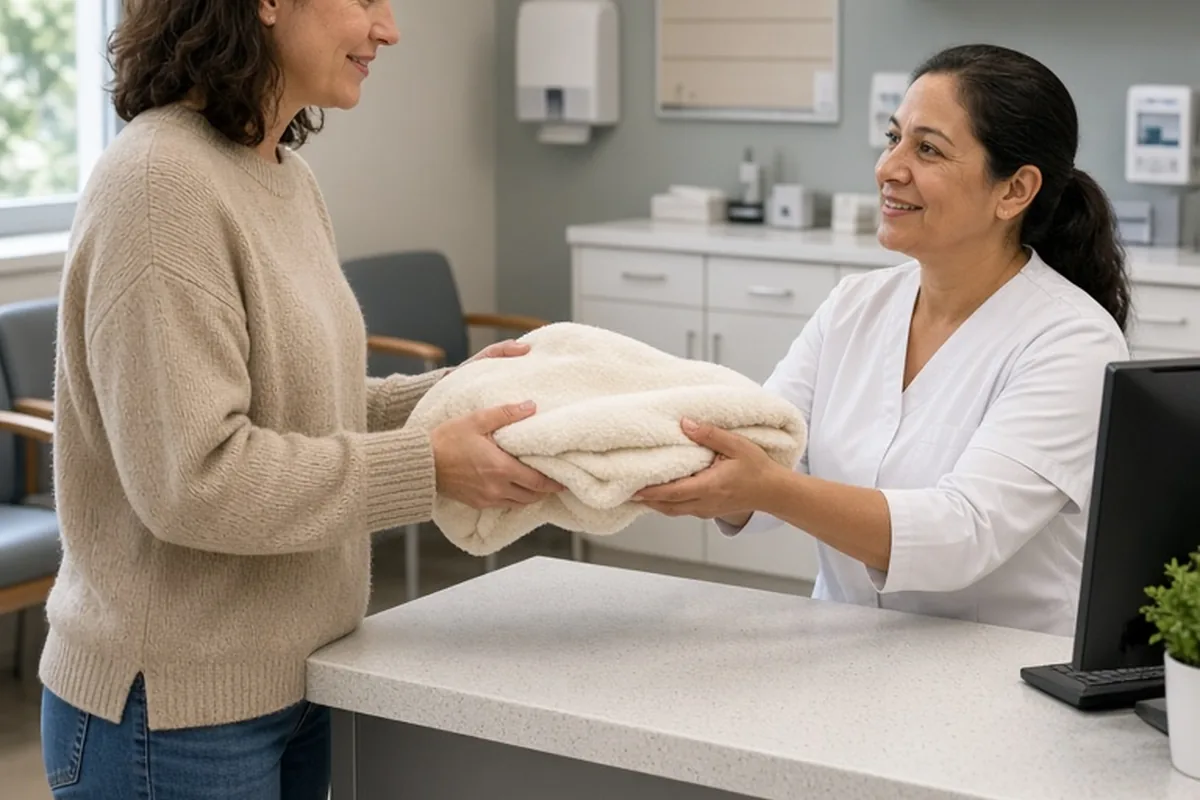
Elena's close friend David was admitted to the hospital with unexplained neurological symptoms and underwent several days of tests. Elena initially wanted to reassure David by sending articles about treatable conditions and saying, 'I am sure it will turn out to be nothing serious.' Sensing that David felt unheard and increasingly anxious about his symptoms, Elena shifted her strategy. She visited briefly, brought a soft fleece throw blanket to counter the cold room, and said, 'It is completely understandable to feel scared while waiting for results; I am here with you through the uncertainty.'
Key point: Validating real fear and offering grounding physical presence is much more comforting than enforcing premature optimism.
Frequently asked questions
Is it better to call or text someone who is in the hospital?
Texting or sending a physical card is generally preferred over unexpected phone calls. Hospital routines involve unpredictable doctor rounds, medication schedules, and irregular sleep, making phone calls potentially disruptive. A text allows the patient to read and respond whenever their energy permits.
What items are thoughtful to bring or send to a hospital room?
Comfort items that improve the hospital environment are usually the most helpful. Long phone charger cords, lip balm, unscented lotion, warm non-skid socks, eye masks, and cozy blankets are practical and comforting. Always check hospital unit policies before sending fresh flowers or food, as some specialized floors restrict them.
What should I say if I do not know the hospitalized person very well?
Keep your message simple, kind, and focused on comfort rather than personal details. A phrase like 'Wishing you a peaceful and steady recovery' or 'Thinking of you and sending warm thoughts during your hospital stay' conveys genuine goodwill while respecting personal boundaries.
How should I respond if someone shares difficult or unexpected medical news?
Focus on listening and validating their experience rather than trying to provide an immediate silver lining. Simple, supportive statements like 'I am so sorry you are facing this news,' 'Thank you for trusting me with this,' or 'I am here with you no matter what comes next' offer dependable comfort without minimizing their emotions.
Your next step
Select one low-pressure message from this guide, add an explicit note that no reply is necessary, and send it as a text or write it in a card today to offer gentle, practical support.