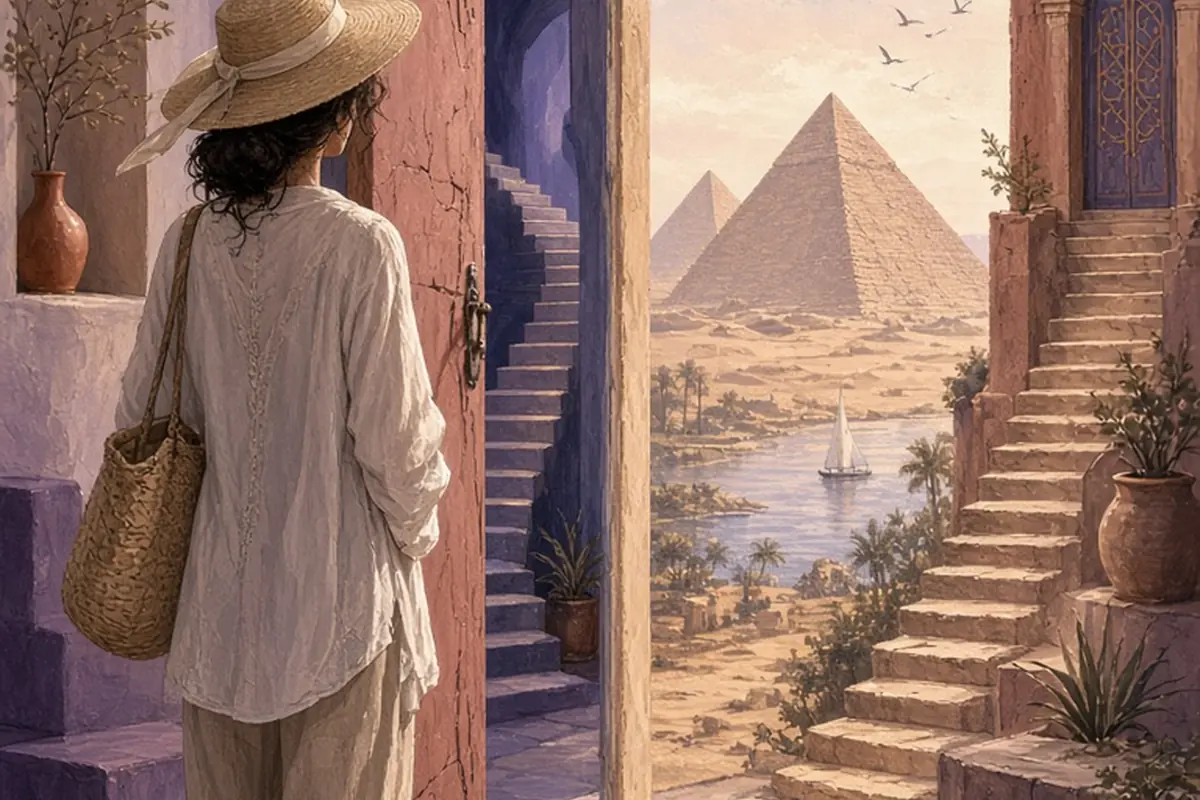
As a female tourist in Egypt, prioritize loose-fitting, breathable clothing made of linen or cotton that covers your shoulders, chest, and knees. While private beach resorts allow standard western swimsuits, exploring cities, historical monuments, and rural areas requires modest silhouettes like wide-leg trousers, maxi skirts, and lightweight long-sleeve shirts, paired with a versatile scarf to navigate conservative cultural norms comfortably.
Navigating Egypt as a woman means balancing intense desert sun, dusty terrain, and conservative cultural expectations across ancient monuments, bustling metropolitan markets, and coastal retreats.
Understanding Cultural Modesty and Street Dynamics
Egypt is a predominantly conservative Muslim country with a deeply rooted culture of modesty in public spaces. While local women choose varying degrees of traditional dress ranging from hijabs to niqabs or modest Western clothing, female visitors are not legally required or culturally expected to cover their heads on everyday streets. However, dressing in a manner that conceals the collarbones, upper arms, midriff, and knees is a powerful tool for blending in, showing respect to host communities, and significantly reducing unwanted street attention or prolonged staring.
The standard for modesty changes slightly depending on neighborhood density and economic context, but adopting a baseline of relaxed modesty keeps interactions friendly and comfortable. In busy residential districts of Cairo, traditional neighborhoods like Islamic Cairo, or rural agricultural towns along the Nile, adhering strictly to loose long pants and tunic-style tops creates an immediate layer of social ease. An important trade-off to recognize is that while modest clothing does not eliminate all street catcalling, it removes unnecessary friction and allows you to move through daily markets and transport hubs with far greater confidence.
Selecting Fabrics and Fits for Arid Heat and Dust
The climate in Upper Egypt, Cairo, and the Western Desert can reach extreme temperatures during the middle of the day, making your fabric choices critical for physical stamina. Synthetic materials like polyester, nylon, and heavy elastane trap perspiration against your skin, create odor retention, and quickly become unbearable in forty-degree heat. Instead, anchor your wardrobe in natural, open-weave fibers such as medium-weight linen, pure cotton, chambray, and breathable bamboo viscose that encourage airflow around the body while blocking intense UV radiation.
Fit is just as important as fabric composition when constructing daily outfits. Tight-fitting clothing clings to damp skin, restricts ventilation, and tends to draw more conservative scrutiny in public squares. Loose silhouettes, such as oversized linen button-downs, wide-legged palazzo trousers, and flowing A-line midi or maxi skirts, allow natural breezes to circulate beneath the fabric. Neutral tones like khaki, stone, olive, terracotta, and soft blues are ideal because they reflect sunlight without highlighting the pervasive, fine desert dust that instantly coats dark navy or stark black fabrics.
Dressing for Archaeological Sites, Tombs, and Desert Walks
Exploring iconic historical attractions such as the Giza Plateau, the Valley of the Kings, Karnak Temple, and Saqqara involves intense physical activity under direct sun with minimal shade. Visiting these sites entails walking across loose sand, climbing steep wooden scaffolding into low-ceilinged burial chambers, and stepping over uneven limestone blocks. Practicality demands sturdy, non-restrictive clothing that safeguards your limbs from abrasive stone edges and sun exposure.
A practical touring uniform consists of lightweight cargo trousers or ankle-length linen pants, a breathable cotton crew-neck T-shirt, and a long-sleeve utility or linen overshirt that you can unbutton for ventilation or roll up as needed. Avoid floor-length maxi dresses when navigating steep pyramid shafts or subterranean tomb staircases, as long hems frequently become tripping hazards or drag through dusty gravel. A wide-brimmed hat with a secure chin strap prevents desert gusts from blowing your sun protection away during open-air exploration.
Etiquette and Garment Requirements for Visiting Mosques
Egypt is home to extraordinary historic mosques, such as the Mosque of Muhammad Ali in Cairo and the Mosque of Sultan Hassan, which welcome non-Muslim visitors outside of prayer hours. Religious sites maintain strict dress codes that are actively enforced at entry checkpoints. In these spaces, women must cover their hair, entire chest, shoulders, upper arms, and legs down to the ankles, with no sheer fabrics or revealing cuts permitted.
Always carry a dedicated pashmina, linen shawl, or lightweight scarf in your day bag so you are instantly prepared for spontaneous visits to active religious spaces. You will also be required to remove your footwear before stepping onto interior carpets or courtyard stone floors. Wearing shoes that slip on and off easily saves considerable time, and packing a pair of clean cotton socks inside your bag ensures you can walk comfortably on stone floors that may be heated by the sun or chilled in deep stone halls.
Regional Differences: Metropolitan Cities Versus Red Sea Resorts
Wardrobe expectations shift significantly across Egypt’s distinct geographic and cultural zones. Metropolitan Cairo, Alexandria, Luxor, and Aswan demand consistent modesty throughout public streets, museums, and transportation hubs. Alexandria carries a breezy Mediterranean coastal atmosphere, yet it remains socially traditional, meaning beachwear should stay strictly confined to private beach clubs rather than the public Corniche promenade.
In sharp contrast, private resort enclaves along the Red Sea and South Sinai—including Sharm El Sheikh, Hurghada, Dahab, and El Gouna—cater heavily to international beach tourism. Within private hotel grounds, enclosed resorts, and designated boat excursions, standard Western swimwear, shorts, sundresses, and tank tops are completely standard. However, if you step out of the gated resort perimeter to explore municipal downtown markets, local grocery stores, or bus stations, throw on a lightweight kimono, linen pants, or a caftan over your outfit to remain respectful of local community norms.
Footwear Strategies for Rugged Terrain and Urban Exploration
Footwear in Egypt must handle uneven dirt roads, broken pavements, loose gravel, and slippery polished marble. Open-toed flat sandals may feel cooling, but they leave your feet vulnerable to desert dust, sharp stones, and urban grime, requiring frequent washing. High heels, delicate slip-ons, and flimsy flip-flops are impractical outside of private resort hotel lobbies or sit-down dinners.
Prioritize well-cushioned, closed-toe walking shoes or breathable trail-runner sneakers with solid traction for temple complexes and long walking days in city centers. Supportive leather walking sandals with secure ankle straps are an excellent alternative for warmer afternoons, provided you do not mind dusty feet. Pair your closed shoes with moisture-wicking merino wool or bamboo socks to prevent friction blisters during extensive walks across vast monument grounds.
Essential Accessories and Day Bag Management
Beyond primary garments, targeted accessories elevate your comfort and personal safety across long travel days. High-protection UV sunglasses with polarized lenses are indispensable against the harsh glare reflecting off pale limestone ruins and desert sand. A compact crossbody bag with secure zipper closures keeps your essentials close to your body in crowded markets like Khan el-Khalili, deterring pickpockets while leaving your hands free for balance on uneven steps.
A versatile scarf remains the single most functional item in a female traveler's day pack. Beyond serving as an impromptu head covering for mosque entry, it functions as a sun shield for your neck, a dust barrier during sudden desert winds, a light blanket in air-conditioned tour vans, and a modest chest drape when entering conservative family-run restaurants. Ensure your day pack also contains broad-spectrum sunscreen, biodegradable wet wipes for cleaning dusty hands, and a reusable insulated water bottle.
Frequently asked questions
Do female tourists have to wear a hijab or headscarf in Egypt?
No, female tourists are not expected or required to cover their hair in everyday public spaces, hotels, or restaurants. A head covering is only required when stepping inside active mosques, where you can easily drape a loose pashmina or scarf over your head before entering.
Can I wear shorts or tank tops while traveling through Egypt?
Shorts and tank tops are acceptable inside enclosed private Red Sea resort properties, private hotel pools, and on dive boats. However, they are culturally out of place and attract significant unwanted attention in cities, historical ruins, and local neighborhoods, where knee-covering bottoms and shoulder-covering tops are the norm.
What is the best outfit for riding camels or quad bikes in the desert?
Wear long, durable cotton or linen trousers to protect your inner legs from saddle friction and hot machinery, paired with a long-sleeved shirt to prevent sunburn. Secure closed-toe sneakers and a scarf or keffiyeh wrapped around your face and head will keep blowing sand and dust out of your hair and mouth.
How should I dress for evenings and Nile cruise dinners?
Evenings on Nile cruise ships and in upscale restaurants generally follow a smart-casual standard. A flowing maxi dress with shoulder coverage, a lightweight jumpsuit, or tailored linen trousers with a blouse work perfectly, offering comfort while accounting for cooler evening river breezes.
Your next step
Build your Egypt travel wardrobe around loose, breathable natural fibers with modest necklines and hem lengths, and always keep a lightweight scarf in your day bag for seamless comfort across all settings.