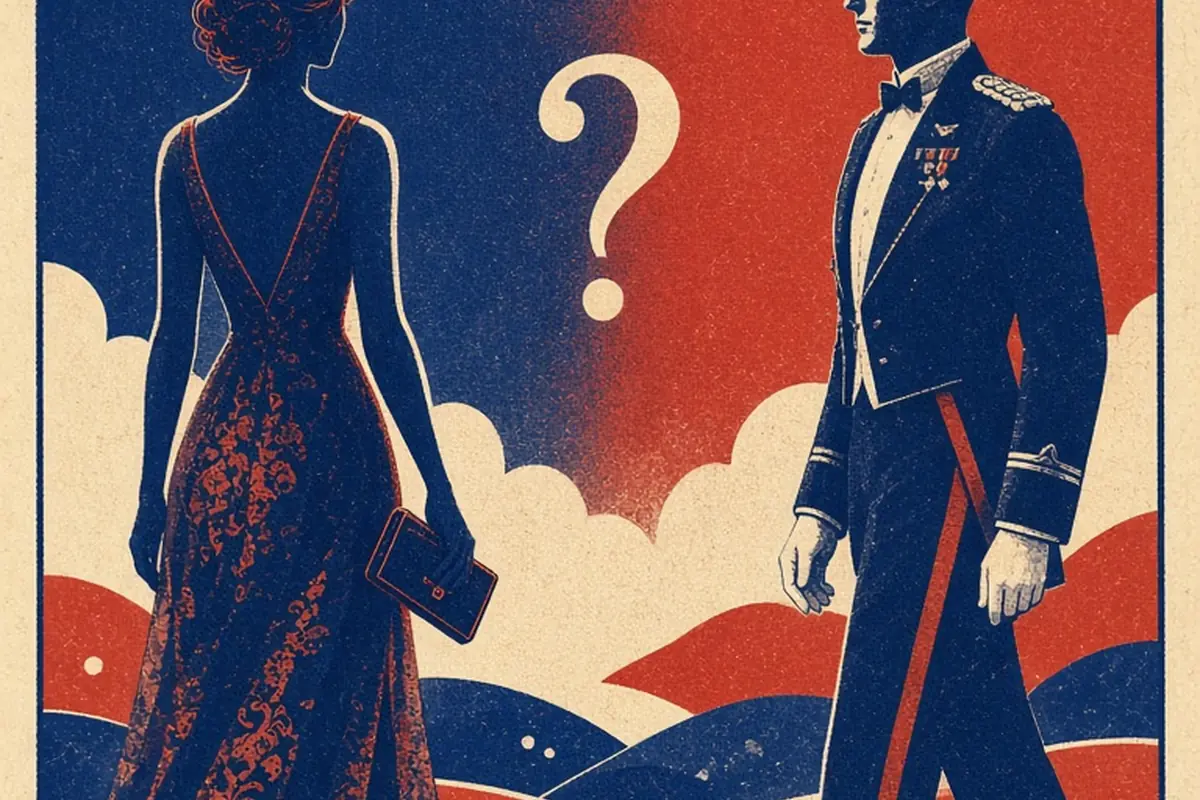
For a military ball, female civilian guests and dates should wear a floor-length formal evening gown that balances elegance with modesty. Choose jewel tones, navy, black, or metallic shades, avoiding excessively high slits, plunging necklines, or neon colors. Female service members typically wear their service branch's formal mess dress or dress blues uniform, though regulations sometimes permit an appropriate civilian ballgown depending on command authorization and unit guidelines.
Military balls are storied, tradition-rich formal ceremonies that celebrate unit camaraderie, branch history, and the achievements of service personnel. Because these galas follow distinct ceremonial customs alongside traditional white-tie and black-tie standards, knowing how to balance individual style with military decorum ensures you feel confident, comfortable, and appropriately dressed from the opening receiving line to the final dance.
Civilian Gown Standards: Silhouette, Hemline, and Fabric
When attending a military ball as a civilian guest, the foundational rule is to wear a floor-length formal gown. While standard black-tie galas occasionally tolerate sophisticated tea-length or midi dresses, military balls lean conservative and traditional. A skirt that brushes the top of your shoes conveys respect for the solemnity of the colors ceremony and the formal receiving line. Look for classic, structured silhouettes such as A-line, empire waist, column, or modest ballgown cuts. High-slit dresses can pose practical challenges during formal seated dinners and toasts, so if a dress features a slit, ensure it does not rise above mid-thigh when walking or sitting.
Fabric selection directly shapes both the formality and functional comfort of your attire. Substantial, elegant textiles such as crepe, mikado, velvet, heavyweight satin, and structured lace drape cleanly and resist excessive wrinkling through hours of sitting. Lightweight sheer fabrics like chiffon can work well when fully lined, but unlined or semi-transparent panels should be avoided around the bodice, midriff, or thighs. For example, a heavy emerald crepe column gown offers a modern line without risking tears or static cling on high-traffic ballroom carpets. The primary trade-off with heavy textiles is heat retention; historic armories or packed hotel ballrooms can quickly become warm during the dancing portion of the night, making breathable linings an essential consideration.
Active Duty Expectations: Uniform Requirements and Civilian Attire Permissions
Female service members face a different set of standards determined by their branch regulations and unit command directives. In almost all circumstances, active duty and reserve personnel are expected to wear their service branch's formal evening uniform. For the Army, this is the Army Mess Dress or the Army Service Uniform with formal modifications; for the Navy, the Dinner Dress Blue or Dinner Dress White; for the Marine Corps, the Evening Dress or Dress Blue 'A'; and for the Air Force and Space Force, the Formal Dress or Mess Dress. These uniforms represent personal accomplishment and service heritage, carrying precise regulations for miniature medals, rank insignia, ribbons, and accoutrements.
Under specific circumstances, unit commanders may permit female service members to attend in civilian formal attire rather than uniform, especially if attending strictly as a civilian spouse or companion to a member of a different unit or branch. However, this exception requires advance confirmation with the chain of command. If civilian attire is approved, grooming standards such as natural-toned hair color, modest jewelry, and tasteful presentation still reflect upon your military standing. The trade-off between uniform wear and civilian dress involves preparation: uniform maintenance requires meticulous dry cleaning, medal mounting, and strict adherence to branch grooming regulations, but it eliminates the stress of finding an outside gown that fits rigorous ball etiquette.
Navigating Color Etiquette and Visual Harmony
Choosing an appropriate dress color requires thoughtful coordination rather than exact matching. Civilian guests frequently wonder if they should match their date's dress blues or branch colors, such as wearing scarlet for an artillery unit or light blue for infantry. While honoring unit colors can be a subtle nod, trying to match the exact shade of a uniform jacket often looks overly coordinated, akin to a high school prom. A more sophisticated approach is complementary harmony: rich jewel tones like sapphire, burgundy, plum, and forest green look stunning alongside military dress uniforms without competing for attention.
Neutral shades such as navy, charcoal, champagne, metallic pewter, and classic black are universally appropriate choices. However, certain color palettes warrant caution. Bright fluorescent or neon tones clash severely with formal dress uniforms and ceremonial decorum. Pure bridal white can also create awkward visual confusion during group photographs and toasts, although soft metallics or ivory with distinct texture can work. Consider a slate-blue satin gown paired with an Army officer's midnight-blue mess dress: the pairing feels intentional, mature, and photogenic without turning the couple into a monochrome pair.
Footwear Choices for the Receiving Line and Ceremonial Standing
Footwear for a military ball requires a practical balance between formal elegance and physical endurance. A military ball is not an event where you move directly from a car to a dinner chair. Guests routinely spend thirty to sixty minutes standing in a slow-moving receiving line to shake hands with the commanding officer, executive officer, and honored guests. Following this, the posting of the colors, the invocation, and traditional toasts require attendees to remain standing at attention or in place for extended stretches before food is served.
For these reasons, towering stiletto heels that cause discomfort after twenty minutes can ruin your evening. Opt instead for a formal block heel, a modest kitten heel, an elegant wedge, or embellished pointed-toe evening flats. Ensure that any shoes you choose are thoroughly broken in prior to the ball and offer solid traction on slick parquet dance floors. If you prefer high heels for photographs, select a gown hemmed specifically for that height, but carry discreet folding flats in your vehicle for the end of the evening. Keep in mind that hemming a gown for high heels means switching to flats later may cause your hemline to drag and collect dirt.
Modesty, Necklines, and Selecting Outerwear for the Ceremony
Military balls maintain a dignified atmosphere where respect for service traditions, fallen comrades during the fallen soldier table ceremony, and senior leadership takes center stage. Consequently, conservative evening wear is the standard. Deep plunging V-necks, completely exposed midriffs, excessively sheer illusion panels, or low-cut backs that drop below the waistline are generally considered out of place. If your gown has an open back or strapless neckline, plan to bring a structured wrap, pashmina, or bolero jacket to wear during the ceremonial portions of the night.
Outerwear selection is equally critical because early arrival queues and check-in tables are often situated in cold entryways or drafty hangars. Wearing an everyday casual puffer coat or denim jacket over an elegant gown detracts from the formal aesthetic. Instead, pair your gown with a tailored wool trench, a formal evening cape, or a faux-fur stole. A black velvet stole or a fine cashmere wrap not only provides necessary warmth during the indoor presentation of colors but can also be draped gracefully over your chair back once the formal ceremonies conclude and dinner begins.
Undergarments, Alterations, and the Practical Fit Test
A successful ball gown requires strategic structural support underneath. Because military balls involve transitioning between prolonged standing, sitting through multi-course dinners and speeches, and lively dancing, your foundation garments must remain secure and comfortable. Avoid shapewear that pinches or restricts normal breathing, as you will be seated through several speeches and award presentations. Seamless underwear, properly fitted strapless bras, or professionally sewn-in bra cups prevent wardrobe malfunctions and visible lines under clingy fabrics.
Perform a comprehensive fit test at home at least two weeks before the ball. Put on your complete ensemble, including your intended undergarments and exact shoes. Practice standing straight for ten minutes, sitting down in a low dining chair without having to pull awkwardly at your neckline, and raising your arms above your head as if dancing. If the bust gapes when you lean forward or the hem catches under your heels when stepping backward, take the dress to a tailor immediately. Professional tailoring provides polish that elevates an inexpensive off-the-rack gown to look like bespoke couture.
Accessories, Evening Bags, and Ballroom Etiquette
Accessories should enhance your outfit without producing distracting noise during quiet ceremonies. Avoid stacks of metallic bangles or long charm bracelets that clink against tables or during the national anthem. Instead, choose understated, luminous pieces such as crystal drop earrings, pearl strands, or a delicate pendant necklace. If your gown features heavy beadwork or an ornate neckline, minimize your jewelry to simple studs to prevent a cluttered appearance.
Carry a compact clutch or a small minaudiere rather than an everyday shoulder bag or large purse. Your clutch should hold only the essentials: government identification for base entry, a small touch-up compact, lip color, breath mints, and your phone. During the formal toasts and national anthem, phones should be set to complete silent mode and kept inside your purse rather than resting on the dining table. When standing in the receiving line, hold your clutch in your left hand so your right hand remains free and unobstructed for welcoming handshakes.
Illustrative Scenarios
Balancing Formal Modesty with Personal Taste
Elena was invited to attend an annual Marine Corps ball with her partner. Her first choice was a backless, slinky metallic slip dress she previously wore to a high-end city celebration. After researching the formal toasts and extended receiving lines, she realized the dress lacked the coverage and mobility needed for ceremonial etiquette. Elena chose an A-line midnight-navy gown made of structured satin with a boat neckline and a graceful low-back, pairing it with a tailored pashmina wrap and two-inch block heels.
Key point: Opting for a structured, classic silhouette with dependable footwear allows civilian guests to look sophisticated while effortlessly enduring hours of formal standing and ceremonial customs.
Frequently asked questions
Can a female civilian guest wear a short or cocktail-length dress to a military ball?
A floor-length gown is strongly recommended for almost all military balls because the dress code corresponds to white-tie or strict black-tie. A short cocktail dress will appear noticeably underdressed next to formal dress uniforms and other evening gowns. If a floor-length gown is truly unattainable, a very dressy, ankle-length maxi or tea-length dress in a luxurious dark fabric is the absolute minimum standard.
Are formal jumpsuits or pantsuits acceptable for female guests?
Yes, an upscale, tailored formal evening pantsuit or wide-leg jumpsuit can be appropriate if it matches the formality of a floor-length gown. Look for refined evening materials like crepe, velvet, or satin with elegant cuts, avoiding daytime business suiting or casual cotton blends. Pair the suit with statement jewelry and formal evening heels to preserve the black-tie tone.
Do civilian guests need to remove their wraps during the national anthem or toasts?
No, guests do not need to remove formal shawls, wraps, or evening jackets during ceremonies or toasts, provided they are modest and tidy. Service members in uniform will observe branch-specific headgear and cover rules, but civilian formal outerwear remains governed by personal comfort and modesty inside the ballroom.
Should female service members wear their hair up when attending in uniform or civilian dress?
When in uniform, female service members must strictly follow their branch grooming regulations, which generally mandate neat buns or approved braids that do not extend past the bottom edge of the collar. If authorized to attend in civilian attire, regulations relax, but opting for a tidy updo or polished style keeps the look elegant and aligned with formal ballroom standards.
Your next step
Verify the exact uniform designation listed on the event invitation with your host, then secure your floor-length gown and schedule professional tailoring alongside your event shoes at least four weeks in advance.