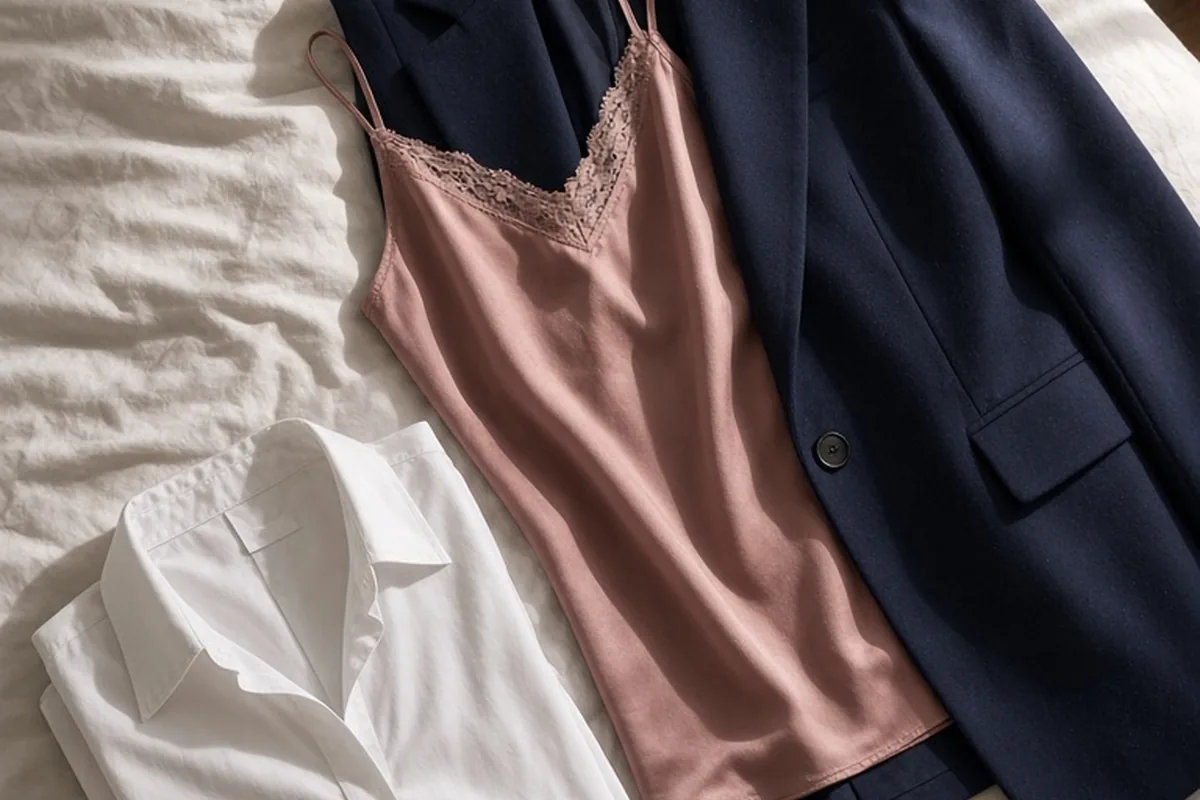
To style a women's suit jacket, choose an underlayer based on your dress code and climate. A tailored button-up or silk shell offers formal elegance, while a fine-gauge knit or mock-neck creates modern business sophistication. For smart-casual settings, select a fitted crew-neck tee or smoothing bodysuit. Focus on smooth, low-bulk fabrics that keep sleeves mobile and prevent bunching.
A well-tailored suit jacket provides structure and confidence, but the piece resting underneath dictates the mood, comfort, and functionality of your entire outfit.
Classic Button-Up Shirts and Collared Blouses
A crisp button-up shirt remains the gold standard for traditional corporate environments, formal boardrooms, and legal settings. The structured collar frames the face naturally and reinforces the lapels of your jacket, creating sharp vertical lines that project authority. When selecting a shirt, pay close attention to the collar height and stiffness; a collar that collapses under the weight of the lapel can look untidy. Cotton poplin delivers a classic, clean appearance, while cotton-blend shirts with two to four percent elastane offer necessary stretch across the shoulders when reaching or typing at a desk.
To execute this look cleanly, ensure the shirt fits properly across the bust to prevent fabric pulling or gaping between buttons. If you often experience gaps, look for shirts designed with hidden interior placket buttons or opt for a tailored blouse with sewn darts rather than a boxy menswear cut. The main trade-off with pure cotton button-downs is maintenance; they wrinkle quickly beneath jacket elbows and require thorough pressing before every wear. A soft silk or matte-crepe collared blouse provides a graceful compromise, giving you the neat collar line with a gentler drape and better resistance to creasing.
Silk and Satin Camisoles for Polished Fluidity
A fluid silk or satin camisole softens the rigid construction of a tailored blazer, introducing subtle luster and movement to your ensemble. This combination is especially effective for evening networking events, upscale dinners, or creative professional settings where severe formality is unnecessary. A camisole with a soft scoop neck or gentle V-neckline visually opens the chest area, balancing the broad shoulder structure of modern oversized or double-breasted suits.
When choosing a camisole, prioritize heavier silk weights or fully lined satin tops to prevent the fabric from clinging awkwardly or showing the outline of your undergarments. Look for designs with adjustable straps and wide armholes that lie flat against your ribcage without billowing. The primary limitation of a delicate camisole is temperature vulnerability; lightweight silk offers virtually no thermal insulation in cold conference rooms, and bare skin against a polyester jacket lining can feel clammy. If you choose an open neckline, check the front drape while leaning forward to ensure your coverage stays aligned with your professional comfort zone.
Fine-Gauge Sweaters and Turtlenecks for Cooler Weather
Fine-gauge knitwear brings seamless, architectural warmth to suiting during autumn and winter. Lightweight merino wool, silk-cashmere blends, and smooth ribbed knits mold closely to the torso, eliminating the wrinkles and tucking issues common with woven fabrics. A slim black, cream, or charcoal turtleneck under a structured glen plaid or camel blazer creates a timeless, high-impact aesthetic that reads as intentional, creative, and sophisticated.
The critical technical factor when layering knits under tailoring is sleeve and armhole circumference. Bulky cable knits or heavy yarns will distort the jacket shoulder pads, stretch the upper sleeve seam, and severely restrict your arm mobility. Stick to 16-gauge or 18-gauge knits that feel nearly as thin as a standard jersey shirt. A mock-neck top is an exceptional alternative for anyone who finds a full turtleneck constricting around the throat, as it delivers the same clean vertical collar look while allowing more room for breathing and movement.
Fitted Crew-Neck T-Shirts and Bodysuits for Contemporary Casual
Pairing a tailored suit with a minimalist T-shirt or seamless bodysuit is the foundation of modern smart-casual dressing. This combination breaks down the inherent rigidity of a two-piece suit, making tailored trousers and jackets feel wearable for casual office days, travel, or weekend dinners. The key to making this casual underlayer look refined rather than careless is fabric quality; standard slubby cotton or sheer lounge tees undermine the structure of the jacket.
Instead, choose dense, opaque fabrics such as double-knit pima cotton, modal blends, or compact mercerized jerseys with a neat, narrow collar band. Bodysuits are particularly effective under slim-cut blazers because they remain completely smooth around the hips and waistband, removing the bulge of fabric that often bunch when tucking ordinary shirts into high-waisted trousers. The drawback to consider is that once your jacket comes off, a fitted bodysuit or plain T-shirt may feel significantly more casual or revealing than you intend for a professional room, so keep your environment's dress expectations in mind.
Sleeveless Crepe Shells for Year-Round Commuting Comfort
A woven crepe or georgette sleeveless shell is one of the most reliable workhorses in a professional wardrobe. These tops are engineered specifically to sit smoothly under jackets without adding friction or heat to the upper arms. Because the sleeves are eliminated, your jacket retains full movement at the shoulder joint, which helps avoid fabric tension across the back. Crepe also resists creasing exceptionally well, making it an ideal choice for long days involving heavy commuting or travel.
When purchasing sleeveless shells, inspect the armhole drop closely. Armholes that dip too low expose the sides of your bra, while armholes cut too tight can cause chafing against the jacket seams. Look for tops featuring a modest crew neck, boat neck, or inverted pleat at the center front, which creates vertical drape without excess volume. The main limitation is unlayering; if you work in an office where jackets are routinely removed during work sessions, ensure the shoulder straps of the shell are wide enough to cover lingerie straps entirely on their own.
Aligning Your Underlayer With Jacket Silhouette and Lapels
The lapel style and stance of your suit jacket should directly inform the neckline you choose beneath it. Single-breasted jackets with a deep, low button stance naturally showcase a larger expanse of your chest, pairing beautifully with horizontal boat necks, crew necks, or structured collared shirts that anchor the open triangular space. In contrast, double-breasted jackets overlap across the torso, leaving only a compact V-shaped opening at the neck. With a double-breasted cut, an elaborate blouse with ruffles or large collars can easily look crowded and chaotic.
Pay attention to balance and proportion. If you wear an oversized, boxy '80s-inspired blazer, balancing the volume with a fitted knit or tucked shell prevents your overall frame from appearing swamped by excess fabric. Conversely, if your jacket is a cropped or sharply fitted equestrian cut, a top with a neat hem that does not hang below the jacket waistline maintains clean, deliberate proportions. Take a moment in front of a mirror to assess where the top's hem hits relative to the jacket's lower button to avoid awkward peeking fabric layers.
Managing Fabric Friction, Heat, and Undergarments
What you wear beneath your suit jacket must perform mechanically as well as aesthetically. Synthetic jacket linings like acetate, polyester, or cupro generate static electricity and friction against certain underlayer materials. If you pair an unlined wool knit over a clingy synthetic shell, the layers may ride up and bunch around your ribs throughout the day. Choosing natural fibers or spraying an anti-static guard inside the jacket can resolve this issue immediately.
Undergarments also determine how smoothly your top sits under a tailored blazer. Molded, smooth-cup bras in shades close to your skin tone ensure that seam lines, lace textures, and color contrasts do not show through lightweight tops under bright office lighting. Additionally, consider how easily you tend to overheat; if you run warm, wearing a breathable natural fiber like lightweight linen-cotton blends or silk prevents sweat marks around the armscye of your jacket, protecting both your comfort and the longevity of dry-clean-only suiting.
Illustrative Scenarios
Navigating All-Day Climate Swings at a Professional Conference
Jordan needed an outfit for an eight-hour conference that moved continuously between humid outdoor walking paths and intensely air-conditioned auditoriums. An initial choice of a stiff cotton button-down felt too stifling and wrinkled immediately under her navy wool blazer, while an ultra-thin camisole left her uncomfortably cold once the presentation started. She adjusted by pairing her blazer with a fine-gauge, short-sleeved merino wool knit in ivory.
Key point: Selecting a temperature-regulating, short-sleeved natural knit provided warmth under strong air conditioning, resisted creasing during travel, and looked polished even when she removed her jacket during interactive afternoon workshops.
Frequently asked questions
Can I wear a suit jacket without anything underneath?
Yes, wearing a suit jacket buttoned as a standalone top creates a modern, sleek statement for evening events. To do this comfortably, the jacket must have a higher button stance and adequate chest overlap, often secured with fabric tape or a discreet hook-and-eye closure.
How do I prevent my button-down shirt from bunching inside suit sleeves?
Look for shirts with tapered sleeves and smooth, lightweight fabrics rather than stiff, wide cuts. Pull your shirt cuffs down so they extend roughly a half-inch past the jacket cuff before buttoning, which keeps the sleeves anchored straight.
What colors work best under a dark navy or black suit?
Classic neutrals like crisp white, soft ivory, and pale blue offer high contrast and clean definition against dark tailoring. For a modern, understated aesthetic, consider monochrome layering using rich charcoal, slate grey, or midnight navy.
Your next step
Assess your day's schedule, choose an underlayer with smooth fabrics that fit your jacket's neckline, and test your arm mobility in front of a mirror before heading out.