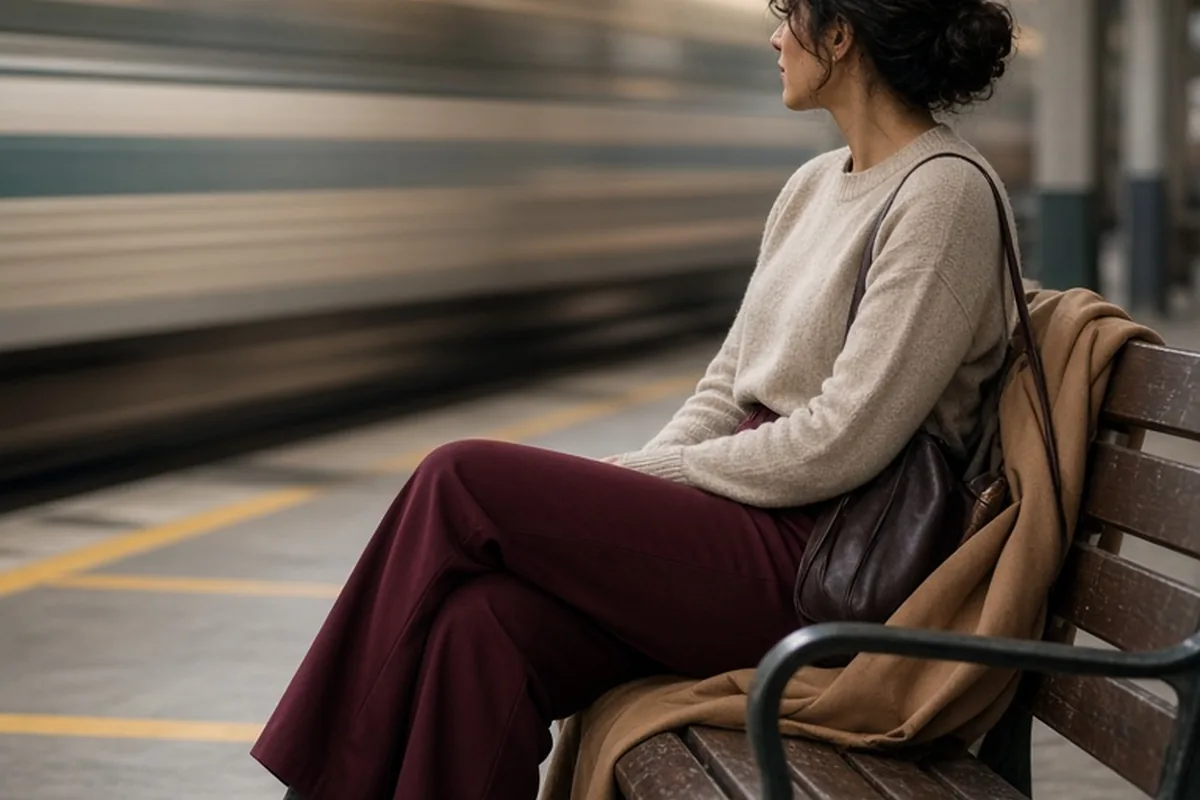
To style burgundy pants, pair them with versatile neutrals like cream, crisp white, camel, charcoal, and black for a balanced look. For richer contrast, incorporate forest green, dusty blush, or navy blue. Balance wide-leg cuts with fitted knitwear or structured blazers, while pairing slim-fit trousers with relaxed tops. Complete your outfit with neutral footwear, such as cognac leather loafers, black ankle boots, or minimalist white sneakers.
Burgundy serves as an exceptionally versatile anchor color in modern wardrobes, bridging the gap between neutral staples and expressive seasonal statement pieces. Understanding how to balance color palettes, garment proportions, and fabric textures allows you to wear burgundy trousers confidently across professional settings, casual gatherings, and elevated evening events.
Color Palettes That Naturally Complement Burgundy
Burgundy functions much like a deep neutral because its rich red and brown undertones coordinate effortlessly with a wide spectrum of shades. The most straightforward pairings rely on light, warm neutrals such as cream, vanilla, ecru, and soft camel. These shades provide an immediate brightness that offsets the deep saturation of the pants without creating an overly stark visual divide. Charcoal grey and heather oatmeal also introduce gentle textural contrast, making them ideal options for everyday knitwear, casual tees, and soft cardigans.
When you want to introduce deliberate color contrast rather than neutral balance, cool jewel tones and muted pastels work exceptionally well. Deep navy blue, forest green, and slate blue sit comfortably opposite burgundy on the color spectrum, creating a sophisticated, grounded aesthetic suitable for autumn and winter. For warmer months or softer daywear, dusty rose, blush pink, and pale sky blue soften the intensity of the trousers, producing an approachable, modern outfit. Avoid pairing bright cherry red or neon hues with burgundy, as these competing shades can create visual discord.
You can easily build reliable outfits by organizing your tops into distinct tonal categories based on the mood you want to project:
- Crisp Brights: Soft white, ecru, and light ivory to illuminate the face and keep the overall silhouette fresh.
- Rich Earth Tones: Camel, toffee, olive green, and warm taupe for grounded, autumnal combinations.
- Deep Contrast: Classic navy, midnight black, and charcoal grey for sleek, understated drama.
- Soft Accents: Dusty blush, powder blue, and muted sage for gentle, daytime dimension.
Balancing Proportions Based on Trouser Cut and Silhouette
The cut of your burgundy pants dictates the ideal silhouette for your top, jacket, and footwear. High-waisted, wide-leg burgundy trousers require top layers that define the natural waistline to prevent the outfit from overwhelming your frame. Fitted ribbed turtlenecks, cropped boxy tees, or tucked-in silk blouses maintain clean vertical lines and allow the fluid drape of wide-leg trousers to remain the focal point. If you prefer wearing an open outer layer, such as a tailored blazer or long duster coat, keep the inner base layer tucked neatly into the waistband.
Conversely, slim-leg, cigarette, and skinny burgundy pants pair best with garments that offer relaxed volume up top. Oversized cashmere sweaters, longline poplin button-downs, and relaxed tunics provide a balanced contrast against fitted legs. When styling straight-leg burgundy chinos or tailored ankle trousers, you have the flexibility to choose either semi-tucked lightweight knits or structured short jackets. Pay close attention to hem length; straight and slim cuts should generally hit right at the ankle bone to ensure footwear transitions seamlessly.
Specialty fabrics such as burgundy faux leather, corduroy, or crushed velvet require additional thought regarding texture rather than just cut. Because these materials carry inherent sheen or tactile weight, balance them with matte, understated tops like brushed cotton, fine-gauge merino wool, or soft denim shirts to keep the ensemble refined.
Selecting Footwear Colors and Styles
Footwear anchors your burgundy pants outfit and determines whether the finished look leans casual, business-ready, or evening-appropriate. Neutral shoe tones are the most reliable choice because they let the rich tone of the trousers lead. Cognac and warm tan leather shoes bring out the warm undertones of burgundy, making them a natural match for daytime tailoring and casual weekend wear. Black leather or suede boots, loafers, and pumps create a sleek, seamless transition that elongates the leg line, particularly when paired with darker tops.
For relaxed and contemporary settings, clean white leather sneakers provide an effortless casual contrast against cropped or wide-leg burgundy chinos. In dressier scenarios, pointed-toe nude pumps or metallic strappy heels in muted gold or pewter add refinement without competing with the pants. Ensure your choice of shoe matches the trouser hemline; wide-leg styles look best with substantial soles or pointed toes that peek through the hem, while tapered styles highlight loafers, ankle booties, and mules.
Professional and Office Wear Styling Strategies
Burgundy trousers are an excellent alternative to standard black or navy suit pants in professional environments, offering refined color while maintaining workplace polish. To create a dependable business casual outfit, combine tailored burgundy wool or crepe trousers with a crisp white spread-collar shirt and a structured black or houndstooth blazer. Pointed-toe black leather loafers or low block heels maintain professional decorum while keeping you comfortable throughout the workday.
In corporate settings where suits are preferred, a monochrome burgundy pantsuit worn with a light ecru silk camisole creates a polished, cohesive aesthetic. Alternatively, pairing burgundy slim-leg trousers with a fine-gauge camel crewneck sweater and a narrow leather belt delivers understated elegance. When working with deep red shades in office environments, limit high-contrast patterns and keep jewelry delicate and architectural to preserve a clean, tailored finish.
Casual and Weekend Outfit Ideas
For relaxed off-duty days, burgundy pants bring intentional style to simple, comfortable basics. Pair high-waisted burgundy denim or utility trousers with a vintage-washed graphic tee, an oversized medium-wash denim jacket, and low-top white sneakers. This combination balances casual ease with curated color, making it suitable for weekend errands, casual lunches, or travel.
During transitional weather, swap the denim jacket for a chunky knit cardigan in oatmeal or heather grey layered over a simple ribbed tank top. Relaxed burgundy joggers or wide-leg corduroys can also be paired with a cropped neutral sweatshirt and slip-on canvas shoes for an elevated loungewear look that feels put-together when stepping out.
Layering Outerwear for Changing Seasons
Choosing outerwear for burgundy pants depends on balancing the visual weight and undertone of your coat with the rest of your outfit. A tailored double-breasted camel overcoat is one of the most flattering layering pieces you can wear over burgundy, as the warm tan tone enriches the deep berry shade. For an edgier, contemporary aesthetic, a black leather moto jacket paired with burgundy trousers and ankle boots creates a balanced contrast between structured leather and soft tailoring.
In wet or transitional seasons, a classic beige or khaki trench coat adds light structure while keeping the overall palette airy. If you prefer casual outerwear, consider an olive green utility jacket or an oversized plaid wool shacket featuring flecks of brown, cream, and rust. Keep coat lengths proportionate to your pant silhouette: longline coats pair well with both wide-leg and skinny cuts, whereas cropped jackets are best reserved for high-waisted trousers.
Accessorizing and Incorporating Patterns
Accessories serve as the unifying elements that tie your burgundy trousers to the rest of your wardrobe. Warm metal jewelry, such as polished yellow gold or brushed brass hoops and chain necklaces, complements the warm depth of wine and maroon shades. If your outfit leans cool with charcoal grey and white tops, sleek silver jewelry provides a clean, modern finish.
When introducing patterned accessories or garments, select prints that contain small touches of burgundy, cream, tan, or navy. A classic silk neck scarf in a geometric print, a subtle houndstooth blazer, or a fine pinstripe button-down adds depth without overwhelming the outfit. Animal prints, such as leopard or tortoiseshell belts and bags, also pair naturally with burgundy because their warm brown and black tones mirror the trouser's rich base.
Frequently asked questions
Can I wear burgundy pants in spring and summer?
Yes, you can comfortably wear burgundy pants in warmer months by selecting lightweight fabrics like linen, lightweight cotton, or silk blends. Pair them with breezy white linen button-downs, sleeveless tops in pastel blush or ecru, and open-toe neutral sandals to keep the outfit looking light and seasonal.
What belt color looks best with burgundy trousers?
A medium cognac, warm tan, or rich espresso brown leather belt provides a flattering, organic accent against burgundy trousers. For more formal or monochrome outfits, a slim black leather belt with minimal gold or silver hardware offers a clean, defined waistline.
Is it acceptable to wear a burgundy top with burgundy pants?
Monochromatic burgundy outfits look exceptionally chic when you intentionally vary the textures or tones between pieces. Try pairing smooth tailored burgundy pants with a chunky burgundy cable-knit sweater or a lustrous silk blouse to create depth and prevent the outfit from looking flat.
Your next step
To build your next outfit, select one pair of neutral shoes—such as white sneakers for casual wear or black ankle boots for tailored looks—and match them with a simple cream or black top to let your burgundy pants stand out effortlessly.