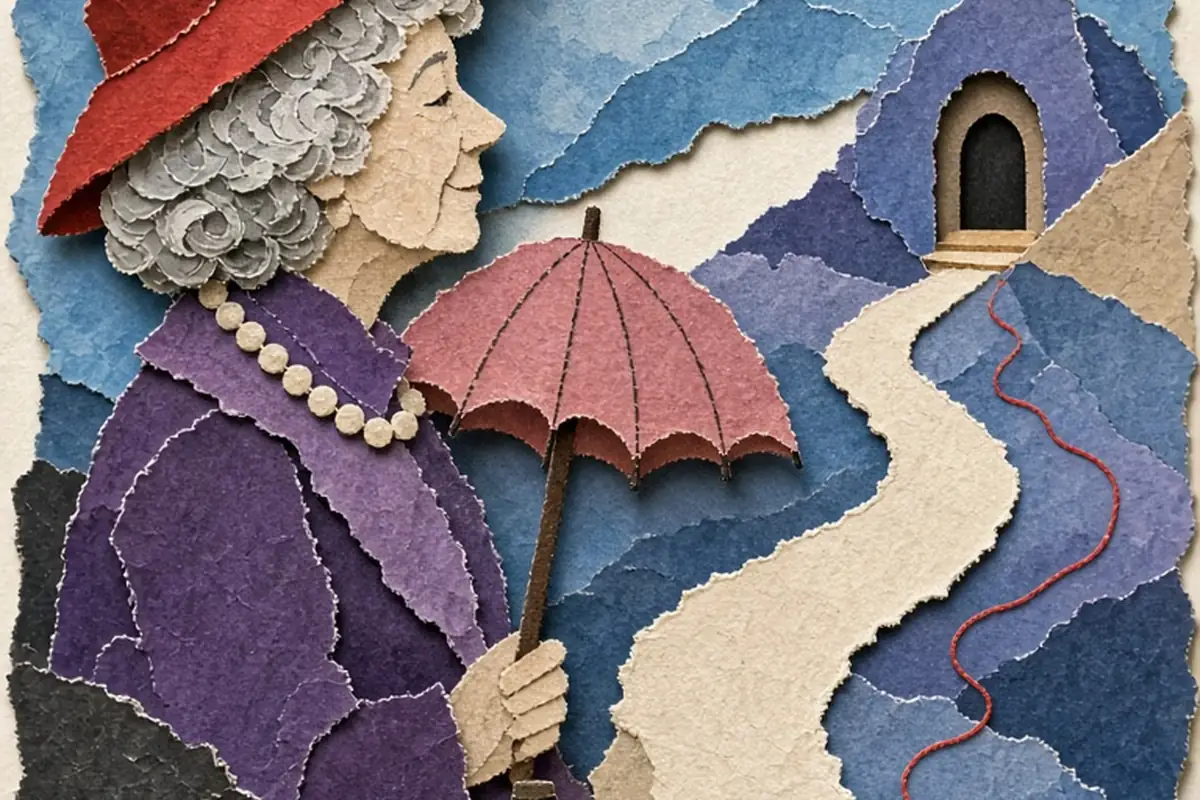
The phrase when I am an old woman references Jenny Joseph's celebrated poem Warning and represents a broader philosophy of authentic, boundary-free living. It addresses the desire to shed rigid social expectations, embrace eccentric self-expression, and claim personal autonomy. Rather than postponing joy and individuality until late adulthood, the concept encourages individuals to practice confident self-permission, unburdened living, and genuine self-expression right now.
Many people spend years conforming to professional expectations, caregiving demands, and social scripts, secretly promising themselves that they will finally relax and live boldly once they reach old age. Exploring the meaning behind this sentiment offers a practical roadmap for claiming that same freedom today.
The Meaning and Origin Behind the Purple Dress
The popular phrase originates from Jenny Joseph's 1961 poem titled Warning, which opens with the iconic line about wearing purple with a red hat that does not go. For decades, the poem has served as an anthem for women and marginalized individuals who feel constrained by traditional codes of politeness, neatness, and domestic perfection. The narrator imagines an older self who spits on the pavement, rings emergency bells for fun, eats three pounds of sausages at once, and unapologetically hoards useless objects. This vivid imagery resonates deeply because it contrasts sharply with the stifling composure demanded of adults during their prime career and parenting years.
Beyond its humorous defiance, the text captures a universal tension between societal duty and personal liberation. Readers often recognize the exhausted habit of keeping up appearances for neighbors, employers, and family members while suppressing their eccentricities. The enduring popularity of the sentiment reflects a collective hunger for autonomy. It serves as a reminder that aging does not have to mean quiet decline or diminishing relevance; instead, it can be viewed as an expansive stage of life defined by total disregard for unearned external judgment.
Why Society Teaches Us to Postpone Authenticity
From early adulthood, social conditioning encourages people, especially women, to prioritize accommodating others over pursuing personal desires. Workplace cultures frequently reward conformity and emotional suppression, while social circles often police non-traditional behavior through subtle disapproval or overt criticism. Consequently, many develop an internal bargain: fulfill every obligation now, remain sensible and agreeable, and defer quirky hobbies, bold attire, and honest boundary-setting to a distant, unspecified future.
This habit of postponement carries a hidden psychological cost. When you spend decades editing your thoughts, muting your style, and subordinating your preferences to keep the peace, reclaiming your authentic voice later in life becomes significantly harder. Postponing self-acceptance can lead to chronic burnout, resentment, and a diminished sense of self. Recognizing this pattern allows you to see that waiting for an arbitrary age milestone to grant yourself permission is an unnecessary barrier to daily fulfillment.
Practicing Radical Self-Permission Before Old Age
Embracing the spirit of the poem does not require waiting for gray hair or a milestone birthday. You can begin integrating small acts of deliberate self-permission into your regular routine. This means making choices based on personal joy rather than external validation. Whether that involves wearing clashing, vibrant colors, declining social invitations that drain your energy, or picking up a playful, non-productive hobby, these small gestures train your mind to value your own comfort over casual public approval.
Consider an everyday example: choosing what to wear on a weekend outing. Instead of selecting an outfit designed to blend in or look conventionally flattering, you might wear an eccentric vintage jacket, practical running shoes, or a striking piece of jewelry purely because it makes you smile. A sensible boundary to keep in mind is distinguishing between harmless self-expression and actions that infringe on others. The goal is not antisocial behavior, but freeing yourself from unnecessary self-consciousness in harmless daily choices.
- Wearing clothing, colors, and accessories that bring you joy regardless of whether they match current fashion trends
- Saying no to obligations that drain your mental reserves without offering elaborate excuses or apologies
- Engaging in creative or playful activities without needing them to be productive, profitable, or socially impressive
- Expressing honest preferences about food, leisure, and personal time instead of defaulting to what pleases the group
Redefining Later Life Beyond Invisibility and Decline
Mainstream cultural narratives frequently portray aging as a process of loss, irrelevance, or quiet retreat. However, viewing later adulthood through the lens of intentional living transforms it into a time of heightened self-trust, creative exploration, and relational clarity. When you no longer feel compelled to prove your worth through relentless productivity or social compliance, aging becomes an opportunity to cultivate deep personal resilience and unshakeable contentment.
This perspective requires actively unlearning ageist assumptions about what older adults should look like, how they should dress, and how they ought to spend their time. Many older adults discover that maturity brings a powerful sense of clarity, making it easier to prune superficial relationships and focus on meaningful pursuits. The trade-off lies in accepting that non-conformity may surprise acquaintances who expect predictable compliance, but the resulting peace of mind far outweighs temporary social friction.
Navigating Social Pushback and Cultivating Boundaries
When you stop people-pleasing and begin living on your own terms, the people around you may experience an adjustment period. Family members, coworkers, and long-time friends who are accustomed to your constant accommodation might initially interpret your new boundaries as coldness or sudden eccentricity. Understanding that their reaction usually reflects their own discomfort with change helps you stay grounded without becoming defensive.
To navigate this transition smoothly, communicate your boundaries with calm clarity rather than confrontation. For instance, if relatives pressure you to host an elaborate holiday gathering that leaves you exhausted, you can simply say that you are choosing a restful celebration this year and offer a simpler alternative. Upholding your preferences consistently teaches others how to interact with you based on mutual respect rather than automatic compliance, creating healthier, more honest relationships over time.
Balancing Spontaneous Living with Practical Well-Being
While the idea of living with reckless abandon is deeply poetic, real-world empowerment requires balancing spontaneous joy with practical self-care. True autonomy is not about ignoring financial security, personal safety, or long-term health; rather, it is about eliminating superficial pressures so that you can invest your resources into things that genuinely matter to you. A fulfilling life combines authentic individuality with responsible stewardship of your physical and emotional well-being.
For example, you can fully embrace eccentric personal style, unfiltered conversations, and joyful leisure without neglecting essential obligations like saving for the future or maintaining reliable health habits. The limit to keep in mind is avoiding self-destructive rebellion disguised as freedom. Freedom is most sustainable when supported by steady habits that protect your independence, giving you the energy and security to enjoy life fully at every age.
Illustrative Scenarios
Balancing Daily Autonomy with Professional Obligations
Elena, a forty-five-year-old project manager, spent years masking her creative interests to project an ultra-conventional corporate image. Inspired by the concept of unapologetic aging, she decided to stop waiting for retirement to express herself. She began wearing bold, expressive colors to work, dedicated weekend mornings to oil painting in public parks, and established strict boundaries around after-hours email. While she initially worried colleagues would take her less seriously, her candid communication and relaxed demeanor actually improved her professional relationships and personal satisfaction.
Key point: Practicing self-permission does not require drastic life disruptions; small, deliberate expressions of authenticity build lasting confidence right now.
Frequently asked questions
What is the poem When I Am an Old Woman I Shall Wear Purple about?
The poem, titled Warning by British poet Jenny Joseph, depicts an older woman choosing joyful eccentricity over rigid social expectations. It celebrates the freedom to wear clashing colors, break trivial etiquette rules, and live authentically without worrying about societal approval.
Why do people connect so strongly with the idea of wearing purple in old age?
The purple dress represents breaking free from the exhausting pressure to conform and remain agreeable throughout adulthood. People connect with the imagery because it symbolizes claiming personal autonomy, humor, and self-permission after years of following conventional rules.
How can I start living more authentically without waiting for retirement?
You can begin by identifying small areas where you censor yourself to please others, such as your wardrobe choices or leisure activities. Practice saying no to draining commitments and introduce one or two eccentric, joyful habits into your daily life today.
Does living unapologetically mean ignoring social responsibilities?
No, authentic living focuses on discarding superficial social expectations and people-pleasing habits, not neglecting essential duties. You can maintain reliable financial, personal, and ethical responsibilities while fully embracing your unique personality and creative freedom.
Your next step
Choose one small personal preference you have been putting off for the future, such as wearing a bold outfit or pursuing a playful hobby, and practice it openly this week without apologizing.