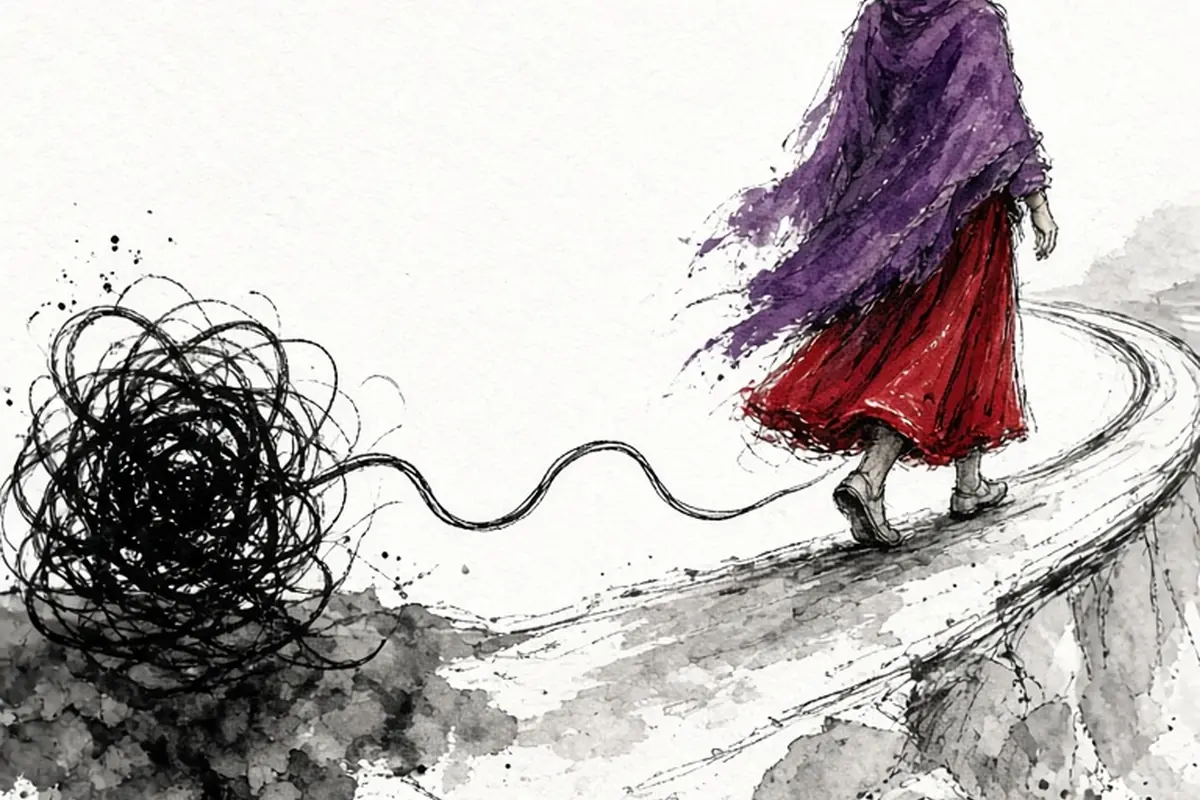
When I am an old woman I shall wear purple is the opening line of the 1961 poem Warning by British poet Jenny Joseph. The poem celebrates rebellious self-expression, the release of societal expectations, and personal liberation in later life. While it playfully imagines postponing eccentricity until old age, its enduring cultural message encourages people to live authentically, prioritize personal joy, and shed stifling social conventions today rather than waiting for retirement or old age.
For decades, this memorable verse has served as an informal anthem for individuals seeking permission to break free from rigid social expectations and embrace their true identities.
The Literary Origins and Core Meaning of Warning
British writer Jenny Joseph penned the poem Warning in 1961, creating a character who dreams of casting aside the heavy mantle of social propriety. The narrator contrasts the demanding responsibilities of adulthood—paying rent, setting a sober example for children, and minding manners—with an exuberant vision of later life where she can spit on pavements, hoard useless objects, and wear a purple dress with a clashing red hat. The tone is neither bitter nor resigned; rather, it is a spirited, subversive declaration of personal sovereignty.
The poem struck a chord because it acknowledged the immense energy required to maintain conventional respectability. By contrasting quiet, dutiful present-day behavior with loud, joyful future defiance, Joseph exposed the arbitrary nature of social expectations. The enduring appeal of the poem lies in this stark contrast: it names the invisible labor of keeping up appearances and validates the deep human yearning to live without external judgment.
Why the Purple and Red Symbolism Resonates Across Generations
The imagery of wearing purple with a red hat is deliberate aesthetic chaos. Historically, purple signaled royalty, dignity, and wealth, while red communicated passion, boldness, and danger. In traditional mid-century fashion conventions, pairing them was considered a glaring stylistic error. By deliberately choosing colors that clash and do not suit her, the speaker rejects the notion that a woman's primary duty is to remain decorous, understated, or visually pleasing to others.
This visual rebellion resonated so deeply that it inspired modern social movements, most notably the Red Hat Society founded in 1998 by Sue Ellen Cooper. Women around the world adopted the colorful combination as a uniform of camaraderie, playfulness, and intentional visibility. For many who spent decades prioritizing the needs of employers, spouses, or children, donning these vivid colors became an accessible, tangible way to announce that they were stepping back into the center of their own lives.
The Hidden Hazard of Postponing Authenticity
While the poem is widely celebrated for its humor, it contains a subtle, cautionary tension: the speaker is currently waiting. She dutifully fulfills her current obligations while reserving freedom for an unspecified future date. In the penultimate stanza, she even considers practicing a little now so that friends and neighbors are not completely shocked when she finally lets go. This dynamic highlights a common psychological trap: deferring genuine self-expression until reaching a milestone such as retirement, an empty nest, or an arbitrary birthday.
Waiting for an imagined future before asserting your individuality carries clear risks. Patterns of chronic people-pleasing and self-suppression do not automatically dissolve simply because a calendar flips. Habits of deference harden over decades, making sudden liberation unfamiliar and intimidating. Relying on an eventual finish line can rob your present years of vitality, curiosity, and authentic connection, creating unnecessary regret for the time spent living on standby.
Practicing Everyday Micro-Rebellions in the Present
Reclaiming agency does not require drastic life upheavals or public spectacles. Instead, it begins with small, deliberate choices that prioritize your genuine interests over automatic compliance. These micro-rebellions can be aesthetic, behavioral, or relational, serving as low-stakes experiments in living more honestly. For example, wearing an expressive garment, declining an obligation without providing elaborate excuses, or choosing to read in a park instead of completing non-urgent chores allows you to reclaim ownership of your time and identity.
A practical method for developing this habit involves identifying where you routinely self-censor. If you find yourself holding back laughter, downplaying personal achievements, or forcing yourself into uncomfortable clothes to blend into a room, pause and ask what choice you would make if no one were evaluating you. Choosing the more authentic option, even in minor circumstances, builds emotional tolerance for being seen as you are rather than as others expect you to be.
- Saying no to social invitations that drain your energy without inventing artificial scheduling conflicts.
- Pursuing creative or physical hobbies regardless of natural talent or public validation.
- Wearing textures, patterns, and colors that bring you comfort and delight rather than following rigid age-based fashion rules.
- Speaking plainly during conversations instead of nodding along to opinions you disagree with simply to keep the peace.
Reframing Aging as Expansion Rather Than Diminishment
Modern culture frequently frames aging as a process of loss—loss of beauty, relevance, physical capability, and social value. Joseph's poem offers a radically different framework: aging as an expansion of personal freedom. In this view, growing older provides a hard-won perspective that diminishes the power of external validation. The accumulation of lived experience allows individuals to realize that social approval is fickle, making the pursuit of internal contentment far more rewarding.
This shift in perspective replaces social invisibility with deliberate, unbothered presence. Rather than shrinking to fit into narrowing expectations of quiet decorum, mature adults can choose to occupy space fully. This does not require becoming deliberately abrasive or neglecting genuine responsibilities; rather, it means recognizing that aging grants an emotional license to live without needing permission from anyone else.
Navigating Boundaries and Real-World Trade-Offs
Embracing greater nonconformity can introduce relational friction. People in your personal and professional circles are accustomed to your existing patterns of compliance and may feel unsettled when you begin establishing firmer boundaries or displaying new eccentricities. Friends or family members might interpret your newfound autonomy as emotional distance or self-centeredness, while workplace environments still require baseline professionalism and cooperative decorum.
Navigating these trade-offs requires distinguishing between harmful social performance and functional cooperation. You do not need to pick fights over trivial matters or ignore legitimate ethical obligations to be authentic. Ground your choices in self-respect rather than reactionary defiance. Communicate clearly with loved ones that your evolving self-expression is an invitation to know the real you, not a rejection of your connection with them.
Building a Sustainable Community of Nonconformity
Sustaining authentic self-expression is significantly easier when you are surrounded by people who celebrate your individuality rather than police it. Solitary rebellion can feel exhausting, but shared freedom creates a supportive, energizing environment. Seeking out peer groups, creative circles, or community organizations that value personal autonomy allows you to share laughter, swap stories, and normalize living outside conventional molds.
Cultivating these relationships requires intentional vulnerability. When you openly share your genuine interests, quirks, and boundaries, you create a reciprocal space where others feel safe to drop their own social masks. Over time, this collective honesty replaces superficial social interactions with durable, meaningful friendships built on mutual respect and shared joy.
Illustrative Scenarios
Choosing Joyful Authenticity Before Retirement
At fifty-four, Evelyn felt drained by decades of conforming to a conservative corporate dress code and managing family expectations. She often recited the opening line of Jenny Joseph's poem to herself, intending to finally relax and explore creative painting once she retired in her sixties. After realizing that postponing her happiness was draining her present vitality, Evelyn decided to begin integrating small authentic choices immediately. She started wearing vibrant turquoise scarves to the office, enrolled in a weekend pottery workshop, and established firm evenings where she was unavailable for routine family errands.
Key point: Authenticity does not require waiting for an arbitrary age milestone; integrating small, joyful expressions into your daily routine creates immediate fulfillment.
Frequently asked questions
Who wrote the poem about wearing purple and a red hat?
The line comes from the 1961 poem Warning, written by British poet and author Jenny Joseph. The poem became widely famous after being selected as the United Kingdom's favorite post-war poem in a 1996 BBC poll.
What is the cultural connection between this poem and the Red Hat Society?
In 1998, artist Sue Ellen Cooper gifted a friend a copy of the poem Warning along with a vintage red fedora for a milestone birthday. This playful gesture inspired the founding of the Red Hat Society, a global social organization dedicated to fun, sisterhood, and visible self-expression for women in midlife and beyond.
How can I apply the message of the poem without disrupting my career or family life?
Focus on personal agency rather than disruptive behavior. You can practice the spirit of the poem by setting clear boundaries, engaging in creative hobbies without needing external approval, and dressing in ways that bring you comfort and personal satisfaction within appropriate daily contexts.
Your next step
Identify one rule or expectation you follow solely out of habit or fear of judgment, and intentionally replace it this week with a choice that reflects your true preference.