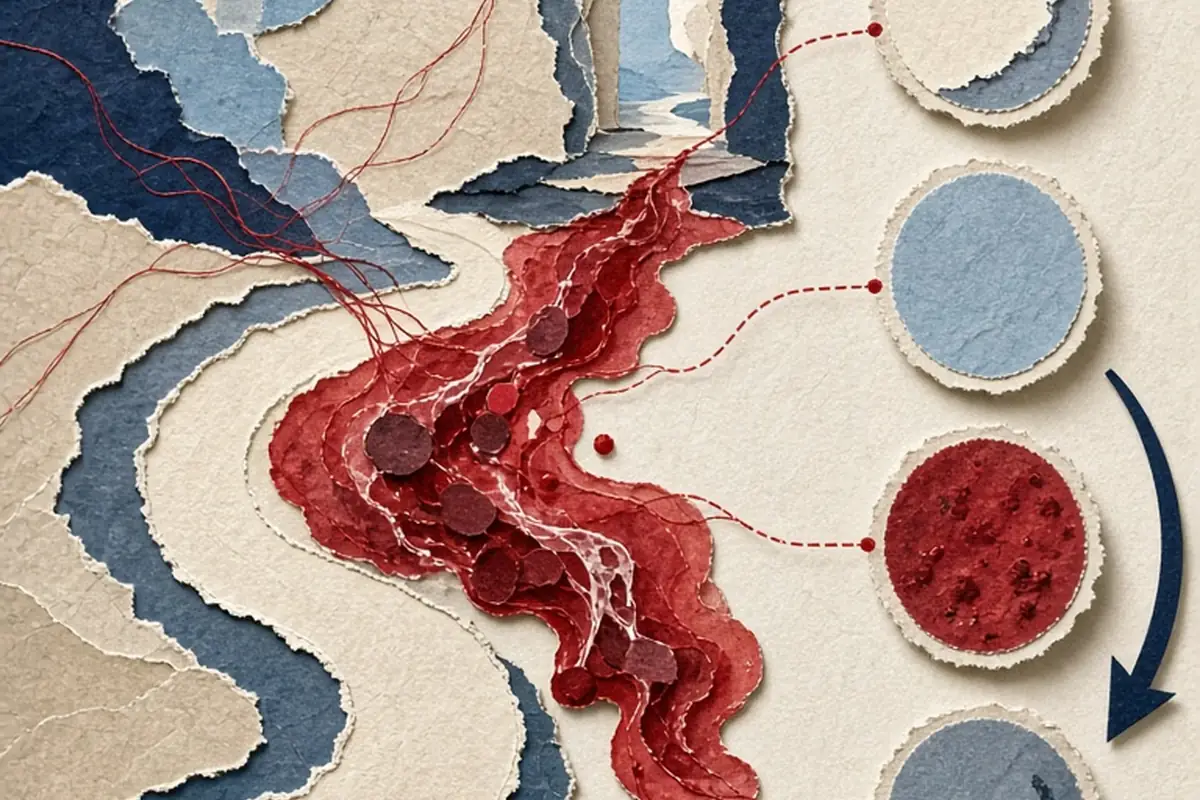
Menstrual blood often looks or feels gooey because it mixes with cervical mucus and endometrial tissue as it leaves your body. Natural clotting proteins can also thicken the fluid, particularly during days with heavier flow or when blood rests in the vaginal canal before exiting. In most cases, a jelly-like or stringy texture is a normal part of cycle variation.
Noticing changes in period texture can be surprising, especially if you expect flow to resemble a uniform liquid. Your menstrual discharge is a combination of blood, discarded uterine lining cells, and natural secretions that shift depending on hormonal balance, hydration levels, and daily movement. Understanding how these biological components interact makes it easier to evaluate your symptoms with confidence and calm.
The Role of Cervical Mucus in Period Texture
Cervical mucus production continues throughout your menstrual cycle, changing in consistency based on fluctuations in estrogen and progesterone. During your period, the cervix remains slightly dilated to allow uterine lining and blood to pass through. As blood flows down through the cervical canal, it directly combines with this natural mucus. If your body was producing thicker, elastic mucus right before menstruation began, that gel-like secretion blends with the fluid, creating a distinctly gooey, stringy, or jelly-like texture upon collection in a pad, tampon, or cup.
This combination is completely typical and often varies from one month to the next depending on stress, hydration, and natural hormonal pacing. For example, you might observe a clear or cloudy gel streaked with bright red or dark brown blood on the first two days of your period. While the presence of mucus is a sign that your cervical glands are lubricating and protecting the vaginal canal from outside bacteria, excessive foul-smelling mucus alongside itching or burning warrants a clinical checkup to rule out secondary vaginal infections.
Endometrial Tissue Shedding and Texture Changes
Another primary reason period blood appears gooey or thick is the presence of the endometrium itself. The uterine lining does not disintegrate into a purely smooth liquid before being shed; instead, it peels away in microscopic pieces and small tissue fragments. As the uterine muscle contracts to push this material out, the mixture of cells, structural proteins, and capillaries forms a denser fluid than regular venous blood.
When you look closely at gooey menstrual discharge, you are often seeing these cellular matrices suspended in blood. For instance, on days with strong menstrual cramps, your uterus is contracting more actively to expel larger fragments of this mucosal lining. The resulting flow can appear clumped, thick, or viscous. It is helpful to recognize that shedding tissue is the core biological function of menstruation, meaning a jelly-like texture alone is rarely an indicator of pathology unless accompanied by debilitating pain or abnormally large tissue masses.
How Blood Flow Rate and Natural Clotting Influence Viscosity
Menstrual fluid contains natural anticoagulants designed to thin out blood and prevent large blockages as it exits the uterine cavity. However, when your flow is particularly heavy, these enzymes can become temporarily depleted or overwhelmed by the volume of blood leaving the uterine wall. When this happens, natural clotting factors activate, causing the blood to coagulate into jelly-like clots or dense, viscous strands before leaving the body.
Flow speed also plays a decisive role in physical texture. If you have been sitting at a desk or sleeping overnight, blood pools in the vaginal vault where it has time to cool, thicken, and interact with vaginal flora. When you stand up in the morning, the pooled discharge often exits as a gooey, dark glob. Conversely, when you are physically active and your flow is moving rapidly, blood tends to look thinner and brighter red because it has spent less time coagulating in the canal.
Color Variations That Accompany Gooey Flow
Texture and color during your cycle are closely linked, providing valuable clues about how long the fluid took to travel from the uterus to your menstrual product. Bright red gooey blood typically indicates an active, swift flow that mixed directly with fresh cervical mucus on its way out. This is most common during the peak days of your cycle when the cervix is open and fluid transit is continuous.
In contrast, dark red, brown, or nearly black gooey discharge usually indicates older blood that has undergone oxidation. Oxygen exposure breaks down the hemoglobin in the blood, darkening its pigment while allowing time for mucus and proteins to cross-link into a thicker gelatinous consistency. For example, spotting gooey brown discharge at the very start or end of your period is typical because the flow rate is slow, giving the blood ample time to oxidize and combine with background vaginal secretions before exiting.
External Factors: Hydration, Birth Control, and Hormones
Everyday lifestyle variables and medical treatments exert a noticeable influence on the viscosity of your menstrual discharge. Systemic hydration, for instance, affects the water content of all mucosal fluids in your body, including cervical secretions. When you are mildly dehydrated, your body conserves water, causing bodily secretions to become thicker, stickier, and more concentrated, which directly translates into a more gelatinous menstrual flow.
Hormonal birth control methods—such as oral contraceptive pills, intrauterine devices (IUDs), injections, or implants—deliberately modify cervical mucus consistency to prevent pregnancy. Many progestin-based contraceptives thicken the cervical mucus plug, creating a physical barrier against sperm. When breakthrough bleeding or withdrawal bleeds occur while using these methods, the blood passes through this dense mucus barrier, resulting in a noticeably stringy, gooey, or clotted appearance compared to a natural, unmedicated cycle.
When to Track and When to Seek Medical Evaluation
While gooey period blood is usually harmless, tracking changes in texture across several cycles helps you understand what is typical for your specific body. Keeping a basic log of flow consistency, accompanied by color and pain levels, gives you a clear baseline. A practical guideline is to monitor whether the gooey consistency is isolated to expected flow peaks or if it represents a sudden departure from your historical patterns.
Medical guidance is recommended if you observe gooey discharge accompanied by warning signs that suggest underlying issues like uterine fibroids, polyps, or infections. You should schedule an evaluation with a healthcare provider if you experience clots larger than the size of a quarter, saturate a pad or tampon every hour for two consecutive hours, notice a persistent foul or fishy odor, or suffer from severe pelvic pain that fails to respond to standard over-the-counter pain relief.
Practical Tips for Managing and Caring for Gooey Flow
Managing a thicker or gooey menstrual flow requires choosing hygiene products that match your personal comfort and flow dynamics. Traditional pads can sometimes leave gooey fluid sitting on the surface layer, which can cause skin irritation or discomfort during long workdays. Opting for menstrual cups or discs can be particularly effective for gooey flow because they collect fluid internally without relying on the capillary absorption required by conventional cotton tampons.
In addition to product selection, supporting pelvic hygiene with simple habits reduces irritation. Washing the external vulvar area with warm water alone avoids disrupting the delicate vaginal pH that regulates mucus production. Staying consistently hydrated throughout the week prior to your period can also help maintain normal fluid balance, preventing excessive mucus thickening and making menstrual management smoother and more predictable.
Frequently asked questions
Can pregnancy cause gooey, bloody discharge?
Yes, early pregnancy can involve light pink or brown gooey spotting known as implantation bleeding or hormonal adjustment discharge. This happens when the fertilized egg implants in the uterine wall and mixes with increased cervical mucus. However, if gooey bleeding is heavy or accompanied by severe cramping, consult a healthcare provider promptly.
Does gooey menstrual blood mean I have an infection?
Gooey menstrual blood alone is rarely a sign of an infection and is usually just mucus mixed with blood. An infection is more likely if the gooey discharge has a strong fishy odor, causes itching or burning, or appears greenish-gray. If these accompanying symptoms appear, schedule an exam with a clinician.
Why is my period gooey only on the first or last day?
At the beginning and end of your period, your menstrual flow moves much more slowly than during peak days. This slow transit gives the blood time to oxidize and mix thoroughly with standard cervical secretions before exiting. The resulting discharge is frequently dark brown and gooey due to this prolonged contact time.
How can I tell the difference between a blood clot and gooey tissue?
Blood clots are typically dark red or maroon clumps that break apart easily under light pressure or water. Shed endometrial tissue and mucus are more fibrous, cohesive, and stringy, holding their structural shape more firmly. Both are standard components of menstrual discharge when small.
Your next step
Start noting your flow texture, color, and pad change frequency in a cycle-tracking app or simple journal for the next two months so you have accurate data to discuss with your healthcare provider if concerns arise.