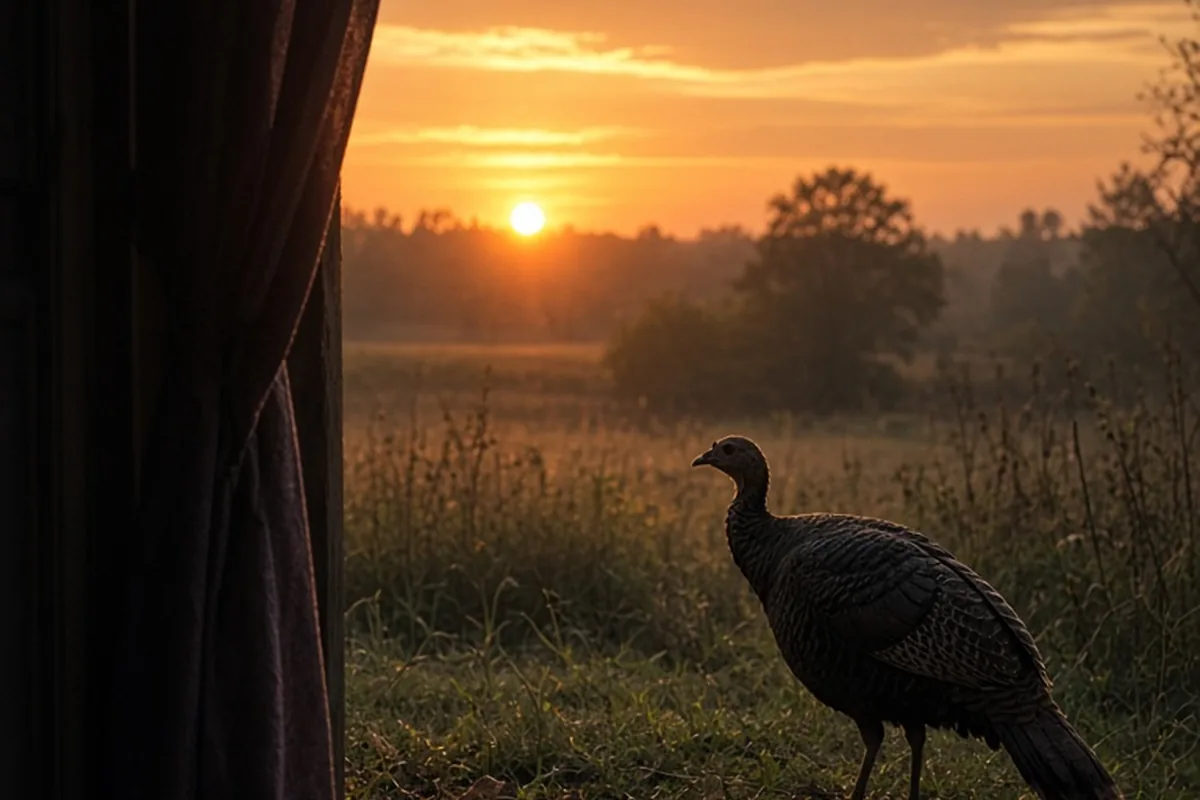
A female wild turkey, or hen, is usually alone because she is actively nesting, incubating eggs, or laying a clutch during the spring. Outside of breeding season, solitary behavior typically stems from temporary foraging away from her flock, juvenile dispersal, predator evasion, or occasionally an underlying injury. In most cases, a single hen is healthy and executing normal seasonal survival routines.
Wild turkeys are renowned for their tight social structures, frequently roaming suburban fields and hardwood forests in vocal groups. Encountering a solitary hen often raises concerns about whether the bird is lost, injured, or abandoned, yet individual behavior serves vital evolutionary functions throughout the year.
Spring Nesting and Egg Laying Routines
The most frequent reason to encounter a solitary female wild turkey between late March and early July is breeding and incubation. Once a hen has mated, she quietly detaches from the larger flock to find a discreet ground nesting location. Wild turkeys nest in shallow depressions on the ground, typically concealed by dense brush, fallen logs, thick briars, or tall grasses at the edge of woodlands. During the egg-laying phase, a hen deposits roughly one egg per day over a period of nearly two weeks, often wandering alone to forage between visits to the nest site.
Once her full clutch is complete, the hen begins around-the-clock incubation, sitting motionless for up to twenty-eight days. During this critical window, she leaves the nest only once or twice a day for brief, solitary feeding intervals to conserve energy and avoid revealing her location to opportunistic predators like coyotes, foxes, raccoons, and crows. If you observe a lone hen moving deliberately and quietly through a yard or meadow in late spring, she is almost certainly taking a calculated foraging break before returning to her eggs.
The primary challenge during this phase is accidental human or pet interference. Hens are ground nesters, making their nests exceptionally vulnerable to curious off-leash dogs or lawn equipment. When encountering a single hen in the spring, remaining at a distance and avoiding following her movements helps protect her nest from being abandoned.
Independent Foraging and Food Selection
Even outside the intense incubation period, individual hens frequently drift away from their home range flocks to exploit localized food sources. While winter flocks often feed together in open agricultural fields or under mature oak canopies, food distribution in spring, summer, and early autumn can be patchy. A solitary hen may discover an isolated pocket of high-value nourishment—such as a fallen fruit tree, a dense patch of wild berries, an abundance of grasshoppers, or an active suburban bird feeder—and stay separated to feed without competition.
Turkeys have broad omnivorous diets that change dramatically across the seasons. A hen requiring extra calcium or protein after laying eggs may actively hunt insects, snails, and amphibians along field edges rather than scratching for acorns alongside a group. This localized foraging can give the impression that the bird is marooned, when in reality she is taking advantage of a specific ecological niche.
A useful consideration for homeowners is that artificial feeding stations can inadvertently encourage a hen to linger alone in high-risk zones, such as near busy roadways or fenced suburban yards. Allowing the bird to search naturally for native seeds, greens, and insects supports her natural foraging instincts without creating dependence on neighborhood yards.
Predator Evasion and Flock Scattering
Flock dispersal is a core defensive strategy when turkeys encounter immediate threats. When a flock is ambushed by a predator such as a bobcat, domestic dog, or coyote, the birds do not always retreat together in a coordinated unit. Instead, individual birds may explode into flight in different directions or sprint into deep brush to confuse the hunter and minimize group casualties.
Following a predator attack, an individual hen may remain isolated for hours or even days. She will often freeze in place until she assesses that the danger has passed, moving cautiously through unfamiliar terrain as she works her way back toward familiar territory or vocalizes quietly to locate other turkeys. This cautious, slow-paced solo movement is a deliberate survival tactic rather than a sign of helplessness.
While it is tempting to intervene when seeing a cautious, solitary bird in dense brush, turkeys have strong spatial memory and sharp navigational skills. In the absence of visible physical trauma, giving the hen space allows her to recalibrate, listen for roosting calls at dusk, and naturally rejoin neighboring birds.
Loss of a Brood or Nest Failure
Wild turkey nesting carries high natural mortality rates, with many nests lost to predation, severe weather, or accidental disturbance. When a hen loses her entire clutch of eggs or her newly hatched poults to predators, her daily behavioral patterns change abruptly. Instead of leading a chirping brood through brushy cover, she reverts to solitary roaming while her body readjusts biologically.
In early spring, a hen that loses her first nest may attempt a second nesting cycle, continuing her solitary routine as she prepares another clutch. Later in the summer, however, a hen whose brood has failed will often wander alone for an extended transition period before gradually assimilating into other hen groups or multi-family summer flocks.
During this period, the hen may appear somewhat unsettled or vocalize more frequently with soft yelps and lost calls. Recognizing this natural biological cycle helps observers understand that solitary behavior can simply be the aftermath of a reproductive attempt, requiring no human intervention.
Juvenile Independence and Dispersal
Young female turkeys, known as jennies, undergo distinct life stages as they mature from dependent poults into self-sufficient adults. In late winter and early spring, juvenile birds begin separating from maternal brood flocks to establish their own home ranges and integrate into wider breeding populations. This dispersal process often involves temporary periods of solitude as young hens navigate new territory.
A dispersing juvenile hen may wander through residential neighborhoods, golf courses, or utility corridors while exploring habitat boundaries. These birds are fully capable of flight, foraging, and predator avoidance, but their lack of familiarity with specific human-dominated landscapes can make them seem out of place to observers.
The primary risk during juvenile dispersal is collisions with vehicles or glass reflections. Providing clear pathways by avoiding cornering the bird helps ensure she can navigate out of enclosed properties and find suitable woodland habitat on her own.
Illness, Physical Injury, or Natural Aging
While most solitary hens are healthy and acting on natural instincts, isolation can occasionally result from physical impairment. A turkey suffering from a fractured leg, a damaged wing, a collision with a fence, or an avian disease like avian pox or blackhead disease will struggle to keep pace with an active flock. When unable to match the flock's rapid walking tempo, the injured bird naturally falls behind.
Distinguishing between a healthy nesting hen and an impaired bird requires careful visual observation. A healthy lone hen remains alert, holds her head high, reacts promptly to sudden sounds, and moves with a steady, purposeful gait. An impaired hen may exhibit drooping wings, closed or crusty eyes, a severe limp, reluctance to stand, or an inability to fly upward into roosting trees at dusk.
When an injury or severe illness is apparent, approaching or attempting to catch the bird directly is dangerous for both the turkey and the handler. Contacting a licensed local wildlife rehabilitator or state wildlife agency provides the best path for professional evaluation and humane care.
How to Responsibly Coexist with a Lone Hen
Spotting a female wild turkey on your property offers an opportunity to observe native wildlife behavior, but maintaining appropriate boundaries is essential. Wild turkeys adapt easily to human environments, and well-intentioned actions can inadvertently create safety hazards or habituate the bird to domestic spaces.
To support the turkey's natural habits and protect local wildlife dynamics, several basic yard management practices are recommended:
By practicing hands-off coexistence, property owners allow solitary hens to complete their seasonal nesting, foraging, or recovery cycles with minimal stress and reduced risk of human-wildlife conflict.
- Maintain a respectful viewing distance of at least thirty to fifty feet to avoid triggering flight responses or defensive reactions.
- Keep domestic dogs leashed and supervise pets outdoors, especially near tree lines, tall grass, and decorative brush piles where ground nests may hide.
- Avoid offering supplemental grain, bread, or poultry feed, which can attract vermin, spread avian pathogens, and discourage natural foraging.
- Temporarily modify reflective surfaces such as low ground-level windows or polished vehicle bumpers if the hen displays territorial pacing or pecking behaviors.
- Check tall grass and brush before mowing during peak spring nesting months to prevent accidental destruction of concealed ground nests.
Frequently asked questions
Is a solitary female wild turkey lonely or distressed?
No, turkeys do not experience human loneliness, and solitary behavior is a regular part of a hen's life cycle during nesting, egg laying, and independent foraging. Unless she displays clear physical signs of injury or illness, she is functioning normally.
Where does a single hen sleep at night?
Like flocking turkeys, a solitary hen flies up into mature tree canopies at dusk to roost safely away from ground predators. If she is actively incubating a clutch of eggs, however, she will remain on her ground nest overnight.
What should I do if a single turkey hen refuses to leave my yard?
Ensure all potential food sources, such as dropped birdseed and accessible pet food, are removed to eliminate artificial attractants. If the bird remains healthy and active, she will typically move on once her local foraging or nesting cycle concludes.
When does a lone wild turkey require wildlife rehabilitation?
Intervention is only warranted if the bird shows visible physical trauma, dragging wings, an inability to stand, or signs of severe disease such as swollen, crusty eyes. In such cases, contact a licensed local wildlife rehabilitator rather than attempting to capture the bird yourself.
Your next step
Observe the lone hen from a safe distance, keep pets leashed, and let her natural nesting and foraging instincts run their course without human interference.