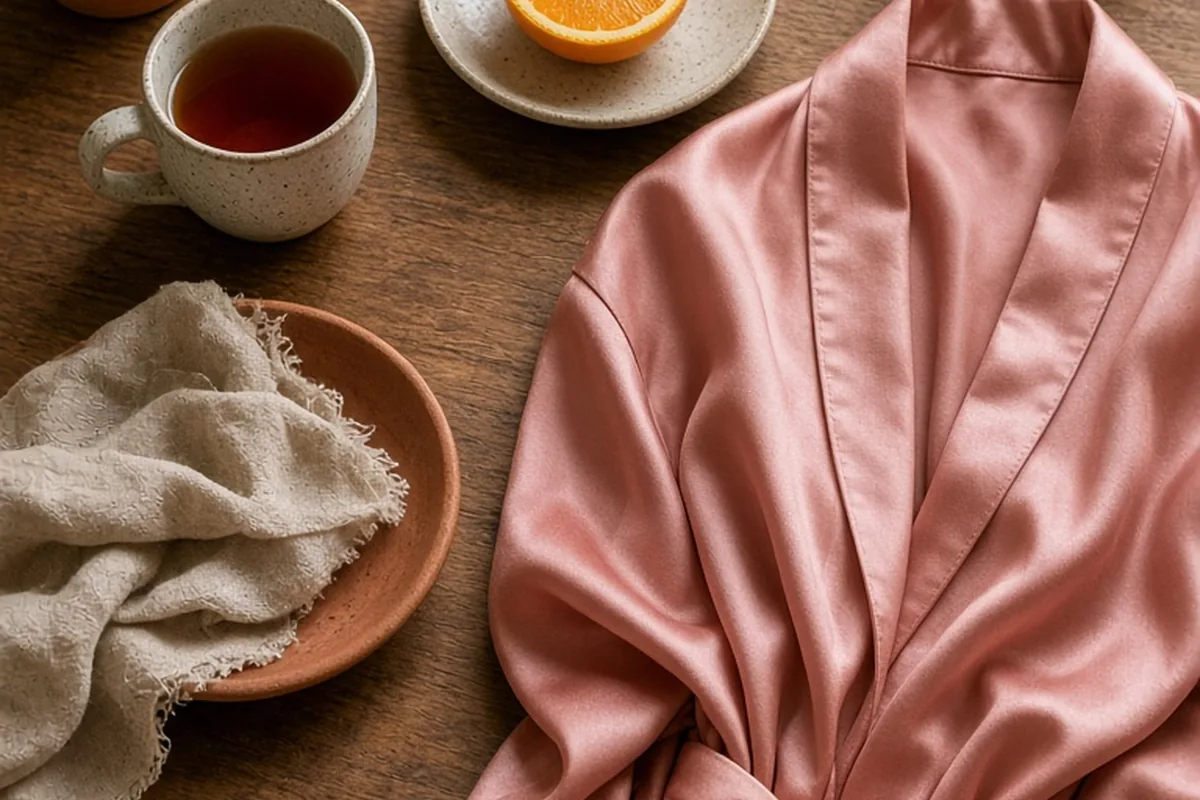
A high-quality women's silk robe delivers natural temperature regulation, skin-friendly softness, and lasting drape when made from 100% Grade 6A Mulberry silk. For the ideal blend of durability and lightweight fluidity, look for a fabric density between 19 and 22 momme, verify the presence of secure interior waist ties, and confirm the garment is pure animal protein fiber rather than synthetic polyester satin.
Whether selected as a meaningful gift or an intentional upgrade to personal loungewear, a genuine silk robe combines tactile luxury with everyday utility. Navigating fiber grades, weaves, cuts, and realistic care requirements ensures you pick a garment that looks elegant and performs reliably over years of wear.
Fabric Fundamentals: Mulberry Silk, Momme Weight, and Satin Weaves
The first step in evaluating a silk robe is understanding what the label actually describes. The gold standard for sleepwear is long-fiber Mulberry silk, cultivated from silkworms fed a uniform diet of mulberry leaves. This produces smooth, uniform strands that resist pilling and feel exceptionally soft against bare skin. To gauge quality, look for Grade 6A silk, which indicates the highest raw strand uniformity, tensile strength, and sheen. A common point of confusion is the term satin, which refers exclusively to a weaving technique rather than a raw material. A robe labeled as silk satin or silk charmeuse uses genuine silk threads woven in a satin structure, yielding a glossy exterior and a matte interior. In contrast, garments sold simply as satin without mentioning silk are almost always synthetic polyester or nylon, which lack natural breathability and tend to trap body heat.
Fabric density in silk is measured in momme (often abbreviated as mm) rather than traditional thread count. One momme equals approximately 4.34 grams of fabric per square meter. For loungewear, momme weight directly dictates how the garment drapes, breathes, and withstands daily motion. Lightweight silks under 16 momme feel ethereal but can be fragile, prone to seam slippage, and somewhat sheer in light colorways. Heavy weights above 25 momme offer immense durability and rich opacity, yet they can feel stiff and overly warm in temperate climates. A density between 19 and 22 momme represents the sweet spot for women's robes, delivering a fluid, opaque drape that holds up well to frequent wear without feeling bulky.
Selecting Lengths and Sleeve Cuts for Daily Routine and Climate
Choosing a robe silhouette requires balancing personal style with how the garment will actually be used throughout the day. Short robes, typically falling from mid-thigh to just above the knee, offer maximum freedom of movement and pack easily for travel. They work well as transitional morning layers over slip dresses or pajamas, particularly in warmer months. However, shorter hemline robes provide less coverage when sitting down, which may feel less practical for relaxed, shared-household lounging or cooler mornings.
Midi and floor-length maxi robes provide full-body drape, warmth, and elevated sophistication. A mid-calf midi cut is often the most functional long option because it prevents the lower hem from dragging on floors or catching on stairs while navigating the home. Sleeve construction is equally important to day-to-day usability. Wide, traditional kimono sleeves offer an airy feel and classic visual appeal, yet their voluminous cuffs can easily drag across bathroom counters or dip into coffee cups and breakfast plates. Tapered or three-quarter length sleeves eliminate this inconvenience, keeping cuffs clean while preserving the robe's graceful silhouette.
Sizing and Style Strategies for Confident Gift Giving
Silk robes make enduring gifts for milestones like anniversaries, birthdays, weddings, or holidays because they offer an indulgent experience that recipients rarely buy for themselves. One of the main advantages of a wrap-front robe is its forgiving fit. Because the silhouette adjusts with a belt, precise tailoring is not necessary to achieve a flattering look. When purchasing for someone else, choosing an oversized or relaxed fit is generally safer than sizing down, as a generous cut allows the silk to drape naturally around the body without pulling across the shoulders or hips.
Color selection should reflect the recipient's personal aesthetic and lifestyle. Neutral tones like champagne, ivory, pearl gray, and dusty rose offer timeless appeal and match almost any existing sleepwear collection. Rich jewel tones like navy, emerald green, burgundy, and deep plum add drama and have the practical benefit of hiding accidental water splashes or skincare marks better than pale shades. If you consider personalization such as monogrammed embroidery, place it discreetly on the cuff or inner lapel rather than large across the back, ensuring the piece maintains a versatile, understated aesthetic.
Key Structural Details: Inner Ties, Seams, and Pockets
The difference between a robe that stays comfortably in place and one that constantly slides open lies in its interior construction. Because pure silk charmeuse has a very low friction coefficient, an external sash belt alone is rarely enough to keep the front panels aligned during movement. High-grade robes incorporate secure inner tie strings that fasten the inside layer to the opposite side seam. Without these interior ribbons, the front overlap tends to drift open whenever the wearer walks or sits, turning a relaxing lounge experience into a continuous cycle of readjustment.
Examine the stitching and seam finishing before committing to a purchase. Quality silk robes feature French seams, where raw fabric edges are fully enclosed within the stitching rather than left exposed or finished with a basic overlock serge. Enclosed seams prevent the delicate weave from fraying over time and protect sensitive skin from abrasive threads. Additionally, look for wide belt loops attached with reinforced bar-tack stitching to handle tension. In-seam pockets add immense functional value for holding small essentials, but they must be carefully anchored to the interior front facing so they do not sag outward when carrying a smartphone or light accessories.
Practical Maintenance: Washing, Steaming, and Preservation
Caring for a silk robe is straightforward once you understand that silk is a natural protein fiber similar to human hair. Harsh alkaline detergents, enzymatic stain removers, and bleach break down these protein chains, stripping the natural luster and causing the fibers to become brittle. To wash silk at home, use cool water and a pH-neutral liquid detergent formulated specifically for delicates or silk. While hand washing in a clean basin is gentlest, many modern robes can tolerate a delicate machine cycle inside a mesh laundry bag, provided you select cold water and low spin settings.
Drying and heat management require equal attention to prevent irreversible shrinkage or fabric warping. Never place a pure silk robe in a tumble dryer, as dry heat weakens the fibers and damages the glossy finish. Instead, gently press excess water out of the garment using a clean, dry cotton towel without wringing or twisting the fabric. Lay the robe flat on a drying rack or hang it on a wide, padded hanger away from direct sunlight and heating vents. For removing wrinkles, a gentle garment steamer held a few inches away is far safer than a dry hot iron, which can scorch silk or leave flattened, shiny patches on the satin weave.
Weighing Washable Silk Against Traditional Charmeuse
As textile processing has evolved, washable silk has emerged as a popular alternative to traditional dry-clean or hand-wash-only silk charmeuse. Washable silk is typically sand-washed or specially treated during the milling process to relax the fibers. This gives the fabric a soft, suede-like matte finish rather than a reflective sheen. The primary benefit of washable silk is effortless convenience: it withstands standard gentle machine washing with far less risk of water spotting, making it an exceptional option for daily, high-rotation morning routines.
The trade-off lies in visual texture and formal appeal. Traditional silk charmeuse delivers the classic, liquid-like drape and luminous glow associated with high-end luxury loungewear, making it the preferred choice for special occasions, bridal morning preparation, and evening relaxation. Washable matte silk, while exceptionally soft and low-maintenance, has a more casual, relaxed appearance similar to fine cupro or brushed modal. Deciding between them depends on whether you value frictionless daily washing or the unmatched brilliance and liquid fluidity of traditional high-luster silk.
Frequently asked questions
What is the difference between a silk robe and a satin robe?
Silk is a natural protein fiber produced by silkworms, offering high breathability, hypoallergenic properties, and natural temperature regulation. Satin is a weaving method that creates a glossy surface; while silk can be woven into satin, most generic satin robes are made from synthetic polyester, which lacks breathability and traps heat.
What momme weight should I look for in a silk robe?
For women's sleepwear and robes, 19 to 22 momme is widely considered the ideal weight range. It provides sufficient density to ensure opacity and seam strength while preserving a fluid, graceful drape that feels light on the body.
How do I prevent my silk robe from constantly coming untied?
Always choose a robe equipped with internal ties, which anchor the overlapping front panel firmly in place before you tie the exterior sash. Additionally, tying the exterior belt in a flat double knot rather than a loose single bow keeps smooth silk charmeuse from slipping open.
Can I wear a silk robe straight out of the shower?
It is best to dry off thoroughly with a cotton or microfiber bath towel before putting on a silk robe. Silk is designed as loungewear rather than an absorbent bath wrap, and prolonged exposure to excess moisture can weaken the fibers and cause temporary water spots.
Your next step
To choose the right silk robe, prioritize 19 to 22 momme Mulberry silk with French seams and internal ties, then pick a silhouette and wash profile that matches your daily routine.