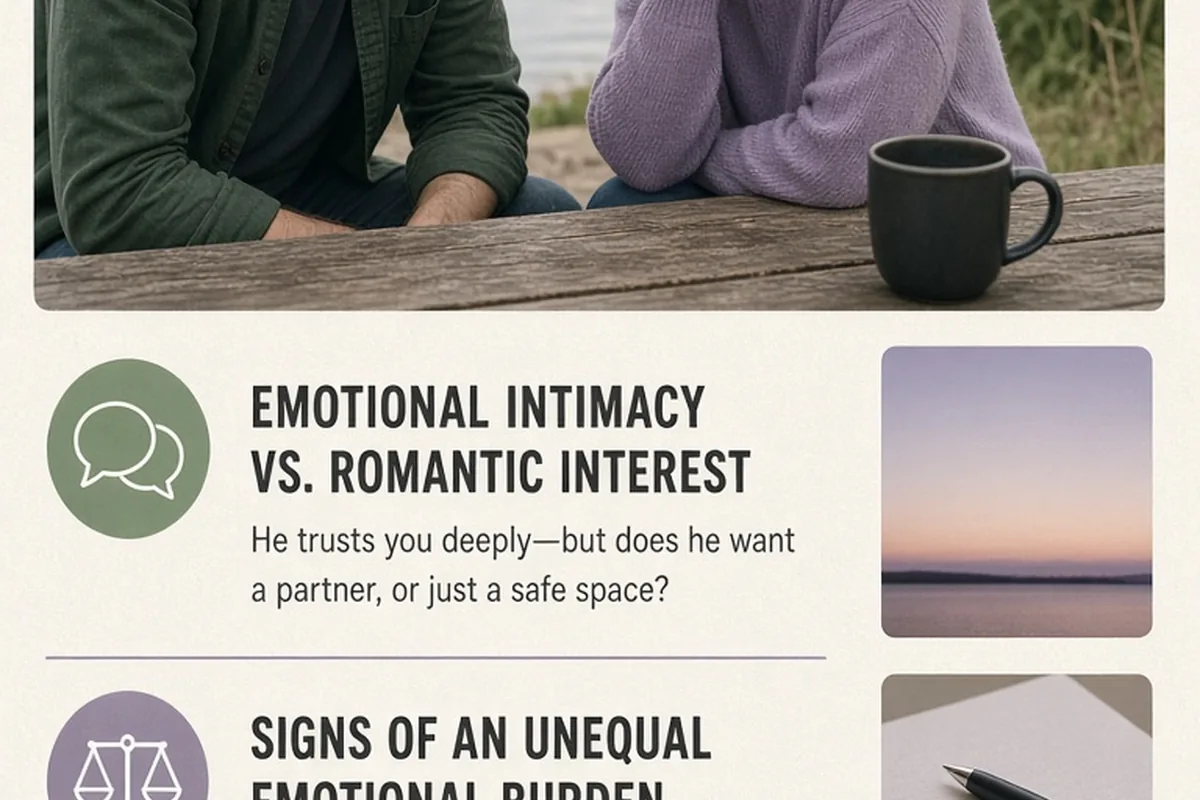
Being someone's primary emotional support means he trusts you deeply with his vulnerabilities, but support alone does not guarantee romantic feelings. If he shares personal struggles yet avoids romantic commitment, reciprocal care, or clear dating boundaries, your closeness may be purely platonic or emotionally one-sided. Clarify where you stand by observing whether he also supports you and initiating an honest, gentle conversation about your mutual expectations.
When a close male friend leans on you during difficult moments, the line between deep companionship, emotional dependency, and romantic potential often blurs. Understanding your role helps you protect your emotional energy while deciding whether this connection can grow into an authentic, balanced partnership.
The Difference Between Emotional Intimacy and Romantic Interest
In many social environments, men are conditioned to suppress vulnerability around casual acquaintances and peers, which can lead them to rely heavily on one trusted person for emotional processing. If you find that he shares his deepest anxieties, career fears, or family conflicts exclusively with you, it reflects significant emotional safety and trust. However, emotional transparency is not identical to romantic attraction. A person may value your insight, empathy, and listening ear without viewing the connection through a romantic lens, creating confusion when one person expects the intimacy to naturally evolve into dating.
To distinguish between platonic reliance and genuine romantic interest, examine the context in which your interactions happen. Romantic interest typically involves intentional planning, physical or romantic flirtation, curiosity about your personal life, and a desire to integrate you into public social circles. In contrast, platonic or convenience-based support often occurs behind closed doors, late at night, or primarily during personal crises. If his attention spikes when he needs comfort but dissipates when his life stabilizes, the connection is functioning as a support system rather than a mutual romantic pursuit.
Consider an example where a friend calls you for hours to discuss a recent breakup, work stress, or personal insecurity, but consistently forgets to ask how your week went or changes the subject when you bring up your own challenges. While his vulnerability feels intimate, the lack of reciprocity indicates that you are fulfilling the role of an emotional counselor rather than participating in a shared, two-way bond. Recognizing this dynamic early prevents you from investing romantic hopes into what is currently an asymmetrical friendship.
Recognizing the Signs of an Unequal Emotional Burden
Serving as someone's primary emotional anchor can easily cross the line from healthy friendship into emotional over-functioning. When you absorb his stress, manage his moods, or feel responsible for keeping him grounded, you take on emotional labor that should ideally be distributed across a wider support network or addressed through professional guidance. Over time, this imbalance breeds silent resentment, mental exhaustion, and a sense of being taken for granted.
Key warning signs of an unequal emotional dynamic include conversation hijacking, where every interaction is steered back to his dilemmas, and intermittent availability, where he is intensely present only when in distress. You might also notice that he dismisses your boundaries when he is upset, expecting immediate replies to texts or calls regardless of your schedule. If you find yourself walking on eggshells to maintain his emotional stability, the relationship has shifted from mutual care to caretaking.
The trade-off of maintaining an unbalanced support role is substantial. It drains the emotional energy you need for your own personal goals, work, and potential romantic opportunities with people who are ready to offer equal care. Acknowledging that you cannot carry another person's emotional well-being single-handedly is not an act of abandonment; it is an essential step toward restoring your personal balance.
How to Tell if He Sees You as a Potential Partner
When emotional support serves as a foundation for genuine romantic interest, you will notice distinct patterns of reciprocal effort and future-oriented behavior. A person who envisions a romantic future with you will demonstrate active curiosity about your life, values, and emotional needs. He will not merely seek your reassurance; he will actively offer his own time, energy, and practical help to make your life easier and happier.
Look for clear indicators such as consistent communication that is not triggered solely by distress, enthusiasm for spending dedicated, alcohol-free, one-on-one time together, and clear gestures of romantic intent. If he introduces you to his family, speaks openly about long-term compatibility, and respects your physical and emotional boundaries, your support is likely part of a broader, reciprocal attachment. Conversely, if he keeps the connection ambiguous or treats you as a partner in private while acting like a casual friend in public, he may be enjoying the benefits of emotional support without wanting the responsibilities of commitment.
For instance, imagine you are preparing for a difficult certification exam. A person who sees you as a romantic partner will remember the date, check in beforehand, and celebrate your effort afterward. A person who solely relies on you as a support pillar might briefly acknowledge your exam before redirecting the conversation back to his own difficult day at work. Observing these behavioral patterns provides clearer answers than analyzing ambiguous text messages or subtle body language.
Establishing Boundaries Without Damaging the Connection
Setting boundaries does not require coldness or confrontation; rather, it establishes healthy parameters that protect both your well-being and the integrity of the friendship. When you become less available for unfiltered venting, you create space for the other person to develop self-reliance and seek additional support channels, while simultaneously testing whether the connection can survive outside of crisis management.
You can practice gentle boundary setting by controlling your response times and defining your availability. If he sends lengthy, emotionally charged messages during your workday or late at night, delay your response until you have the mental bandwidth. When you do reply, offer brief empathy while redirecting the pace of the conversation. Encouraging him to speak with a counselor, mentor, or family member also reinforces that you cannot be his sole sounding board for deep psychological challenges.
Practical phrasing can keep the interaction kind yet firm. You might say, 'I care about what you are going through, but I do not have the capacity to unpack this tonight. Let us catch up briefly this weekend instead.' Alternatively, if a conversation becomes overwhelming, you can state, 'This sounds really challenging, and it might be helpful to talk this through with a professional who specializes in this area.' These statements validate his feelings while firmly preserving your personal energy.
Having an Honest Conversation About Where You Stand
If you have romantic feelings for the person you are supporting, avoiding the subject indefinitely often leads to heartache. Lingering in the ambiguous space of being an emotional confidante while privately wishing for romance creates false expectations and unspoken tension. Initiating a direct, low-pressure conversation allows both of you to align your expectations and make informed decisions about how to proceed.
Choose a calm, neutral setting when neither of you is in the middle of a personal crisis or emotional breakdown. Frame the conversation around your own feelings and observations rather than accusations. You can explain that you value the closeness you share, but you want to understand if there is potential for a reciprocal romantic relationship or if your connection is strictly platonic. Using clear, straightforward language removes ambiguity and prevents prolonged misunderstandings.
Be prepared for any outcome and prioritize clarity over a comfortable half-truth. If he confirms that he shares your feelings, you can discuss how to transition from a caretaking dynamic to a balanced romantic courtship. If he clarifies that he only sees you as a friend, you gain the clarity needed to step back emotionally, adjust your level of support, and protect your own heart moving forward.
Moving Forward: Transitioning to Romance or Reclaiming Independence
If both of you agree to explore a romantic relationship, the dynamic must intentionally evolve beyond late-night venting and crisis management. A healthy romantic partnership requires fun, shared novel experiences, physical attraction, and mutual vulnerability. Make a conscious effort to plan enjoyable dates, explore shared hobbies, and establish a fresh foundation where both partners give and receive emotional support equally.
If the connection remains platonic or you realize that the emotional reliance is unhealthy, taking a step back is essential for your well-being. Dialing back your availability allows you to reset the dynamic to a standard friendship level, where interactions are lighthearted and balanced. It also frees up your time and emotional availability to meet potential romantic partners who are enthusiastic about offering mutual care and commitment from the beginning.
Ultimately, your value does not depend on how much emotional weight you can carry for someone else. Healthy relationships are built on mutual respect, shared effort, and emotional balance. Choosing to protect your boundaries, whether within a redefined friendship or in pursuit of a new romantic connection, ensures that your care and empathy are always met with equal appreciation.
Frequently asked questions
How can I tell if he is using me for emotional support or genuinely cares about me?
Notice whether he takes an active interest in your life and stands by you during your own challenges. If he listens attentively, offers help when you need it, and maintains contact during good times, his care is likely genuine. If he only reaches out during personal emergencies or constantly redirects conversations to himself, the dynamic is one-sided.
What should I do if he gets defensive when I set emotional boundaries?
Remain calm and avoid apologizing for protecting your time and mental health. Reiterate your care for him while holding the boundary firmly, explaining that you cannot be available at all times. A healthy friend will adjust over time, whereas persistent anger or guilt-tripping indicates that he valued the unconditional support more than the friendship itself.
Can a connection based on one-sided emotional support turn into a healthy romance?
It is possible only if both individuals consciously recognize the imbalance and actively reshape the dynamic. Both partners must commit to mutual vulnerability, reciprocal effort, and regular shared enjoyment rather than relying on a counselor-patient pattern. If the caretaking dynamic persists, a balanced romantic partnership cannot thrive.
Your next step
Take an honest look at your recent conversations to evaluate whether your support is reciprocated, and if it feels one-sided, set one clear boundary regarding your availability this week.