In astrological traditions, an Aquarius mother brings open-mindedness, intellectual curiosity, and a deep respect for individuality to parenting. Compatibility with her child depends largely on how naturally their temperaments handle independence versus emotional intimacy. While air and fire sign children often thrive alongside her inventive, low-pressure approach, water and earth sign children may require more explicit emotional warmth and structured daily predictability than an Aquarius parent instinctively provides.
Exploring zodiac compatibility between a parent and child offers an imaginative, reflective lens for examining household dynamics, communication habits, and mutual expectations. Rather than determining a child's destiny or evaluating parenting ability, sun sign archetypes highlight general tendencies in how family members express affection, resolve friction, and encourage personal growth.
The Defining Qualities of an Aquarius Mother's Parenting Approach
In astrological frameworks, the sign of Aquarius is governed by an orientation toward intellectual exploration, egalitarian values, and personal freedom. An Aquarius mother rarely treats parenthood as an exercise in rigid authority or social conformity. Instead, she tends to view her child as an autonomous individual from an early age, valuing the child's distinct personality, unconventional ideas, and emerging worldview. Her household environment often emphasizes open inquiry, creative experimentation, and exposure to diverse viewpoints, where rules are explained with rational logic rather than enforced through blind tradition.
This inclination toward fairness creates a distinct atmosphere of acceptance. An Aquarius mother is typically comfortable with quirks, artistic experiments, and changing interests that might puzzle more conventional parents. She encourages her child to think critically about the surrounding world and to stand up for personal values. However, her reliance on reason and objective detachment can occasionally present challenges when a young child experiences intense, irrational emotional outbursts. Because she processes life primarily through thought rather than raw sentiment, learning to sit comfortably with unstructured emotional vulnerability is often her central developmental journey as a parent.
Balancing Mental Independence with Daily Emotional Reassurance
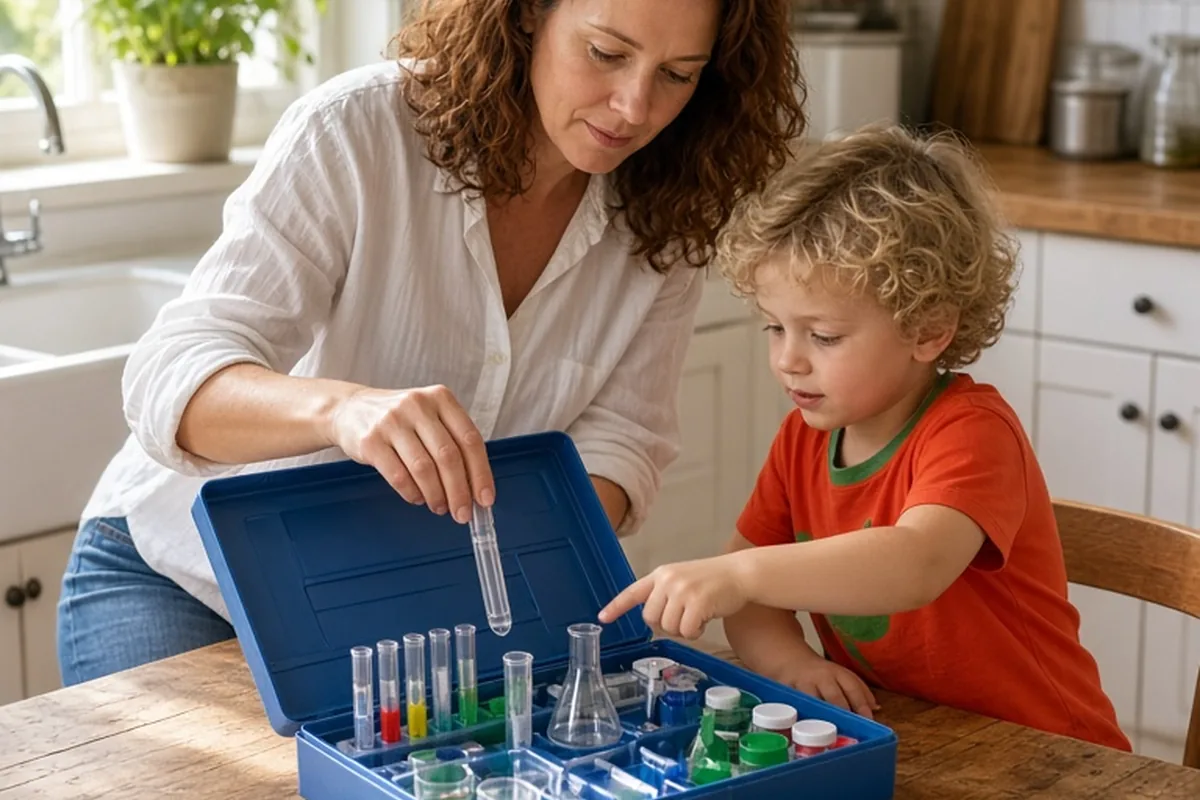
One of the central dynamics in an Aquarius mother's relationship with her child is the tension between intellectual encouragement and emotional presence. An Aquarius parent naturally excels at cheering on independent projects, introducing educational hobbies, and supporting a child's unique identity. She is often the parent who gladly builds a science kit at the kitchen table, discusses current events with a teenager, or accepts an unusual wardrobe choice without judgment. Her instinct is to give her child room to breathe, discover, and self-regulate without helicoptering.
While this broad-minded freedom builds resilience and self-reliance in many children, it can inadvertently feel distant to a child who gauges love through direct physical affection, routine verbal reassurance, or cozy domestic predictability. Young children do not always experience autonomy as respect; sometimes they experience it as detachment. An Aquarius mother strengthens her bond by remembering that small, concrete rituals of warmth—such as regular bedtime conversations, spontaneous hugs, and validating tears without immediately trying to solve the problem logically—provide the emotional foundation children need before they can fully enjoy their independence.
How an Aquarius Mother Connects Across the Four Zodiac Elements
Astrological compatibility organizes sign interactions through elemental temperaments—Air, Fire, Earth, and Water. When paired with fellow Air sign children (Gemini, Libra, Aquarius), the household typically buzzes with conversation, curiosity, and shared social interests. These children share their mother's need for mental stimulation and respect for autonomy. The primary challenge in an all-Air dynamic is grounding the relationship in practical routines and addressing unvoiced feelings, as both mother and child may intellectualize or brush past underlying emotional distress.
With Fire sign children (Aries, Leo, Sagittarius), an Aquarius mother usually finds a spirited, enthusiastic companion. Fire children appreciate her refusal to micromanage their energy and respect her willingness to try new adventures. Frictions can arise, however, when a Fire child's dramatic passions or demand for center-stage attention clash with an Aquarius mother's detached fairness and dislike of emotional theatrics. A Leo child, in particular, craves devoted personal admiration, whereas an Aquarius mother naturally treats everyone with equal, non-preferential warmth.
Earth sign children (Taurus, Virgo, Capricorn) introduce an opposite set of preferences centered on tangible structure, tactile stability, and predictable schedules. An Earth child often finds an Aquarius mother's spontaneous schedule changes or abstract discussions slightly disorienting. While the Aquarius mother teaches the Earth child to embrace broader perspectives, she must honor the child's genuine need for steady routines, reliable meals, and concrete reassurance rather than treating practical needs as boring afterthoughts.
Water sign children (Cancer, Scorpio, Pisces) present the deepest contrast in emotional frequency. Water children navigate the world through sensory intuition, deep sensitivity, and emotional bonding. When an Aquarius mother attempts to analyze a Water child's hurt feelings with rational troubleshooting, the child can feel dismissed or misunderstood. Compatibility flourishes when the mother accepts that emotional feelings do not need a logical defense to be valid, offering a calm, steady physical presence while letting the child express feelings at their own pace.
Everyday Communication Habits That Foster Mutual Trust
Because an Aquarius mother prizes direct, honest exchange, communication is the primary bridge across which compatibility is built. In day-to-day interactions, she rarely relies on vague hints or authoritarian commands like 'because I said so.' Instead, she explains the principles behind house guidelines, which helps children learn moral reasoning and accountability. This communication style works exceptionally well as children transition into middle childhood and adolescence, where collaborative problem-solving prevents the power struggles common in more rigid households.
To make this communication style supportive for every child, an Aquarius mother can consciously adjust her delivery depending on the child's immediate state. If a child is crying or frustrated, jumping straight into a rational explanation of why things went wrong can feel dismissive. Pausing to say, 'I see how upset you are, and it makes sense that you feel disappointed,' before moving into discussion, creates an environment where the child feels heard. Once the emotional temperature cools, the child is far more receptive to the thoughtful, inventive solutions an Aquarius mother naturally provides.
Supporting Sensitive or Routine-Oriented Children Without Giving Up Individuality
When an Aquarius mother raises a child whose temperament leans heavily toward caution, routine, or deep emotional sensitivity, she may feel puzzled by their reluctance to embrace novelty or autonomy. For instance, a child who resists attending a lively neighborhood gathering or who needs the exact same bedtime sequence every evening operates on a rhythm that feels alien to an unconventional, socially flexible Aquarius parent. Tension can arise if the parent interprets this caution as stubbornness or fearfulness rather than a genuine sensory need.
Compatibility in these instances does not require the mother to abandon her own innovative spirit; it simply requires intentional accommodation. Building predictable domestic anchor points—such as consistent dinner times, giving ample advance warning before changing plans, and honoring quiet introversion—gives a cautious child the baseline safety they require. When the child feels secure in basic rhythms, they are much more willing to engage with their mother's creative ideas and community-minded activities without feeling overwhelmed.
Navigating Boundary Testing and Conflict Across Childhood Stages
Disagreements between an Aquarius mother and her child shift dramatically as the child moves from early childhood to adolescence. In toddlerhood and early elementary years, conflicts often stem from the mother's expectation that a child can be reasoned with like a small adult. When developmental limits prevent a four-year-old from following logical explanations, frustration can mount. Recognizing that emotional regulation develops slowly over years helps an Aquarius mother remain patient and avoid turning simple behavioral corrections into philosophical debates.
During the teenage years, the dynamic often reaches its most rewarding phase, though distinct hurdles remain. Aquarius mothers are generally progressive and open to teenagers exploring their identities, beliefs, and peer circles. However, an Aquarius parent can possess a stubborn streak of intellectual certainty, believing that her progressive or rational framework is objectively correct. If a teenager chooses a deeply traditional path, holds opposing political views, or simply seeks privacy, an Aquarius mother must extend the same tolerance she advocates to her own child's right to disagree with her.
Looking Beyond Sun Signs to the Whole Parent-Child Dynamic
While exploring sun signs provides a helpful shorthand for general archetypes, human relationships are far more complex than any single zodiac category. In traditional astrological practice, a complete natal chart includes the Moon sign, which reflects emotional needs, the Rising sign, which shapes immediate presentation, and planetary placements that modify behavioral patterns. A mother with an Aquarius sun and a Cancer moon, for example, will display much greater domestic nurturing and emotional protectiveness than an Aquarius archetype alone suggests.
Beyond astrological symbolism, real-world factors like attachment style, family culture, neurodivergence, sensory preferences, and life circumstances ultimately shape how a parent and child relate. Astrological frameworks should serve as an engaging starting point for self-reflection and dialogue, never as an inflexible diagnosis of a child's capabilities or an excuse for neglecting basic developmental needs. A mother's willingness to listen attentively, observe her child's specific cues, and adapt her parenting style remains the true foundation of lasting compatibility.
Frequently asked questions
Does an Aquarius mother get along better with older children than with babies?
Many Aquarius mothers find parenting progressively more comfortable as children learn to speak and express abstract thoughts. While infancy requires intense physical care and non-verbal intuition, older children can engage in the shared conversations, projects, and philosophical discussions where an Aquarius parent naturally excels.
How can an Aquarius mother tell if her child needs more affection than she naturally gives?
Observable clues include physical clinginess, sudden regression in daily tasks, or frequent bids for one-on-one attention during busy moments. If a child seeks frequent physical proximity or becomes tearful without a clear external trigger, offering consistent hugs and quiet presence without trying to analyze the cause helps restore their sense of connection.
What happens when an Aquarius mother raises an Aquarius child?
Two Aquarius placements in the home create mutual understanding around personal space, intellectual curiosity, and unconventional interests. The shared challenge is maintaining warm emotional vulnerability and consistent follow-through on practical chores, as both individuals may default to independent parallel play rather than emotional sharing.
Can astrological compatibility predict whether a parent and child will be close as adults?
Astrological compatibility reflects symbolic personality tendencies rather than guaranteed future outcomes. Adult closeness depends on mutual respect, healthy boundaries, reliable communication, and how well the parent supported the child's authentic self throughout childhood.
Your next step
Observe your child's natural response to emotional comfort this week by offering a simple, non-verbal moment of connection—like sitting quietly together or offering an unhurried hug—without immediately trying to solve, explain, or analyze their mood.