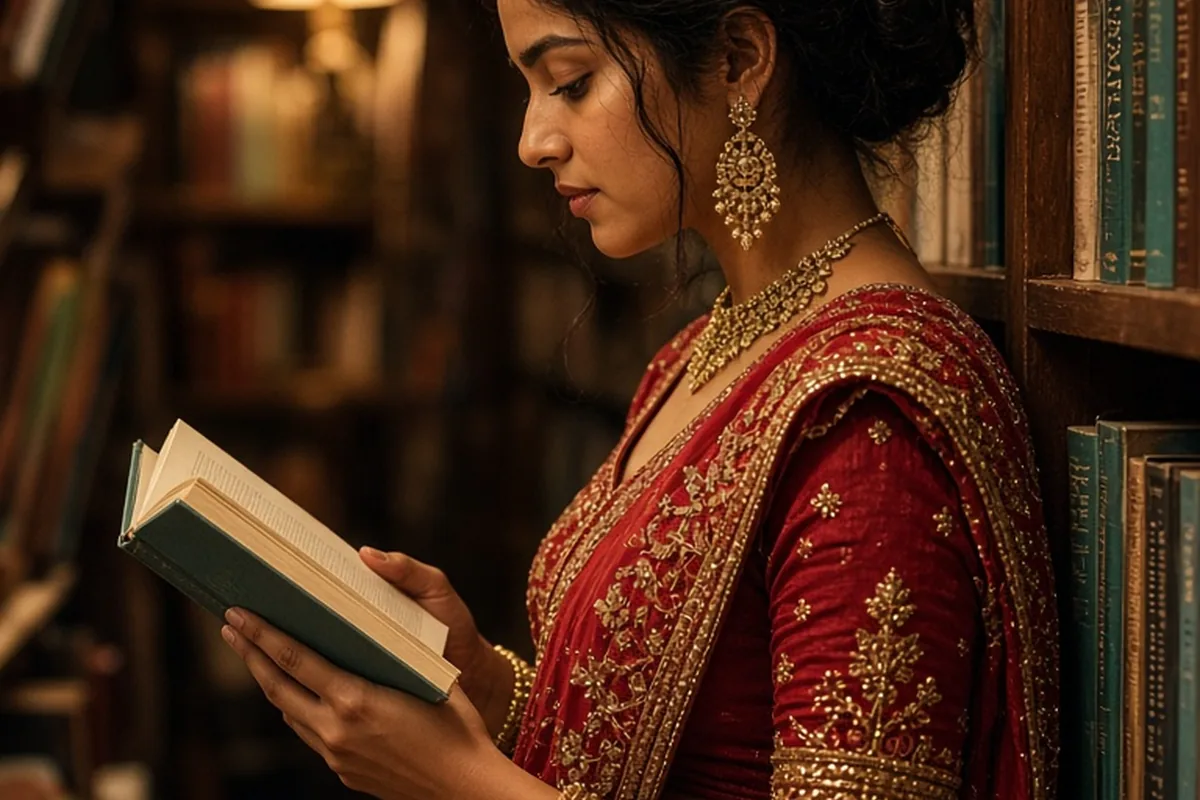
A royal red bridal lehenga centers on deep crimson, scarlet, or ruby tones enhanced with intricate gold or silver hand-embroidery like zardozi, gota patti, or dabka. Choosing the right design requires balancing fabric weight, such as velvet for cooler months or raw silk for warmer venues, with your silhouette preferences, wedding venue lighting, and mobility needs throughout the ceremony.
Red remains the definitive bridal hue across South Asian wedding traditions, symbolizing auspicious beginnings, vitality, and timeless majesty. Finding the piece that honors this classic heritage while supporting personal comfort and logistical realities requires thoughtful planning across design, construction, and event details.
Navigating the Red Palette Across Ceremony Lighting and Venues
Not all reds register the same way under camera lenses or venue illumination. Royal red encompasses a wide spectrum of tones, spanning bright vermilion and sindoori red to deep ruby, crimson, and wine-tinged oxblood. Warm undertones carry subtle orange or golden bases that flourish in outdoor daytime ceremonies under natural sunlight. Conversely, cool undertones lean toward jewel-toned berry and ruby, holding their saturation beautifully against indoor ballroom fixtures and heavy amber halogen spotlights.
When selecting your specific shade, consider the time of day and the ambient color scheme of your mandap or stage. A bride wearing a brilliant scarlet lehenga during a sunlit afternoon garden wedding may find the color translates with radiant clarity, whereas that same shade might appear overexposed beneath direct stage strobes. Conversely, an opulent dark maroon that appears regal in an evening reception hall can sometimes look muted in shaded outdoor settings. Viewing textile swatches in both daylight and warm artificial light helps clarify how the color behaves across your itinerary.
Fabric Architecture: Balancing Structure, Breathability, and Weight
The underlying textile dictates not only how the skirt falls but also your physical endurance during hours of rituals. Traditional royal designs rely heavily on rich fabrics like micro-velvet, raw silk, matka silk, and heavyweight brocade. Velvet provides an incomparably regal depth of color and holds structured, high-relief needlework without buckling. However, a full velvet skirt adorned with metallic embroidery can easily weigh between twelve and twenty pounds, creating significant heat retention and physical fatigue.
If your wedding takes place in a warm climate or an open-air venue, lighter structural bases like raw silk, pure georgette, or silk organza offer compelling alternatives. Raw silk possesses enough inherent stiffness to maintain a full flared silhouette while allowing body heat to dissipate far more effectively than synthetic weaves or velvet. For layered drama without excessive bulk, designers often combine a crisp raw silk base with sheer organza or tulle overlays. The primary trade-off rests between visual density and physical ease, making your venue climate and ritual length the ultimate deciding factors.
Evaluating Handcrafted Embroidery and Surface Ornamentation
The visual grandeur of a royal red lehenga comes largely from centuries-old artisanal needlecraft. Zardozi work, which utilizes delicate metallic coils, wires, and sequins, imparts three-dimensional texture and aristocratic sheen to royal garments. Dabka and nakshi methods weave coiled copper or silver wire into raised floral and architectural motifs, while gota patti incorporates folded ribbon appliqués for broad reflective planes that catch candlelight softly. Resham work introduces fine silk threads, often used to shade petals, figures, and border borders alongside metallic highlights.
Evaluating embroidery involves assessing both execution quality and physical durability. High-density metallic work around the waistband and lower hemline looks stunning but can catch on delicate dupatta fabrics or scratch bare arms during greeting lines. Inspect the underside of sample garments to check for clean finishing and lining layers that protect skin from stiff wire knots. Choosing a garment that blends dense zardozi on the lower borders with lighter scattered buttis across the midsection preserves the royal aesthetic while significantly reducing overall garment weight.
Selecting the Right Skirt Silhouette and Internal Structure
A skirt's internal architecture establishes its presence as you enter the venue and walk toward the ceremony platform. The classic kalidar silhouette uses multiple vertical panels—often sixteen to thirty-two panels—tapered at the waist and flaring generously toward the hem. This cut allows even distribution of heavy motifs and produces graceful, sweeping motion. In contrast, an umbrella or circular cut offers uninterrupted canvas area for expansive scenic tapestries or continuous borders, though it can bunch unpredictably at the waistline if the fabric is dense.
Underneath the outer shell, can-can skirts and stiff horsehair braid hemlines dictate flare and volume. While built-in, multi-tiered stiff net creates an immaculate bell shape for photos, it poses substantial challenges when sitting cross-legged during traditional seated wedding rituals. Opting for a detachable can-can skirt or choosing structured tulle layers rather than rigid plastic-backed netting allows you to enjoy dramatic entrance volume while sitting naturally and comfortably during extended pheras.
Mastering the Double Dupatta Draping System
The double dupatta configuration has become a standard approach for royal bridal styling due to its balance of practical support and visual layering. In this arrangement, a lightweight veil made of gossamer tulle, organza, or sheer chinon is reserved exclusively for the head covering, pinned securely into the hairstyle. This keeps heavy weight off the cervical spine and skull, allowing natural head movement and preventing hairpins from pulling loose during greetings.
The secondary dupatta, typically constructed from richer raw silk, georgette, or embroidered velvet, drapes across the chest, shoulders, or waist. This garment can either echo the deep royal red of the lehenga skirt for a cohesive monochromatic presence or introduce a soft secondary accent such as pale peach, antique gold, sage, or ivory. The trade-off with a two-veil system is the need for meticulous pinning; every safety pin must be anchored to structural garment seams rather than sheer mesh to avoid fabric tears under tension.
Harmonizing Blouse Cut with Bridal Jewelry Heirloom Pieces
A royal red wedding outfit serves as a stage for statement heirloom jewelry, which means the blouse neckline and jewelry placement must be designed in concert. If you plan to wear an elaborate polki choker, multi-tiered rani haar, and substantial collar pieces, a wider sweetheart, jewel, or shallow scoop neckline provides a flat, supportive backdrop without overlapping borders. Deep plunge cuts or excessively high collars can crowd heavy necklaces, causing stones to flip sideways or catch on embroidered neckline borders.
Sleeve length also influences both visual balance and physical ease. Elbow-length sleeves trimmed with neat zardozi bands offer classic royal proportions and accommodate bridal bangles, chooda, and hathphool without fabric friction. If you prefer cap sleeves or sleeveless designs, ensure the shoulder straps are wide enough to anchor the weight of the chest dupatta without cutting into the shoulders. Consider requesting internal bra cups with firm padding and reinforced side boning to provide all-day structural support without external foundation straps.
Timelines, Alteration Benchmarks, and Movement Preparation
Handcrafted bridal lehengas often require three to six months for production, making deliberate scheduling essential. Schedule your penultimate fitting roughly four to five weeks before the wedding day, with a final check scheduled ten days prior. Always bring your exact wedding day footwear to these fittings; a floor-skimming skirt hem cannot be accurately measured using approximate heel heights. An error of even one inch can cause the heavy front hem to catch under your toes during ceremony steps.
During your final fitting, practice practical movements rather than simply standing still in front of full-length mirrors. Sit down on a low stool or the floor to confirm that the waistband does not dig into your ribs and that the skirt panels spread comfortably. Walk across the boutique at your normal cadence, turn around abruptly, and test raising your arms to ensure the blouse armholes permit natural motion. Pack an emergency kit containing heavy-duty safety pins, fabric tape, moleskin patches for wire pokes, and spare hooks to resolve minor issues promptly on the wedding day.
Frequently asked questions
How do I manage the physical weight of an elaborate red bridal lehenga?
Distribute garment weight by selecting a wide, padded waistband rather than a narrow drawstring that cuts into your waist. You can also request a detachable can-can skirt so you can shed internal bulk after photos, and drape a lightweight sheer veil on your head while pinning the heavier embroidered shawl across your shoulder.
Should I choose antique gold, champagne, or silver embroidery on royal red?
Choose your embroidery tones to harmonize with your intended bridal jewelry. Antique gold and dull bronze zari complement traditional yellow gold, kundan, and uncut polki sets, while pale champagne or soft silver embroidery pairs cleanly with white diamond, platinum, or emerald statement pieces.
How can a royal red bridal lehenga be repurposed after the wedding?
You can deconstruct the ensemble by pairing the heavily embroidered red skirt with a crisp raw silk shirt or minimal blouse for family events. Alternatively, the rich bridal dupattas can be restyled over simpler solid-tone anarkalis, or the skirt can be altered into a tailored jacket and lighter lehenga set.
What is the best way to clean and store a heavy red silk or velvet lehenga?
Always entrust the outfit to an experienced professional dry cleaner who specializes in handcrafted bridal wear and metallic zari. Store the clean garment folded in an unbleached muslin garment bag inside a dark, climate-controlled closet rather than hanging it, which can stretch skirt seams and damage shoulder straps over time.
Your next step
Book your initial consultation with your footwear heel height and primary jewelry measurements ready, ensuring every structural hem and neckline is drafted to fit your actual ceremony posture.