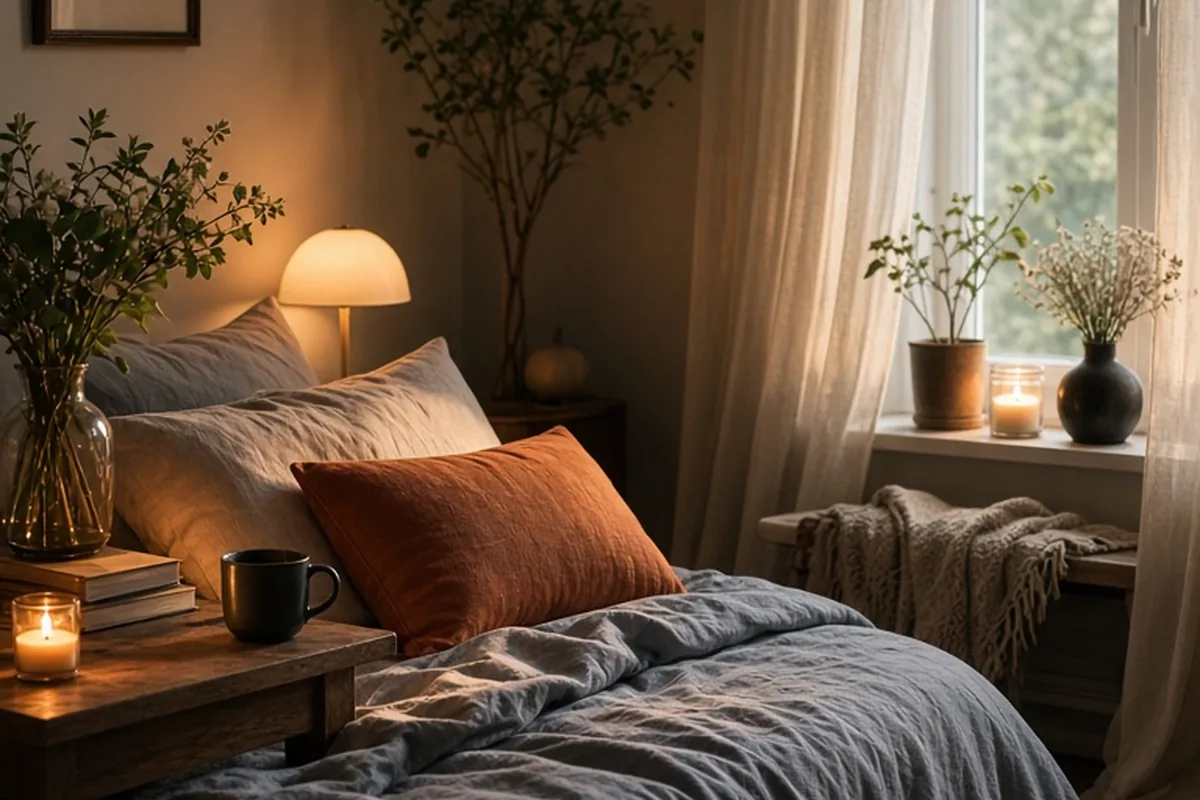
To make your bedroom more romantic, focus on atmosphere and intention: swap harsh overhead lighting for warm, dimmable lamps or candles, clear out clutter and work items, upgrade to soft bedding, add a scent you both enjoy, keep phones and TVs out of reach, and display a few personal touches that celebrate your relationship. Small, consistent changes matter more than expensive makeovers.
Romance rarely dies from one big problem. More often, it fades because the space where you end each day feels like a storage unit, an office, or a charging station. The good news is that the fix is mostly about attention, not money.
Start With Lighting, Because It Sets the Entire Mood
Lighting is the single fastest way to change how a bedroom feels. Overhead fixtures tend to be bright, cool-toned, and unflattering, which signals alertness rather than intimacy. Swap in warm-toned bulbs (look for 2700K or lower on the packaging), add a dimmer switch if you can, or simply rely on bedside lamps instead of the ceiling light. The goal is a soft glow that makes the room feel like a retreat rather than a workspace.
Candles are the classic move for a reason: flickering, low light is naturally calming and flattering. If open flames worry you, good-quality LED candles now mimic real flicker convincingly and can be left on a timer. A practical example: one partner gets home late most nights, so the other keeps a small lamp on a smart plug set to warm light. Walking into a softly lit room instead of a dark or glaring one changes the tone of the whole evening. The trade-off is that very dim light makes reading or getting dressed harder, so keep one brighter option available rather than committing the whole room to mood lighting.
Clear the Clutter So the Room Has One Job
A bedroom buried in laundry piles, work laptops, mail, and random clutter sends your brain a constant to-do list. Romance needs mental space, and visual noise eats it. You do not need a minimalist showroom; you need the room to clearly say rest and connection rather than unfinished business. Start with the surfaces you see from the bed, because those shape the last thing you see at night and the first thing you see in the morning.
A realistic approach is a ten-minute reset rather than a weekend purge. Give clutter somewhere to go: a basket for clothes that are not quite dirty, a drawer or box for chargers and paperwork, a hook behind the door for tomorrow's outfit. If your bedroom doubles as an office, even a folding screen or a closed cabinet for work gear creates a psychological boundary. The limit here is honesty: if the room must serve multiple functions, accept that and hide the evidence at night rather than chasing an impossible ideal.
Upgrade the Bed Itself, Since It Is the Main Event
The bed is the centerpiece of a romantic bedroom, and small upgrades here pay off every single night. Fresh, clean sheets in a fabric you both like, whether crisp cotton percale or soft sateen, change how the whole room feels. Add layers: a duvet that actually fits the bed, a throw blanket at the foot, and enough pillows for comfort without building a wall between you. Washing bedding weekly is unglamorous advice, but nothing kills the mood faster than sheets that smell like last month.
Color and texture matter more than thread count marketing. Deep, warm tones or soft neutrals tend to feel more intimate than busy patterns or stark white. A concrete example: replacing a sagging, mismatched pillow set with two good sleeping pillows plus a couple of decorative ones makes the bed look inviting instead of purely functional. The trade-off is budget and preference: high-end linen is lovely but not required, and partners sometimes disagree on firmness or fabric. Solve that by testing one change at a time together rather than overhauling everything at once.
Engage Scent and Sound, the Two Senses People Forget
Smell is strongly tied to memory and emotion, which makes it a quiet powerhouse for romance. A subtle scent from a diffuser, a linen spray, or a candle can become a signal your brain associates with winding down together. Keep it light: heavy fragrance in a small room becomes headache-inducing rather than seductive. If one of you is sensitive to scent, skip it entirely or stick to fresh air and clean linens, because forcing a fragrance on a reluctant partner is the opposite of romantic.
Sound works the same way. A small speaker for music you both enjoy, a white noise machine if the street is loud, or simply thick curtains that muffle outside noise all protect the bubble you are trying to create. Many couples find that a shared playlist becomes part of their ritual, the audio equivalent of dimming the lights. The limit is volume and control: agree on what plays and when it stops, because falling asleep to one partner's podcast is a common and avoidable irritation.
Get the Tech Out, or at Least Out of Reach
Few things flatten a romantic atmosphere like a television glowing over the dresser or two people scrolling in bed with their backs turned. Screens compete for attention, and attention is the actual currency of intimacy. If removing the TV entirely is a fight you do not want, compromise: keep it but agree it goes off at a set time, or move charging stations to a dresser across the room so phones are not the last thing each of you touches at night.
This is also about what the room is for. When the bed becomes a place for email, news, and social media, your brain stops associating it with rest and closeness. A simple household rule, like phones charge outside the bedroom or in a drawer after a certain hour, works better than vague intentions. The honest trade-off: many people use phones as alarm clocks or genuinely enjoy winding down with a show together. Shared screen time can be bonding; the problem is parallel, separate scrolling. Aim for togetherness, not purity.
Add Personal Touches That Mean Something to Both of You
A romantic bedroom should feel like yours as a couple, not a hotel room or a furniture catalog. Framed photos from a trip you loved, art you picked out together, a souvenir on the nightstand, or even a note tucked into a drawer all turn generic space into shared space. These details work because they prompt good memories, and good memories are kindling for connection. Choose a few meaningful items rather than covering every surface, since clutter is still clutter even when it is sentimental.
Color and decor choices deserve a conversation, not a unilateral decision. Warm neutrals, deep greens, soft blush tones, and muted blues all tend to read as calm and intimate, but the best palette is one you both like waking up to. A practical move is picking one element together each season, like new pillow covers or a piece of art, so the room evolves as a joint project. The limit: if your tastes genuinely clash, aim for a calm neutral base and let each person own one small zone, like their own nightstand styling.
Keep It Romantic With Small Rituals, Not Grand Gestures
A one-time makeover fades fast if daily habits undo it. The couples whose bedrooms stay romantic usually rely on tiny rituals: making the bed together in the morning, lighting a candle while they talk before sleep, keeping a carafe of water or a small vase of fresh flowers on the dresser, or doing a five-minute tidy before bed. These habits cost almost nothing and keep the room feeling cared for, which is really what romance looks like on a Tuesday.
It also helps to treat the bedroom as a protected space for the relationship. That means difficult arguments, budget talks, and logistics happen at the kitchen table when possible, so the bed stays associated with safety and closeness rather than conflict. This is a suggestion, not a law: sometimes hard conversations happen where they happen. The point is to notice what the room comes to mean over time and nudge it back toward connection when it drifts.
- Warm, dimmable lighting instead of harsh overheads
- Clear surfaces and hidden clutter
- Fresh, layered bedding you both like
- A subtle shared scent or clean-air freshness
- Music or quiet that protects the mood
- Phones and TV out of reach or on a schedule
- Personal photos, art, and objects with shared meaning
- A nightly reset ritual that takes under ten minutes
Illustrative Scenarios
The Bedroom That Became a Warehouse
After a move, a couple's bedroom slowly filled with unpacked boxes, a drying rack, and a laptop permanently open on the dresser. One partner read the mess as proof the relationship had gone stale and started avoiding the room entirely, staying up late on the couch. Instead of a big confrontation, they spent one Saturday clearing the room together, moved the laptop to the kitchen, and bought two cheap warm bulbs for the lamps. The room did not become fancy, but it stopped feeling like a storage unit, and they started going to bed at the same time again.
Key point: A neglected room can look like a neglected relationship. Sometimes the fix is environmental first and emotional second.
The Grand Gesture That Missed
For an anniversary, one partner planned a surprise: rose petals, dozens of candles, and a full room transformation while the other was out. The reveal landed awkwardly, because the other partner found heavy fragrance overwhelming and felt pressure to perform gratitude after an exhausting week. They talked it through and discovered what both actually wanted was simpler: clean sheets, soft light, and an hour with no phones. The next month they built that smaller version together, and it became a regular ritual instead of a one-night production.
Key point: Romance is personal. Ask what your partner finds relaxing before staging a scene, because effort aimed at the wrong target still misses.
Frequently asked questions
How can I make my bedroom romantic on a tight budget?
Focus on free or cheap changes first: declutter, rearrange furniture, wash the bedding, and swap in warm-toned bulbs, which cost only a few dollars. A single candle, a borrowed speaker for music, and putting phones away deliver most of the atmosphere for almost nothing.
What if my partner and I have different tastes in decor?
Start with a neutral base you both find calm, then let each person personalize a small area like their nightstand. Choosing one item together each season keeps the room a shared project instead of a tug-of-war.
Are candles safe to use in the bedroom?
Real candles are fine with basic care: keep them away from curtains and bedding, never leave them burning unattended, and put them out before sleep. If that feels risky, LED flameless candles now look surprisingly realistic and remove the worry entirely.
How often should I refresh the bedroom to keep it feeling romantic?
A quick nightly reset of five to ten minutes handles most of the work, with a slightly deeper tidy weekly. Refreshing one small element every few months, like pillow covers or a photo, keeps the space feeling intentional without constant effort.
Your next step
Pick one change tonight, not thirteen: swap the overhead light for a warm lamp or clear the surfaces you see from the bed. Small, consistent effort beats a single dramatic makeover, and inviting your partner to choose the next change with you turns the room into something you build together.