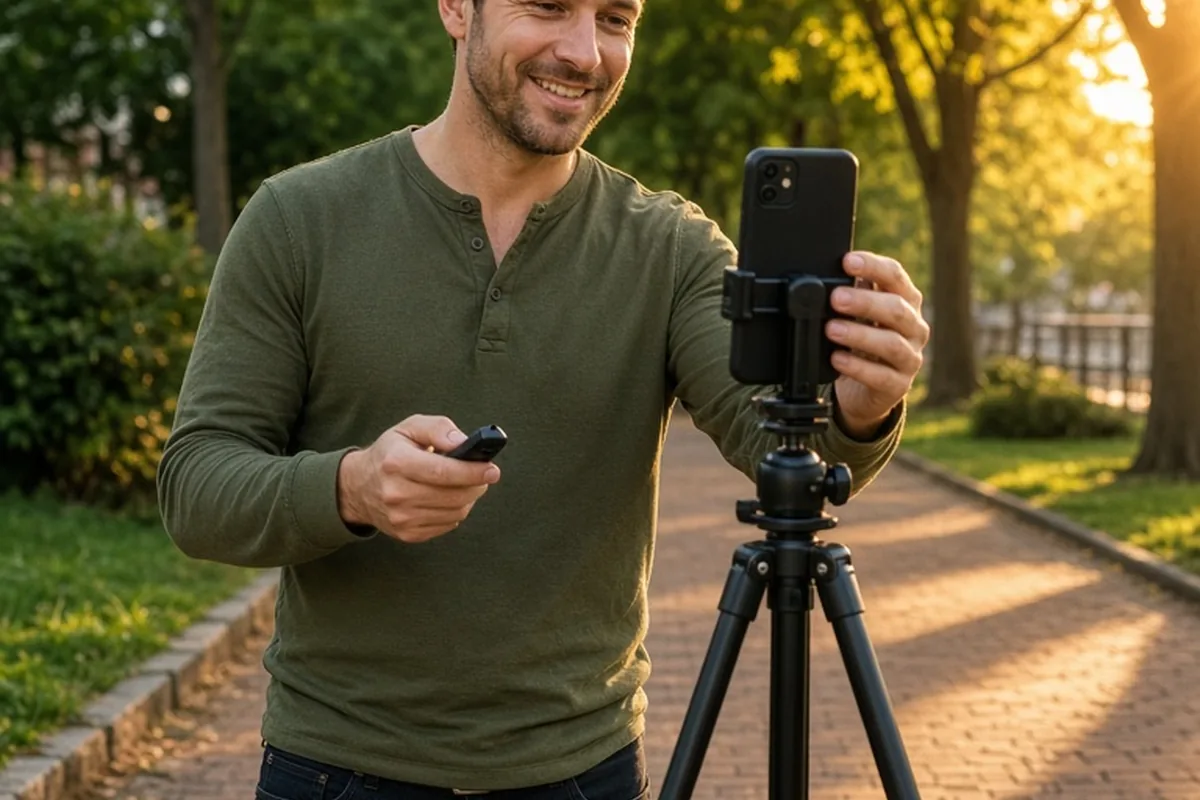
To take the best dating profile picture, guys should use soft natural lighting, wear a clean, well-fitting everyday outfit, look directly at the camera, and frame the shot from the chest or waist up with a relaxed smile. Avoid sunglasses, heavy filters, bathroom mirror selfies, and distracting backgrounds. Setting a smartphone on a tripod at eye level or having a friend take candid portraits produces the most authentic, approachable result.
Dating apps rely heavily on visual clarity to build trust and generate genuine interest. For men, creating an effective set of photos does not require professional modeling skills or expensive studio gear. Success comes from intentional presentation: showing an honest, warm, and confident likeness that reflects how you actually look and live.
Crafting Your Primary Photo with Clear Framing and Warm Eye Contact
Your primary profile picture carries the responsibility of making an immediate, positive first impression. The most effective lead photo is a solo portrait framed from the mid-chest or waist up. This framing allows viewers to clearly see your facial features, grooming, and general build without the distortion of an extreme close-up or the detachment of a distant wide shot. Look directly into the camera lens rather than off to the side, as direct eye contact establishes a sense of openness and confidence.
A natural, relaxed expression is essential for this lead image. A slight smile that engages your eyes—often called a warm, genuine smile—creates an approachable demeanor. To avoid looking stiff or forced, take a breath, look away briefly, and look back at the camera while thinking of something genuinely amusing just before the shutter clicks. Keep the background simple and slightly out of focus so the viewer's attention remains entirely on you rather than on busy street traffic or cluttered room decor.
Avoid hiding your eyes or face in your first photo. Sunglasses, baseball caps pulled low, large headphones, and hands covering parts of your jaw create visual barriers that lead people to swipe past. Potential matches want to know what you look like immediately, and obscuring your features introduces hesitation before a conversation can even begin.
Using Natural Lighting and Proper Camera Angles to Flatter Facial Features
Lighting makes the biggest technical difference between an amateur snapshot and an eye-catching portrait. Harsh overhead lighting—such as direct midday sun, fluorescent office bulbs, or downward-pointing bathroom spotlights—casts unflattering shadows under your brow, nose, and chin, creating the appearance of dark eye circles. Instead, shoot outdoors during the golden hour (the first hour after sunrise or the last hour before sunset) or on a bright overcast day when cloud cover acts as a natural softbox.
If you are taking photos indoors, stand two to four feet away from a large window during the day. Position yourself so the window light hits your face from the front or at a forty-five-degree angle rather than directly from behind. Backlighting turns you into a dark silhouette, while side-angled soft light accentuates your jawline and adds depth to your features without creating harsh lines.
Camera height and lens perspective also dramatically alter how your face appears. Keep the camera at eye level or very slightly above eye level. Angling the camera upward from below your chest creates an unnatural perspective that distorts your proportions. Furthermore, avoid holding a phone arm's-length away on the standard wide-angle lens, which can exaggerate the size of your nose and forehead. Instead, position the phone farther back and use a 2x or 3x telephoto setting to preserve realistic facial proportions.
Selecting Outfits and Grooming That Look Put-Together Yet Realistic
Your wardrobe should communicate that you take care of yourself while staying true to your day-to-day style. Choose clothes that fit your frame cleanly rather than oversized garments or excessively tight shirts. Classic staples like a tailored button-down, a fitted henley, a well-kept knit sweater, or a clean, solid-color t-shirt paired with a casual jacket work consistently well across different dating platforms.
Stick to solid colors or muted, timeless patterns that complement your skin tone. Deep blues, olive greens, charcoal, burgundy, and warm earth tones tend to photograph well and keep the focus on your face. Avoid loud graphic tees with slogans, busy neon prints, athletic gym wear for your main photo, or formal suits unless attending formal events is a routine part of your social life. The goal is to look like the best version of how you would show up for a relaxed first date at a coffee shop or wine bar.
Grooming requires a balanced approach. If you plan to get a haircut, schedule it three to five days before your photo session so your hair has time to settle into a natural shape. Trim and shape your beard or cleanly shave based on your everyday routine. Just before shooting, wash your face with cool water or use an oil-blotting sheet to remove excess shine from your forehead and nose.
Building a Complete Four- to Six-Photo Lineup That Tells a Clear Story
A strong dating profile is not just one good photo; it is a cohesive sequence of images that answers the basic questions a match has about your lifestyle and personality. Aim for four to six distinct photos taken in different settings, wearing different outfits, and showcasing different moods. Repeating the same angle and shirt across three photos suggests a lack of effort or a very narrow set of experiences.
Structure your lineup strategically to maintain momentum. After your primary chest-up portrait, include a clear full-body photo taken in natural light so matches have an accurate, honest sense of your height and build. Your third and fourth photos should highlight active interests or passions—such as cooking a meal, hiking a scenic trail, working on a craft, or playing an instrument. These activity shots provide natural conversation starters for prospective matches.
Finish your profile with a relaxed social shot or an interesting travel photograph. If you include a social image with friends, ensure you are clearly the central focus, and avoid photos where other people's faces are cropped awkwardly. Never make a group photo your primary image, and limit group shots to a single photo in the latter half of your profile.
Avoiding Common Dating Photo Pitfalls: Mirror Selfies, Gym Shots, and Filters
Certain photo types consistently perform poorly because they come across as low-effort or self-centered. Mirror selfies—especially those taken in dimly lit bathrooms with exposed plumbing, toothbrushes, or dirty mirrors in the background—are among the most common mistakes men make. They convey that you did not want to take the time to step outside or set up a proper shot.
Gym progress photos and shirtless bathroom selfies also present challenges. While fitness may be a major component of your routine, a flexing mirror selfie often reads as boastful rather than welcoming. If being active is central to your lifestyle, show it through context: an unposed photo of you bouldering, running an outdoor race, or enjoying a beach day with friends feels much more organic and approachable.
Avoid using beauty filters, artificial skin-smoothing tools, or heavy color presets. Most people quickly recognize digital alterations, which creates doubt about whether your photos represent your real-life appearance. Similarly, remove photos that are more than a year or two old, or any pictures where your hair, weight, or facial hair look noticeably different from today. Consistency between your profile pictures and your in-person appearance builds immediate trust on a first date.
Setting Up Quality DIY Shots with a Smartphone and Inexpensive Gear
You do not need to hire a professional photographer to get high-caliber profile pictures. Modern smartphone cameras are capable of capturing excellent portraits when paired with a basic tripod and a Bluetooth remote shutter. A compact, flexible tripod costs very little and allows you to position your phone at precise heights and angles outdoors or in well-lit rooms.
To take natural-looking solo photos, mount your phone securely at eye level in an open outdoor area, such as a quiet park or an aesthetically pleasing urban street corner. Use the phone's rear camera rather than the front-facing selfie camera, as rear lenses offer significantly higher image quality and better depth rendering. Set your camera to burst mode or continuous shooting, press the remote shutter, and move slowly through several subtle poses: looking slightly away, smiling, adjusting your cuff, or walking toward the lens.
Another effective technique is recording short 4K video clips of yourself moving naturally in good lighting. Walk through a scene, pause, smile, and turn toward the lens. Afterward, scrub through the video footage on your phone and take high-resolution frame grabs of the most relaxed, natural micro-moments. This method avoids the frozen, awkward stiffness that often happens when waiting for a self-timer to count down.
Testing and Selecting Your Strongest Photos with Objective Feedback
Men frequently struggle to choose their most appealing photos because personal attachment to a memory can cloud objective judgment. You might love a photo because it was taken at a memorable concert, even if the lighting is poor and your face is cast in deep shadows. Choosing the right lineup requires evaluating images based on technical clarity and perceived warmth.
Seek candid, constructive feedback from friends—particularly female friends or peers who actively use dating apps. Ask specific, targeted questions rather than general inquiries. For example, ask, 'Which of these three photos makes me look most approachable?' or 'Does this image look like how I look when we hang out in person?' Honest outside perspectives quickly identify unflattering angles or expressions you might have overlooked.
You can also use built-in dating app testing features, such as smart photo rotation tools that automatically place your most-swiped photo first based on user interaction data. Pay attention to changes in match quality and inbound messages when you update your primary picture, and be willing to swap out underperforming images until you find a balanced, effective combination.
Illustrative Scenarios
Replacing Quick Selfies with Intentional Outdoor Portraits
Marcus had a profile consisting of two car selfies, a low-light bar photo with friends, and a gym mirror picture. Despite being an active, outgoing graphic designer, he noticed low match rates and few initial message replies. He initially assumed online dating simply was not working for him. Instead of deleting the app, he spent one Saturday morning at a local park with a friend. Wearing a clean olive jacket over a neutral t-shirt, he had his friend take ten minutes of candid, waist-up photos near a shaded brick wall during morning light. He replaced his main car selfie with a crisp outdoor portrait and removed the gym picture.
Key point: Natural outdoor lighting and relaxed posture instantly communicate warmth, dramatically improving how approachable a profile feels.
Balancing Activity Shots to Spark Better Conversations
Ethan had four high-resolution portraits, but all of them were stiff headshots taken against plain indoor backgrounds. While the image quality was sharp, matches rarely had anything specific to comment on in their opening messages. Ethan decided to replace two redundant portraits with context-driven activity photos: one of him working in his woodworking garage and another candid shot of him laughing while playing board games with family. The new lineup preserved clear facial visibility while offering concrete glimpses into his lifestyle.
Key point: Including specific, authentic hobbies in your photo lineup gives potential matches effortless conversation starters.
Frequently asked questions
How many photos should a guy use on his dating profile?
Aim for four to six high-quality photos. This provides enough variety to show your face, build, style, and hobbies without overwhelming the viewer or including low-quality filler shots.
Is it ever okay to use a selfie in a dating profile?
While having someone else take the photo or using a tripod is preferred, one well-lit outdoor selfie can be acceptable if it is not a primary photo. Avoid mirror selfies, car selfies, and extreme close-ups, as they tend to distort facial features.
Should men hire a professional photographer for dating app pictures?
Hiring a professional is not required and can sometimes result in photos that look overly staged or corporate. A modern smartphone, good natural lighting, and a friend or tripod can produce authentic, high-quality results for free.
How often should you update your dating profile pictures?
Update your photos whenever your appearance changes significantly, such as getting a new hairstyle, changing facial hair, or experiencing noticeable weight shifts. In general, review and refresh your lineup every six to twelve months to keep it current.
Your next step
Grab a clean everyday outfit, head outside to an open shaded area an hour before sunset, and use a smartphone tripod or a friend to take twenty candid waist-up portraits to update your primary photo today.