Allergies to skincare ingredients happen when your immune system treats a specific cosmetic component as a threat, triggering allergic contact dermatitis. Common culprits include added fragrances, essential oils, chemical preservatives, and certain sunscreen filters. Unlike standard irritation, an allergic response involves an immune reaction that typically appears twenty-four to seventy-two hours after application, producing persistent redness, severe itching, localized swelling, or small fluid-filled bumps across exposed skin.
Navigating skincare formulas can feel overwhelming when your skin suddenly rebels against a product that promised clear, calm results. Unraveling the exact reason behind a sudden flare-up requires understanding how topical ingredients interact with both your physical barrier and your deeper immune defense.
Distinguishing True Skincare Allergies from Irritant Reactions
When skin flares after applying a serum or cream, determining whether the reaction stems from irritation or a genuine allergy is the first critical step. Irritant contact dermatitis occurs when an ingredient physically disrupts the skin barrier or strips essential lipids. This response is strictly localized, does not involve the immune system, and frequently produces an immediate stinging, burning, or tightness within minutes of application. Common culprits of irritation include high concentrations of direct acids, strong retinoids, or harsh foaming surfactants. The severity of an irritant reaction directly corresponds to how much product was applied and how long it remained on the skin.
In contrast, allergic contact dermatitis is a delayed-type hypersensitivity reaction orchestrated by your immune cells. Once your body becomes sensitized to a specific allergen, subsequent exposures trigger immune activation even at microscopic concentrations. Symptoms often do not peak immediately; instead, they emerge between twenty-four and seventy-two hours post-application. The visual presentation usually features intense itching, pronounced redness, localized swelling, and clusters of tiny fluid-filled papules or vesicles. Furthermore, an allergic reaction can spread beyond the exact area of application, creeping onto neighboring skin such as the neck or eyelids even if you only applied the product to your cheeks.
Common Offending Ingredients in Cosmetic Formulations
While virtually any cosmetic component can theoretically trigger a reaction in a sensitized individual, a handful of ingredient classes account for the majority of cosmetic allergic contact dermatitis cases. Fragrance materials represent the most frequent sensitizers in both luxury and drugstore skincare. This category encompasses synthetic aroma compounds as well as natural essential oils, plant absolutes, and aromatic botanical extracts. Natural essential oils like lavender, tea tree, ylang-ylang, and citrus oils contain complex mixtures of volatile terpenes such as limonene and linalool, which readily oxidize upon exposure to air and light, dramatically increasing their allergenic potency.
Preservatives form the second major category of common cosmetic allergens. Manufacturers incorporate preservatives to prevent dangerous bacterial and fungal contamination in water-based products, making them an indispensable component of safe formulation. However, specific classes of preservatives carry higher sensitization rates than others. Historic sensitizers like methylisothiazolinone and methylchloroisothiazolinone, along with formaldehyde releasers such as DMDM hydantoin, diazolidinyl urea, and quaternium-15, are known triggers for reactive individuals. Other recurrent offenders include chemical UV filters like avobenzone or oxybenzone, emulsifying agents such as lanolin or propylene glycol, and topical antibiotics found in soothing aftercare ointments.
- Synthetic and natural fragrances, including concentrated essential oils like lavender and bergamot
- Oxidized aroma terpenes, particularly limonene, linalool, geraniol, and eugenol
- High-sensitization preservative systems such as methylisothiazolinone and formaldehyde-releasing agents
- Lanolin alcohols and wool wax derivatives frequently found in heavy moisturizing balms
- Specific organic ultraviolet filters, including benzophenones and cinnamates
How to Perform an Effective at-Home Patch Test
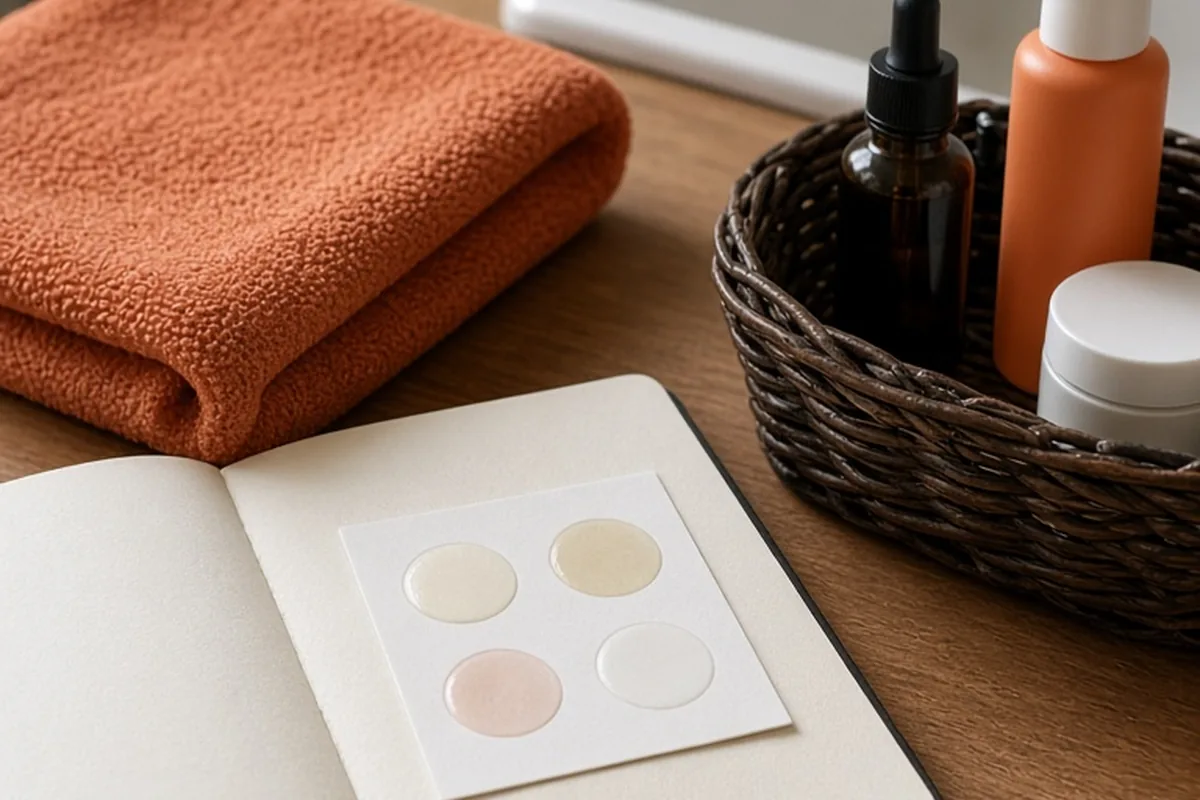
Performing a controlled at-home patch test before introducing a new product to your face can help catch severe sensitivities before they cause widespread facial distress. To execute a meaningful test, apply a small, pea-sized dab of the product to a discreet patch of clear skin with structural similarity to facial tissue. The inner crook of your elbow, the upper inner forearm, or the soft area behind your earlobe serve as prime testing sites. Leave the area unwashed and avoid applying other topical treatments over the test spot so the variable remains completely isolated.
Because true allergic reactions are governed by delayed immune responses, observing the site for only an hour or two is insufficient. Reapply the product to the exact same test spot twice daily for at least three to four consecutive days, keeping an eye out for delayed erythema, swelling, or pruritus. If the skin remains calm, flat, and free of itching after seventy-two hours, the product is generally safer to try on a small section of your jawline. However, an at-home patch test has distinct limitations: it cannot definitively separate low-grade irritation from a mild allergy, nor does it identify which specific raw chemical in a twenty-ingredient formula caused the response. Definitive identification requires standardized clinical patch testing performed by a board-certified dermatologist or allergist.
Managing an Active Flare-Up and Resetting the Skin Barrier
When an acute allergic reaction occurs, your immediate priority is stopping ongoing exposure and reducing local inflammation. Discontinue all active skincare products immediately, including chemical exfoliants, retinoids, vitamin C serums, clay masks, and scented cleansers. Wash your face gently with lukewarm water and a bland, fragrance-free, non-foaming cleanser to remove any residual allergens remaining on the surface. Resist the urge to scrub the skin, as physical friction will compromise an already inflamed stratum corneum and worsen swelling.
Support skin recovery by applying cool, damp cotton compresses to the affected areas for ten minutes at a time to soothe burning and reduce localized edema. Follow with a bare-bones moisturizer formulated without fragrances, plant extracts, or harsh preservatives, prioritizing simple barrier-reinforcing ingredients such as pure petrolatum, medical-grade squalane, or colloidal oatmeal. For intense itching and swelling, short-term use of an over-the-counter low-strength topical hydrocortisone cream may provide relief, but it should be used cautiously and kept away from the delicate eye contours. If symptoms persist beyond a few days, continue to spread, or involve eye swelling, seek prompt professional evaluation from a medical provider.
Deciphering Labels and Identifying Hidden Sensitizers
Scanning ingredient lists requires looking beyond front-of-bottle marketing buzzwords such as 'hypoallergenic', 'dermatologist tested', or 'clean'. In the cosmetic industry, these marketing phrases are not strictly standardized by regulatory bodies, meaning a product claiming to be hypoallergenic can still contain known contact allergens like plant essences or essential oils. Instead, turn the container over and inspect the International Nomenclature of Cosmetic Ingredients list printed on the back.
Watch closely for catch-all designations. The term 'fragrance' or 'parfum' can represent a proprietary blend of dozens of undisclosed chemical compounds, making it impossible to know precisely what you are applying. Even products labeled 'unscented' can contain masking fragrances designed to neutralize the unpleasant chemical odor of base ingredients without imparting a noticeable perfume. Individuals with confirmed sensitivities should also examine botanical names listed in Latin, as many consumers do not realize that ingredients like Chamomilla Recutita or Citrus Aurantium Dulcis represent active botanical extracts capable of provoking significant contact allergies.
Establishing a Safer Routine Through Methodical Elimination
Rebuilding your daily regimen after identifying an allergy requires a methodical, single-variable approach to prevent recurring confusion. Begin by stripping your routine down to an ultra-minimal core of just three essential steps: a gentle, unfragranced cleanser, a simple, non-reactive moisturizer, and a mineral-based sunscreen utilizing zinc oxide or titanium dioxide. Mineral filters sit on the surface of the skin and are substantially less likely to provoke allergic contact dermatitis compared to organic chemical filters. Maintain this stripped-down baseline for at least three to four weeks until your skin exhibits zero signs of inflammation.
Once your baseline is completely stable, you can introduce one new cosmetic product at a time. Maintain each new addition for a minimum of two weeks before introducing another product into the lineup. Keep a written or digital skincare log documenting the full ingredient list of every product you use, alongside daily notes regarding skin comfort. This structured habit creates a traceable paper trail; if your skin suddenly reacts on day six of a new product, you can cross-reference its ingredient deck against previously tolerated products to isolate the likely culprit.
Illustrative Scenarios
Uncovering a Hidden Botanical Sensitivity
A composite user named Jordan experienced recurring eyelid redness, flaking, and severe itching that persisted for months despite switching to a popular gentle, natural moisturizer. Believing the natural claims guaranteed safety, Jordan continued using the botanical moisturizer alongside a simple cleanser. After working with a clinician to log all topical exposures, Jordan realized the moisturizer contained oxidized linalool derived from lavender extract. Switching to a purely fragrance-free formula without plant extracts allowed the skin barrier to clear completely within two weeks.
Key point: Natural and plant-derived formulations often contain potent volatile terpenes that can trigger stubborn allergic contact dermatitis just as readily as synthetic additives.
Frequently asked questions
How long does an allergic reaction to skincare take to clear up?
Most mild allergic contact dermatitis flare-ups resolve within two to three weeks once the triggering product is completely removed. Full barrier recovery may take longer if the skin was severely inflamed or physically scratched during the reaction.
Can you suddenly become allergic to a skincare product you have used for years?
Yes, allergic sensitization is an acquired immune response that can develop after repeated, long-term exposure to a substance. Additionally, cosmetic manufacturers frequently update product formulations without prominent packaging changes, introducing new ingredients to familiar products.
What is the difference between a clinical patch test and an at-home patch test?
An at-home patch test checks whether a finished product causes an obvious reaction on your skin, but it cannot isolate the exact offending chemical. A clinical patch test applies standardized panels of isolated allergen extracts under medical supervision to diagnose your specific chemical sensitivities definitively.
Your next step
Take a photo of your current product ingredient labels and pause all non-essential treatments to establish a calm, fragrance-free baseline for the next two weeks.