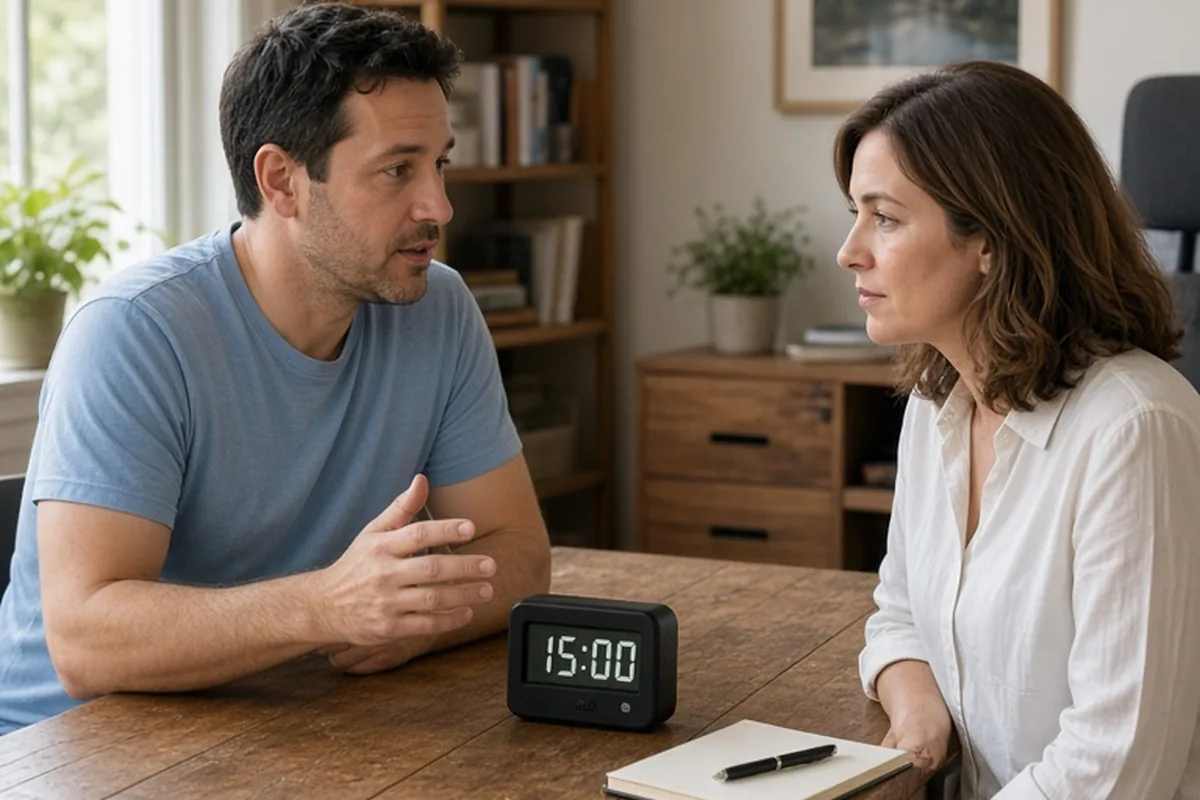
Practical alternatives to couples therapy include structured weekly relationship check-ins, evidence-based communication workbooks, peer relationship workshops, individual counseling, and targeted coaching. These options work best when both partners share a genuine commitment to constructive dialogue and emotional safety, offering lower-cost, flexible ways to build conflict-resolution skills, reestablish shared routines, and clarify expectations outside a clinical setting.
When recurring friction builds or a familiar routine turns silent, seeking formal therapy is a frequent recommendation, but it is not the only viable path forward. Scheduling clashes, financial constraints, or mutual reluctance about clinical counseling often lead couples to seek structured, private methods they can implement on their own terms.
Establishing Weekly Structured Relationship Check-Ins
Unstructured conversations about relationship stress often happen at the worst times, such as late in the evening when patience is depleted or during a rushed morning routine. A dedicated, structured weekly meeting provides a predictable container for both logistical planning and emotional maintenance. By scheduling a recurring twenty to thirty minutes when both individuals are rested, partners remove the element of surprise that frequently triggers defensiveness. This habit transforms ongoing friction from an emergency debate into a manageable agenda item.
To make these meetings effective, couples benefit from adopting a clear, collaborative framework. Begin by sharing two sincere appreciations from the preceding week to set a grounded tone, review necessary logistical items such as household duties or calendar commitments, and address only one specific area for relational adjustment. For example, rather than engaging in a vague debate about feeling neglected, one partner might request thirty minutes of phone-free dinner time three nights a week. A key limitation of this method is that it requires disciplined emotional regulation; if either person uses the check-in as an unfiltered list of grievances, the meeting quickly becomes another source of dread.
Using Guided Workbooks and Structured Exercises
Clinically grounded workbooks offer partners a systematic way to explore communication patterns without needing a third-party mediator in the room. These texts translate established therapeutic concepts into concrete exercises, guiding discussions through objective prompts. Using an external guide relieves both partners of the pressure to act as the self-appointed therapist, reducing the interpersonal friction that often occurs when one person attempts to instruct the other on how to communicate.
Implementing a workbook requires choosing an established program and establishing clear parameters for pacing, such as completing one short chapter or exercise every Sunday afternoon. For instance, an exercise might ask each partner to identify their typical stress response—whether they tend to withdraw into silence or press urgently for immediate answers—and discuss how those responses inadvertently feed each other during a disagreement. The main trade-off of self-directed reading is that it depends entirely on mutual motivation; if one partner approaches the text as homework to rush through, the exercises will not generate meaningful behavioral change.
Pursuing Individual Counseling to Address Personal Triggers
A relationship functions as an interconnected system, meaning that a deliberate shift in one person's behavioral habits inevitably changes the interactive loop between both partners. When a partner is reluctant to attend joint sessions, starting individual counseling is often the most productive alternative. Personal therapy offers a private space to explore emotional reactivity, unresolved family conditioning, and personal stress thresholds without the immediate defensiveness that can arise during joint counseling.
In practice, individual work is most helpful to a partnership when the focus stays on personal agency rather than cataloging a spouse's shortcomings. For example, a man who habitually reacts to constructive feedback with sullen withdrawal can work with a counselor to identify the physical sensations of defensiveness and practice staying grounded during tense moments. A notable limitation of individual therapy is that the counselor only hears one perspective; if the client uses therapy language primarily to justify their own stance or criticize their partner, individual work can unintentionally create greater emotional distance.
Engaging in Relationship Coaching and Skill Seminars
While clinical therapy often explores past psychological injuries, family histories, and emotional pathology, relationship coaching and educational seminars emphasize practical, forward-looking skill development. These formats focus heavily on behavioral adjustments, presenting clear models for active listening, de-escalation, and shared decision-making. For couples who generally share core values but lack specific operational tools to manage financial disagreements or parenting stress, a coaching structure offers actionable guidance without a clinical label.
Couples can engage with coaching through modular digital courses, small group cohorts, or short-term private packages centered around specific outcomes. For example, a couple struggling with financial disagreements might work through a budgeting workshop that establishes neutral frameworks for tracking expenses, negotiating discretionary spending, and resolving disparities in financial philosophy. However, coaching is not a regulated clinical profession, which serves as a major trade-off; it is unsuited for relationships dealing with severe mental health crises, hidden substance abuse, or patterns of coercive control.
Rebuilding Everyday Friendship Through Intentional Novelty
Chronic conflict frequently starves a partnership of simple warmth, ease, and shared humor, creating an environment where even neutral questions sound like veiled criticism. Over time, negative sentiment override takes hold, causing partners to interpret ordinary behavior through a lens of suspicion. Deliberately reintroducing shared novelty, curiosity, and non-demanding companionship interrupts these negative cycles, strengthening the underlying friendship that makes conflict resolution possible.
Reconnecting does not require expensive vacations or dramatic gestures; it relies on consistent micro-rituals that disrupt domestic autopilot. For example, choosing to cook an unfamiliar meal together, starting a collaborative home project, or taking an evening walk without mobile devices requires gentle teamwork and allows partners to interact outside their habitual roles. The trade-off is recognizing that positive experiences cannot replace difficult, honest conversations; while shared enjoyment creates goodwill, it cannot fix unaddressed boundary violations or financial dishonesty on its own.
Recognizing the Practical Limits of Self-Help
While alternative approaches foster autonomy and lower financial barriers, self-directed strategies have distinct boundaries that must be recognized to protect both partners. Evaluating your progress with clear eyes ensures you do not waste years on surface-level techniques when deeper issues require formal intervention. Maintaining self-respect means understanding when simple miscommunications have crossed the line into fundamental incompatibilities or destructive behavior patterns.
Couples should establish a trial period—such as two months of consistent weekly check-ins and exercises—to gauge whether their dynamic is genuinely improving. If discussions continue to trigger pervasive contempt, chronic stonewalling, explosive anger, or deceit despite honest efforts, self-help methods have reached their ceiling. Acknowledging that self-directed alternatives are insufficient is not a failure of will, but a practical signal that licensed clinical mediation or an honest reevaluation of the relationship's future is necessary.
Illustrative Scenarios
Tackling Defensive Arguments Over Domestic Responsibilities
Marcus and Elena found themselves caught in an escalating cycle of exhaustion every Sunday night, arguing about chore distribution and work schedules. Marcus felt constantly criticized whenever Elena brought up household tasks, leading him to justify his contributions defensively and shut down the conversation. Rather than committing to costly therapy that neither felt ready to pursue, Marcus suggested a twenty-minute structured check-in every Sunday morning with a strict five-minute timer per person. When Elena explained her overwhelm regarding weekday mornings, Marcus practiced summarizing her concerns before offering solutions, resisting the impulse to list his own chores. By giving each other predictable, timed attention without immediate counter-arguments, their weekday friction decreased significantly.
Key point: Implementing basic conversational ground rules lowers defensiveness, allowing partners to address practical logistics before they evolve into deep emotional resentment.
Shifting Relational Dynamics Through Personal Agency
Following the arrival of their second child, David noticed a growing emotional distance between himself and his partner, Clara. Quiet evenings often deteriorated into curt replies, and David initially felt tempted to push Clara into counseling to address her withdrawal. Recognizing that Clara was physically depleted and resistant to outside analysis, David decided to pursue individual counseling to address his own stress management. He also introduced a low-pressure communication workbook, asking Clara to complete just one short exercise with him each weekend. By learning to manage his impatience and asking open-ended questions about her day without attempting to fix every problem, David helped de-escalate the tension in their home.
Key point: Working on your own emotional regulation and listening habits often alters a stagnant dynamic more effectively than demanding a spouse attend counseling.
Frequently asked questions
Can reading relationship workbooks genuinely replace formal therapy?
Workbooks provide structured communication frameworks and helpful vocabulary for couples who already share mutual goodwill and emotional safety. They cannot, however, observe real-time defensive reactions or mediate high-conflict gridlock like a trained professional. They serve best as proactive skill-building resources rather than remedies for severe relational distress.
What should I do if my partner refuses therapy but agrees to try self-help?
Propose a concrete, low-stakes experiment such as holding a twenty-minute check-in once a week or completing one workbook chapter for four weeks. Agree upfront on clear markers of success, such as fewer escalated arguments or clearer expectations around daily responsibilities. If the underlying conflict remains unchanged after that agreed period, you can revisit the need for professional guidance.
How are relationship coaches different from licensed marriage therapists?
Coaches focus primarily on forward-looking goals, communication habits, and behavioral frameworks for couples functioning reasonably well. Licensed therapists are clinically trained to diagnose and treat psychological conditions, attachment trauma, and severe relational dysfunction. If your relationship struggles stem from deep emotional wounds or mental health issues, a licensed clinician is the safer choice.
What is the most effective low-cost step to improve communication immediately?
Instituting a recurring, distraction-free twenty-minute conversation each week with strict ground rules is completely free and highly effective. Focusing on active listening, reflecting back what your partner says, and avoiding defensiveness prevents minor logistical annoyances from hardening into chronic resentment.
Your next step
Choose one specific method to test this week—such as a twenty-minute, distraction-free check-in with an agreed agenda—and commit to practicing it consistently for thirty days before deciding whether further intervention is needed.