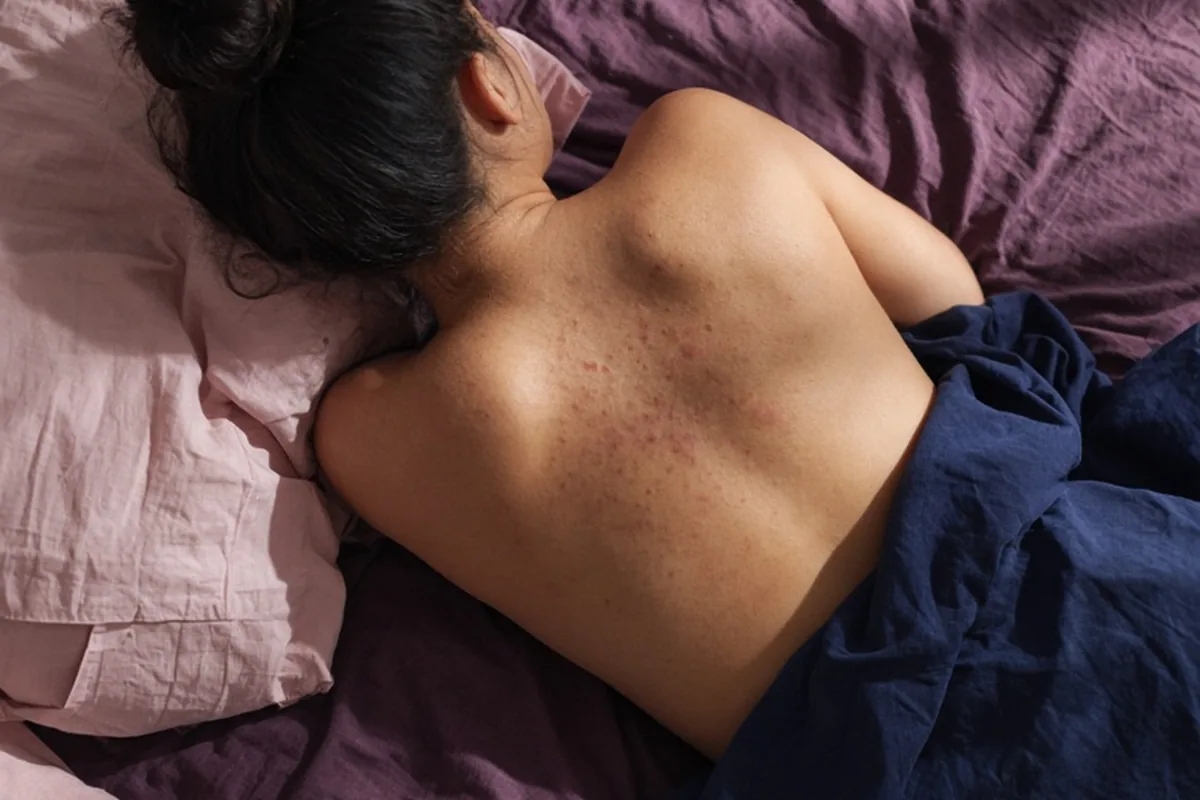
Back acne treatment focuses on clearing clogged pores, reducing bacteria, and soothing inflammation across thicker body skin. Practical treatment begins with daily over-the-counter washes featuring benzoyl peroxide or salicylic acid, showering immediately after exercise, and wearing loose, breathable fabrics. For deep, painful, or scarring cysts, dermatologists prescribe targeted topical medications, oral antibiotics, or specialized systemic treatments to address deeper follicular inflammation effectively.
Breakouts on the back present unique challenges compared to facial blemishes because the skin on the torso is thicker, contains larger sebaceous glands, and experiences regular friction from clothing and equipment. Managing these breakouts requires a thoughtful combination of targeted topical actives, mechanical adjustments during daily activities, and an understanding of when over-the-counter options should transition to medical care.
Distinguishing Back Acne from Pityrosporum Folliculitis
Before selecting a back acne treatment, it is essential to determine whether the blemishes are true acne vulgaris or an infection of the hair follicles known as pityrosporum folliculitis. True acne develops when excess sebum, dead skin cells, and Cutibacterium acnes bacteria plug pores, producing a diverse mix of comedones, tender red papules, and deeper nodules. Because the skin of the upper torso possesses a high concentration of active sebaceous glands, these plugs can enlarge significantly before becoming visible on the surface.
In contrast, pityrosporum folliculitis occurs when an overgrowth of Malassezia yeast inflames the hair follicles, resulting in pinpoint, intensely itchy bumps that appear remarkably uniform in size and shape. While traditional acne treatments target bacterial proliferation and cellular turnover, standard acne therapies often fail to resolve fungal folliculitis and can occasionally irritate the surrounding skin further. Consulting a board-certified dermatologist allows for an accurate physical evaluation or surface scraping to confirm which condition is present before committing to an intensive regimen.
Further reading: American Academy of Dermatology: Acne
Effective Over-the-Counter Actives for Back Acne
Over-the-counter management of body breakouts relies on proven chemical exfoliants and antimicrobial washes designed to penetrate denser skin layers. The most widely recommended non-prescription active is benzoyl peroxide, which works by introducing oxygen into the pores to suppress acne-causing bacteria while reducing surface swelling. Because back skin is less sensitive than facial skin, cleansers containing higher strengths are commonly tolerated, provided they are applied with adequate contact time.
To maximize the efficacy of a benzoyl peroxide wash, apply it to wet skin in the shower and allow it to sit undisturbed for three to five minutes before thoroughly rinsing. This brief contact period gives the active ingredient sufficient time to penetrate the follicular canal. Users should note that benzoyl peroxide permanently bleaches colored fabrics, so using white towels and allowing the skin to dry completely before dressing is necessary to protect clothing and bed linens.
Salicylic acid serves as an alternative or complementary beta-hydroxy acid that dissolves lipid bonds between dead skin cells, helping to clear trapped sebum from deep inside pores. Packaged frequently in foaming washes or continuous 360-degree spray bottles, salicylic acid offers a practical method for reaching the center of the back without assistance. Combining a morning salicylic acid mist with an evening wash can control oil production without creating excessive dryness, though individuals experiencing flaking or tightness should scale back application frequency.
- Benzoyl peroxide washes: Reduces surface bacteria and calms inflammatory pustules; requires three to five minutes of dwell time before rinsing.
- Salicylic acid sprays: Exfoliates within pore linings and provides an accessible way to cover wide, hard-to-reach areas of the upper back.
- Topical retinoid gels: Normalizes cellular turnover to prevent recurring microcomedones; best applied in thin layers on clean, completely dry skin.
Further reading: American Academy of Dermatology: Acne
Managing Friction and Sweat to Prevent Acne Mechanica
A substantial portion of body breakouts stems from acne mechanica, a distinct subtype triggered by physical heat, pressure, and repetitive friction against the skin surface. When tight clothing, synthetic athletic gear, heavy backpacks, or sports equipment rub against sweat-dampened skin, the outer protective barrier is compromised, forcing dead skin cells into open pores. This mechanical stress rapidly accelerates the formation of inflammatory lesions across the shoulders, shoulder blades, and waistline.
Mitigating acne mechanica requires eliminating prolonged contact between moist garments and the torso. Removing workout clothing promptly and showering with a gentle cleanser immediately after physical exertion prevents trapped perspiration and resident skin bacteria from settling into follicles. When an immediate shower is unavailable, wiping the back with a damp washcloth or pre-soaked salicylic acid cleansing wipe provides a temporary measure until a full rinse is possible.
Fabric selection also plays a protective role in physical comfort and skin health. Choosing loose-fitting, natural cotton garments or high-performance moisture-wicking synthetics reduces abrasive shear against the skin during movement. Additionally, washing sports bras, gym shirts, and compression apparel after every use in fragrance-free laundry detergents prevents the reintroduction of accumulated body oils and lingering microbial residues to newly cleaned skin.
Further reading: American Academy of Dermatology: Acne
Dermatologist-Led Medical Therapies for Persistent Body Blemishes
When widespread, painful, or deeply embedded lesions do not respond to consistent over-the-counter care after six to eight weeks, professional dermatologic intervention becomes crucial. Deep cysts and nodules on the torso carry an elevated risk of creating permanent hypertrophic scars or pitted indentations due to the high tension of back skin. Dermatologists can provide stronger therapeutic modalities tailored to the severity and physical distribution of the breakouts.
Medical therapy often incorporates high-strength prescription topical retinoids, such as tretinoin or trifarotene, which are formulated specifically to treat large surface areas while stimulating steady cellular renewal. For active inflammatory flare-ups, clinicians may prescribe a temporary course of targeted oral antibiotics to suppress bacterial activity and calm systemic inflammation from within. In adult female patients, systemic hormonal options, such as combined oral contraceptives or spironolactone, may be evaluated if breakouts correlate with endocrine fluctuations.
For severe, recalcitrant, or scarring nodulocystic back acne that resists topical and oral antimicrobial regimens, oral isotretinoin remains an established clinical option. Isotretinoin works by systematically shrinking sebaceous glands, decreasing sebum volume, and disrupting the environment necessary for bacterial colonization. Because of its potency and specific monitoring requirements, clinicians evaluate patient health history, laboratory panels, and risk factors thoroughly before initiating treatment.
- Topical prescription retinoids: Target stubborn comedones and facilitate uniform epidermal turnover across broad surface areas.
- Oral antimicrobial medications: Provide systemic anti-inflammatory relief to interrupt the progression of painful, widespread cysts.
- Hormonal regulation therapies: Address underlying androgenic stimulation of sebaceous glands in appropriate adult female candidates.
- Systemic retinoids: Offer an intensive intervention for severe nodular acne resistant to traditional clinical protocols.
Further reading: American Academy of Dermatology: Acne
Back Acne Treatment Cost Factors and Expense Categories
Understanding the financial scope of back acne management requires breaking expenses into distinct categories: self-directed topical supplies, medical office visits, prescription pharmaceuticals, and optional clinical procedures. Because body surface area is significantly larger than the face, products deplete more rapidly, making container size and application volume important factors in long-term personal budgeting.
The overall cost for professional care varies widely based on geographic region, provider credentials, and individual health insurance arrangements. Evaluating a realistic budget involves examining how each component contributes to monthly out-of-pocket expenses while identifying methods to verify fees prior to receiving services.
- Over-the-Counter Daily Topicals: Ongoing recurring purchases including high-capacity benzoyl peroxide washes, salicylic acid sprays, non-comedogenic moisturizers, and gentle cleansers.
- Dermatology Office Visits: Specialist copayments or full self-pay consultation fees for initial clinical diagnostic assessments, periodic follow-up appointments, and progress evaluations.
- Prescription Medications: Out-of-pocket pharmacy obligations influenced by insurance drug tiers, prior authorization approvals, manufacturer co-pay discount programs, or generic availability.
- In-Office Clinical Procedures: Elective professional services such as specialized chemical peels, extractions, or light-based treatments, which are rarely covered by commercial insurance policies.
- Cost Verification Steps: Contact insurance member services to verify dermatology specialist referral rules, ask clinics for self-pay fee schedules, and request prescription pricing from retail pharmacy benefit managers.
Further reading: American Academy of Dermatology: Acne
Designing a Sustainable Daily and Weekly Back Care Routine
Establishing an effective routine for back care requires balancing potent active ingredients with careful barrier support to prevent chronic peeling, stinging, and redness. Many people mistakenly believe that scrubbing the back with stiff bristle brushes, textured loofahs, or coarse abrasive scrubs will clean pores faster. In reality, vigorous physical scrubbing strips essential surface lipids, causes microscopic skin tears, and aggravates underlying inflammation, triggering the sebaceous glands to produce rebound oil.
A practical daily routine begins in the shower by washing and thoroughly conditioning hair before cleansing the back. Many rich hair conditioners contain heavy silicones, panthenol, and fatty alcohols that leave a pore-clogging film if allowed to rinse down the spine without subsequent removal. After hair products are completely washed away, apply the active body wash using clean hands or a soft, hygienic silicone applicator that does not harbor mildew or bacterial buildup.
Following the shower, pat the skin dry with a clean towel rather than rubbing briskly. If using leave-on targeted products, such as salicylic acid mists or thin layers of prescription topicals, allow the treatment to absorb fully for a few minutes before dressing. When the skin exhibits any tightness or irritation, layer a lightweight, oil-free, non-comedogenic body lotion enriched with ceramides or hyaluronic acid over the area to reinforce barrier resilience without occluding follicles.
Further reading: American Academy of Dermatology: Acne
Frequently asked questions
How long does back acne treatment usually take to show noticeable improvement?
Most over-the-counter and prescription back acne treatments require six to eight weeks of continuous, daily use before visible improvements emerge. Because body skin cells turn over more slowly and the follicular structures are deeper than those on the face, patience and regular application are necessary to prevent new lesions from forming.
Can regular body lotion cause back breakouts to get worse?
Yes, many conventional body lotions contain heavy emollients, synthetic fragrances, and occlusive oils that trap sweat and dead skin cells inside pores. To prevent clogged follicles, choose body moisturizers explicitly labeled non-comedogenic, oil-free, or non-acnegenic, which hydrate without blocking hair follicles.
Why does my back acne seem to flare up more during the summer?
Warmer weather increases both ambient humidity and personal perspiration, creating a damp environment where surface bacteria and skin lipids combine readily under clothing. Increased UV exposure can also dry out the skin surface temporarily, prompting an overproduction of natural oils while thickening the outer dead skin layer.
When should I see a doctor instead of using drugstore acne washes?
You should schedule an evaluation with a board-certified dermatologist if your back blemishes form deep, painful nodules, show signs of infection, or leave dark marks and raised scars. Professional care is also recommended if consistent use of drugstore washes yields no visible improvement after two months.
Your next step
Assess your current shower and laundry habits today, replace rough loofahs with a gentle active cleanser, and consult a board-certified dermatologist if deep or painful lesions persist.