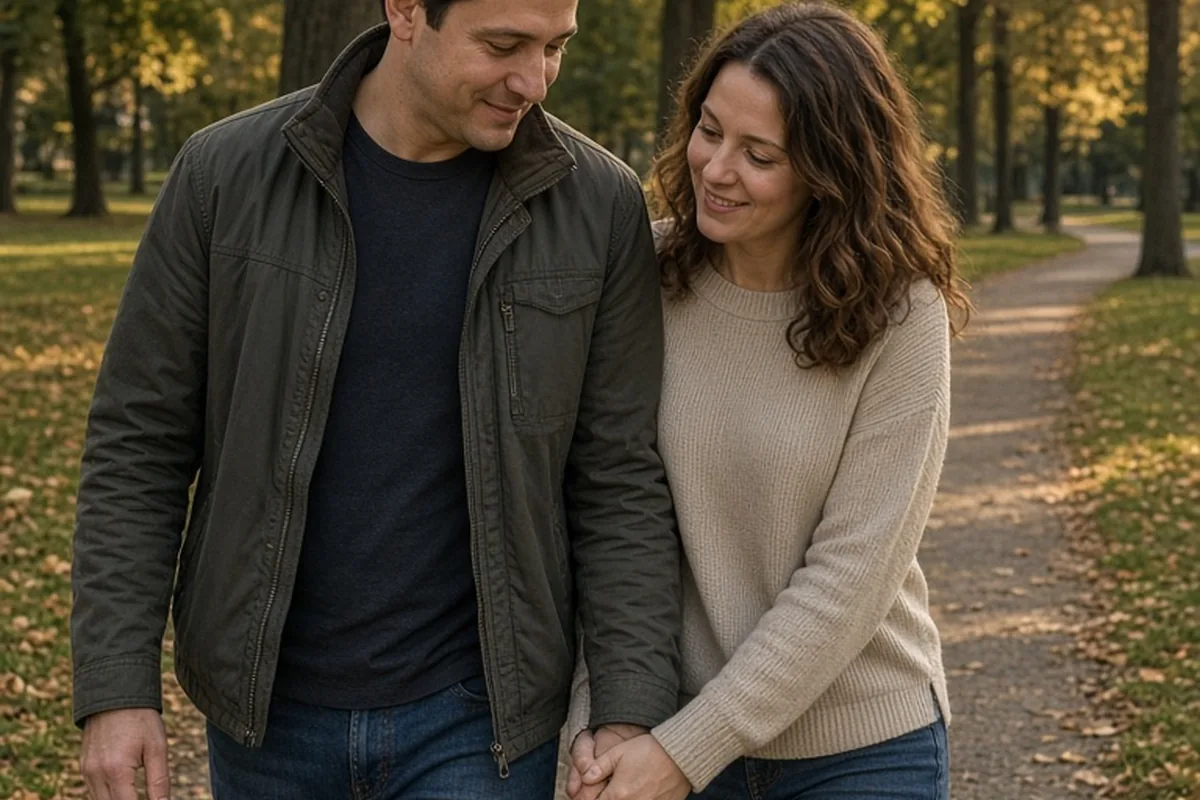
While nonverbal cues cannot definitively prove someone is falling in love, consistent patterns often reveal deepening emotional connection. These include prolonged, warm eye contact, leaning in during conversations, unconscious physical mirroring, genuine smiles that engage the eyes, open posture, and gentle, lingering touches. Rather than relying on a single isolated gesture, look for sustained clusters of attentive behavior across different settings, combined with verbal warmth and reliable follow-through.
Navigating early romance often leaves people searching for tangible reassurance that their feelings are reciprocated. It is natural to watch how someone moves, sits, or looks at you when you are trying to understand where you stand, but physical signals are most informative when viewed in context rather than treated as an infallible secret code.
Sustained Eye Contact and the Softening Gaze
Eye contact is one of the most direct nonverbal ways people express focus and emotional intimacy. When someone is developing deep romantic feelings, their gaze often shifts from polite social scanning to a more sustained, attentive hold. You may notice them holding your gaze a few seconds longer than normal conversation requires, or looking back up at you after looking away. Their facial expression often softens during these moments, with relaxed brow muscles and a warm, steady focus that signals they are entirely present with you.
It is helpful to distinguish between an intense, intimidating stare and a gentle, affectionate gaze. A person who is falling for you will usually pair eye contact with subtle expressions of enjoyment, such as a slight upward turn of the mouth or crinkling around the outer corners of the eyes. Conversely, a lack of eye contact does not automatically signal disinterest; shyness, social anxiety, neurodivergence, or cultural norms can cause someone to look down or away frequently even when they care deeply. Look at whether their eyes return to you when they feel comfortable rather than demanding constant direct contact.
Physical Proximity and Orienting the Torso Toward You
People naturally seek physical closeness with those to whom they feel emotionally drawn. In group settings or casual outings, a person who is falling in love will often angle their shoulders, chest, and feet directly toward you, even if they are speaking to someone else across the table. This physical alignment reflects where their primary attention rests. When seated next to each other, they may lean in to hear your voice more clearly, rest an elbow close to yours on the table, or unconsciously close the physical gap between you.
Notice how they respond when the physical environment shifts. If you move to another part of a crowded room or step aside to grab a drink, do they naturally drift in your direction or reposition themselves so you remain in their field of view? This drive to stay within comfortable reach indicates a desire for shared connection. However, respect for personal boundaries is equally telling; someone who genuinely cares will lean in close without crowding your space or ignoring your physical comfort cues.
Unconscious Mirroring of Posture, Gestures, and Cadence
Mirroring happens when two people fall into mutual conversational rhythm, subtly adopting each other's postures, hand movements, or speech patterns. If you cross your legs and notice them doing the same moments later, or if they pick up their water glass right after you take a drink, their body is aligning with yours. This synchronized behavior occurs below conscious awareness when someone feels deep empathy, rapport, and emotional investment in the person they are with.
Beyond simple physical gestures, mirroring often extends to vocal tone and pacing. When someone is enamored, they may naturally soften their voice to match a quiet mood, slow down their speech to match your cadence, or adopt specific shared phrases and inside jokes. While deliberate mirroring is sometimes used as a conscious sales or social technique, natural romantic mirroring feels relaxed, fluid, and accompanied by emotional warmth rather than calculated imitation.
Lingering Touch and Intentional Micro-Gestures
Touch often shifts in quality and frequency as casual dating transitions into deeper affection. In the early stages, physical touch might be brief and functional, such as a quick high-five or standard greeting hug. As deeper feelings develop, touch tends to become more deliberate and lingering. This can look like a hand placed gently on the small of your back when navigating a doorway, a thumb brushing your hand while passing an item, or a hug that lasts several seconds longer with full torso contact.
Attentive micro-gestures also become more frequent when someone feels protective and affectionate. They might reach out to adjust your coat collar in the cold, gently remove a stray thread from your sweater, or instinctively reach for your hand when walking side by side. The defining quality of these touches is attentiveness and care rather than entitlement; they are offered gently, gauge your comfort in real time, and immediately respect any boundary or hesitation you show.
Open Body Language and Removing Physical Barriers
When people feel guarded, defensive, or emotionally detached, they often create subtle physical barriers. They might cross their arms tightly across their chest, keep a heavy jacket zipped up, place a large bag or menu between themselves and their companion, or keep their smartphone visible on the table. In contrast, someone who feels safe and romantically invested will adopt open, welcoming body language that invites connection.
Look for uncrossed arms, relaxed open palms, loose shoulders, and an unobstructed space between the two of you. Someone falling in love will often deliberately move physical obstacles out of the way, setting a water pitcher to the side or slipping their phone out of sight into a pocket or bag to ensure uninterrupted focus. Keep in mind that physical tension can also stem from external factors like room temperature, physical fatigue, or nervousness about making a good impression, so observe these cues over several dates rather than judging an isolated moment.
Comparing Baseline Behavior Across Different Social Settings
Nonverbal signals only carry meaningful weight when you understand the other person's baseline personality. Some people are naturally expressive, tactile, and charismatic with everyone they meet, from casual acquaintances to service workers. If an outgoing person hugs everyone and makes intense eye contact in ordinary conversations, those behaviors do not necessarily signify unique romantic interest in you.
To evaluate their feelings accurately, observe how they interact with their broader social circle compared to how they treat you. Do they show an extra layer of gentleness, attentive listening, and focused physical orientation when you are present? Conversely, if someone is typically quiet, reserved, or physically distant with others but noticeably opens up, leans in, and seeks shared glances with you, that contrast is a strong indicator of special emotional significance. Context and individual consistency always matter more than any universal body language rule.
Moving from Interpreting Silent Clues to Clear Conversation
While observing body language can provide comforting clues, trying to decipher unspoken feelings indefinitely creates unnecessary anxiety and leaves room for misunderstanding. Body language indicates comfort, focus, and physical attraction, but it cannot confirm long-term compatibility, exclusive commitment, or emotional readiness. At some point, the healthiest way to understand someone's feelings is to engage in clear, pressure-free verbal communication.
You can invite clarity without putting the other person on the spot or demanding an instant declaration. Try using straightforward, warm language that shares your perspective first, such as: 'I have really enjoyed getting closer over the past few weeks, and I feel like our connection is growing into something special. I wanted to see how you are feeling about where things are heading.' This gives them space to share their emotional reality honestly without feeling cornered, turning silent nonverbal hints into genuine mutual understanding.
Illustrative Scenarios
Deciphering Mixed Signals at a Busy Restaurant
Jordan noticed that Taylor seemed physically reserved during a dinner date, sitting with arms folded and frequently looking around the noisy room. Jordan initially worried that Taylor was losing interest. However, once they left the crowded venue and walked through a quiet park, Taylor relaxed, reached out to hold hands, leaned in close, and apologized for feeling overwhelmed by the sensory overload inside. Jordan realized the closed posture was a reaction to the loud environment, not a sign of emotional distance.
Key point: External environments heavily influence physical posture; observe how someone interacts across quiet, low-stress settings before drawing conclusions.
Distinguishing Natural Charisma from Personal Affection
Sam felt excited because Alex was exceptionally warm, constantly smiling, and frequently touched Sam's shoulder during casual hangouts. After observing Alex at a mutual friend's birthday gathering, Sam noticed Alex exhibited the exact same bubbly, tactile behavior with everyone in the room. Instead of assuming Alex was falling in love, Sam paid closer attention to whether Alex followed through with one-on-one plans and initiated meaningful personal conversations, eventually choosing to ask directly about romantic interest.
Key point: A person's natural social baseline determines the meaning of their gestures; look for distinctive, selective attentiveness rather than general outgoing habits.
Frequently asked questions
Can nervous body language look like disinterest?
Yes. Fidgeting, avoiding eye contact, clearing the throat, or sitting stiffly can easily be mistaken for coldness when it is actually caused by intense nervousness. When someone likes you a lot, the fear of making a mistake can temporarily disrupt their natural warmth.
Does prolonged eye contact always mean someone is in love?
No. Sustained eye contact indicates intense focus, which can stem from romantic attraction, deep platonic listening, professional engagement, or natural confidence. Look for eye contact that occurs alongside softened facial expressions, affectionate smiles, and open body posture over time.
What if someone shows affectionate body language in person but rarely texts?
People have varying communication habits and work demands outside of in-person dates. Rather than guessing whether their digital absence cancels out their physical warmth, bring it up casually to see if they prefer phone calls, have a demanding schedule, or are looking for a different pace.
How long should I observe nonverbal signs before bringing up my feelings?
There is no mandatory timeline or fixed waiting period. If you have spent consistent time together and feel an ongoing pattern of mutual closeness, it is reasonable to initiate a calm, low-pressure conversation whenever you want emotional clarity.
Your next step
Pick one specific time during your next conversation to notice whether their body language aligns with their verbal engagement, and plan a low-pressure moment to share your feelings if you want clear mutual understanding.