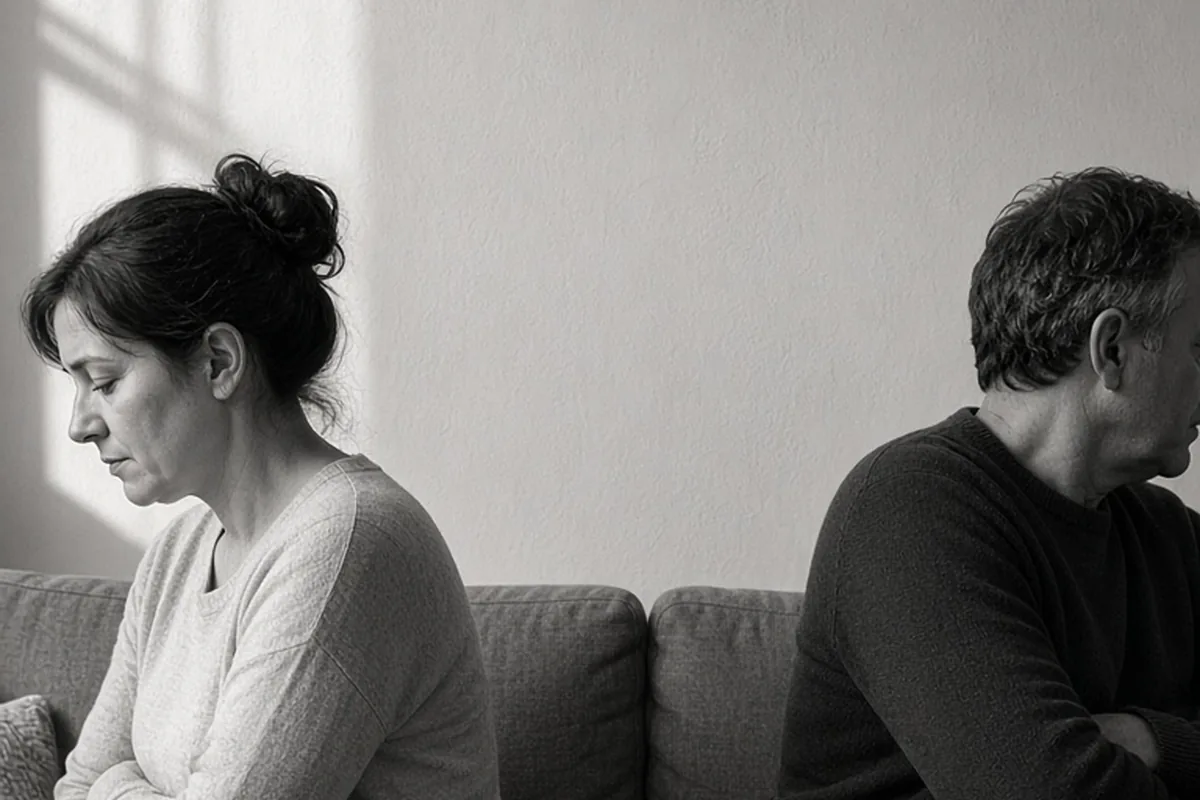
The body language of unhappy married couples often reveals emotional distance before words do. Common nonverbal patterns include physical avoidance, lack of spontaneous touch, crossed arms or angled torsos turned away during conversation, flat facial affect, absent eye contact, and contemptuous expressions like eye-rolling. Recognizing these subtle physical cues helps partners identify underlying detachment and begin addressing core relationship issues constructively.
While words can easily mask resentment or disappointment, physical posture and reflexive habits often tell a far more candid story about the health of a partnership.
Physical Proximity and the Creation of Spatial Distance
When emotional harmony begins to erode, partners frequently adjust the physical space between them without consciously intending to do so. In content relationships, partners naturally gravitate toward one another, whether settling close on a sofa, walking at a synchronized pace, or moving comfortably within each other's personal space. By contrast, an unhappy dynamic often manifests as subtle physical widening. Spouses may consistently choose separate ends of furniture, position decorative pillows or laptops as physical barricades, or find reasons to occupy entirely different rooms under the guise of household tasks.
Consider a couple watching television together in the evening. In a connected marriage, they might lean toward the center of the seating area or share a blanket. In a strained dynamic, one partner may perch on the outer edge of an armchair, oriented toward an exit rather than the center of the room. This spatial detachment functions as an emotional buffer, allowing each individual to minimize the risk of friction or unwanted intimacy. However, it is essential to distinguish between a healthy need for solo decompression after a hectic workday and a persistent, chronic avoidance pattern that replaces shared time entirely.
The Disappearance of Casual and Affectionate Touch
Touch is one of the most direct nonverbal barometers of marital well-being, conveying safety, warmth, and reassurance. In thriving relationships, partners engage in frequent micro-touching: a light hand placed on the lower back while passing in the kitchen, a gentle squeeze of the arm during a shared joke, or an unhurried morning kiss. When unhappiness settles in, these small tactile exchanges are often the first rituals to fade. Physical contact may become strictly utilitarian, such as handing over a set of car keys without skin-to-skin contact, or it may disappear altogether.
When affection is offered in a distressed marriage, the recipient's physical reaction often highlights the underlying tension. A spouse might subtly stiffen, pull back their shoulder, or offer an awkward, mechanical pat rather than sinking into an embrace. For example, during a routine departure, a partner might present an angled cheek instead of facing their spouse directly, effectively limiting warmth while fulfilling a perfunctory social habit. These physical hesitations typically indicate emotional guardedness or unaddressed hurt rather than simple forgetfulness.
Eye Contact Shifts: Avoidance and Cold Gazes
The eyes convey nuance, vulnerability, and engagement, making gaze patterns particularly revealing in romantic relationships. Happy couples regularly exchange lingering, soft eye contact that signals presence and mutual respect. In contrast, partners navigating deep unhappiness often avoid looking directly at one another. During conversations, a disengaged spouse may fixate on a smartphone screen, stare at the floor, or continuously scan the room, subtly communicating that their attention and emotional investment lie elsewhere.
At the other extreme, eye contact can turn sharp, fixed, and unyielding during moments of conflict. Rather than signaling curiosity or empathy, a cold or deadpan stare paired with narrowed eyelids indicates emotional shutdown or entrenched defensiveness. A trade-off occurs when one partner attempts to force visual engagement by demanding constant eye contact; doing so in the middle of an escalating argument often increases stress rather than creating true connection. Observing whether eye contact feels collaborative or combative provides valuable insight into the emotional climate of the home.
Defensive Postures and Closed Torso Dynamics
Body alignment is an involuntary indicator of openness. In healthy interactions, couples maintain an open posture: torsos face each other, shoulders are relaxed, and arms rest naturally at the sides or in the lap. When resentment or anxiety dominates the relationship, closed postures become the default. Crossing arms tightly over the chest, hunching shoulders forward, or clutching objects like coffee mugs tightly with both hands creates a tangible physical shield against emotional vulnerability.
Directional orientation is equally telling. Known in nonverbal communication as torso orientation, the direction a person's chest and feet point indicates where they want to direct their energy. If one spouse tries to discuss household planning and the other keeps their feet pointed toward the doorway while angling their shoulders away, their body is expressing a desire to escape the interaction. While crossed arms can occasionally stem from feeling cold or finding a comfortable resting position, a consistent pattern of closed and angled-away posture during dialogue strongly suggests internal defensiveness.
Facial Expressions of Contempt and Disconnect
Facial micro-expressions reveal fleeting emotions before conscious filtering takes over. In distressed partnerships, negative micro-expressions frequently replace warmth and shared humor. The most damaging of these expressions is contempt, characterized by asymmetric movements such as a slight sneer, a unilateral lifting of the upper lip, or an overt upward eye roll while the other person is speaking. These expressions convey a sense of moral superiority or dismissal, signaling that a partner's perspective is being devalued rather than heard.
Another common facial cue in unhappy marriages is flat affect, where the face remains rigid, expressionless, and unreactive during personal conversations. When a spouse shares good news or attempts to express vulnerability, a neutral or stony response can feel deeply isolating. For instance, if one partner describes a difficult moment at work and the other responds with an unblinking, motionless expression, the absence of natural mirroring signals emotional withdrawal and a breakdown in empathy.
Distinguishing Temporary Stress from Chronic Marital Distress
Interpreting nonverbal cues requires careful contextual awareness. Every individual experiences periods of intense work fatigue, grief, illness, or personal overwhelm that temporarily constrict their body language. A spouse dealing with chronic back pain or a demanding deadline may cross their arms, avoid eye contact, or crave personal space purely due to depleted energy, with no underlying dissatisfaction toward their marriage. Jumping to conclusions based on isolated incidents can create unnecessary friction.
The key distinction lies in longevity and consistency. Temporary stress typically ebbs as circumstances resolve, and a stressed partner will generally offer verbal reassurance if prompted gently. Chronic marital unhappiness, however, displays a steady, predictable pattern of closed body language that persists across varied settings and over extended periods. Evaluating body language within the wider context of your shared life prevents misinterpreting normal human exhaustion as relational failure.
Constructive Steps for Addressing Nonverbal Distance
Noticing nonverbal disconnect offers a valuable opportunity for proactive intervention rather than despair. If you recognize these patterns in your marriage, the first step is to manage your own nonverbal signals. Approaching your spouse with open hands, a relaxed posture, and an unhurried tone creates a lower-stakes environment for conversation. Pointing out their body language accusatorily—such as saying, 'Why are you rolling your eyes at me?'—typically increases defensiveness; instead, focus on your desire for genuine connection.
A more productive approach is to share your observations gently using neutral, feeling-centered language. You might say, 'I have noticed that we seem a bit distant in the evenings lately, and I miss feeling connected to you. How are you feeling about how things have been between us?' This invites honest dialogue without assigning blame. If mutual communication has stalled and physical distance feels insurmountable, working with a licensed marriage and family therapist can provide structured support to help rebuild trust and comfort.
Frequently asked questions
Can body language alone determine whether a marriage is failing?
No, body language should never be viewed in isolation. Nonverbal cues reflect emotional states at a given moment, but environmental stressors, health challenges, and personal habits also play significant roles. Evaluating overall communication and relational patterns offers a far more accurate picture.
How can I encourage my partner to be more physically affectionate if they have pulled away?
Start by offering low-pressure, gentle touch without expecting an immediate reciprocal gesture, such as a brief hand on their shoulder. Pairing this with open communication about your desire for warmth helps your partner feel safe rather than pressured to perform affection.
What should I do if my spouse consistently rolls their eyes during disagreements?
Pause the discussion calmly and address the dynamic directly without mirroring the hostility. You might say, 'It is difficult for me to communicate when I feel dismissed; let us take a short break and return to this when we are both ready to listen.'
Your next step
Choose a neutral, calm moment this week to open an honest, blame-free conversation about how you both are feeling, pairing your words with relaxed, welcoming body language.