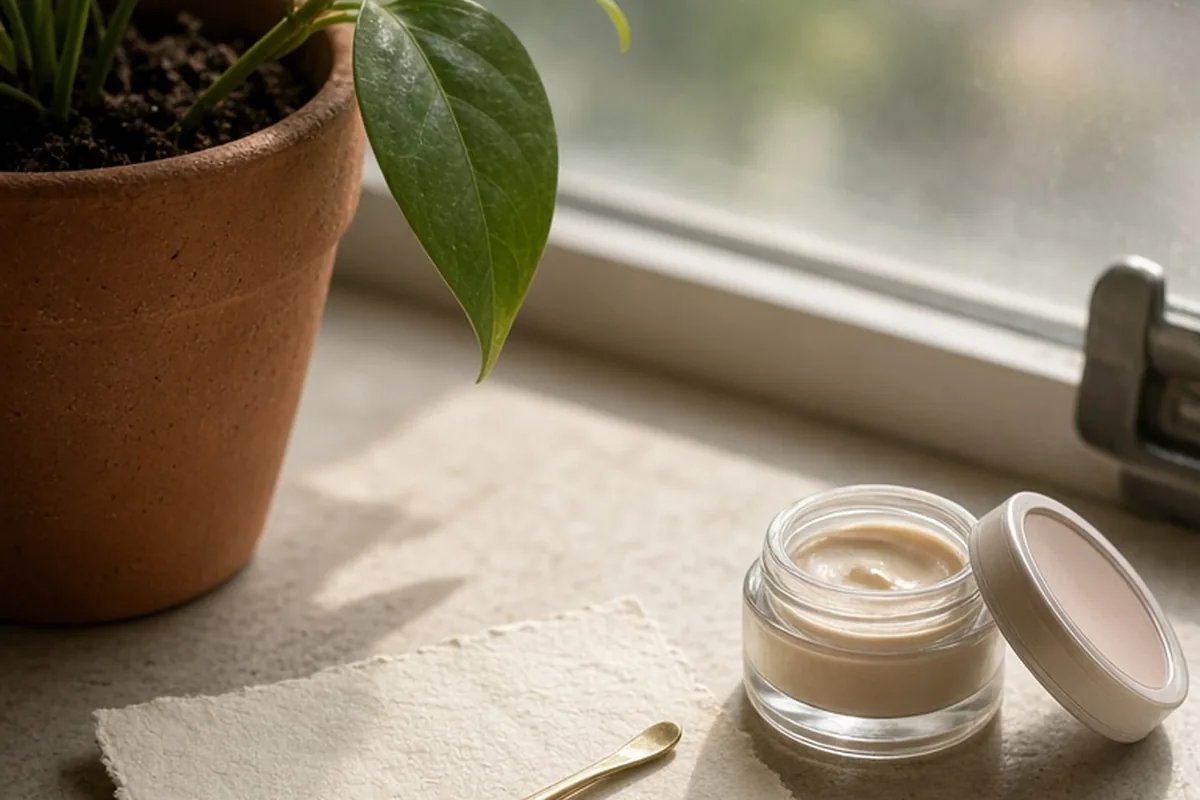
Yes, you can bring makeup on a carry-on bag without restrictions on solid products, but any liquid, cream, gel, paste, or aerosol cosmetic must comply with standard aviation security regulations. These products must be stored in containers holding 3.4 ounces or 100 milliliters or less, and all of them must fit into a single, transparent, quart-sized resealable bag.
Packing your beauty routine for air travel often feels like a balancing act between bringing your favorite products and meeting strict airport checkpoint guidelines. Understanding how security agencies classify different textures and formulations helps you assemble an organized travel kit that clears inspection quickly and arrives intact at your destination.
Navigating the Core Liquid Rules for Cosmetics
Transportation authorities classify a surprisingly wide spectrum of cosmetics under liquid restrictions. The foundational guideline enforced by the Transportation Security Administration in the United States and comparable international aviation agencies is the standard liquid rule. Under this directive, every liquid, aerosol, gel, cream, and paste must sit in a container of 3.4 ounces (100 milliliters) or smaller. Crucially, airport security bases this limit on the stated capacity printed on the bottle or tube, not on how much product remains inside. Carrying a half-empty six-ounce bottle of micellar water or setting spray will result in confiscation, because officers cannot verify the precise remaining volume at the checkpoint belt.
All of these compliant containers must fit easily inside one clear, resealable, quart-sized plastic bag. The bag must seal fully without straining, bulging, or splitting at the seams. If you frequently travel with a multi-step skincare and cosmetics regimen, this single quart bag requires deliberate curation. You must allocate this limited space across liquid foundation, primer, mascara, liquid exfoliants, setting mist, perfume, and lip oils alongside basic travel toiletries such as toothpaste and moisturizer. Evaluating each product before you pack ensures that you do not have to forfeit an expensive cosmetic during standard baggage screening.
Distinguishing Liquids and Creams from Solids
The most frequent source of confusion at checkpoint screening centers on formulation ambiguity. Travelers often assume that if a product is not a runny fluid, it does not count as a liquid. In airport security terms, however, any substance that is pourable, smearable, spreadable, or pumpable falls under liquid, aerosol, and gel restrictions. This means that cream blushes, cushion compacts, liquid concealers, lip glosses, liquid highlighters, and gel eyeliners are categorized identically to traditional liquid foundation. Even viscous pastes like petroleum jelly, solid-feeling clay face masks, and rich under-eye balms occupy liquid volume allowances.
Conversely, true solid cosmetics enjoy unrestricted packing allowances inside both your carry-on luggage and personal item. Standard twist-up bullet lipsticks, traditional stick deodorants, pencil eyeliners, wooden lip pencils, pressed powder compacts, and solid cheek sticks that maintain their structural shape at room temperature do not count toward your quart bag limit. For example, replacing a liquid foundation with a solid mineral powder or a stick foundation frees up precious space in your quart-sized bag for items that cannot be swapped, such as essential prescription skin creams or contact lens solution.
Mascara occupies a unique gray area for many flyers. Despite its thick consistency and small tube size, security screeners treat mascara as a paste or gel. You must place your mascara inside your quart bag. Brow pomades, potted cream shadows, and rollerball perfumes follow the same rule. When evaluating whether an item counts toward your allowance, ask yourself if the cosmetic yields or spreads smoothly under gentle fingertip pressure. If it shifts shape or spreads like butter, treat it as a liquid.
Powder Cosmetics and Checkpoint Screening Rules
Dry powder cosmetics—including loose translucent setting powder, pressed powder foundations, powder blushes, bronzers, and eyeshadow palettes—are permitted in your carry-on baggage. They do not occupy space in your clear quart-sized liquid bag. However, aviation security guidelines feature specific handling procedures for loose and pressed powder substances designed to keep screening lanes moving efficiently.
When powder containers exceed 12 ounces or approximately 350 milliliters—roughly the volume of a standard soda can—they are subject to enhanced security screening. Screeners may pull your bag aside to open the container, test the powder with chemical trace swabs, or inspect it under an X-ray machine. While most standard individual makeup compacts range between 0.2 and 1.5 ounces and stay well below this threshold, professional makeup artists or travelers carrying large tubs of body powder or loose baking powder can easily trigger a manual bag search.
To avoid delays, pack large powder containers in easily accessible outer pockets of your carry-on so you can remove them and place them separately in a bin if requested. Additionally, cabin pressure fluctuations and rough baggage handling can shatter pressed powders or pop loose sifter lids open. Placing a small, clean cotton round inside your compact directly over the pressed cake absorbs shock vibrations during transit, preventing your favorite palette from turning into loose dust inside your luggage.
Decanting and Preventing Cabin Pressure Leaks
Commercial aircraft cabins undergo noticeable air pressure drops as planes climb to cruising altitudes of thirty thousand feet. As external air pressure falls, the air trapped inside your cosmetic bottles and squeeze tubes expands. This pressure differential forces creams, oils, and foundations upward through pump nozzles, screw threads, and dropper tops, often greeting travelers with messy leaks when they unzip their luggage at their hotel.
Preventing leaks requires a combination of deliberate decanting and smart packaging habits. Transferring foundation, primer, or night cream into smaller travel-sized containers saves quart-bag volume while preserving product integrity. Reusable silicone squeeze tubes, miniature airless pump bottles, and clean contact lens cases make effective travel vessels. A contact lens case features two leak-resistant, threaded wells that hold several days worth of liquid concealer and cream blush without wasting valuable real estate.
When packing squeeze tubes and pump bottles, gently compress the body of the container to expel excess trapped air before twisting the cap shut. This creates a slight internal vacuum, giving the product room to expand without breaching the seal. For added protection against pressure spikes, unscrew the lid, stretch a small piece of plastic wrap across the bottle opening, and tightly screw the cap back down over the plastic barrier. Finally, keep all decanted items inside a durable, transparent zip bag so that any unexpected seep remains contained.
Carrying Beauty Tools, Blades, and Heated Devices
A complete makeup setup often includes mechanical tools, sharp implements, and electronic styling hardware. Understanding which tools are permitted inside aircraft cabins prevents accidental forfeitures at security checkpoints. Basic cosmetic application tools like synthetic and natural fiber makeup brushes, beauty sponges, manual eyelash curlers, and handheld plastic pencil sharpeners are fully permitted in carry-on bags without restriction.
Implements with blades or sharp edges require careful attention to size limits. Standard slanted or pointed eyebrow tweezers and fingernail clippers are permitted in carry-on luggage across most international and domestic aviation systems. Small grooming scissors with blades measuring four inches or less from the pivot point are generally allowed in United States checkpoints, though local international security agents occasionally exercise stricter discretion. Straight razors, box cutters, and loose double-edge razor blades are strictly prohibited in the cabin and will be confiscated immediately.
Electronic beauty accessories introduce additional power regulations. Cordless styling wands, heated eyelash curlers, and illuminated travel mirrors frequently operate on rechargeable lithium-ion batteries. Aviation safety standards mandate that spare lithium-ion batteries and cordless heat styling tools containing integrated batteries must stay in your carry-on luggage rather than checked baggage due to fire mitigation protocols. If you pack a lighted makeup mirror or portable curling iron, make sure the power switch features a physical lock or safety cover to prevent accidental activation inside overhead bins.
Preparing for Checkpoint Screening Smoothly
How you organize your carry-on luggage directly influences how quickly and stress-free you move through the airport security screening lane. Even though modern computed tomography scanners at select major airports allow passengers to leave liquids and electronics inside bags, many domestic and international airports still operate conventional X-ray machines that require travelers to separate their toiletries for individual inspection.
Pack your transparent quart-sized liquids bag in an exterior pocket or at the very top of your carry-on suitcase where you can retrieve it in seconds without unzipping your entire wardrobe. If you are asked to remove your liquids, placing your clear pouch flat inside the bin alongside your laptop streamlines the screener's visual evaluation. Keep your secondary non-liquid makeup kit organized in a separate zippered organizer so security personnel can clearly see solid compacts and brushes on their monitors without visual clutter.
Be prepared for regional discrepancies when connecting through international hubs. While the United States TSA allows one quart-sized plastic bag of roughly similar dimensions, airports in the European Union, the United Kingdom, and parts of Asia frequently enforce strict twenty-centimeter by twenty-centimeter clear plastic bags with specific closure requirements. When flying internationally, leave a small amount of extra breathing room in your cosmetics bag so you can transfer your items into a locally mandated airport bag without having to abandon products at the gate.
Assembling an In-Flight Refresh Kit
Air travel places specific physical demands on skin, as cabin environmental control systems circulate air with humidity levels that routinely dip below twenty percent. Long flights can cause foundation to separate, dry patches to flake, and lips to crack. Keeping a compact, curated mini-kit inside your under-seat personal item allows you to maintain comfort and refresh your appearance before landing without wrestling with overhead luggage.
Your under-seat kit should prioritize targeted hydration and simple touch-ups over an elaborate cosmetic routine. Effective inclusions comprise a nourishing lip balm, a miniature hydrating facial mist under 3.4 ounces, a travel-sized sheet mask, blotting papers, and a multi-use cream tint for cheeks and lips. Because airplane lavatories feature tight quarters and surfaces that may harbor germs, avoid complex routines that require spreading out multiple brushes or sponges. Applying a swipe of balm and patting on a creamy tint using clean fingertips is quick, hygienic, and practical.
Respect fellow passengers when using cosmetics in the passenger cabin. Strongly scented setting sprays, perfumes, nail polishes, and acetone removers should never be opened or applied at your seat, as circulating airflow distributes chemical vapors and strong fragrances throughout neighboring rows. Confine any spray application to a quick spritz in the lavatory, or opt for fragrance-free solid balms and blotting sheets that freshen your complexion quietly and politely.
Illustrative Scenarios
Streamlining a Weekend Travel Routine
A traveler preparing for a three-day city trip faced the challenge of fitting a ten-step beauty routine into a single carry-on roller bag. Rather than risking full-sized bottles getting rejected at the checkpoint, she audited her collection by texture. She swapped her bulky eight-ounce micellar water for dry makeup-removing towelettes, transferred five pumps of liquid foundation into a sanitized contact lens well, and replaced her liquid blush with a twist-up cream cheek stick that counted as a solid. Her remaining liquids—setting mist, mascara, lip oil, and sunscreen—tucked neatly into her quart bag with space to spare.
Key point: Swapping liquid formulas for solid equivalents and decanting multi-use creams eliminates bulk and guarantees your cosmetics meet airport security requirements.
Frequently asked questions
Can I bring full-sized makeup bottles if they are mostly empty?
No, security screeners assess container capacity based on the volume printed on the packaging, not the amount of fluid remaining. Even if a six-ounce bottle holds only a single use of foundation, it will be confiscated if brought through carry-on screening.
Does lip balm or lipstick count toward the liquid allowance?
Traditional twist-up solid lipsticks and hard stick balms do not count toward your liquid allowance and can travel anywhere in your carry-on luggage. Liquid lipsticks, lip glosses with wands, squeeze-tube salves, and lip oils are considered liquids or gels and must fit inside your quart-sized bag.
Are tweezers and small cosmetic scissors permitted in carry-on bags?
Standard eyebrow tweezers of any length are permitted in your carry-on bag without issue. Small cosmetic or cuticle scissors are generally allowed in United States airports as long as the blade measures four inches or less from the pivot point, though regulations can vary at international security checkpoints.
Do makeup remover wipes count as a liquid under airport rules?
Pre-moistened makeup wipes and facial cleansing towelettes do not count as liquids, creams, or gels. You can pack as many cleansing wipes as you need in your carry-on luggage without taking up space in your quart-sized liquids pouch.
Your next step
Before your next departure, lay out your cosmetics collection and sort every item by physical state: separate pourable liquids, creams, and gels into your quart-sized transparent bag, leave solid powders and sticks in your primary makeup case, and place your liquid pouch in an easily accessible pocket for swift security screening.