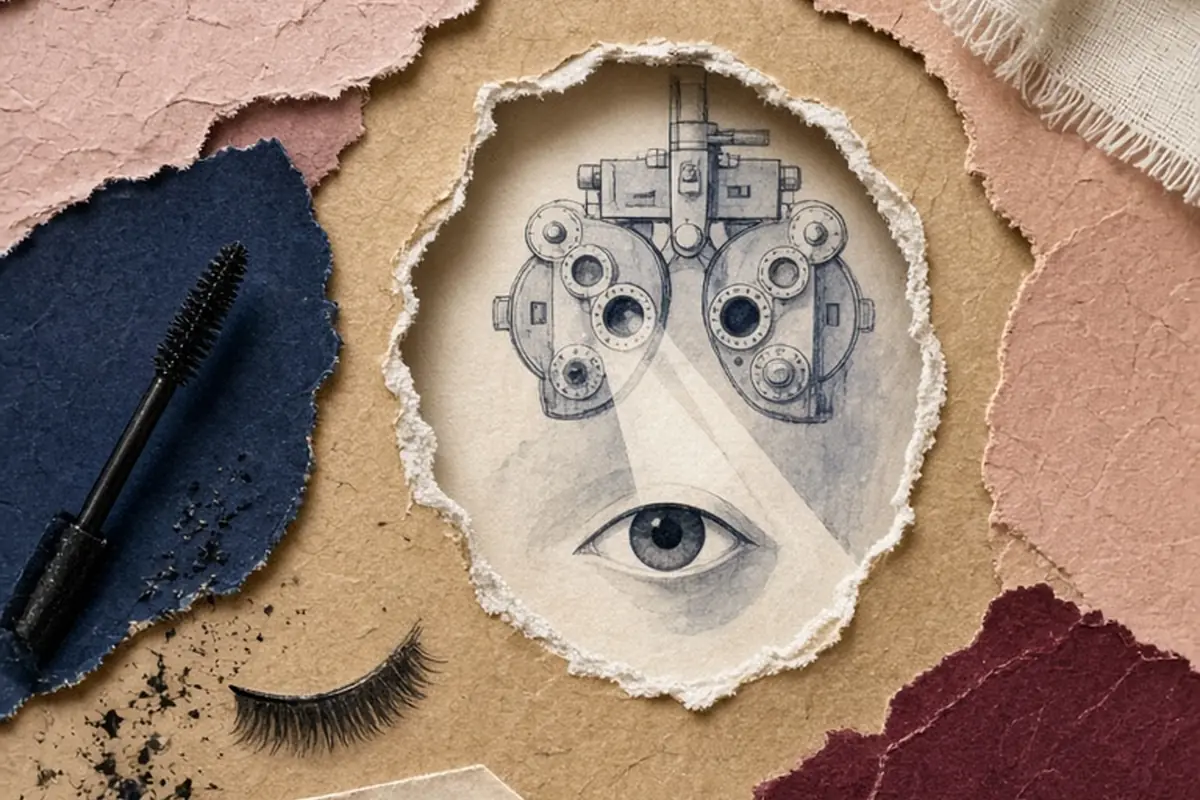
It is best to avoid wearing eye makeup to an eye exam. Mascara, eyeliner, eyeshadow, and false lashes can flake into your eyes, interfere with diagnostic equipment, alter tear film assessments, and smear during dilation drops or puff tests. Going bare-faced helps your eye doctor get a clear view of your ocular health and prevents accidental irritation or smudging.
Scheduling an eye exam is a routine step in maintaining clear vision and ocular health, yet preparing for the visit often raises practical questions about personal grooming. While deciding whether to apply cosmetic products might feel like a minor aesthetic choice, eye makeup can directly influence the ease and precision of your clinical evaluation.
How Eye Makeup Disrupts Diagnostic Equipment and Visual Inspection
During a comprehensive eye examination, your eye care provider uses high-powered microscopes, known as slit lamps, to examine the delicate structures of your cornea, iris, lens, and eyelids. When cosmetics like powder eyeshadow, glitter pigments, or fiber mascara are present around the eye area, tiny particles naturally migrate into the tear film or settle along the eyelid margins. Under intense magnification and focused light beams, these cosmetic specks can easily be mistaken for foreign bodies, corneal abrasions, micro-cysts, or cellular debris, complicating what should be a straightforward visual assessment.
Furthermore, diagnostic equipment requires clean optical pathways and unobstructed views of ocular tissues. Reflective mica or shimmer found in many beauty formulations scatters light unpredictably, making it difficult for the doctor to evaluate subtle color changes, tissue textures, or vascular patterns on the surface of the eye. For example, if a practitioner is checking for early signs of dry eye or contact lens-related irritation, the glare from an illuminated highlighter or stray pigment flake can obscure tiny surface changes. Choosing to leave the eye area completely bare ensures that every millimeter of tissue is visible under illumination without optical interference.
The Impact of Cosmetics on Tear Film and Eyelid Health Checks
A critical component of modern eye exams involves evaluating the health of the meibomian glands, which line the edges of your upper and lower eyelids. These tiny oil glands secrete essential lipids that prevent your tears from evaporating too quickly. When people apply pencil or gel eyeliner along the waterline—a technique known as tightlining—the pigment directly blocks these delicate gland openings. If your doctor needs to assess the quality of your oil secretions or check for chronic blockages, thick cosmetic layers conceal the natural appearance of the eyelid margin and prevent a genuine baseline reading.
Cosmetics also disrupt standard tear stability assessments, such as the tear film break-up time test. In this procedure, a doctor evaluates how evenly your natural tears coat the ocular surface. Residual cream shadows, setting powders, or oily cleansers alter the biochemical balance of the tear layer, causing premature tear evaporation or irregular film patterns that mimic ocular surface disease. If you are being evaluated for gritty sensations, redness, or fluctuating vision, arriving with pristine, unpainted eyelids ensures your provider measures your actual tear health rather than your makeup formulation.
Why Eye Drops, Tonometry, and Dilation Complicate Makeup Wear
Most comprehensive examinations involve the administration of liquid eye drops, such as numbing agents, yellow fluorescein dye, or dilating solutions. When these drops are instilled, excess liquid inevitably spills over the lower lid and runs down the cheeks. If you are wearing mascara, liquid eyeliner, or heavy under-eye concealer, the chemical runoff blends with the cosmetic pigments. This not only causes immediate running and streaking across your face, but it also creates a stinging mixture that can wash loose cosmetic binders directly back across the cornea.
Certain diagnostic tests require physical proximity or direct contact with the ocular surface. Tonometry, which measures intraocular pressure to screen for conditions like glaucoma, involves either an air puff that can dislodge dry powder into the open eye or a physical sensor tip that gently rests against the numbed cornea. If your eyelashes are coated with thick, stiffened mascara, the doctor may have difficulty steadying your lids without brushing against the coated lashes. This increases the risk of transferring cosmetic residue onto delicate clinical probes or pressing crusted mascara clumps against the sensitive epithelial surface.
Safe Alternatives and What Face Makeup You Can Keep
Choosing to skip eye makeup does not mean you must forego your entire personal care routine before an appointment. You can comfortably wear base products, such as tinted moisturizers, light foundations, and setting powders, provided they are kept well below the orbital bone and away from the immediate eye area. Similarly, brow pencils or lightly set brow gels are generally fine as long as they are non-flaking formulas that stay firmly positioned above the brow bone throughout the visit.
Lipstick, tinted lip balm, and light cheek blush applied away from the lower orbital rim will not interfere with vision testing or eye drop administration. The primary objective is simply keeping a clean perimeter of at least half an inch around the entire orbital socket, covering the upper brow bone, temples, and tear troughs. For example, swapping a full smoky eye and liquid liner for a hydrating face lotion and a tinted lip balm allows you to feel put-together while leaving the critical diagnostic zone clear for the optometrist or ophthalmologist.
- Keep all concealers, foundations, and powders at least half an inch below the lower lash line.
- Avoid glitter, shimmer, or setting sprays anywhere on the upper half of the face.
- Stick to non-flaking brow products and avoid heavy cream formulations near the brow bone.
- Opt for simple lip colors or neutral cheek tints that do not require touch-ups after watery eye drops.
Navigating False Lashes, Lash Extensions, and Contact Lenses
If you wear semi-permanent eyelash extensions, you generally do not need to have them professionally removed before a standard eye check, but you should notify the clinic staff before testing begins. Lash extensions make it harder for doctors to perform certain procedures, such as eversion of the upper eyelid to check for hidden irritants, and the adhesive can occasionally trap debris. In contrast, temporary strip lashes and individual cluster lashes held by daily adhesive should always be left off entirely, as the flexible glue softens when exposed to diagnostic eye drops and can easily slip into the eye.
Contact lens wearers must also plan carefully when preparing for an exam. Most providers ask patients to bring their current glasses and contact lens cases, as lenses often need to be removed prior to corneal mapping, dilation, or pressure checks. Removing contact lenses when you have wet or powdered eye makeup on dramatically increases the chance of trapping pigment beneath the lens when you put them back in later, leading to painful surface irritation. Keeping your eyes completely bare ensures a smooth transition between glasses, contacts, and testing instruments.
How to Prepare Your Eyes the Night Before and Morning Of
Effective preparation starts the evening before your scheduled appointment. Use a gentle, oil-free makeup remover or micellar water to break down any long-wearing mascara, waterproof liner, or stubborn glitter from the previous day. Follow up with a mild, fragrance-free facial cleanser, paying careful attention to rinse away all surfactant residues. Thorough cleansing the night before allows your eyelid margins to rest and prevents lingering oils from migrating into your tear film overnight.
On the morning of your exam, wash your face with plain water or a basic, non-comedogenic cleanser, and apply a lightweight face moisturizer while steering clear of the eyelid margins. If you have an afternoon appointment and must attend work or social events beforehand, carry a travel-sized pack of pre-moistened lid wipes or makeup remover pads so you can cleanly strip away cosmetic products in the clinic restroom twenty minutes before your scheduled check-in time.
Managing Your Post-Exam Routine and Reapplying Cosmetics
If your eyes are dilated during the visit, your pupils will remain enlarged and sensitive to bright light for several hours, often accompanied by blurry near vision. Attempting to apply precise eyeliner, mascara, or intricate shadows immediately following a dilated exam is challenging and increases the likelihood of accidental pokes to the eye or uneven application. Additionally, your eyes may continue to produce excess tears for an hour or two as the diagnostic drops gradually wear off.
The safest strategy is to bring dark sunglasses to wear on your way home and wait until your pupil size and focusing ability return to normal before applying any fresh makeup. Once the effects of dilation have fully subsided and your eyes feel comfortable and clear, you can safely resume your standard beauty routine. If your doctor used fluorescein dye or performed minor in-office procedures, waiting until the next morning to apply eye cosmetics gives the ocular surface plenty of time to rehydrate and settle.
Frequently asked questions
Can I wear mascara if I skip eyeliner and eyeshadow?
It is still best to skip mascara because the wand deposits pigment close to the lash base, and dried product can flake during testing. Stiffened lashes also make it harder for the doctor to position instruments close to your eyelids or administer drops cleanly.
What should I do if I forget and arrive at my exam with makeup on?
Inform the receptionist or technician right away when you check in for your appointment. Most clinics keep gentle makeup remover pads or saline wipes on hand so you can cleanse your eye area in the restroom before testing begins.
How long after dilation drops can I put on eye makeup?
You should wait until your pupils have returned to their normal size, your close-up vision is fully restored, and your eyes stop watering. For most people, this takes between four to six hours, though waiting until the following morning is often the most comfortable option.
Your next step
Cleanse your eye area thoroughly before your appointment, keep your cosmetics packed in your bag for later, and focus on giving your eye care professional a clean, unobstructed view of your ocular health.