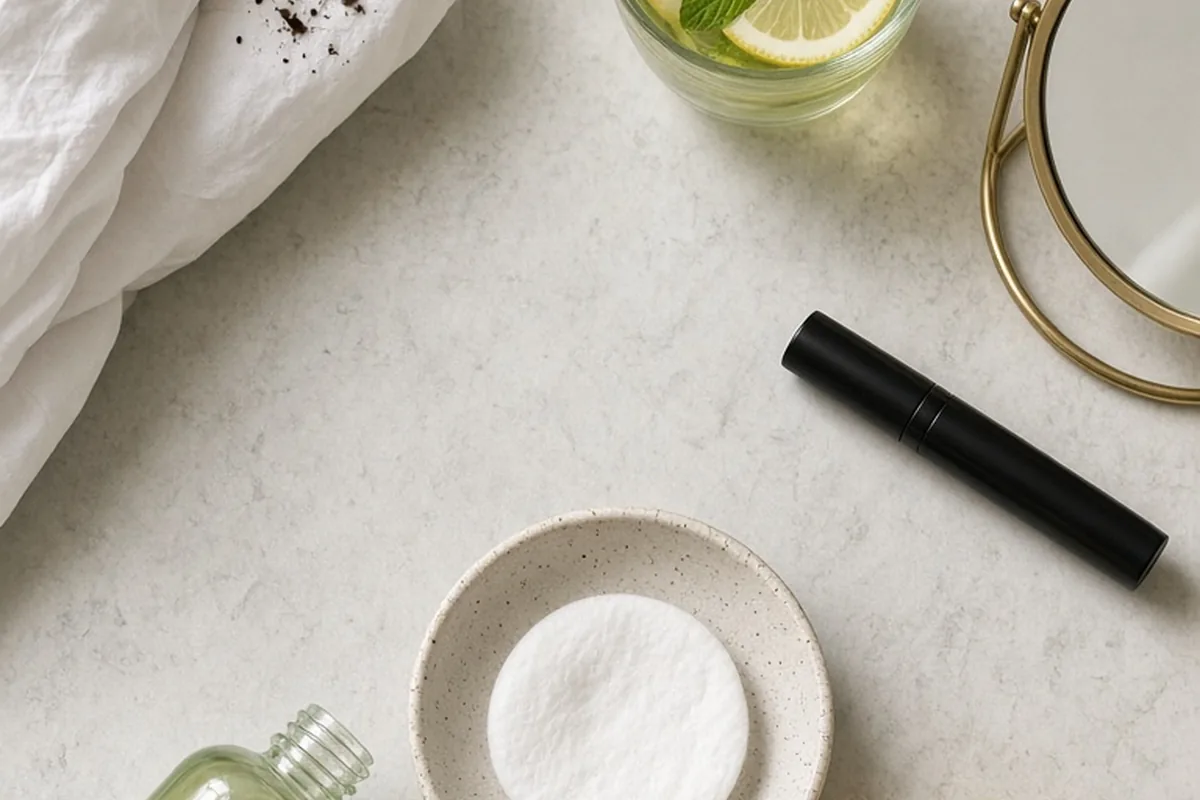
You should not sleep with mascara on because dried formula stiffens your natural eyelashes, making them prone to snapping against your pillow during sleep. Overnight wear also increases the likelihood of product flaking into your eyes, causing surface irritation, clogged eyelid glands, and potential infections. If you fall asleep wearing mascara occasionally, gently dissolve the product in the morning without aggressive rubbing.
Late nights and exhaustion can make completing a full evening skincare routine feel daunting, leading many people to occasionally skip washing their face before bed. While missing an evening cleanse once in a while happens to almost everyone, leaving mascara on overnight carries specific drawbacks for both your eye comfort and long-term eyelash health.
How Overnight Mascara Affects Eyelash Structure
Mascara is formulated to coat individual lash hairs with film-forming agents, waxes, and pigments that harden as they dry to hold curl and add volume. While this stiffness is ideal during waking hours, it transforms flexible hairs into rigid, brittle fibers. When your head shifts against a pillow during sleep, the friction bends these stiffened lashes at unnatural angles, causing them to fracture along the shaft or snap off entirely near the base.
Natural eyelashes shed continuously on a normal physiological cycle, but mechanical breakage caused by hardened makeup is different from healthy shedding. When lashes snap midway down the shaft rather than falling out naturally from the root, the remaining blunt ends can make your lash line appear visibly thinner and uneven. Consistently going to bed with coated lashes disrupts the delicate lash fringe faster than new hairs can grow to replace damaged ones.
Eye Irritation and Blocked Eyelid Glands
Beyond cosmetic damage to the lash hairs themselves, overnight mascara presents real risks to the surface of your eyes and the surrounding skin. As you sleep, tiny dried particles of pigment and wax inevitably flake off. These micro-flakes can migrate beneath your eyelids, settling on the conjunctiva or scratching the sensitive surface of the cornea, which often produces redness, stinging, and gritty discomfort upon waking.
Your eyelids also contain tiny oil glands, known as meibomian glands, along the lash line that secrete essential oils to keep your tear film stable. Leaving cosmetic residue along this delicate margin overnight can trap natural secretions, dead skin cells, and environmental debris. Over time, these blocked openings can lead to localized inflammation, painful styes, or chronic eyelid margin conditions that require medical treatment.
Comparing Waterproof and Regular Formulas Overnight
The specific type of mascara you wear changes the nature of the overnight risk. Waterproof formulas rely on heavy polymers, synthetic waxes, and volatile solvents designed to resist moisture and sweat. Because these ingredients create an exceptionally rigid, water-repellent shell around the lash hair, waterproof mascara poses a substantially higher risk of severe mechanical snapping when pressed against bedsheets.
Standard water-soluble formulas and tubing mascaras are somewhat more pliable than waterproof alternatives, but they still present significant concerns. Standard mascaras tend to flake more readily during tossing and turning, scattering loose particulates directly into the ocular surface. Tubing mascaras form polymer sleeves that can peel off in small chunks, potentially trapping debris against the eyelid margin if left unwashed.
Step-by-Step Recovery If You Slept in Mascara
If you wake up and realize you forgot to remove your eye makeup, the most critical rule is to avoid pulling, picking, or roughly scrubbing at the dried product. Dry pulling tears out eyelashes that might otherwise remain intact and can abrade the tender skin of your eyelids. Instead, focus on thoroughly softening the hardened polymers before attempting to wipe them away.
To clear the dried formula safely, apply a gentle, oil-based cleanser, cleansing balm, or bi-phase micellar water to a soft cotton pad. Press the saturated pad against your closed eye for twenty to thirty seconds, allowing the solvent to break down the hardened waxes completely. Once the formula dissolves, gently slide the pad downward in the direction of lash growth without back-and-forth friction, rinsing afterward with lukewarm water.
- Soak a cotton pad with bi-phase makeup remover or micellar water formulated for eyes.
- Hold the pad firmly against your closed eyelids for thirty seconds to dissolve polymers.
- Sweep gently downward toward the tips of the lashes without rubbing sideways.
- Rinse the eye area with lukewarm water and apply a preservative-free lubricating eye drop if your eyes feel gritty.
Practical Nightstand Strategies for Low-Energy Evenings
Building a foolproof routine means planning for nights when fatigue prevents you from standing at the bathroom sink for a multi-step cleanse. Relying solely on willpower after an exhausting shift or late event often leads to skipped hygiene steps, so creating accessible alternatives can keep your eyes protected with minimal effort.
Keeping a bottle of gentle, no-rinse micellar water and reusable cotton rounds directly on your nightstand provides an immediate, low-friction solution. While a full sink cleanse remains ideal for overall skin clarity, spending twenty seconds swiping away mascara from bed is far better for your eyes than leaving heavy pigments on overnight. For an even simpler option, keep pre-moistened, ophthalmologist-tested makeup removal wipes within arm's reach.
Restoring Weakened Lashes After Wear and Tear
If repeated overnight makeup wear has left your eyelashes brittle, short, or sparse, implementing a brief period of recovery can help restore lash integrity. Taking a break from all eye makeup for several consecutive days reduces physical tension on healing follicles and allows natural sebum to condition the hair shafts without interference from drying pigments.
You can also support lash flexibility by applying a drop of lightweight, skin-safe oil such as squalane or cold-pressed castor oil to clean fingertips and lightly brushing it over the lash tips before bed. Take care to use only a minimal amount near the ends of the hairs rather than right at the eyelid margin to prevent the oil from migrating into the eyes or blocking glandular pores.
When to Seek Professional Eye Care
Mild morning redness or temporary dryness after sleeping in makeup usually subsides within a few hours once the eye is cleansed and flushed with artificial tears. However, persistent discomfort indicates that irritation may have progressed beyond simple surface fatigue.
If you experience ongoing sharp eye pain, extreme sensitivity to light, persistent swelling along the eyelid rim, or yellow or greenish discharge, consult an optometrist or ophthalmologist promptly. These symptoms can signal an active bacterial infection, a deep corneal abrasion, or a severe gland blockage that requires targeted medical intervention rather than home remedies.
Frequently asked questions
Can sleeping in mascara once permanently damage your eyelashes?
Sleeping in mascara once is unlikely to cause permanent damage, though you may experience temporary lash breakage and minor eye irritation the following morning. As long as you dissolve the formula gently without pulling and keep the area clean, your lashes will continue their normal growth cycle.
Are tubing mascaras safer to sleep in than waterproof formulas?
While tubing mascaras do not form the same rock-hard bond as waterproof formulas, they are still unsafe for sleeping. The polymer tubes dry into rigid sleeves that can snap your lashes against the pillow or shed large particles that irritate your eyes overnight.
Why do my eyes feel gritty the morning after sleeping in makeup?
Grittiness occurs when dried makeup flakes migrate onto the surface of your eye during sleep, causing microscopic friction against the conjunctiva and cornea. In addition, makeup residue can clog the oil glands on your eyelid margins, leading to temporary dryness and reduced tear quality.
What is the fastest way to get mascara off when I am too tired for a full wash?
Saturate a cotton round with bi-phase eye makeup remover or gentle micellar water and press it over your closed eyes for thirty seconds. This softens and wipes away the bulk of the pigment in under a minute without requiring a trip to the sink.
Your next step
Place a gentle eye makeup remover and soft cotton pads beside your bed tonight so you can quickly dissolve your mascara even on your most exhausting evenings.